American Battery Technology Company Reclaims $115 Million DoE Grant for Tonopah Lithium Refinery, Propelling Domestic Supply Chain Forward
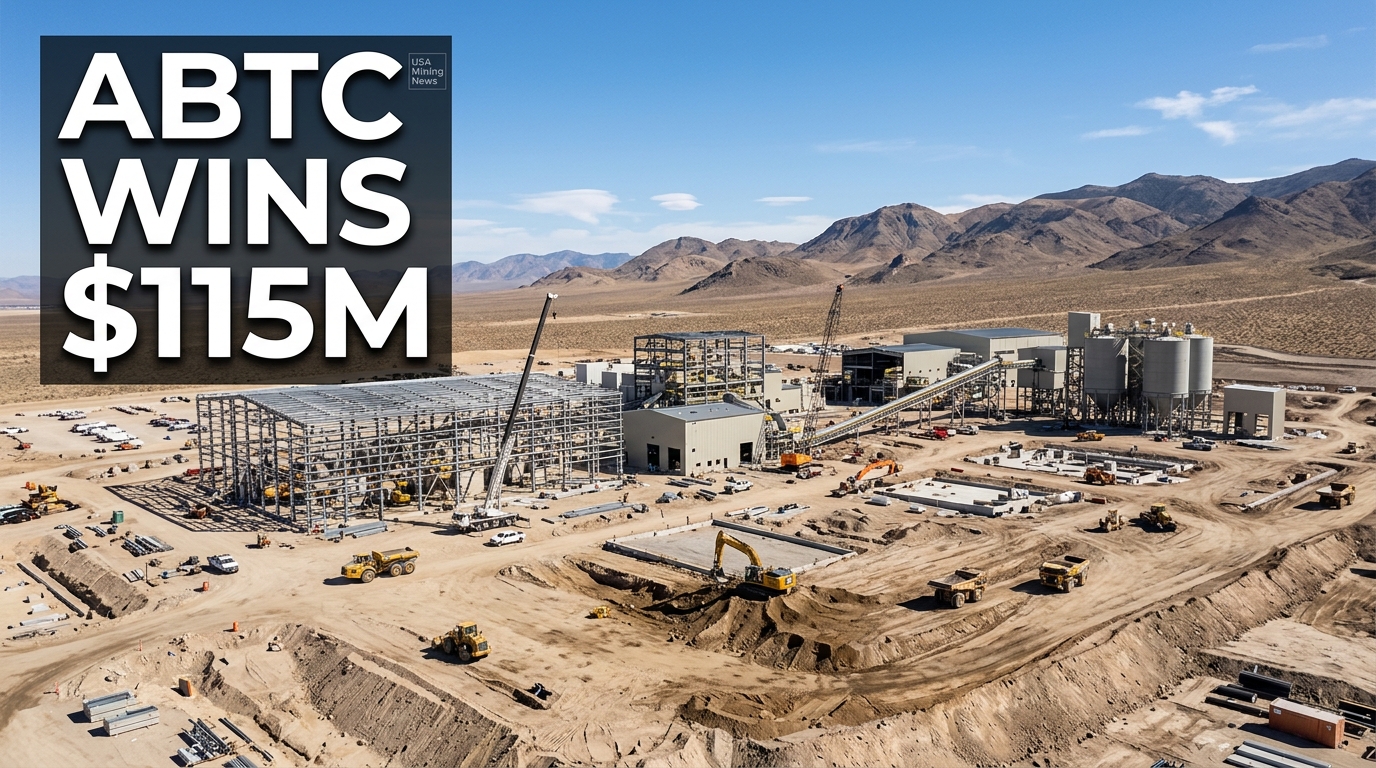
RENO, NEVADA – June 8, 2026 – In a significant development for the burgeoning domestic critical minerals sector, the American Battery Technology Company (ABTC) has announced the successful reinstatement of a $115 million grant from the U.S. Department of Energy (DoE). This vital funding, aimed at advancing the first phase of a commercial-scale lithium refinery at ABTC’s Tonopah Flats Lithium Project, was initially rescinded in October 2025 but has now been fully restored following an extensive appeal and review process. The reinstatement underscores the U.S. government's steadfast commitment to bolstering domestic supply chains for battery materials, particularly lithium.
The DoE grant, part of a competitive five-year program initially awarded to ABTC in October 2022, is foundational to the development of a facility designed to produce 5,000 tonnes per annum (tpa) of battery-grade lithium hydroxide. This material is crucial for the manufacturing of high-performance lithium-ion batteries, essential for electric vehicles (EVs) and grid-scale energy storage solutions. The re-securing of this grant marks a pivotal moment for ABTC and the broader American effort to establish a robust, sovereign supply of critical battery minerals.
The Tonopah Flats Project: A Strategic Lithium Resource
The Tonopah Flats Lithium Project is strategically located in Nevada’s Big Smoky Valley, near the historic mining town of Tonopah. This site encompasses 517 unpatented lode mining claims, spanning an expansive area of more than 10,340 acres on land managed by the Bureau of Land Management (BLM). The project is distinguished by what is reported to be one of the largest lithium claystone resources in the United States, across the measured, indicated, and inferred categories.
Lithium claystone deposits, while abundant globally, have historically presented unique extraction challenges compared to more conventional sources like hard rock (spodumene) or brines. Developing economically viable and environmentally sustainable methods for processing these claystone resources is paramount for diversifying the global lithium supply and reducing reliance on traditional, often geopolitically sensitive, sources. ABTC's project seeks to leverage innovative processing technologies to unlock this significant domestic resource, contributing to U.S. energy independence and economic security.
Timeline of Federal Engagement and Appeals Process
ABTC's engagement with federal support for the Tonopah Flats project spans multiple U.S. administrations, reflecting a sustained bipartisan recognition of the project’s strategic importance. Early development and demonstration activities for the project received backing from a DoE grant awarded under the Advanced Materials and Manufacturing Technologies Office during the first Trump administration. Following successful operation at a demonstration scale, the project subsequently secured the current DoE grant from the Manufacturing Energy Supply Chain office during the Biden administration.
By June 2025, ABTC had successfully completed two years of the current grant term. In a testament to its national significance, the project was also selected by the White House’s National Energy Dominance Council and the FAST-41 Permitting Council as a critical mineral Priority Project. This designation highlights federal efforts to streamline and accelerate the permitting process for infrastructure projects deemed vital to the national interest.
However, the project faced a significant hurdle on October 9, 2025, when ABTC, along with several other grant recipients, was notified by the DoE of its grant's termination. ABTC swiftly contested this decision, filing an appeal on October 10, 2025. This initiated an Informal Dispute Resolution process with the DoE, involving several months of in-depth technical and commercial assessments. The rigorous review culminated in a final meeting in December 2025. Following this extensive due diligence, the DoE concluded that "after a thorough review of all materials submitted, including your reconsideration request, the Department has concluded that recision of the termination notice and continuation of the project is warranted." This formal notification of reinstatement cleared the path forward for the Tonopah project.
Refinery Specifications and Output Targets
The $115 million grant is designated for the first phase of constructing a commercial-scale refinery at the Tonopah Flats site. This facility is engineered specifically to convert Nevada's vast claystone lithium resources into high-value battery materials. The target output of 5,000 tpa of battery-grade lithium hydroxide is a critical figure, as lithium hydroxide is the preferred compound for nickel-rich cathodes, which are integral to the higher energy density batteries sought after by leading EV manufacturers.
Achieving this production capacity would significantly contribute to filling the projected supply deficit for battery-grade lithium in North America. The refining process for claystone-derived lithium is complex, typically involving acid leaching or calcination followed by a series of purification and crystallization steps to meet the stringent purity requirements of battery manufacturers. ABTC's success in this endeavor could set a precedent for other claystone projects and establish a new domestic pathway for lithium production.
Strategic Importance for U.S. Critical Minerals Supply
The reinstatement of this grant underscores the U.S. government’s strategic imperative to secure and diversify its critical mineral supply chains. Currently, a significant portion of the world's battery-grade lithium refining capacity is concentrated outside North America, particularly in East Asia. This reliance presents economic vulnerabilities and geopolitical risks. Projects like Tonopah Flats are fundamental to mitigating these risks by establishing robust domestic extraction and refining capabilities.
The designation of Tonopah Flats as a critical mineral Priority Project by federal bodies highlights its role in national security and economic competitiveness. President Biden’s administration has consistently emphasized the need to build a resilient and domestic supply chain for materials vital to the clean energy transition, from mining to manufacturing. This grant to ABTC is a tangible manifestation of that policy, aiming to create jobs, foster technological innovation, and reduce foreign dependency within the U.S.
ABTC's Leadership Perspective and Future Outlook
Ryan Melsert, CEO of ABTC, expressed gratitude and confidence in the company's long-standing collaboration with the DoE. "We are proud of our long-standing partnership with the US Department of Energy and are grateful that after rigorous due diligence it has concluded that this critical mineral lithium refinery project has achieved all of its contracted technical and commercial milestones to date, and that continued federal support of this project is warranted," Melsert stated. He further emphasized, "We consider the US Department of Energy one of our closest long-term partners and look forward to continuing to work with them throughout multiple administrations to continue to drive domestic critical mineral projects."
The successful resolution of the grant termination, following a transparent and thorough dispute resolution process, enhances ABTC’s credibility and de-risks the Tonopah Flats project for potential private investors and strategic partners. With the completion of this review, the project is now poised to move forward with renewed momentum. The next steps will involve accelerating engineering, procurement, and construction activities for the first phase of the commercial refinery, aiming to bring domestic battery-grade lithium hydroxide essential to the U.S. clean energy economy to market.
Broader Implications for Domestic Lithium Production
The re-activation of the $115 million DoE grant for ABTC's Tonopah Flats project sends a clear signal to the mining industry and investors: the U.S. government is serious about investing in and supporting innovative domestic critical mineral projects. This development is particularly significant for the future of lithium extraction from claystone, a resource type that holds immense potential but requires advanced technological solutions.
The Tonopah project’s success could serve as a blueprint for similar initiatives, attracting further investment into unconventional lithium resources across the U.S. As global demand for lithium continues its dramatic ascent, driven by the electrification of transportation and expansion of renewable energy infrastructure, a diversified and secure supply from domestic sources like Nevada's claystone will be indispensable. ABTC's steadfast approach to its federal partnership and its successful navigation of the grant reconsideration process positions the company at the forefront of this critical national endeavor.