Utah Shores Up Domestic Lithium Supply with Major Incentive for Anson Resources' Green River Project
Salt Lake City, Utah – September 7, 2026 – In a significant move set to bolster the United States' burgeoning domestic lithium supply chain, Anson Resources, an Australia-based mineral exploration company, has announced the securing of a substantial business incentive valued at up to $194 million (A$268.79 million) from the Utah Inland Port Authority Board. This pivotal financial support is earmarked for the company's Green River Lithium Project, located in Utah, a development poised to contribute significantly to the nation's critical minerals independence.
The incentive, formalized on September 7, 2026, represents a strategic endorsement of the Green River project, which is being advanced by A1 Lithium, a wholly owned U.S. subsidiary of Anson Resources. As the global demand for lithium continues its exponential ascent, driven by the electric vehicle (EV) revolution and the broader energy transition, the development of robust, domestic production capabilities has become a national imperative. This Utah-led initiative signals a tangible commitment to fostering such capabilities within the state's borders, leveraging its natural resources and strategic logistical advantages.
Strategic Boost for U.S. Lithium Ambitions: The Green River Project
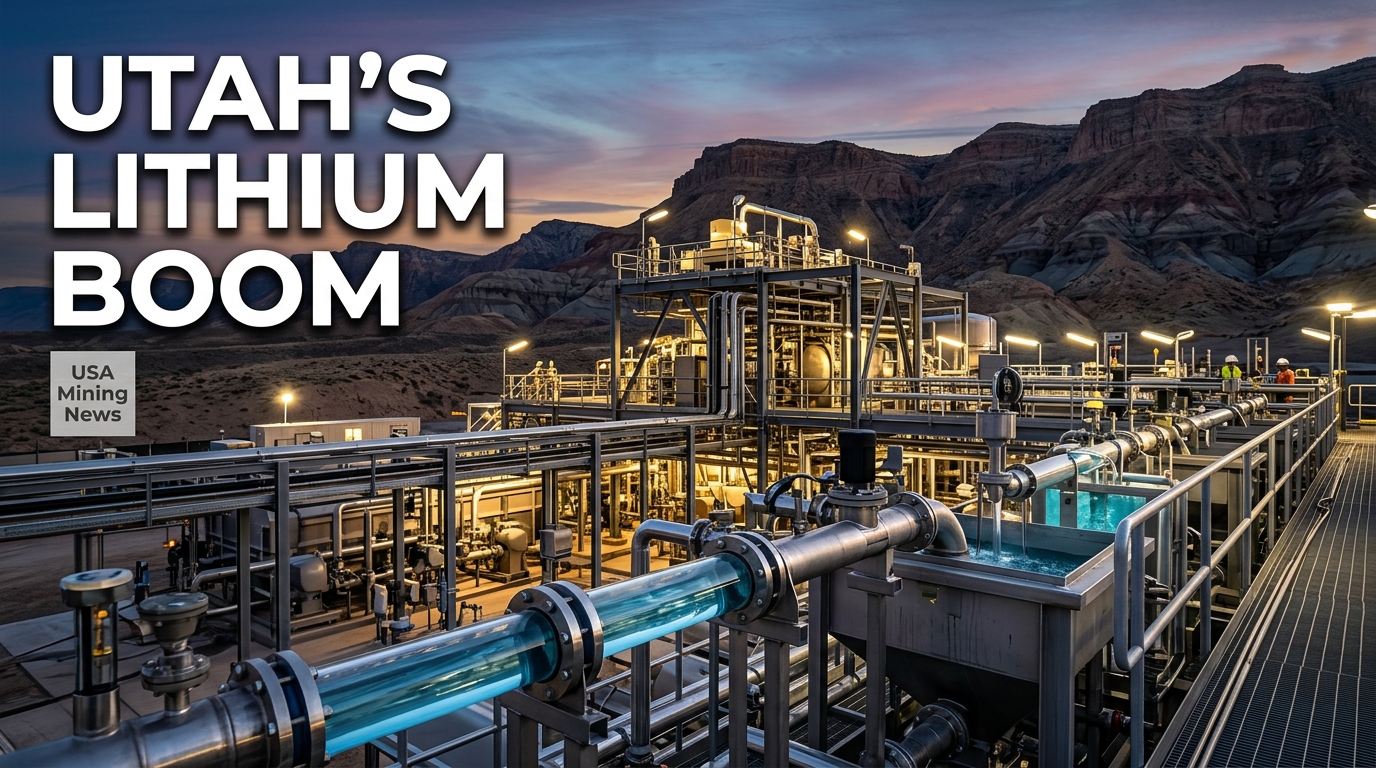
The Green River Lithium Project is designed to be a high-capacity production facility, targeting an annual output of 10,000 tonnes of lithium carbonate. This scale of production, once operational, would significantly enhance the North American supply of battery-grade lithium, a critical component for manufacturing cathodes in lithium-ion batteries. The project's progression is closely watched by industry stakeholders, as it represents one of several promising initiatives seeking to establish a resilient domestic supply chain for this vital commodity, reducing reliance on offshore sources.
The incentive provided by the Utah Inland Port Authority Board is not a direct upfront grant but rather a rebate mechanism designed to share future economic prosperity. It is calculated as 50% of the projected increase in annual property tax revenues generated by the project over its operational life. This rebate will be disbursed to Anson Resources over a period of up to 25 years, commencing once the Green River production facility achieves completion and begins operations. This long-term financial commitment underscores the state's confidence in the project's viability and its sustained contribution to the local and regional economy.
A1 Lithium, as the operational arm of Anson Resources in the U.S., is spearheading the development, ensuring that the project adheres to local regulations and benefits from local expertise. The involvement of the Utah Inland Port Authority, an entity focused on optimizing Utah's transportation and logistics infrastructure, highlights the project's strategic alignment with regional economic development goals. The Port Authority's mandate includes attracting and supporting businesses that contribute to Utah's economic growth and logistical efficiency, making the Green River Lithium Project a natural fit for such an incentive program.
Understanding the Utah Inland Port Authority Incentive Structure
The specifics of the incentive package reveal a carefully structured agreement designed to benefit both the developer and the public sector. The $194 million figure represents the maximum cap of the incentive, predicated on the successful generation of expected additional property tax above a baseline level. This baseline is established at the time of the agreement with Anson Resources, ensuring that the incentive only rebates taxes generated by the new development, not existing tax revenues.
Crucially, the City of Green River, which stands as the "baseline" tax recipient, has played an active role in confirming the calculation of this tax differential. This collaborative approach between the developer, the state-level authority, and the local municipality ensures transparency and mutual benefit. The Utah Inland Port Authority has projected that, contingent on the continued successful operation of the project, the rebate could amount to approximately $8 million annually. This consistent annual cash flow back to Anson Resources could be a significant factor in the project's financial planning and operational sustainability.
Beyond the direct rebate, Anson Resources is also engaged in discussions with the Utah Inland Port Authority regarding alternative financing mechanisms. These discussions explore the possibility of leveraging the incentive to support bonds specifically for public infrastructure necessary for the planned 10,000 tpa lithium carbonate production plant. Such infrastructure could include vital utility connections, such as power and water, and critical transport improvements, including upgrades to existing rail and road networks. These improvements are subject to further agreement with both local authorities and the Utah Inland Port Authority Board, highlighting the complex web of approvals and partnerships required for large-scale mining and processing projects. The successful securing of such infrastructure support would significantly de-risk the project, reducing upfront capital expenditure for Anson Resources and ensuring efficient logistics for raw materials and finished products.
Project Scope and Economic Impact
The Green River Lithium Project represents a substantial capital investment, estimated at $569 million. This figure was established following a comprehensive scoping study completed in March 2026. The scoping study outlined the technical and economic viability of extracting lithium from brines at the Green River site, utilizing advanced direct lithium extraction (DLE) technologies, which are gaining increasing prominence for their lower environmental footprint compared to traditional evaporation ponds.
The financial impact of the incentive on the overall project economics will be further detailed and clarified in the forthcoming Green River definitive feasibility study (DFS). The DFS is a critical milestone for any mining project, providing a highly detailed and robust economic analysis, refined resource estimates, and a comprehensive engineering design. The inclusion of the $194 million incentive, whether as direct rebates or leveraged for infrastructure bonds, is expected to significantly enhance the project's internal rate of return (IRR) and net present value (NPV), making it more attractive to potential debt financiers and strategic investors.
The development of a project of this scale also promises a substantial economic ripple effect throughout the region. It will generate numerous construction jobs during the development phase and a significant number of permanent operational jobs once production commences. Furthermore, the increased economic activity will benefit local businesses through supply chain demands, and the property tax revenues – even after the rebate – will provide a sustained funding source for local government services and community development in the City of Green River and wider Grand County.
Anson's Broader Financial Strategy
Anson Resources Executive Chairman and CEO, Bruce Richardson, emphasized the company's diligent approach to project financing. "We have previously stated that we are working on several finance options structures that limit the dilution of our shareholders," Richardson noted. This commitment to non-dilutive financing is a key consideration for investors, demonstrating management's focus on maximizing shareholder value.
Richardson further articulated the ongoing efforts: "We continue to work on pre-production finance stacks as well as options to improve the projected financial returns that also will support debt and strategic investment financing." This indicates a multi-faceted strategy that likely includes a blend of debt facilities, strategic partnerships, and potentially government grants or loans, in addition to the Utah Inland Port Authority incentive. The ability to demonstrate strong projected financial returns, bolstered by incentives and infrastructure support, is paramount for securing the necessary capital from commercial banks and institutional investors who seek robust project economics and de-risked development pathways.
In addition to the arrangement with the Utah Inland Port Authority, Anson Resources has proactively applied to the Governor’s Office of Economic Development for further tax reductions. Such applications are common for significant industrial projects in the U.S., as states compete to attract capital investment and job creation. Securing additional tax benefits would further improve the project's overall profitability and attractiveness.
The Geopolitical Imperative: Domestic Lithium Supply
The investment in the Green River Lithium Project by both Anson Resources and the state of Utah is set against a backdrop of increasing geopolitical focus on critical mineral supply chains. The U.S. government has prioritized the reshoring and diversification of critical mineral production, particularly for materials essential to national security and economic competitiveness, such as lithium. This imperative has been driven by supply vulnerabilities exposed by global events and the strategic competition with dominant producers.
Projects like Green River are not just commercial ventures; they are integral components of a broader national strategy to secure a reliable, ethical, and environmentally responsible supply of materials crucial for the transition to a green economy. Utah, with its significant brine resources, is emerging as a potential hub for this critical mineral, and incentives like the one secured by Anson Resources are instrumental in converting geological potential into economic reality.
Next Steps and Future Outlook
The immediate next step for the Green River Lithium Project is the completion and release of its definitive feasibility study. This document will provide the most comprehensive technical and financial blueprint for the project, serving as the foundation for final investment decisions and the subsequent financing efforts. The details within the DFS will be crucial for securing the "pre-production finance stacks" mentioned by Mr. Richardson.
Concurrently, Anson Resources will continue its discussions with local authorities and the Utah Inland Port Authority Board to finalize agreements for public infrastructure support. The successful leveraging of the incentive for bonds to fund utility connections and transport upgrades will be a critical enabler for the project's efficient construction and operation. With these foundational elements in place, the Green River Lithium Project is positioned to move towards a financial close and, ultimately, the commencement of construction, aiming to contribute significantly to the U.S. domestic lithium supply within the next decade.
The $194 million incentive marks a pivotal moment for Anson Resources and for Utah’s role in the global energy transition. It exemplifies how strategic partnerships between government entities and private developers can accelerate the development of critical mineral projects, securing essential resources for the future and creating lasting economic benefits for local communities.