Barrick Navigates Security Headwinds, Slows Reko Diq Copper-Gold Project in Pakistan
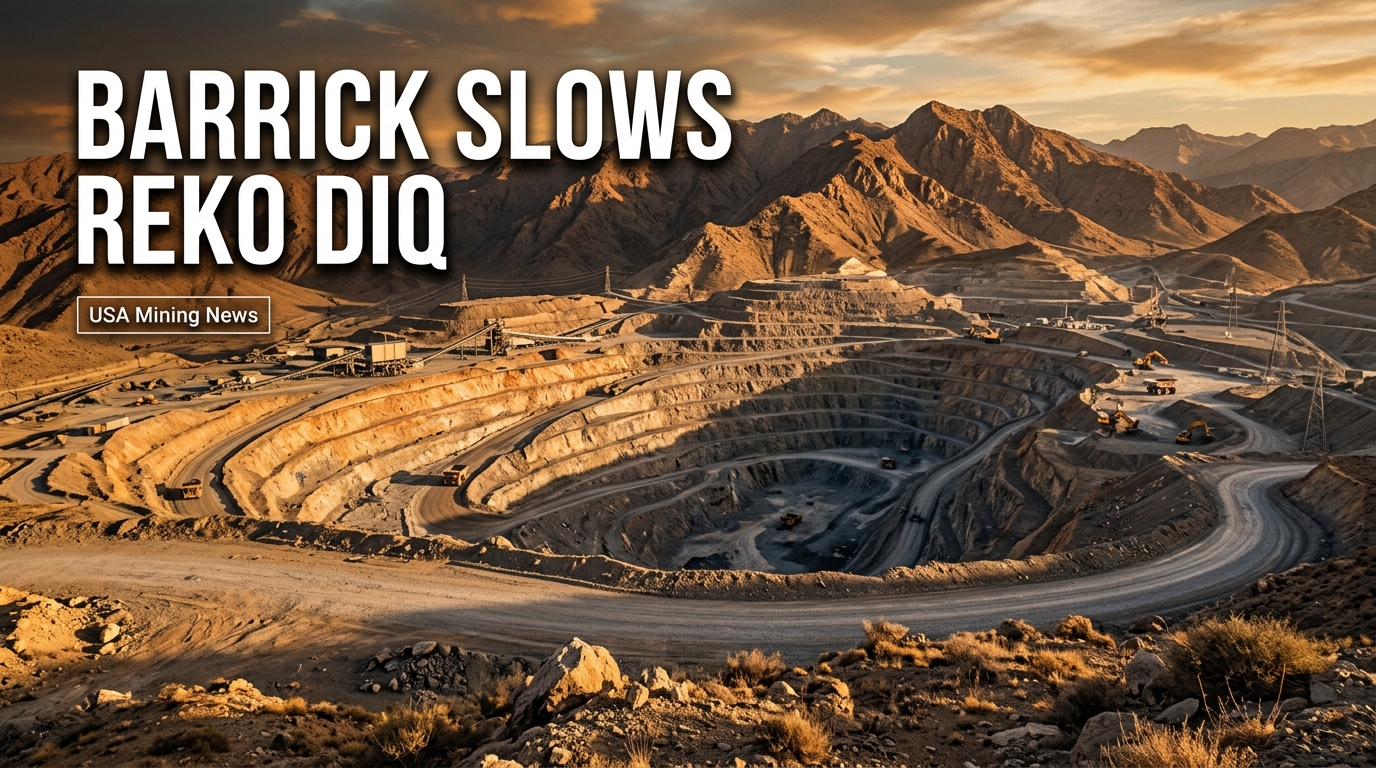
Toronto, Canada – Barrick Gold Corporation (NYSE: GOLD, TSX: ABX), a prominent global miner, has announced a significant operational adjustment at its Reko Diq copper and gold project in Pakistan, confirming a slowdown in activities amidst escalating security challenges in the region. This decision, publicly acknowledged on March 27, 2026, follows an earlier statement in February 2026 indicating a comprehensive review of the project due to a marked increase in security incidents within Balochistan province, where the expansive Reko Diq deposit is situated. The company has since extended this critical review period by an additional 12 months, now stretching from July 2026 to July 2027, to thoroughly assess the evolving security landscape and refine its strategic delivery framework for what is recognized as one of the largest untapped copper-gold deposits globally.
The Reko Diq Project: A Global Copper-Gold Asset
The Reko Diq project represents a cornerstone asset for Barrick’s long-term growth strategy, particularly in bolstering its copper portfolio. Located in the Chagai district of Balochistan province, Pakistan, its geographical placement is notably close to the borders of Afghanistan and Iran, a region historically associated with geopolitical complexities. The project boasts immense potential, widely regarded as one of the world’s most substantial undeveloped copper-gold resources, a designation that underscores its strategic importance to both Barrick and the global metals market.
The ownership structure of Reko Diq is a complex but significant public-private partnership:
- Barrick Gold Corporation: Holds a 50% majority stake, reflecting its leading role in development and operations.
- Federal State-Owned Enterprises (SOEs): Three federal state-owned entities collectively hold a 25% share, representing the Pakistani federal government’s interest.
- Government of Balochistan: Maintains a 25% stake, with specific financial arrangements. Of this provincial share, 15% is fully funded, while the remaining 10% operates on a free carried basis. This free carried interest is designed to ensure direct benefits to the local Balochistan government and its populace without requiring upfront capital contributions for that specific portion.
Barrick's strategic interest in Reko Diq dates back over a decade, with former CEO Mark Bristow prioritizing the project to significantly increase the company's exposure to copper. This emphasis is consistent with broader industry trends foreseeing robust demand for copper, driven by global electrification, renewable energy infrastructure, and the burgeoning electric vehicle market. In December 2022, Barrick successfully completed the reconstitution of the Reko Diq project, a crucial step aimed at transforming it into a long-life mine capable of not only enhancing Barrick’s copper asset base but also delivering substantial, long-term benefits to local stakeholders in Pakistan.
Escalating Security Concerns in Balochistan
The primary catalyst for Barrick's decision to slow operations is the intensification of security challenges within the Balochistan region and, by extension, the broader Middle East. Balochistan, a large and historically restive province of Pakistan, has experienced a significant uptick in insurgent activity. According to Barrick’s internal assessments, and as corroborated by broader reports, insurgent activity in the province reached a decade-high in the year prior to the March 2026 announcement. This backdrop of heightened instability presents considerable operational risks for large-scale mining projects, impacting everything from personnel safety and logistics to supply chain integrity and overall project viability.
The security environment for mining companies operating in complex geopolitical regions is a critical factor in project planning and execution. Such challenges can lead to:
- Increased operational costs due to enhanced security measures.
- Difficulties in attracting and retaining skilled expatriate and local personnel.
- Disruptions to construction and development timelines.
- Potential damage to infrastructure or equipment.
- Reputational risks for the investing company.
Barrick’s February 2026 statement initiated a project review, which has now been extended through July 2027, signaling the company’s cautious approach to managing these multifaceted security risks and ensuring a sustainable path forward for Reko Diq.
Barrick's Strategic Response and Market Reaction
In response to the deteriorating security situation, Barrick is not abandoning the project but rather adopting a measured approach. The operational slowdown is intended to allow for a thorough re-evaluation of potential impacts on the project’s delivery strategy, its budget, and its timeline. Despite these immediate challenges, Barrick reiterated its long-term commitment to the Reko Diq project, stating, “Barrick continues to believe in the long-term value of Reko Diq.” This statement underscores the company’s view of the deposit’s fundamental economic attractiveness, even as it grapples with external operational hurdles.
The market’s reaction to Barrick’s announcement was observed in New York. Barrick’s share price experienced an initial 3.2% dip, reflecting investor concerns over the potential for delays and increased costs associated with the Reko Diq project. This decline also occurred amidst broader movements in the commodities market, particularly a reported downturn in the gold market. However, by mid-morning on March 27, 2026, Barrick’s shares managed to pare some of these losses, trading approximately 0.4% lower, as reported by Bloomberg. This partial recovery suggests that while investors acknowledge the immediate challenges, there may also be an underlying confidence in Barrick's ability to navigate such complexities or in the long-term value proposition of its diverse asset portfolio, which notably included regaining operational control of the Loulo-Gounkoto mine in December 2025.
Broader Industry Implications and Copper Market Dynamics
Barrick’s slowdown at Reko Diq carries significant implications for the wider mining industry, demonstrating the increasing criticality of geopolitical risk assessment in project development. For investors and mining professionals, this situation highlights that even world-class deposits in terms of resource size and grade are not immune to external, non-geological factors. The strategic importance of projects like Reko Diq is amplified by the global demand outlook for copper, a metal deemed indispensable for the energy transition.
Copper is a fundamental component in:
- Electric vehicles (EVs) and charging infrastructure.
- Renewable energy systems, including solar panels and wind turbines.
- Electrical grids and transmission lines, which require significant upgrades to support electrification.
- Advanced electronics and industrial machinery.
The long-term supply-demand balance for copper projects a significant deficit in the coming decades, making large, undeveloped resources like Reko Diq crucial for meeting future needs. Any delay in bringing such projects online can exacerbate potential supply shortages, influencing global copper prices and investment flows into the sector. Barrick's challenges underline that while the geological potential of a mine might be extraordinary, the operational reality in certain jurisdictions demands an exceptionally robust risk management framework, encompassing not just technical and environmental aspects but increasingly, geopolitical stability and community relations.
Future Outlook and Barrick's Portfolio Management
The extended 12-month review period, stretching until July 2027, will be pivotal for Barrick. During this time, the company will undertake a thorough re-evaluation of all facets of its Reko Diq delivery strategy. This likely involves assessing enhanced security protocols, re-estimating project costs and timelines, and potentially exploring alternative development pathways to mitigate risks. Keeping development activities "actively managed," despite the slowdown, indicates Barrick’s intention to maintain momentum where possible and to be ready to ramp up again once conditions allow or strategies are suitably adjusted.
Barrick's commitment to Reko Diq is deeply embedded in its corporate strategy, initiated under former CEO Mark Bristow, who aimed to significantly increase the company’s copper exposure as a diversification from its predominant gold portfolio. This strategic direction remains relevant within the current commodity market. The company’s ability to manage diverse assets across challenging jurisdictions is a testament to its operational depth, as evidenced by its successful reacquisition of operational control over the Loulo-Gounkoto mine in Mali in December 2025 – another region with its own set of operational complexities. The case of Reko Diq will serve as a critical test for how Barrick balances its long-term vision for value creation with the dynamic and often unpredictable realities of operating in geopolitically sensitive areas.
The Reko Diq project continues to represent a significant opportunity for Barrick and Pakistan, but its path to full production will clearly be influenced by the ability to effectively mitigate the security challenges that have brought about this operational slowdown. The industry will closely watch how Barrick adapts its strategy to unlock the immense value of this copper-gold behemoth while ensuring the safety and stability required for such a large-scale mining endeavor.