BHP and SiTration Pioneer Innovative Copper Recovery at Arizona's Copper Cities Site
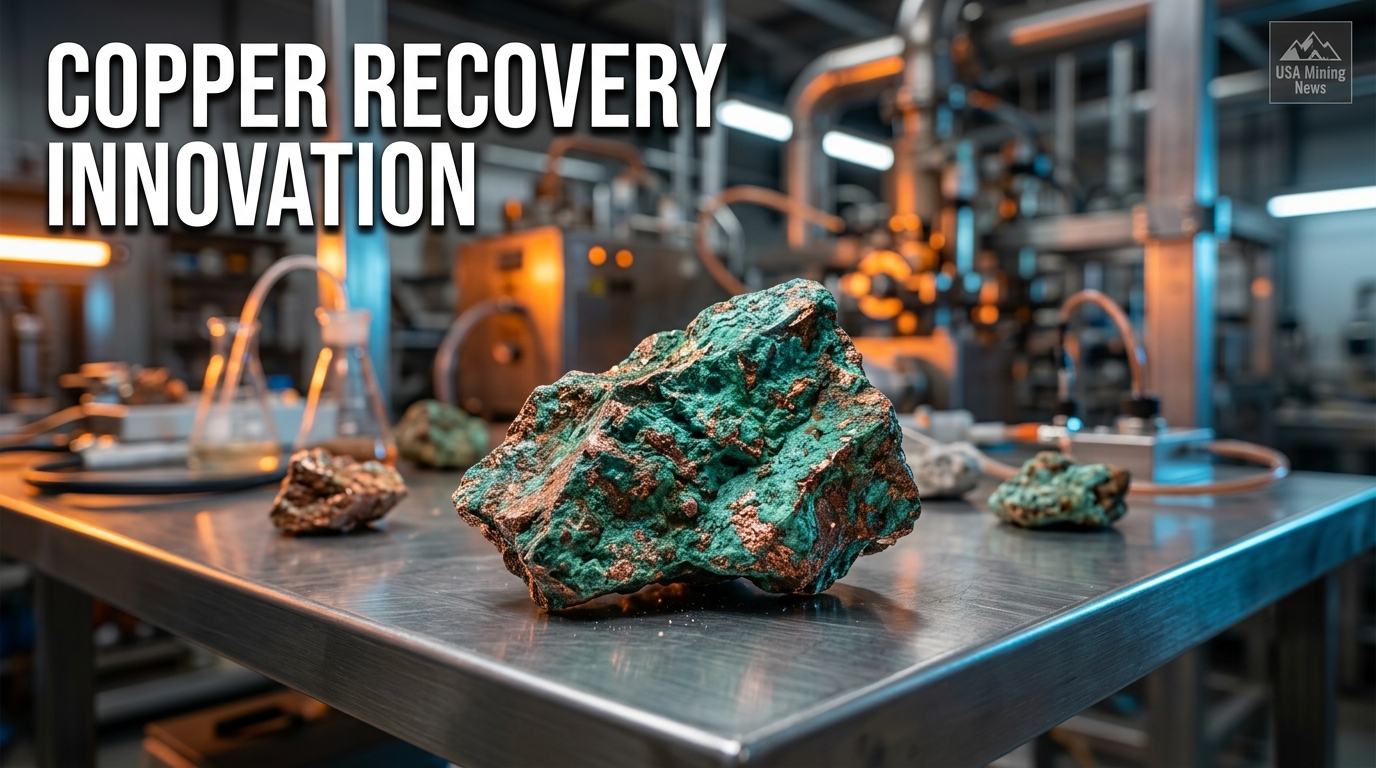
In a significant move poised to enhance domestic copper supply and unlock value from legacy mining assets, global mining behemoth BHP has partnered with SiTration, a spin-out from the Massachusetts Institute of Technology (MIT). The collaboration, announced on August 20, 2026, by Shree Mishra, will see two pilot programs initiated at BHP’s Copper Cities site in the Globe-Miami district of Arizona, US. These pilots are designed to test a groundbreaking technology for extracting copper from mining-impacted water, a process that could redefine how the industry approaches resource recovery and environmental stewardship.
The strategic importance of this partnership cannot be overstated. With global copper demand projected to surge dramatically in the coming decades, identifying efficient, sustainable, and domestically viable sources is paramount. This initiative not only addresses a critical supply chain challenge but also offers a pathway to transform historical mining liabilities into productive assets, leveraging advanced membrane technology developed by SiTration.
Pioneering Copper Recovery in Arizona
The Copper Cities site, located within Arizona's historically rich Globe-Miami mining district, serves as the ideal proving ground for this innovative technology. This former active mine boasts a significant legacy, having produced nearly 400,000 tonnes (t) of copper between the 1950s and early 1980s. While operations ceased decades ago, the site retains a substantial amount of copper dissolved in its legacy mining water – a resource that SiTration CEO and co-founder Brendan Smith estimates to be worth billions of dollars across the American Southwest.
The pilot program is structured in two distinct phases. The initial phase will focus on a small-scale trial, designed for rapid evaluation and optimization, and is set to run over a period of one month. This initial deployment will provide critical technical and operational insights into the technology's performance under real-world conditions. Following a successful first phase, the project is slated to expand later this year. The second, larger deployment will aim to produce up to two tonnes (t) of commercial-scale copper cathodes over a two-month period. The ambition to produce commercial-grade material underscores the partners' confidence in the technology's readiness for industrial application and its potential to contribute meaningfully to the copper supply chain.
SiTration's Innovative Approach and Technical Prowess
At the heart of this collaborative effort is SiTration's proprietary copper recovery technology, which represents a significant leap forward in hydrometallurgical processes. The core innovation lies in its ability to efficiently extract valuable metals from diluted solutions, such as those found in legacy mining water, with notable environmental and economic advantages. Bench-scale tests, already conducted by SiTration using feedstock from Copper Cities, have yielded highly encouraging results.
Key technical highlights reported from these initial tests include:
- Production of LME Grade A Copper: The technology has successfully demonstrated its capability to produce copper of a purity level equivalent to LME (London Metal Exchange) Grade A. This is a critical benchmark, as LME Grade A copper is recognized globally for its high quality and is suitable for diverse industrial applications, including electrical wiring and advanced manufacturing.
- Absence of Chemicals: A significant environmental benefit of SiTration's method is that it reportedly uses no additional chemicals during the copper recovery process. This eliminates the need for expensive reagents and, more importantly, reduces the potential for new chemical waste streams, aligning with modern sustainability imperatives.
- Zero New Waste Products: In conjunction with avoiding chemical additives, the process is designed not to generate new waste products. This addresses a major challenge in traditional mining and refining, where waste management often incurs substantial costs and environmental impact. By focusing on existing legacy water, the technology effectively cleans up an existing environmental footprint.
- Low Energy Consumption: Energy efficiency is a paramount consideration in today's resource industry. SiTration's technology has demonstrated remarkably low energy consumption, reportedly below 3–4 kilowatt-hours per kilogram (kW-hours/kg) for copper recovery from diluted legacy mining water. This is a highly competitive figure, suggesting a potentially lower operational cost base and a reduced carbon footprint compared to conventional methods.
These technical achievements position SiTration's technology as a potentially transformative solution for the mining industry, offering a greener, more cost-effective pathway to copper production.
Strategic Imperative: Bolstering Domestic Copper Supply
The collaboration between BHP and SiTration comes at a time when the strategic importance of domestic mineral supply chains, particularly for critical metals like copper, is gaining unprecedented attention. The US government, through initiatives aimed at re-shoring manufacturing and strengthening national security, has emphasized the need to reduce reliance on foreign sources for essential raw materials. Copper, often referred to as "Dr. Copper" for its bellwether status in the global economy, is indispensable for a vast array of modern technologies.
Brendan Smith of SiTration succinctly articulated this pressing need: "The American Southwest houses legacy mining water containing billions of dollars' worth of copper. With global copper demand projected to grow by around 70% by 2050 to support the rapid buildout of energy infrastructure and data centers, tapping into these resources is an excellent pathway to bolster domestic supply chains while producing copper at the bottom of the global cost curve." This statement highlights a dual benefit: addressing future demand spikes and doing so with a cost advantage that could make US-produced copper highly competitive globally. The ability to recover copper domestically from existing sites minimizes geopolitical risks associated with international supply and transport, providing greater stability and resilience to US industries.
Unlocking Value from Legacy Assets: A Sustainable Pathway
Beyond the economic and strategic implications for copper supply, this pilot program offers a compelling model for sustainable resource management. Legacy mining sites, while historically significant, often present ongoing environmental challenges associated with mining-impacted water. BHP's involvement, spearheaded by its legacy assets general manager Kevin Ramsay, underscores the company's commitment to responsible asset stewardship and innovative solutions.
Kevin Ramsay stated: "The Copper Cities pilot provides an opportunity to evaluate an innovative approach to recover copper from mining-impacted water while generating valuable technical and operational insights. We are excited to work with SiTration to test this technology under real operating conditions and better understand its potential to recover value from legacy mining water sources." This perspective frames the initiative as more than just a resource recovery project; it is an endeavor to actively address and mitigate the environmental legacy of past mining operations. By extracting valuable metals from these waters, the process not only generates economic returns but also contributes to environmental remediation, turning a former liability into a tangible asset. This approach aligns perfectly with the mining industry's growing focus on Environmental, Social, and Governance (ESG) criteria, demonstrating how innovation can drive both profitability and positive environmental impact.
The Broader Market Context: Surging Demand for Copper
The urgency behind finding new and efficient copper sources is directly tied to the exponential growth in global demand for the metal. As Brendan Smith noted, a staggering 70% increase in global copper demand is anticipated by 2050. This surge is primarily driven by two transformative trends:
- Energy Infrastructure: The global transition towards renewable energy sources—including solar, wind, and geothermal—and the expansion of electric vehicle (EV) infrastructure are massive copper consumers. Wind turbines, solar panels, charging stations, and battery systems all rely heavily on copper for its excellent electrical conductivity.
- Data Centers: The digital transformation continues to accelerate, with increasing reliance on cloud computing, artificial intelligence, and big data. This necessitates a rapid expansion of data centers, which are power-intensive and require vast amounts of copper wiring and cooling systems.
Against this backdrop, traditional greenfield exploration and development projects face increasingly complex challenges, including longer permitting timelines, higher capital costs, and greater community scrutiny. Technologies like SiTration’s, which can unlock value from existing disturbed sites, offer a complementary and often more rapid path to market, reducing the need for new land disturbance.
Future Horizons: Scaling Innovation and Industry Impact
The agreement between BHP and SiTration extends beyond the immediate pilot programs. It forms the basis for ongoing collaboration and the evaluation of future opportunities should the pilots demonstrate positive results. This forward-looking approach suggests a potential for broader deployment of SiTration's technology, not just at Copper Cities, but potentially across other legacy sites managed by BHP or other mining companies in the American Southwest and globally.
Successful execution of these pilots could serve as a powerful proof of concept for the entire mining industry. It would validate a new paradigm for resource recovery, showcasing how advanced separation technologies can contribute to both economic prosperity and environmental sustainability. For investors, it signals a promising avenue for capital deployment into innovative solutions that address critical resource needs while adhering to stricter environmental standards. The ability to produce LME Grade A copper at a low cost, without new waste, and with minimal energy consumption from an otherwise dormant resource represents a significant competitive advantage and a blueprint for future mining operations.
The collaboration between BHP and SiTration at the Copper Cities site is more than just a pilot project; it is a strategic investment in the future of copper production. By harnessing cutting-edge technology to transform legacy assets into productive resources, this initiative offers a compelling vision for a more sustainable, domestically secure, and economically viable copper supply chain for the US and the global energy transition.