Buscar Company Quadruples Land Position at Treasure Canyon, Bolstering Gold Exploration in California
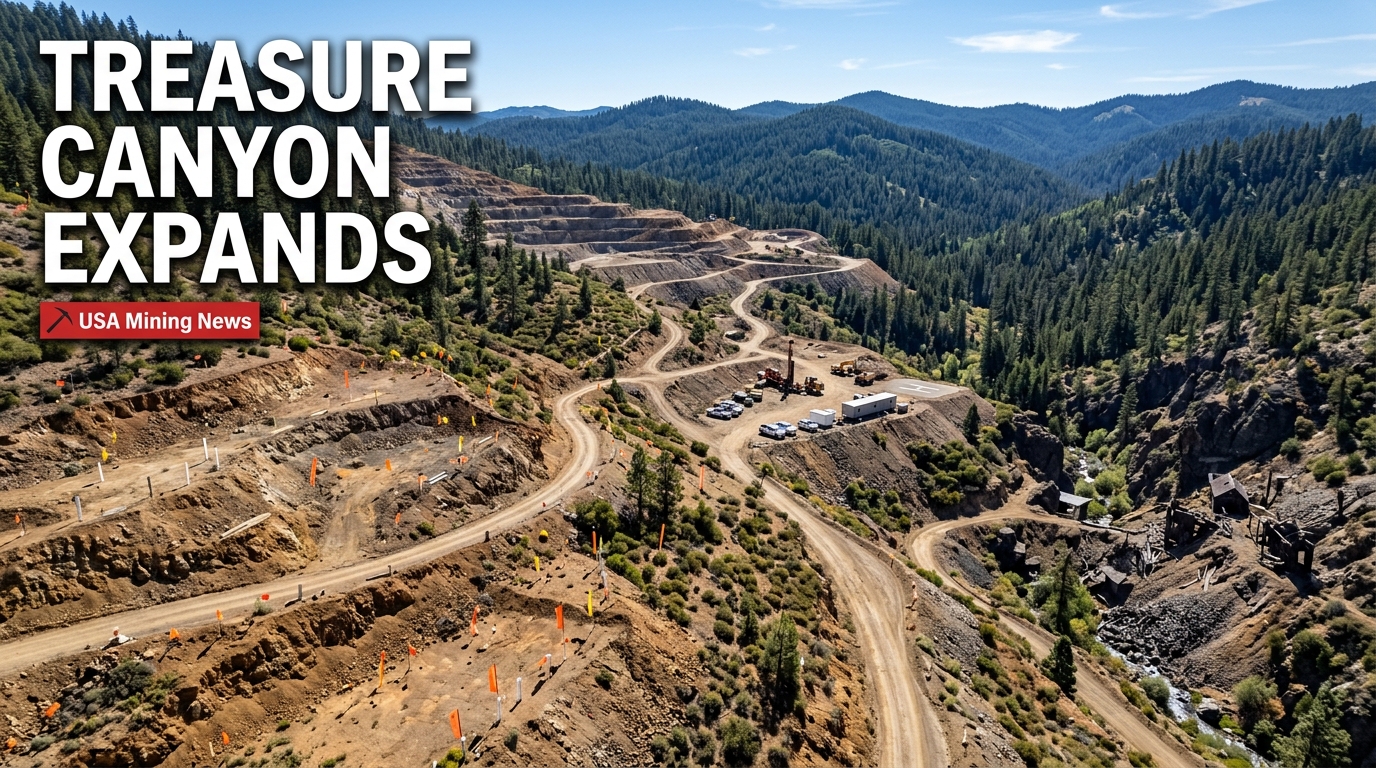
San Francisco, California – In a strategic move poised to significantly advance its exploration efforts, Buscar Company, through its wholly-owned subsidiary Eon Discovery, announced on July 31, 2026, the substantial expansion of its Treasure Canyon Project. Located in the historically rich Plumas County of northern California, the company has staked 44 additional lode mining claims, thereby increasing the project’s total area from approximately 200 acres to an impressive 1,098.71 acres. This represents an addition of roughly 898.71 acres, effectively nearly quintupling Buscar Company’s land holdings within a highly prospective gold and copper district.
The expansion is a critical step for Buscar Company as it prepares for an initial, robust exploration drilling campaign. The newly acquired claims are strategically positioned to encompass the interpreted strike extensions of five prominent gold-bearing quartz vein systems, identified as the North, Wayne, Ada, Otto, and South veins. This systematic approach, based on extensive field mapping and advanced satellite imagery analysis, underscores the company's commitment to unlocking the full potential of the Treasure Canyon district.
Strategic Land Acquisition in Plumas County
The decision to expand the Treasure Canyon Project reinforces Buscar Company's long-term vision for the region. The addition of 898.71 acres brings the total project footprint to 1,098.71 acres from its previous estimate of 200 acres. This significant increase in land area allows for a more comprehensive and systematic exploration program across the broader geological setting. Acquiring adjacent ground is a standard and often necessary practice in mineral exploration, particularly when initial findings suggest that mineralization extends beyond existing claim boundaries. It ensures that a company maintains control over prospective ground and can pursue discoveries without external interference.
Speaking on the expansion, Aleksandr Dekhtyar, CEO of Buscar Company, articulated the strategic importance of this development. "This staking programme nearly quintuples our land position at Treasure Canyon and gives us the footprint needed to systematically explore the district," Dekhtyar stated. "It is a logical step as we advance toward our first drill programme.” His comments highlight the shift from early-stage reconnaissance to district-scale exploration, a critical transition point for any promising mineral project.
Targeting Interpreted Gold-Bearing Vein Extensions
The core rationale behind this land acquisition is to secure the potential strike extensions of known mineralized structures. In geology, "strike length" refers to the horizontal extent of a rock unit or mineralized vein. The enlarged claim block now spans nearly 3.4 kilometers of the interpreted strike length of the five primary vein systems previously identified at Treasure Canyon. This is a significant figure in early-stage exploration, as it suggests substantial potential for continuous mineralization along these structures.
The five vein systems – North, Wayne, Ada, Otto, and South – have been delineated through a combination of detailed field mapping and sophisticated satellite imagery analysis. These preliminary geological investigations are crucial for prioritizing targets and establishing the structural controls on mineralization. While the presence of interpreted extensions is highly encouraging, Buscar Company prudently notes that these extensions have not yet been tested by drilling. Consequently, there is no certainty that economically viable mineralization continues onto these newly acquired claims, a standard cautionary statement for exploration companies at this stage.
Advancing Towards Critical Exploration Drilling
With an expanded land position, Buscar Company is now intensely focused on its upcoming exploration phase. The company is actively seeking permits for a proposed 10,000-foot diamond drilling program. Diamond drilling is a high-precision exploration technique that retrieves core samples, providing invaluable geological and assay data from depth. The initial program is specifically targeting the Ada, Otto, and South vein systems, suggesting these are currently considered the highest-priority targets based on surface expressions and geological models.
Beyond the primary gold targets, Buscar Company also holds contingent plans to drill five additional holes. These holes are designed to investigate the Sulfide Ridge (Lamb’s Ridge) copper-gold soil anomaly, indicating a diversification of potential commodities of interest. This anomaly could represent a significant porphyry or skarn-style copper-gold mineralization, which would add considerable value and optionality to the project.
However, the company remains pragmatic about the inherent uncertainties in early-stage exploration. It has openly stated that there is no assurance that the necessary permits will be granted, that adequate funding for the drilling programs will be secured, or that the drilling will ultimately delineate economically viable mineral resources. These factors are standard risks in the mining industry, especially in jurisdictions like California, which, while endowed with significant mineral wealth, can present complex permitting landscapes.
Historical Context and Regional Significance
The Treasure Canyon Project is situated within the esteemed Lights Creek Mining District, itself a part of the broader Plumas Copper Belt in the northern Sierra Nevada. This region boasts a rich mining history that dates back to the iconic California Gold Rush of the mid-19th century. While gold discoveries initially drove prospectors, the late 19th century saw significant copper and iron production emerge from nearby, historically prominent operations such as the Engels and Superior mines.
Understanding this historical context is vital for modern exploration. Past mining successes often indicate the presence of significant mineralizing systems. Old workings, geological reports, and historical production data can provide invaluable clues for contemporary explorationists, guiding them to areas of known prospectivity and informing their geological models. The "Plumas Copper Belt" designation itself highlights the potential for substantial copper deposits, which aligns well with Buscar Company's interest in the Sulfide Ridge copper-gold anomaly.
CEO's Vision and Future Outlook
CEO Aleksandr Dekhtyar's comments underscore a commitment to systematic, method-driven exploration strategy. The expansion provides an optimal "footprint" – a comprehensive land position – that allows geological teams to follow mineralization trends and explore a district rather than just isolated prospects. This broader approach is crucial for identifying larger, potentially more robust deposits.
For Buscar Company, this expansion marks an important inflection point. Successful permitting and financing will pave the way for the company’s first significant drill program, moving Treasure Canyon beyond a conceptual stage towards real-world testing. The results of this drilling will be pivotal, determining the immediate future trajectory of the project, including potential resource definition and further development. From an investment perspective, systematically de-risking a project through staged exploration, starting with strategic land acquisition and followed by targeted drilling, is a key indicator of a well-managed exploration company.
Market and Industry Implications
This development at Treasure Canyon holds several implications for the broader mining industry and investors tracking junior explorers:
- Systematic Exploration Validation: Buscar Company's disciplined approach – from initial mapping and imagery analysis to strategic land acquisition and planned drilling – exemplifies a best practice in mineral exploration. This methodology helps to reduce geological risk over time, even in early stages.
- Commodity Focus: While the primary target remains gold, the potential for copper-gold mineralization through the Sulfide Ridge anomaly introduces a compelling diversification. Gold continues to be a crucial safe-haven asset, while copper's demand is on an upward trajectory driven by global electrification, renewable energy, and infrastructure development. Capturing both offers significant upside.
- Jurisdictional Considerations: California offers known mineral wealth but also presents a rigorous, often lengthy, permitting process. Navigating these regulatory frameworks efficiently is key to project success. Investor confidence can be bolstered by a company's demonstrated ability to manage these processes.
- Early-Stage Risk vs. Reward: Expansion of claims and upcoming drilling are hallmarks of early-stage exploration, characterized by high risk but also high reward potential. Success here could transform Buscar Company into a significant player, while setbacks would necessitate re-evaluation.
- District Potential: The fact that Treasure Canyon is part of a historically productive mining district (Lights Creek Mining District, Plumas Copper Belt) lends credibility to the prospect's potential. District-scale opportunities are often more attractive to investors looking for multi-decade potential rather than single, isolated deposits.
Conclusion
Buscar Company's aggressive expansion of its Treasure Canyon Project represents a decisive step towards defining a potentially significant gold and copper-gold resource in California. The substantial increase in land area, coupled with a clear strategy to test interpreted strike extensions of multiple vein systems, provides a robust foundation for the planned 10,000-foot diamond drilling program. While the path ahead includes the critical hurdles of permitting and financing, the systematic approach and historical context of the Lights Creek Mining District position Treasure Canyon as a project of distinct interest for mining industry professionals and investors alike. All eyes will now be on the progress of the permitting process and the eventual commencement of drilling, as Buscar Company endeavors to translate geological promise into confirmed mineral wealth.