In a significant development for the North American mining and metals sector, Falcon Copper and Glencore International have announced a strategic Memorandum of Understanding (MoU) aimed at fortifying the United States' critical minerals supply chain. The agreement, disclosed on May 1, 2026, sets a framework for collaboration on global projects designed to deliver a consistent and substantial supply of copper and other essential minerals directly to the US market. This move underscores a growing imperative within the industry to enhance supply chain resilience and reduce reliance on external processing capacities, particularly for materials vital to the ongoing global energy transition.
A Strategic Alliance for US Mineral Security
The MoU establishes a non-exclusive framework through which both Falcon Copper and Glencore International will pursue joint efforts on projects globally, with the explicit goal of ensuring a robust flow of essential minerals into the US. This partnership marries Glencore's extensive global reach, vast commodity trading expertise, and significant operational footprint with Falcon Copper's emerging role in critical mineral production and domestic processing ambitions. The overarching objective is to bolster the national supply chain, ensuring that copper concentrate, intermediate metals, and finished products are either processed domestically within the US or delivered directly to US facilities, thereby reducing logistical complexities and geopolitical vulnerabilities.
Travis Naugle, executive chairman of Falcon Copper, articulated the profound importance of this collaboration. "This agreement is a meaningful step toward building a secure, end-to-end US copper supply chain," Naugle stated. He further emphasized the synergy created by "pairing Glencore’s scope and size with Falcon’s international production of critical minerals and its smelting project in Arizona helps close a critical gap in America’s mineral infrastructure." This sentiment reflects a shared industry understanding of the strategic value in developing localized processing capabilities, especially for commodities like copper, which are fundamental to modern infrastructure, renewable energy technologies, and electric vehicle manufacturing.
Operational Framework and Key Commitments
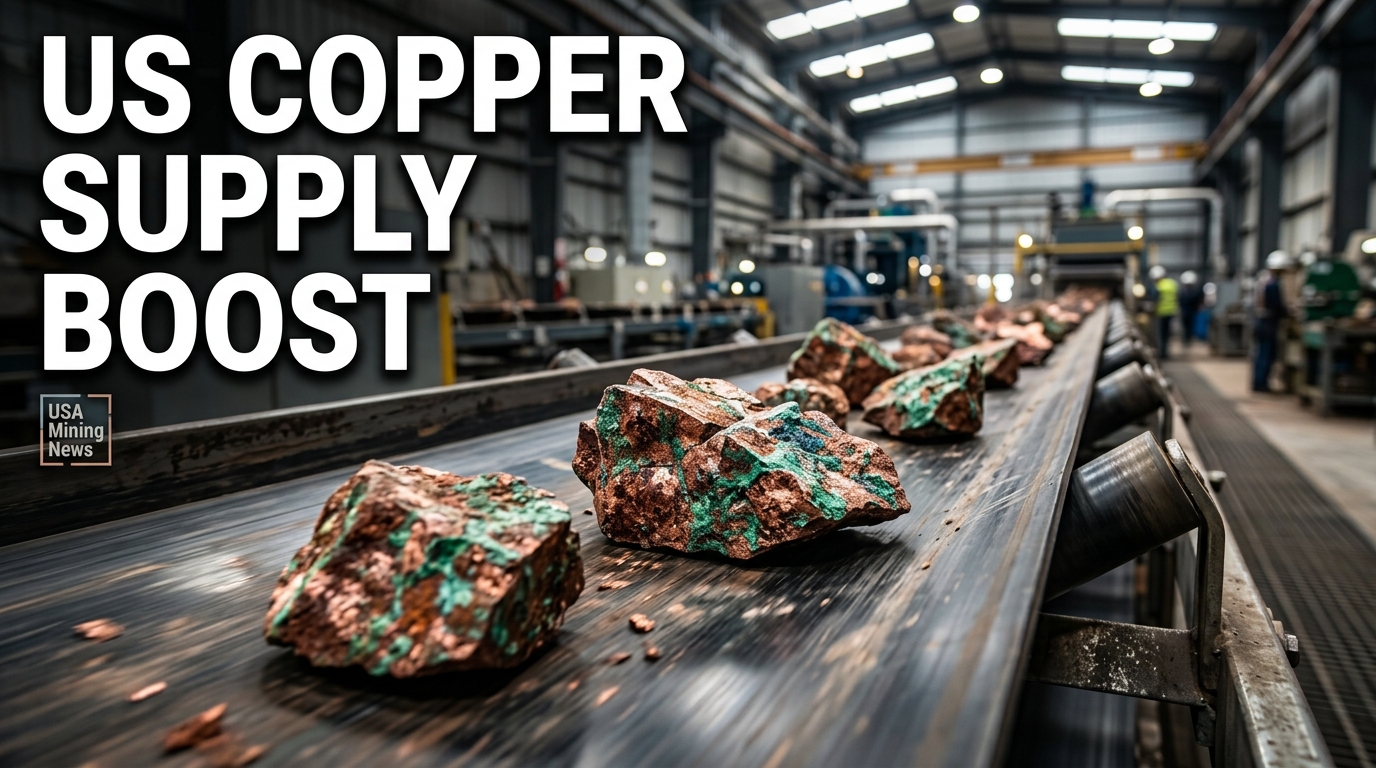
Under the terms outlined in the MoU, Glencore intends to supply a substantial volume of copper concentrate to Falcon Copper’s planned US-based smelting and refining facilities. Specifically, Glencore has committed to delivering up to 1.6 million tonnes per annum (mtpa) of copper concentrate. This commitment is central to Falcon Copper's strategy of establishing a vertically integrated domestic processing capability, capable of transforming raw concentrate into refined metals suitable for various industrial applications within the US economy.
The agreement outlines flexible roles for both parties in future collaborative projects. Falcon Copper may serve either as an operator or an investor, contributing actively to the development and management of the initiatives. Glencore, leveraging its comprehensive capabilities, may provide crucial support encompassing capital investment, logistics management, global marketing, and vital offtake arrangements. This multi-faceted support mechanism is designed to facilitate the smooth execution of projects, from mineral extraction through to market delivery.
It is important to note that while the MoU is non-binding, it includes standard industry clauses pertaining to confidentiality, compliance with relevant regulations, and dispute resolution mechanisms. This foundational agreement sets the stage for more specific, binding arrangements for individual projects, each of which will have its own tailored structure based on a case-by-case evaluation. This flexible approach allows for adaptation to the unique challenges and opportunities presented by various global critical mineral projects without rigid, upfront commitments that might hinder agility.
The Imperative of a Domestic Supply Chain
The strategic intent behind this MoU resonates deeply with broader trends in global commodity markets and national security considerations. Copper, often referred to as "Dr. Copper" due to its bellwether status for economic health, is more critically than ever considered an essential mineral for the world's aggressive decarbonization efforts. Demand is projected to surge dramatically in the coming decades, driven by widespread electrification, the proliferation of electric vehicles, and the build-out of renewable energy infrastructure such as solar farms and wind turbines, all of which are highly copper-intensive.
For the United States, securing an "end-to-end" domestic copper supply chain is not merely an economic advantage but a strategic imperative. Historically, the US has increased its reliance on overseas processing facilities for many of its raw mineral imports, creating vulnerabilities to geopolitical instability, trade disruptions, and fluctuating international market dynamics. The "critical gap" in America's mineral infrastructure, as highlighted by Naugle, refers to this deficiency in domestic smelting and refining capacity. By bringing significant copper concentrate processing capabilities back within its borders, the US can enhance its economic resilience, generate domestic jobs, and ensure greater control over the supply of materials vital to its advanced manufacturing and defense sectors.
Falcon Copper’s ambition to establish new smelting and refining facilities, such as the one referenced in Arizona, represents a direct response to this national need. Such projects require substantial capital investment, advanced technical expertise, and navigating complex regulatory landscapes. The partnership with Glencore, a company with unparalleled experience in these areas, provides critical support and de-risking for such large-scale industrial undertakings.
Glencore's Global Footprint and Strategic Partnerships
Glencore International stands as one of the world's largest diversified natural resource companies, with a formidable presence across the entire mining and metals value chain, from exploration and extraction to processing, recycling, and marketing. Its operational scale and global logistics network make it a pivotal player in securing raw material supplies for various markets. This MoU with Falcon Copper aligns seamlessly with Glencore's broader strategy of reinforcing critical mineral supply chains worldwide.
Evidence of Glencore's proactive approach in securing essential mineral supplies is further demonstrated by other recent activities. In March of this year, just prior to the Falcon Copper announcement, Glencore finalized a binding offtake agreement with Centaurus Metals. This agreement pertained to the supply of high-grade nickel concentrate from Centaurus Metals' Jaguar Nickel Sulphide Project located in Brazil. Under these terms, Centaurus Metals is committed to providing 20,000 dry tonnes of nickel concentrate annually, translating to approximately 6,400 tonnes of contained nickel each year, directly to Glencore. This transaction underscores Glencore's comprehensive strategy to secure supplies of various critical minerals, not just copper, from diverse global sources to meet anticipated demand. For the US market, the Glencore-Falcon Copper partnership leverages this global sourcing capability to specifically address domestic supply chain requirements, complementing broader efforts to secure essential resources.
Market Implications and Future Outlook
The collaboration between Falcon Copper and Glencore carries significant implications for both companies and the broader mining and manufacturing sectors in the United States. For Falcon Copper, this partnership provides a crucial conduit for accessing a reliable and substantial volume of concentrate, enabling the realization of its domestic processing ambitions. For Glencore, it strengthens its position as a key supplier to a strategic market and diversifies its sales channels for copper concentrate, solidifying relationships within the North American industrial landscape.
From a market perspective, if successful, this initiative could significantly alter the dynamics of copper supply in the US, potentially reducing dependence on refined copper imports and insulating domestic industries from certain international market volatilities. The addition of substantial new smelting and refining capacity would contribute to national economic security and potentially create thousands of high-quality industrial jobs across its envisioned operating sites.
The next steps will involve the detailed structuring of specific projects under the MoU’s framework. This will include rigorous technical and economic feasibility studies, navigating complex permitting processes, securing environmental approvals, and making final investment decisions. The timeline for facility development and the commencement of concentrate deliveries will, therefore, depend on these subsequent stages of development and regulatory navigation. Nevertheless, the intent is clear: to move swiftly towards building the infrastructure necessary for a resilient US critical minerals future.
In conclusion, the Memorandum of Understanding between Falcon Copper and Glencore International marks a pivotal moment in the ongoing global effort to secure critical mineral supply chains, particularly for the United States. By combining Glencore’s vast resource network with Falcon Copper's commitment to domestic processing, this alliance represents a robust step toward enhancing US industrial resilience, fostering economic independence, and providing the essential raw materials required for the burgeoning clean energy economy.