On July 30, 2026, the global mining sector witnessed a significant stride in sustainable resource management with the announcement that FAST Metals, a pioneering mining technology company, successfully closed a $4.3 million pre-seed funding round. This crucial investment is poised to propel the company's patented technology platforms, which specialize in the extraction of valuable base and rare materials from red mud and other iron-rich industrial waste streams. The development signals a growing industry commitment to leveraging innovative solutions for critical mineral recovery, addressing both environmental challenges and supply chain vulnerabilities.
Strategic Investment Bolsters Innovative Technology
The $4.3 million pre-seed funding round represents a robust vote of confidence in FAST Metals' disruptive technology and its potential to reshape the economics of industrial waste. New Climate Ventures led this pivotal investment, signaling a strategic focus on technologies that offer both environmental benefits and commercial viability. Significant participation also came from a consortium of other prominent investors, including Azolla Ventures, Humba Ventures, and Astor Swiss. Notably, global mining giant Rio Tinto underscored its commitment to innovation by participating through its mining technology accelerator with Founders Factory, highlighting the mainstream industry's increasing interest in advanced recovery methodologies.
FAST Metals has articulated clear objectives for the newly secured capital. The funds are earmarked for aggressive technical development, which encompasses the refinement and optimization of its proprietary recovery processes. This involves enhancing efficiency, reducing energy consumption, and improving the purity and yield of extracted minerals. Concurrently, a substantial portion of the investment will be channeled into expanding commercial operations and broadening customer engagement. This dual focus on technological advancement and market penetration is critical for scaling FAST Metals’ solutions and integrating them into existing industrial value chains.
Tackling the Red Mud Challenge: A Global Imperative
At the core of FAST Metals' mission is the formidable challenge posed by red mud, also known as bauxite residue. This highly alkaline byproduct is generated in colossal volumes during the Bayer process, the primary method for refining bauxite ore into alumina. Globally, alumina production yields over 175 million tonnes of red mud annually, with accumulated stockpiles exceeding 4 billion tonnes. These vast repositories are not only an environmental liability, due to their alkalinity and voluminous nature, but also occupy significant land area and present complex disposal issues. Historically, red mud has been largely considered a waste product with limited economic pathways for valorization.
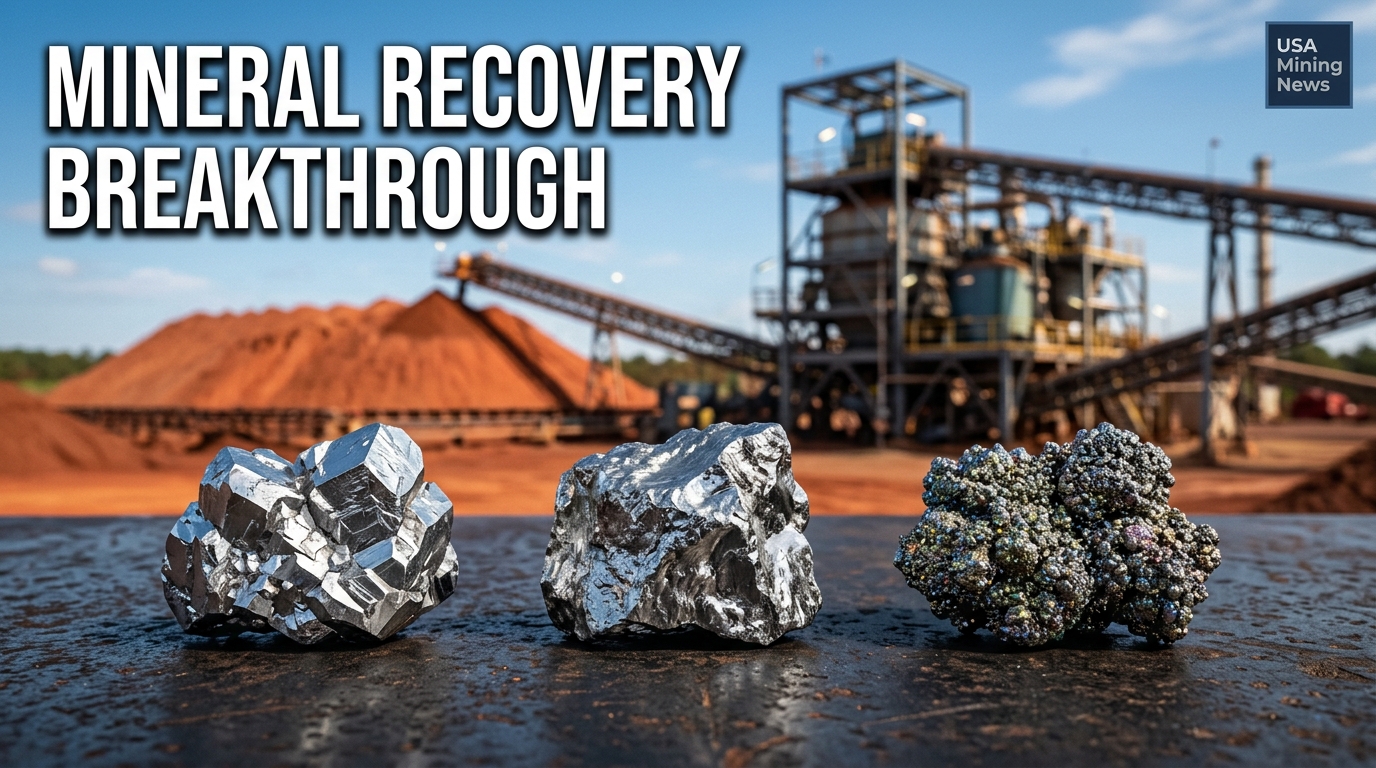
FAST Metals’ patented technology directly confronts this challenge by identifying and extracting a suite of valuable metals embedded within these stockpiles. The company's process is designed to recover critical materials such as aluminium, scandium, titanium, and a spectrum of rare earth elements (REEs). Beyond these, the technology also targets iron, gallium, and titania. The recovery of these elements from red mud transforms an environmental burden into a significant resource opportunity. Scandium, for instance, is highly prized for its lightweighting properties in aerospace alloys, while REEs are indispensable for advanced electronics, electric vehicles, and renewable energy technologies. By creating a methodology to cost-effectively separate these components, FAST Metals offers a dual benefit: mitigating environmental impact and unlocking previously untapped sources of vital raw materials.
First Commercial Partnership and Operational Expansion
Complementing its funding success, FAST Metals announced its inaugural commercial partnership with Metalox Mineral. This collaboration marks a crucial step in translating FAST Metals' innovative technology from pilot scale to commercial application. Under the terms of this partnership, FAST Metals will commence processing one tonne per week of red mud and other iron-bearing waste at Metalox’s facility located in Florida. This steady operational throughput will provide invaluable data for further process optimization and demonstrate the scalability and economic viability of the technology in a real-world industrial setting.
The establishment of this commercial foothold is particularly significant, as it validates the practical applicability of FAST Metals’ processes. Furthermore, the company has indicated that it has signed several memorandums of understanding (MoUs) with additional trading partners. These preliminary agreements suggest a growing pipeline of potential commercial engagements, illustrating market demand for sustainable and economically attractive solutions to industrial waste management and critical mineral sourcing.
The FAST Metals Advantage: Sustainability and Economic Value
Sumedh Gostu, co-founder and CEO of FAST Metals, articulated the core value proposition of the company's technology. Gostu emphasized, “Our patented technology platform for critical mineral extraction removes iron from low-grade feedstock and turns alumina refining waste into previously untapped sources of minerals and metals like iron, gallium, alumina, titania and REEs.” This approach is fundamentally about re-evaluating waste streams not as liabilities, but as latent assets rich in valuable materials. By efficiently extracting iron, the technology not only recovers iron itself but also creates a "cleaner material stream" that can be more effectively processed for other high-value minerals and metals.
This innovative methodology aligns perfectly with the evolving paradigm of circular economy within the mining and metallurgical industries. Gostu further elaborated, “Further proven by our valued partnership with Metalox, we offer miners and extractors a more sustainable approach that can unlock new revenue from existing assets while lowering operating costs.” This statement highlights a compelling economic incentive. For alumina producers, red mud management is a significant operational expense. By transforming this waste into a revenue-generating stream, FAST Metals offers a pathway to not only offset disposal costs but potentially create new profit centers. This synergy of environmental responsibility and economic viability is a powerful driver for industry adoption.
Addressing Critical Mineral Supply Chain Vulnerabilities
The geopolitical landscape of critical mineral supply chains underscores the strategic importance of technologies like FAST Metals'. Many Western nations, including the United States, are heavily reliant on external sources for numerous critical minerals, a situation that exposes them to geopolitical risks and supply disruptions. The demand for these minerals, essential for modern technologies ranging from defense applications to renewable energy infrastructure, is projected to surge dramatically in the coming decades.
FAST Metals' technology offers a compelling domestic alternative, tapping into existing waste stockpiles within the US and other Western countries. By recovering critical minerals such as scandium and rare earth elements from industrial waste like red mud, the company provides a pathway to enhance resource independence and resilience. This internal sourcing mitigates risks associated with volatile international markets, geopolitical tensions, and environmental concerns tied to conventional mining practices in some regions. The ability to valorize legacy waste sites for critical minerals not only bolsters national resource security but also contributes to the establishment of more robust and diversified supply chains, reducing reliance on potentially unreliable external producers.
Expertise Guiding Growth
The credibility and strategic direction of FAST Metals are further reinforced by the caliber of its advisory board. The presence of seasoned industry veterans provides a wealth of experience in navigating the complexities of global commodity markets and large-scale industrial operations. Among the distinguished members are Nick Popovic, former Head of Copper and Zinc Trading at Glencore International, a global leader in commodity trading and mining. Popovic’s extensive experience in market dynamics, supply chain management, and international trade will be invaluable as FAST Metals scales its operations and commercializes its recovered products.
Equally significant is the inclusion of Terry McNulty, a renowned minerals industry specialist. McNulty’s profound understanding of mineral processing, metallurgical engineering, and project development brings critical technical and operational insights. The combined expertise of Popovic and McNulty positions FAST Metals with a strong foundation for both technical excellence and strategic market positioning, ensuring that the company’s innovations are not only scientifically sound but also commercially astute.
Future Outlook: A Paradigm Shift in Resource Management
The trajectory set by FAST Metals, with its recent funding and commercial partnership, portends a significant paradigm shift in how the mining and metallurgical industries perceive and manage waste. The company's advancements could catalyze a broader trend of "urban mining" and industrial symbiosis, where industrial byproducts are systematically re-evaluated as secondary raw material sources. This approach moves beyond traditional waste disposal models towards a more integrated, circular economy model.
Looking ahead, FAST Metals aims to expand its processing capacity and forge additional partnerships, extending its reach beyond Florida. The successful demonstration of its technology at the Metalox Mineral site will be a critical benchmark, paving the way for larger-scale deployments across the globe. As nations increasingly prioritize domestic sourcing of critical minerals and strive for more sustainable industrial practices, companies like FAST Metals are poised to play an indispensable role. The ability to transform an environmental liability into a significant economic opportunity represents a powerful convergence of sustainability, innovation, and strategic resource management for the 21st century mining industry.