First Canadian Graphite Unveils Expansive Potential at Lac Guéret South with Phase Two Survey Results
QUÉBEC CITY, QUÉBEC – September 23, 2026 – First Canadian Graphite has released compelling results from its recently completed phase two airborne magnetic and electromagnetic (EM) survey at the Lac Guéret South Graphite Project, located in the resource-rich Côte-Nord region of Québec, Canada. The comprehensive survey, which encompassed 1,269 line-kilometres, has significantly expanded the interpreted extent of graphite mineralization, suggesting that the previously identified Zone 13 may be part of a much larger, district-scale system. This development holds considerable implications for the company and the broader North American critical minerals supply chain, particularly in the context of burgeoning demand for battery-grade graphite.
Advanced Exploration Uncovers Multi-Kilometre Conductive Trends
The phase two airborne survey was meticulously executed by Gatineau-based Prospectair, a specialized geophysical survey provider. Utilizing advanced magnetic and electromagnetic instrumentation, the survey's primary objective was to identify and delineate conductive geological structures indicative of graphite mineralization across the Lac Guéret South property. Graphite, being an excellent electrical conductor, typically registers as strong anomalies in EM surveys, making this technique a highly effective initial exploration tool.
The detailed geophysical data has successfully outlined a series of multi-kilometre conductive trends that extend significantly beyond the established boundaries of Zone 13. This expansion is crucial, as it transforms the understanding of the project from a localized prospect into one with potential regional significance. Specifically, the new data indicates conductors extending to the east, north, and north-west of the original Zone 13 boundaries. Furthermore, the survey revealed an interpreted Z-shaped fold pattern within these conductive trends, notably featuring a significant fold nose to the south of Zone 13.
Structural features such as fold noses are often prime targets in mineral exploration. They can act as traps or concentrators for mineralizing fluids, potentially leading to thicker and higher-grade ore bodies. First Canadian Graphite specifically noted the interpreted southern fold nose as being of particular interest, attributing this to its strong conductivity and its proximity to areas where high-grade mineralization has previously been identified. The company stated that, if subsequent drilling confirms the presence of these structural features as graphite-bearing horizons, it could imply repeated or significantly thicker graphite-bearing zones, which would substantially enhance the project's economic viability.
High-Grade Graphite Confirmed in Previous Sampling
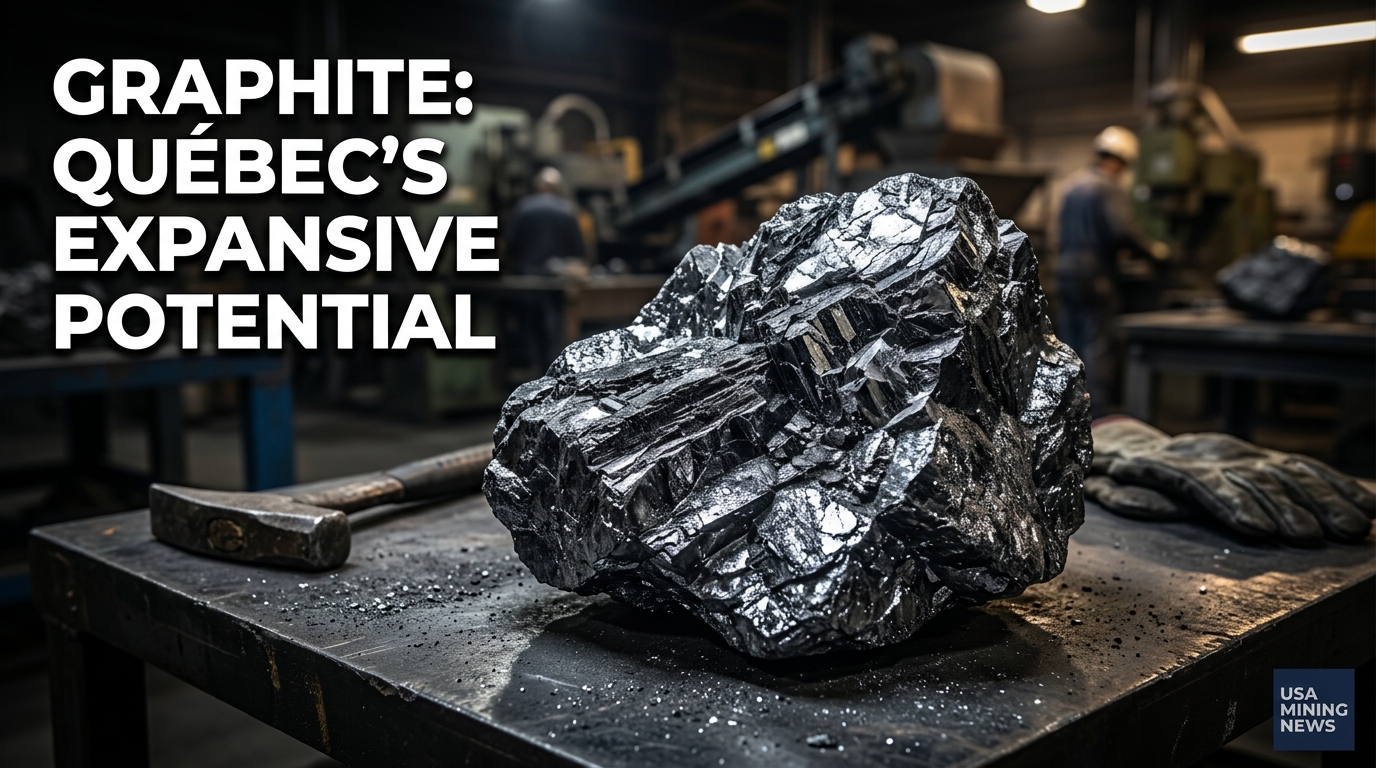
The excitement surrounding the expanded conductive trends is underpinned by historical sampling results from within Zone 13. Previous exploration efforts yielded highly encouraging assays, with 14 out of 46 samples returning more than 20% graphite content. Among these, some samples demonstrated exceptional grades, reaching as high as 43.4% carbon in graphite (Cg). Such high-grade graphite occurrences are particularly attractive to the industry, as they can lead to lower mining costs and higher overall project profitability. The integration of these impressive surface sample results with the newly identified extensive conductive trends provides a robust foundation for targeted follow-up exploration.
The confirmation of these high grades within Zone 13, now juxtaposed with the geophysical evidence of a much larger system, is a pivotal development. It lends significant weight to the interpretation that the Lac Guéret South project hosts a substantial graphite endowment, rather than isolated pockets of mineralization. This shift in perception from a localized deposit to a potential district-scale opportunity can profoundly influence investor confidence and strategic planning.
Lac Guéret South: Situated in a High-Grade Graphite District
The strategic location of the Lac Guéret South project further enhances its appeal. It is situated adjacent to Nouveau Monde Graphite’s Uatnan Project, a prominent graphite development in Québec. This adjacency is not merely geographical; it places First Canadian Graphite’s project squarely within what is increasingly being recognized as a potential high-grade graphite district. The presence of multiple significant graphite occurrences in close proximity suggests a favorable regional geological setting conducive to the formation of large, economically viable deposits. Such districts often benefit from shared infrastructure development and a concentrated pool of geological expertise, which can accelerate project timelines and reduce operational risks.
It is important to note, however, that while historical mineral resource estimates for the broader area were documented in a 2019 technical report, First Canadian Graphite has stated that these figures are not considered current. Furthermore, the company has no immediate plans to update these specific historical estimates. This transparency underscores the industry standard of requiring new, compliant resource estimations based on the latest data and geological understanding, a process that First Canadian Graphite is now embarking upon with its current exploration efforts.
Graphite: A Critical Mineral for the Green Energy Transition
The timing of these findings is particularly significant given the global strategic importance of graphite. Graphite is classified as a critical mineral by numerous governments, including Canada and the United States, primarily due to its indispensable role in the burgeoning electric vehicle (EV) battery market. It is the primary material used in the anode of lithium-ion batteries, which power EVs, portable electronics, and grid-scale energy storage systems. With the accelerating transition away from fossil fuels, demand for graphite is projected to surge dramatically over the next decade.
Currently, the global supply chain for battery-grade graphite is heavily concentrated, with China dominating both raw material extraction and processing. This presents significant geopolitical and supply security risks for Western economies. Consequently, there is an urgent drive to establish diversified, secure, and sustainable sources of critical minerals in North America and other allied jurisdictions. Projects like Lac Guéret South in Québec, with its robust geological potential and proximity to established infrastructure and markets, are therefore of immense strategic value. Canada, and Québec in particular, offers significant advantages for critical mineral development, including a stable regulatory environment, access to clean hydroelectric power, and a skilled workforce.
The Road Ahead: De-risking and Drilling
With the successful completion of the phase two survey, First Canadian Graphite is now moving into a critical integration phase. The company is actively combining the newly acquired airborne geophysical data with all existing geological maps and surface sampling information. This integrated approach is essential for developing a comprehensive understanding of the mineralization controls and for identifying the most promising priority drill targets. The goal is to maximize the efficiency and success rate of the upcoming drilling program by precisely targeting areas with the highest probability of containing significant graphite mineralization.
First Canadian Graphite’s president and CEO, John LaGourgue, articulated the company's forward strategy, stating, “Phase II has expanded Zone 13 into a multi-kilometre conductive system with several priority drill targets, including a prominent southern fold nose near samples grading up to 43.4% Cg. The 50m infill survey has provided better definition of the structure, which will help us plan our next step: a Phase III exploration plan assaying new conductors, along with stripping and channel sampling, to further derisk our drilling plan.”
This statement outlines a clear, staged approach to de-risking the project. The proposed drilling programme will aim to achieve several key objectives:
- To test the sources of conductivity identified in the airborne survey.
- To confirm and define graphite grades within these new zones.
- To determine the mineralized widths of the graphite-bearing horizons.
- To assess the depth continuity of the mineralization, which is crucial for estimating potential resources.
Furthermore, the mention of a "Phase III exploration plan" involving assaying new conductors, stripping, and channel sampling before extensive drilling is a prudent exploration strategy. Stripping involves removing overburden to expose bedrock, while channel sampling involves collecting continuous rock samples across a mineralized zone. These techniques provide detailed geological and grade information at surface, allowing for precise targeting and reducing the geological risk associated with costly drilling operations. By confirming surface expressions of graphite mineralization, the company can optimize drill hole placement and increase the probability of encountering significant intercepts at depth.
Outlook for First Canadian Graphite and North American Supply
The findings at Lac Guéret South mark a significant milestone for First Canadian Graphite, signaling the potential for a substantial graphite resource in a geopolitically strategic jurisdiction. As the global demand for graphite intensifies, driven by the electric vehicle revolution, projects like Lac Guéret South become increasingly vital for ensuring a secure and diversified supply chain outside of traditional sources. The systematic exploration approach, moving from regional geophysics to targeted surface work and ultimately to drilling, demonstrates a commitment to scientifically sound and de-risked project development.
The continued exploration and potential development of the Lac Guéret South project will be closely watched by industry participants and investors alike. Its successful advancement could not only bolster First Canadian Graphite’s profile but also contribute significantly to Québec’s growing reputation as a critical minerals hub, thereby strengthening North America’s position in the global clean energy economy. The next steps, particularly the comprehensive drilling program, will be crucial in translating these promising geophysical and surface sampling results into a quantifiable mineral resource.