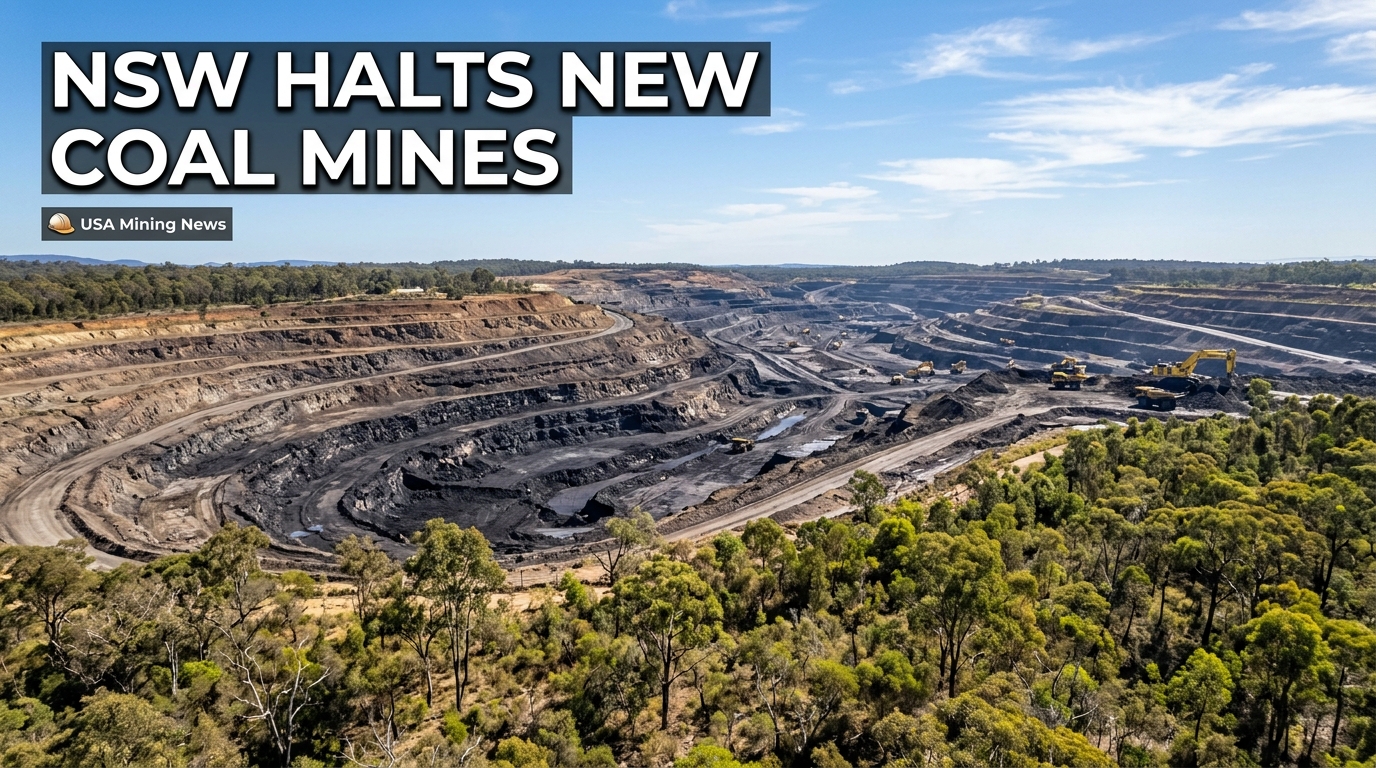
Sydney, NSW, Australia – March 20, 2026 – In a decisive move signaling a profound recalibration of its energy strategy, the New South Wales (NSW) government announced its intention to halt the acceptance of new greenfield coal mine applications. This landmark decision, while excluding existing operations and planned expansions, underscores a growing global imperative to reconcile robust economic output with ambitious climate change mitigation targets. As the leading coal-exporting state in Australia, generating approximately A$32.87 billion (US$23.26 billion) annually from coal sales, predominantly thermal coal destined for power stations in China, Japan, and Taiwan, NSW's policy shift carries significant weight for the global mining industry and energy markets alike.
A Pivotal Shift in NSW’s Coal Policy
The core of NSW’s new policy is a nuanced approach to its coal sector. While outright banning the development of entirely new coal mining sites – often referred to as greenfield projects – the government has explicitly stated that this prohibition will not impact current operating mines. Crucially, it will also permit the expansion of existing projects, provided these expansions are adjacent to established sites and adhere to increasingly stringent environmental and emissions standards. This distinction is vital for understanding the immediate and long-term implications for coal producers, as it allows for the optimization and continued operation of established assets within a tighter regulatory framework, rather than a full moratorium on all coal development.
The underlying motivation for this strategic adjustment is NSW’s commitment to achieving its net-zero emissions goals. By restricting new greenfield developments, the government aims to cap the overall carbon footprint associated with new mining ventures, while simultaneously maintaining a level of production necessary to fulfill existing trade agreements and local energy requirements. This delicate balancing act seeks to provide stability for the estimated 26,000 workers employed in the industry and the communities that depend on coal mining activities, illustrating the socio-economic complexities inherent in energy transitions.
Economic Bedrock vs. Environmental Imperative
Coal stands as NSW’s most valuable export, a cornerstone of the state’s economy. The approximately A$33 billion contributed annually underpins significant regional development, infrastructure investment, and employment. The bulk of these exports is thermal coal, essential for electricity generation in key Asian economies, solidifying NSW’s position as a critical player in the global energy supply chain. The government’s articulated plan is to continue supporting current coal production to honor its commitments to these vital trading partners, satisfy domestic energy demands, and ensure the economic viability of its coal-producing regions.
However, this economic reliance is now juxtaposed against the pressing environmental imperative of climate change. The new policy represents a governmental acknowledgment that while coal remains an economic engine, its unrestricted expansion is no longer tenable in a world pursuing decarbonization. By allowing expansions under strict controls, NSW seeks to manage the decline of its coal sector responsibly, avoiding abrupt economic shocks while progressively aligning with broader climate objectives.
The NSW Coal Industry 2026–50 Strategic Plan
To guide this complex transition, the NSW government has unveiled a comprehensive strategic blueprint, entitled “NSW Coal Industry 2026–50.” This plan delineates the future trajectory of coal in the state, emphasizing a pathway that integrates continued production with heightened environmental stewardship. A central tenet of the plan is the rigorous evaluation process for applications to expand existing mining operations. Such expansions will only be approved if they can demonstrate adherence to advanced environmental standards and stringent emissions reduction protocols, effectively raising the bar for operational excellence within the industry.
Under this plan, coal producers are expected to become active participants in NSW’s wider emissions reduction agenda. This includes lowering on-site operational emissions through the adoption of established abatement technologies and complying with enhanced regulatory controls specified by the Environmental Protection Authority (EPA). This requirement places a clear onus on mining companies to innovate and invest in cleaner operational practices, shifting from a focus solely on extraction to a dual emphasis on extraction efficiency and environmental impact mitigation.
Tackling Methane Emissions: A Regulatory Deep Dive
A significant component of NSW’s new environmental regulations centers on methane emissions, recognizing their potent greenhouse gas effect. The EPA has issued specific mandates compelling miners to capture, treat, or convert methane gas to prevent its release into the atmosphere. These regulations distinguish between different types of mining operations:
- Large Operational Mines: These facilities are now required to drain or flare methane gas from seams targeted for mining before extraction occurs. Flaring, while still releasing carbon dioxide, is a preferred method over direct methane release, as methane has a significantly higher global warming potential over a shorter timescale. Gas drainage systems capture methane, which can then be used for energy generation or safely flared.
- Old and Abandoned Mines: Mines with existing methane leaks must be effectively resealed. This addresses a long-standing environmental challenge where derelict mine workings can continue to release trapped fossil methane into the atmosphere for decades.
According to the EPA, coal mining is a critical source of methane, contributing approximately 30% of the state’s fossil methane emissions and an estimated 11% of its total greenhouse gas releases. It is important to note the distinction highlighted by the EPA: unlike other sectors where methane might result from the cycling of atmospheric gases (e.g., agriculture), coal mining extracts “fossil methane” that has been trapped underground for millennia. This geological sequestration of methane means its release from coal seams adds ancient carbon to the active carbon cycle, making its abatement particularly crucial for combating climate change.
Ensuring a Just Transition: The Future Jobs and Investment Authority
Acknowledging the profound societal implications of transitioning away from a coal-dependent economy, the NSW government is proactively working to establish a Future Jobs and Investment Authority. This authority, currently undergoing parliamentary review, is designed to provide comprehensive support to regions and communities reliant on coal as global demand shifts. Its mandate extends to:
- Worker Transition: Facilitating the transition of the estimated 26,000 workers currently employed in the coal industry into new, sustainable roles. This will likely involve retraining programs, skill development initiatives, and support services to enable career diversification.
- Land Repurposing: Identifying and executing strategies for repurposing former coal mining land and infrastructure. This could involve transforming sites for renewable energy projects, agricultural endeavors, tourism, or other industrial uses that stimulate new investment and job creation.
- Regional Development: Fostering broader regional economic development in areas historically dependent on coal, diversifying their economic bases and building resilience against future commodity market fluctuations.
This initiative reflects a growing international consensus around the concept of a "just transition," recognizing that decarbonization efforts must be socially equitable and minimize adverse impacts on workers and communities. For the mining industry globally, this sets a precedent for how governments can strategically manage the sunsetting of traditional resource sectors while fostering new economic opportunities.
Broader Implications for the Global Mining Landscape
NSW’s policy shift sends a clear signal to the global mining industry and investors. For companies operating or looking to invest in NSW, the focus will now unequivocally be on optimizing existing assets, improving operational efficiency, and demonstrating strong environmental performance. Greenfield exploration for coal in NSW will effectively cease, redirecting capital towards either other commodities or coal projects in jurisdictions with different regulatory environments.
This decision also underscores a broader, accelerating trend: major resource-rich jurisdictions are increasingly integrating climate policy directly into their mining regulatory frameworks. This is not merely an environmental add-on but a fundamental change to the permitting and operational landscape. Investors will increasingly scrutinize companies' ESG (Environmental, Social, and Governance) credentials, with a premium placed on those demonstrating robust methane abatement, responsible land stewardship, and effective community engagement.
For the thermal coal market, while NSW’s ban on new greenfield projects does not immediately reduce current supply, it constrains future potential growth from one of the world’s major exporters. Over time, this could contribute to a tighter market for high-quality thermal coal if demand remains robust and other producers do not fill the potential supply gap, or if demand accelerates its decline in line with global decarbonization efforts. The strategic importance of existing, efficient operations in NSW will likely increase.
The Path Ahead for NSW Coal
The "NSW Coal Industry 2026–50" strategic plan charts a complex but deliberate course for one of Australia’s most vital industries. It represents a bold attempt to balance the immediate economic needs of a major resource state with its long-term environmental commitments. The success of this strategy will hinge on several factors: the effectiveness of the EPA’s enhanced regulatory controls for methane, the capacity of the Future Jobs and Investment Authority to deliver meaningful transition support, and the adaptability of coal producers to operate within these new, more stringent parameters.
As of March 20, 2026, NSW has taken a significant step in defining the future of coal in its jurisdiction. This move will be closely watched by governments, mining companies, and environmental organizations worldwide, serving as a critical case study in the ongoing global transition from fossil fuels to a more sustainable energy future.