Steenkampskraal Monazite Mine Initiates Construction of Pivotal Processing Plant, Bolstering Global Rare Earth Supply Chains
Western Cape, South Africa – April 23, 2026 – In a groundbreaking development set to significantly impact the global critical minerals landscape, Steenkampskraal Monazite Mine (SMM) has officially commenced construction of its highly anticipated monazite processing plant. A soil-turning ceremony on April 23, 2026, marked this pivotal moment, signaling a substantial progression in the phased development plan for a project poised to re-establish South Africa as a key player in the supply of high-grade rare earth elements (REEs).
The strategic importance of this facility cannot be overstated. Located in the mineral-rich Western Cape of South Africa, the plant will process monazite, a phosphate mineral that is a crucial feedstock for various rare earth elements. These elements are indispensable components across a multitude of advanced technology sectors, including the burgeoning renewable energy industry, sophisticated defence technologies, and an array of high-tech manufacturing applications. The project’s advancement comes at a time when global demand for diversified and secure supply chains for critical minerals, particularly REEs, is at an all-time high amidst geopolitical dynamics and an accelerated global energy transition.
Key Stakeholders and Project Ownership
Steenkampskraal Monazite Mine (SMM) operates under a robust ownership structure, being jointly held by Steenkampskraal Holdings and Bora Mining Investments. This collaborative ownership brings together strategic vision and financial backing essential for developing a project of this scale and international significance. The project has successfully navigated the complexities of regulatory requirements, confirming that it is fully permitted, which provides a solid operational foundation and reduces developmental risks typically associated with large-scale mining ventures.
Under the leadership of SMM CEO, Graham Soden, the mine has already demonstrated significant progress and technical capabilities. Mr. Soden’s insights during the announcement underscored the advanced state of the project’s metallurgical research and development, which bodes well for the operational success of the new plant.
Technical Advancements and Operational Pathway
The construction of the processing plant builds upon a foundation of recent technical achievements at the Steenkampskraal site. One significant milestone was the commissioning of an on-site laboratory, a critical asset for real-time ore analysis, quality control, and process optimization. This laboratory infrastructure ensures that the processing parameters can be precisely controlled, maximizing efficiency and product quality.
Perhaps even more indicative of the project’s potential was the recent production of monazite concentrate from SMM’s metallurgical circuit. This represents the first time in more than 60 years that concentrate has been produced from the mine, marking a remarkable resurgence for a historically significant deposit. This initial production run served as a crucial validation of both the ore body’s quality and the efficacy of the planned processing methods.
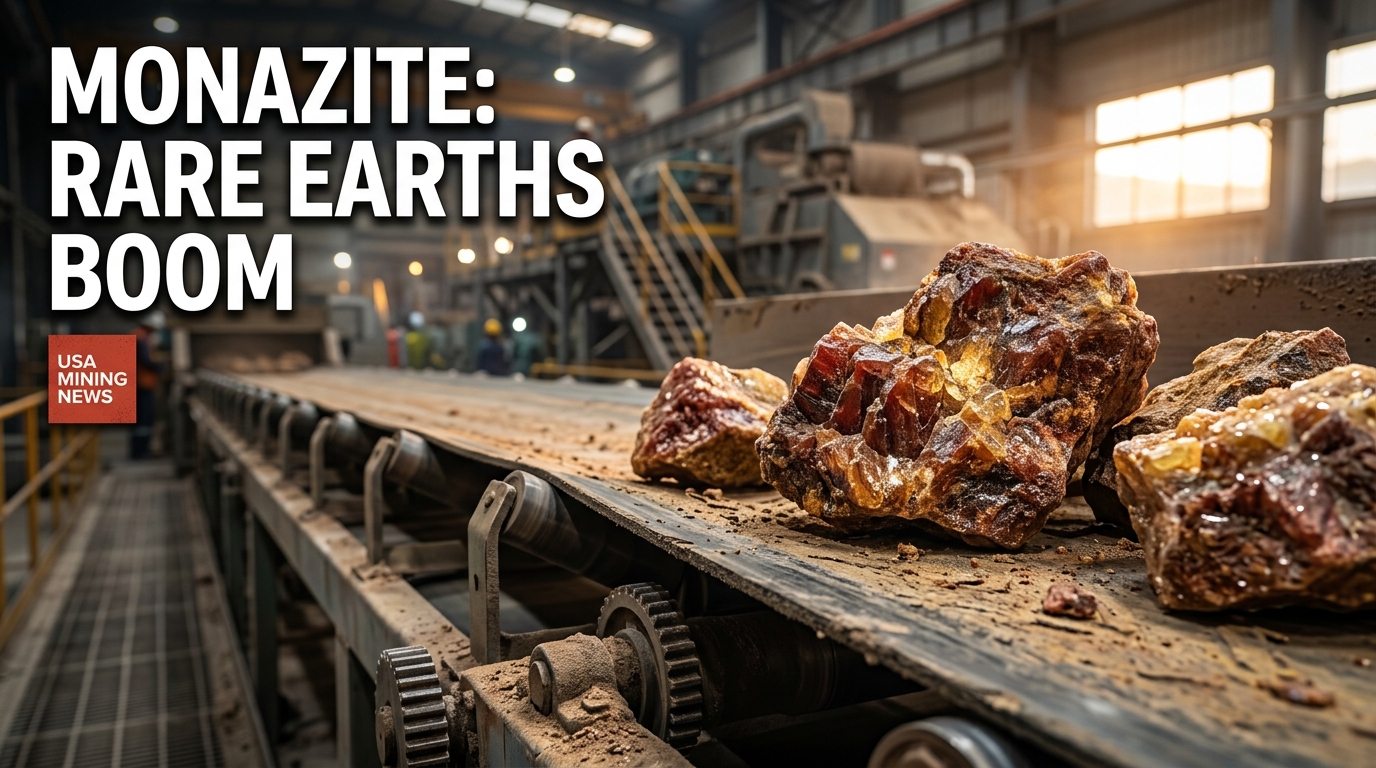
The new processing plant itself is strategically located near the existing underground decline shaft exit. This proximity is critical for operational efficiency, as it minimizes material handling distances. Monazite-rich ore will be transported directly from the underground workings to the surface plant via a conveyor belt system. Upon reaching the surface facility, the ore will undergo initial concentration through a series of established mineral processing techniques:
- Gravity Separation: This method leverages the density differences between monazite and gangue minerals. Monazite, being denser, can be separated efficiently from lighter waste materials using equipment such as spirals or shaking tables.
- Flotation: Following gravity separation, flotation will be employed to further enrich the monazite concentrate. This process involves introducing chemical reagents that selectively attach to monazite particles, allowing them to cling to air bubbles and float to the surface, where they can be skimmed off.
These proven technologies are being optimized through modern refinements, incorporating insights gleaned from extensive pilot testing conducted by reputable institutions such as the Saskatchewan Research Council and Mintek. This collaborative research and development effort ensures that SMM’s processing circuit will operate with maximum efficiency and yield, crucial for meeting stringent market specifications.
Graham Soden highlighted the exceptional quality of the initial product: “The initial product has demonstrated approximately 50% total rare earth oxide (TREO) content, confirming the high-grade nature of the deposit.” This high TREO content is a strong indicator of the deposit’s economic viability and its potential to deliver a premium product to the market.
In parallel to the physical plant construction, SMM’s hydrometallurgical laboratory circuit is currently undergoing intensive optimization. Hydrometallurgy involves the extraction of metals from ores using aqueous solutions. This advanced processing stage is essential for further refining the monazite concentrate and separating it into individual rare earth elements. Early results from this optimization phase have been encouraging, with the anticipation of producing mixed rare earth carbonate (MREC) and cracked thorium in the near term. MREC is a common intermediate product that can be further processed into individual rare earth oxides or metals, while cracked thorium separation addresses a co-product often associated with monazite deposits.
Production Targets and Market Impact
Once fully operational, the new processing facility is designed for a robust output. SMM aims to achieve an annual production of approximately 13,400 tonnes per annum (tpa) of monazite concentrate. Crucially, this concentrate is expected to maintain a significant grade, containing more than 50% TREO. This high-grade specification makes SMM’s product particularly attractive to downstream rare earth processors globally.
The ramp-up phase will be carefully managed. Production will commence at an initial rate of approximately 6,600 tpa. The methodical increase in output is planned to transition to full capacity by the end of the first year of operations. This structured approach to production ensures operational stability and allows for fine-tuning of processes as the plant comes online.
Strategic Importance for Global Critical Mineral Supply Chains
The resumption of monazite processing at Steenkampskraal holds profound implications for the global critical minerals landscape. Rare earth elements are not interchangeable and each plays a unique role in modern technology. For example, neodymium and praseodymium are vital for high-strength permanent magnets used in electric vehicles (EVs) and wind turbines. Dysprosium and terbium are critical for these magnets to operate effectively at high temperatures. Similarly, cerium and lanthanum are used in catalysts and polishing compounds, while europium and yttrium find applications in lighting and displays. With global efforts intensifying to decarbonize economies and enhance national security, the demand for these elements is projected to continue its strong upward trajectory.
For decades, the rare earth supply chain has been significantly concentrated in a few geographic regions, particularly China, which has historically dominated both mining and processing capabilities. This concentration introduces considerable supply chain vulnerabilities, as evidenced by past market disruptions. Projects like SMM’s in South Africa are therefore instrumental in diversifying global sources of rare earths, thereby enhancing supply chain resilience and fostering greater security for industries reliant on these critical materials.
South Africa, with its established mining heritage and rich geological endowment, is well-positioned to contribute meaningfully to this diversification. The Steenkampskraal project demonstrates the nation’s potential to move beyond traditional bulk commodities and tap into the high-value critical minerals sector, creating economic opportunities and contributing to technological independence for nations around the world.
Future Outlook and Broader Implications
The coming months will be crucial for SMM as construction progresses towards commissioning and the hydrometallurgical optimization continues. The anticipated production of MREC and cracked thorium will be a significant step, as these intermediate products will open doors to further downstream processing and value addition, potentially within South Africa itself or through partnerships with international refiners.
Ultimately, the successful operation of the Steenkampskraal monazite processing plant will contribute to a more balanced and robust global rare earth supply chain. It underscores the growing international imperative to secure critical mineral resources for advanced manufacturing, clean energy technologies, and defence capabilities. As SMM moves from construction to production, the global mining community will be watching closely, recognizing the magnitude of this project’s contribution to a more diversified and secure future for critical mineral supply.