Wireless Revolution: Ericsson and Epiroc Pioneer Connected Mining with Private Cellular Networks
April 13, 2026
The global mining industry stands at the cusp of a profound transformation, driven relentlessly by the dual imperatives of operational excellence and sustainable practice. As mining companies worldwide intensify efforts to boost productivity, curtail operational costs, and significantly enhance worker safety, they simultaneously face mounting pressure to minimize their environmental footprint. The established consensus is that advanced automation and comprehensive digitalization are the only viable pathways forward. However, the full potential of these innovations has historically been constrained by the limitations of conventional communication infrastructure within the challenging mine environment. This paradigm is now shifting dramatically, thanks to a pioneering partnership between telecommunications giant Ericsson and Epiroc, a global leader in advanced mining equipment and solutions.
Since 2016, this strategic collaboration has been meticulously focused on simplifying and standardizing the deployment of private cellular technologies to facilitate wireless telematics data transfer, comprehensive digitalization, and sophisticated automation within mining operations. By forging a unified approach to site connectivity and automation protocols, this alliance is actively enabling mining products, services, and integrated solutions to become inherently safer, demonstrably smarter, and substantially more efficient. Both Ericsson and Epiroc bring decades of deep-seated experience within their respective domains, providing an intimate understanding of the industry's intricate communication demands. This combined expertise is proving instrumental in driving the development of the next generation of advanced solutions poised to redefine mining operations globally.
Revolutionizing Mine Connectivity with Private Cellular
The vision of the
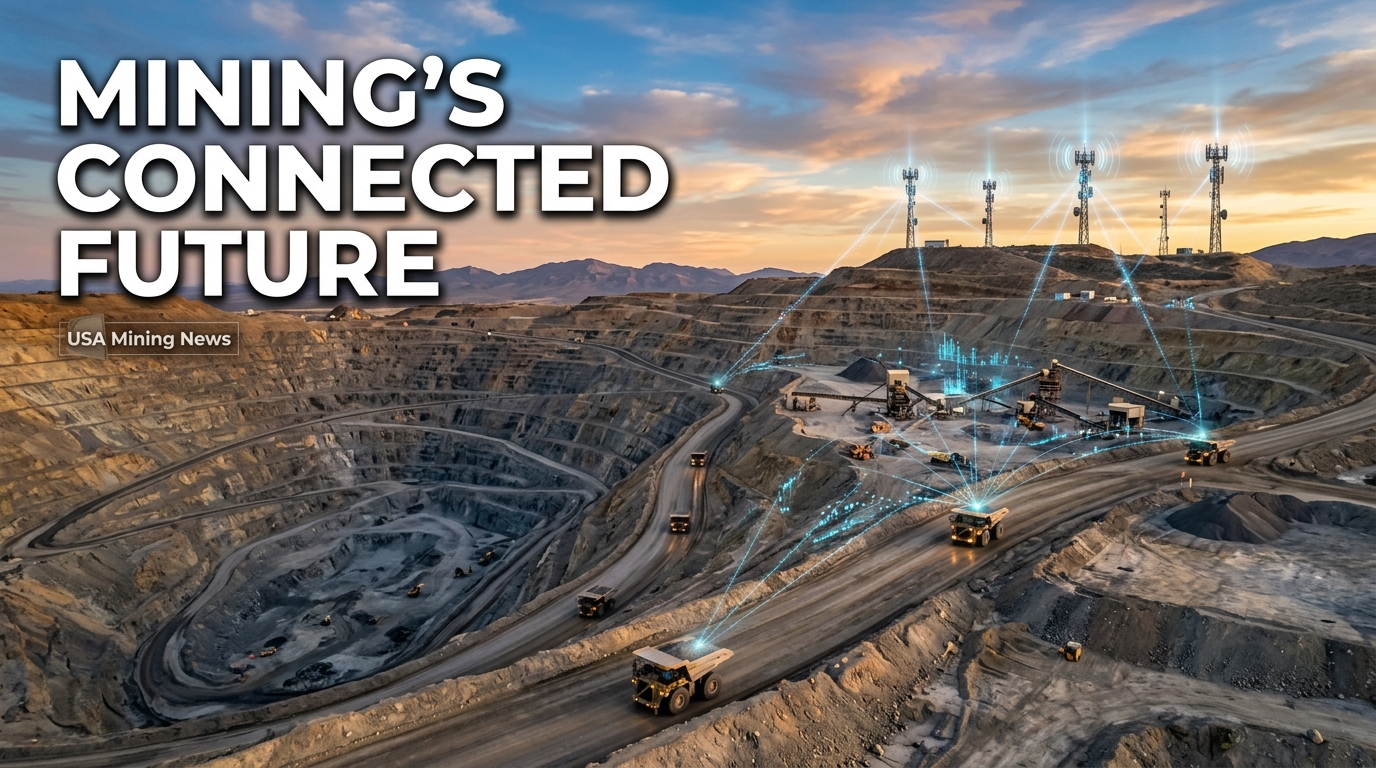
Private cellular networks, whether leveraging the robust capabilities of 4G LTE or the ultra-fast, low-latency potential of 5G technology, offer a distinct and compelling advantage over traditional communication methods, such as Wi-Fi, particularly in the notoriously demanding conditions of a mine. These dedicated networks deliver superior coverage across vast operational areas and provide unmatched capacity to handle the explosion of data generated by modern automated systems. The high bandwidth and critically low latency inherent to 4G and 5G networks are not merely beneficial but essential for the precision and responsiveness required by contemporary mining applications. This includes enabling real-time, instantaneous control of autonomous drilling rigs and facilitating the immediate transmission of high-definition video feeds for critical remote monitoring and diagnostics.
The Distinct Advantages of Cellular in Challenging Environments
Mines, by their very nature, present extraordinary challenges for communications infrastructure. Underground operations often involve extensive networks of twisting, turning tunnels that can stretch for hundreds of kilometers, while open-pit mines encompass vast surface areas crisscrossed by intricate road systems. Modern mining operations, which involve human lives, multi-million dollar equipment, and significant business goals, demand a level of connectivity that is continuously available, capable of delivering high bandwidth and ultra-low latency for automated and semi-automated machinery, and fortified with multi-layer security protocols.
While Wi-Fi excels at providing localized, cost-effective coverage in controlled areas such as administrative offices, workshops, or specific, limited operational zones, its limitations become apparent when attempting to cover extensive underground tunnels or expansive open-pit operations reliably. Private cellular networks address these shortcomings directly by delivering consistent, robust connectivity across the entire operational footprint. A key operational advantage is that LTE/5G networks typically require far fewer access points compared to a comparable Wi-Fi deployment aiming for similar coverage. This reduction in the number of infrastructure components translates directly into lower capital expenditure for deployment, reduced ongoing operational costs, and a significantly lower risk of network outages, which can have severe implications for worker safety and operational continuity.
Furthermore, mining operations are long-term investments, with many sites having been in continuous operation for decades. As these operations naturally expand, deepen, or alter their layouts over time, the underlying communication infrastructure must possess the inherent flexibility to scale and adjust accordingly. Private cellular networks offer this critical adaptability, allowing for seamless scalability as new mining areas are developed, tunnels are extended, or operational shifts necessitate new coverage zones, all without major overhauls of the core network architecture. This ensures that connectivity remains a facilitator, not a bottleneck, to the mine's evolving needs.
Epiroc's Equipment Meets Ericsson's Connectivity
The realization of the connected mine of the future necessitates a deeply collaborative approach, where specialized equipment seamlessly integrates with advanced communication platforms. Epiroc, renowned globally for its cutting-edge equipment and technological solutions, provides the essential tools for next-generation mining. This portfolio includes advanced drill rigs, sophisticated load-and-haul-and-dump (LHD) vehicles, precision rock excavation equipment, and a wide array of other crucial machinery. Recent strategic acquisitions have further bolstered Epiroc’s capabilities, particularly in areas like real-time visualization systems that can track and display the precise locations of both underground employees and mining vehicles on a dynamic, digital 3D map of the mine. This invaluable real-time situational awareness allows equipment operators to see what is approaching around corners or through tunnels, dramatically enhancing safety by enabling collision avoidance and concurrently improving overall operational efficiency.
The Ericsson-Epiroc partnership is already yielding demonstrable results, showcasing precisely how the robust reliability and superior performance of private cellular networks can amplify the effectiveness of cutting-edge mining technologies. These networks are instrumental in elevating the performance of autonomous vehicles, such as Epiroc’s highly advanced Pit Viper drill rigs, enabling them to operate in perfect, synchronized harmony across vast open-pit mines. The ultra-low latency communication provided by 4G/5G ensures that these machines can respond to commands and coordinate movements with split-second precision, maximizing operational throughput and safety.
Beyond autonomous machinery, cellular networks are designed to support and enhance extensive sensor networks deployed throughout a mine. These sensors continuously collect and transmit real-time data on critical parameters ranging from air quality and gas detection to ground stability and rock stress. The high-bandwidth capabilities of these private networks also facilitate the creation and maintenance of sophisticated "digital twins" of the mine. These virtual replicas allow for comprehensive remote monitoring, detailed simulation, and predictive analysis of all aspects of the mining operation, providing unprecedented oversight and control from a central command center. Furthermore, enhanced connectivity enables precise, intelligent control of smart ventilation systems, optimizing energy consumption by delivering airflow only where and when it is needed, while simultaneously ensuring a consistently safe working environment for personnel.
NEXGEN SIMS: A Blueprint for Sustainable Intelligent Mining
Perhaps one of the most compelling demonstrations of the transformative potential of private cellular networks in mining comes from the NEXGENS (Next Generation Sustainable Intelligent Mining System) project. This ambitious, EU-funded initiative was spearheaded by Epiroc, working collaboratively with Ericsson and a consortium of other global partners. The overarching objective of NEXGENS was to engineer a future mining system capable of significantly reducing greenhouse gas emissions and substantially boosting safety standards through the comprehensive application of advanced automation technologies. During its three-year duration, the project established a state-of-the-art test facility in Sweden.
At this dedicated facility, Ericsson Private 5G (EP5G) technology was deployed to serve as the foundational communication backbone, supporting a diverse array of advanced mining applications. One of the most technically challenging and innovative aspects of the NEXGENS project involved the successful implementation of fully autonomous mine machinery operating seamlessly within complex mixed-traffic scenarios. These environments are characterized by the simultaneous presence of fully autonomous machines, semi-autonomous equipment requiring some human oversight, and traditional human-operated vehicles and personnel. The ability of EP5G to provide the requisite reliability, ultra-low latency, and secure communication channels was critical to safely managing these intricate interactions and proving the viability of such mixed operational models, setting a new benchmark for integrated mine automation.
Broader Implications for the Global Mining Sector
For mining industry professionals and investors, the partnership between Ericsson and Epiroc, and the capabilities it unlocks, represent more than just a technological upgrade; it signifies a fundamental shift in operational philosophy and strategic capabilities. This collaboration directly addresses several of the most pressing challenges facing the global mining sector today. By enabling truly pervasive and reliable connectivity, mines can finally unlock the full promise of automation and digitalization, moving beyond the inherent limitations of fragmented or underperforming legacy communication infrastructures.
The implications are far-reaching: a demonstrable improvement in worker safety through collision avoidance systems and real-time hazard detection, significant reductions in operational costs due to optimized equipment utilization and energy consumption, and a boost in overall productivity through synchronized autonomous workflows. Furthermore, the focus on digitalization and automation inherently supports environmental sustainability goals by optimizing energy usage, reducing fuel consumption, and allowing for more precise resource extraction, thereby minimizing waste and environmental disturbance. Companies that embrace these advanced communication solutions early are likely to gain a significant competitive advantage, both in terms of operational efficiency and their ability to attract and retain a modern, tech-savvy workforce.
The Road Ahead: Future Outlook and Industry Adoption
The journey towards the fully connected, autonomous, and sustainable mine is ongoing, but the Ericsson-Epiroc partnership has laid a robust foundation for its rapid acceleration. The next steps will undoubtedly involve the continued deployment and expansion of these private cellular network capabilities across a growing number of commercial mining operations globally. As the tangible benefits in terms of safety, efficiency, and cost savings become increasingly evident and quantifiable, wider industry adoption is expected to follow suit, becoming a de facto standard for modern mining brownfield and greenfield projects.
This collaboration underscores the critical importance of cross-industry partnerships in driving innovation within the mining sector. By combining Ericsson's deep expertise in advanced communication technologies with Epiroc's specialized knowledge of mining machinery and operational contexts, the industry is seeing the emergence of integrated solutions that are truly fit for purpose. The future of mining will be characterized by increasingly intelligent, interconnected, and autonomous operations. The work spearheaded by Ericsson and Epiroc is not just building isolated components of this future; it is actively constructing the vital communication nervous system that will transform mining into a safer, cleaner, and ultimately more efficient industry for decades to come.