The Enduring Challenge of Underground Mining Safety: A Deeper Look at Persistent Accidents and Technological Solutions
By Alejandro Gonzalez
April 2, 2026
Underground mining, inherently one of the most demanding and hazardous industrial sectors, continues to grapple with a persistent paradox: despite significant advancements in safety protocols and equipment, accidents in sub-surface environments remain a critical concern. These incidents, far from being random occurrences, frequently materialize under predictable circumstances, often at decision points where visibility is compromised and operational awareness is limited. As noted by industry observation, locations such as intersections, blind corners, and confined drifts consistently present elevated risks. In these challenging conditions, operators are compelled to make crucial decisions with incomplete data and within extremely narrow reaction windows, exacerbating the potential for serious incidents. This in-depth analysis from USA Mining News explores the root causes of these persistent dangers and evaluates how emerging technologies, particularly Vehicle-to-Everything (V2X) communication and advanced wearables, are enhancing safety paradigms, all while underscoring the irreplaceable role of human oversight.
The Anatomy of Underground Accidents: Beyond the Obvious
The core challenge in subterranean mining stems from an environment expressly designed for resource extraction, not necessarily for optimal human and vehicular navigation. The typical underground mine features a complex labyrinth of tunnels, ramps, and shafts, often characterized by:
- Restricted Visibility: Natural light is non-existent, and artificial illumination, while powerful, cannot eliminate shadows, dust-induced haze, or the inherent blind spots created by large machinery and geological formations. Heavy dust, diesel fumes from equipment, and the confined nature of drifts severely limit an operator's ability to perceive their surroundings, making operations inherently reliant on sensory input that is often compromised.
- GNSS-Denied Environments: Underground operations are by definition Global Navigation Satellite System (GNSS)-denied. This absence of satellite signaling removes a fundamental layer of positional awareness that is standard in surface operations, making accurate real-time tracking of personnel and vehicles a complex endeavor. Systems relying on GNSS, ubiquitous above ground, simply do not function in these environments, contributing directly to the "incomplete information" scenario faced by operators.
- Shared Space Dynamics: Underground mines are dynamic workplaces where heavy haul trucks, loaders, drill rigs, utility vehicles, and personnel often share the same limited pathways. The sheer size, weight, and limited maneuverability of mining equipment mean that even low-speed interactions can have catastrophic consequences for lighter vehicles or individuals on foot.
- Noise and Vibration: Constant noise from machinery, drilling, blasting, and ventilation systems significantly impairs auditory warnings and communication. This persistent background noise can desensitize individuals to critical sounds, further isolating operators and ground personnel from potential hazards.
- Human Factors: Despite rigorous training, human judgment errors, fatigue, complacency, and a lack of real-time situational awareness contribute significantly to accident statistics. The operational pressures to maintain production targets can also inadvertently influence risk assessment and decision-making by personnel.
The persistence of accidents, therefore, is not merely a reflection of a lack of effort but rather a direct consequence of the inherent physical and operational limitations that conventional safety systems struggle to overcome. Traditional warning lights, horns, and reflective markings, while foundational, do not provide the predictive or pervasive awareness needed to prevent incidents in rapidly changing, low-visibility conditions typical of a busy underground mine.
Technological Innovation: A New Frontier for Proactive Safety
Recognizing the limitations of legacy systems, the mining industry is aggressively adopting advanced digital technologies aimed at improving real-time awareness and enhancing response capabilities. Two prominent examples are Vehicle-to-Everything (V2X) communication systems and sophisticated wearable devices, which offer significant improvements over previous generations of safety solutions.
Vehicle-to-Everything (V2X) Communication
V2X technology represents a paradigm shift from individual sensor-based hazard detection to a networked system where vehicles, infrastructure, and even personnel communicate with each other in a continuous, bidirectional flow of information. In an underground mining context, V2X allows for:
- Enhanced Situational Awareness: Vehicles equipped with V2X transceivers can broadcast their position, speed, and direction to other vehicles and stationary infrastructure within range, even around blind corners or through smoke and dust. This proactive data exchange allows operators to "see" hazards that are physically out of sight, providing critical seconds for reaction.
- Collision Avoidance: By continuously monitoring the proximity and movement of all connected entities, V2X systems can issue multi-tiered warnings to operators — from audible alarms to visual displays — or even trigger automated braking or speed reduction, when a potential collision is detected. This is particularly crucial at busy intersections or within confined drifts where multiple vehicles converge with limited space.
- Traffic Management and Optimization: Beyond immediate collision avoidance, V2X can facilitate intelligent traffic flow throughout the mine. By providing real-time data on vehicle locations and movements, it can reduce bottlenecks, optimize routes for efficiency, and minimize hazardous interactions between heavy machinery and light vehicles or personnel. This contributes to both safety and operational efficiency.
- Personnel Protection: When integrated with personnel tracking systems, V2X can alert vehicle operators to the close presence of workers on foot, providing an additional layer of protection in shared spaces where the presence of individuals might otherwise be obscured.
The implementation of V2X typically relies on robust underground wireless networks, often a combination of Wi-Fi, mesh networks, or ultra-wideband (UWB) technologies, which provide the necessary bandwidth and low-latency communication in GNSS-denied environments. These networks are critical infrastructure investments that underpin the next generation of mining safety and automation.
Advanced Wearable Devices
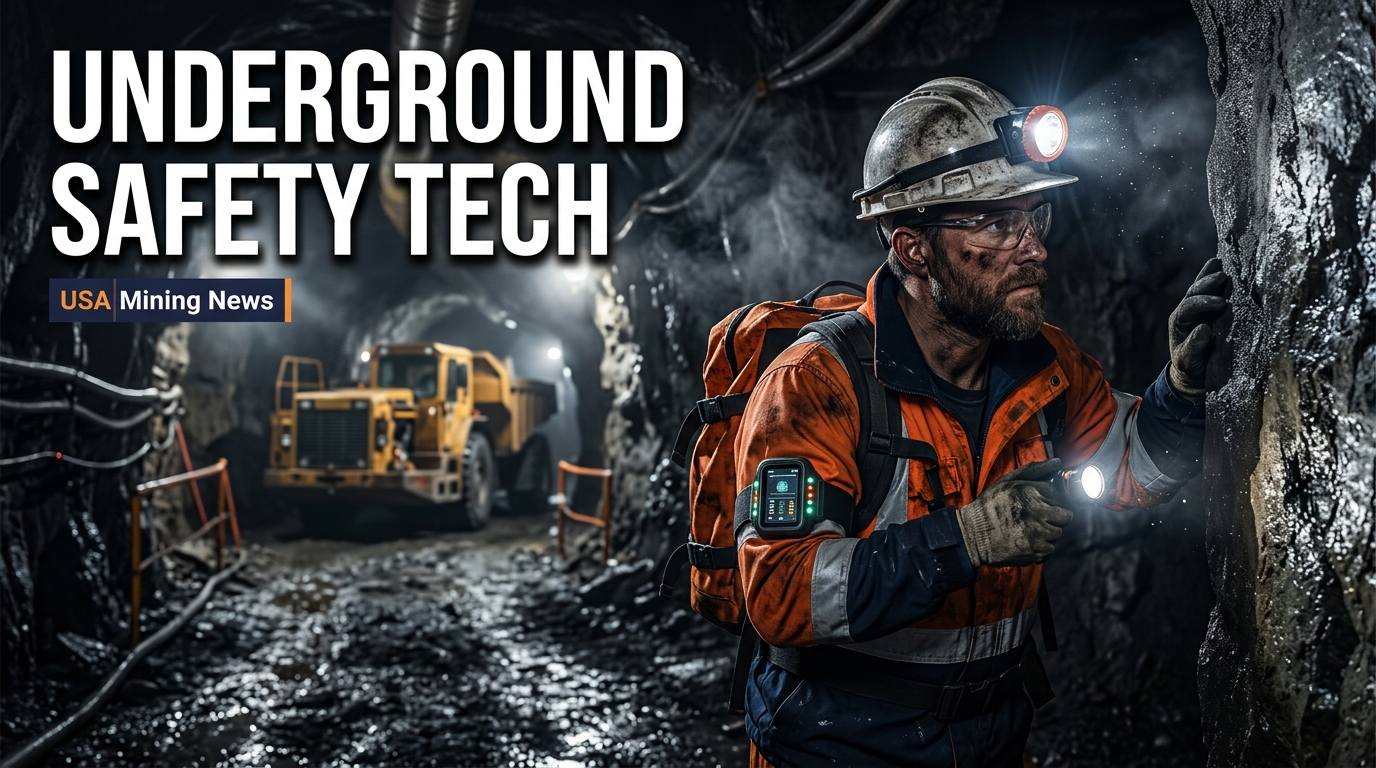
Wearable technology, once primarily associated with consumer electronics, is rapidly transforming personal safety and productivity in underground mines. These devices, worn by individual miners, offer several crucial safety advantages:
- Proximity Detection and Alerts: Many wearables integrate ultra-wideband (UWB) or radio-frequency identification (RFID) tags that communicate with fixed infrastructure and vehicle-mounted receivers. When a miner approaches a hazard zone or a moving vehicle without being seen, both the miner's wearable and the vehicle's system can issue immediate warnings, significantly reducing the risk of person-vehicle interaction accidents.
- Real-time Location Tracking: Coupled with underground positioning systems — often based on UWB or other precise indoor localization technologies — wearables provide precise, real-time location data for every worker. In an emergency, this capability dramatically reduces search and rescue times, improving the chances of survival for trapped or injured miners by pinpointing their exact location.
- Biometric Monitoring: Some advanced wearables can monitor vital signs such as heart rate, body temperature, and activity levels. This data, when continuously collected and analyzed, can be crucial for detecting early signs of operator fatigue, heat stress, or other health issues that could compromise safety, allowing for pre-emptive intervention by supervisors.
- Emergency Call and Man-Down Functionality: Most modern mining wearables include a dedicated panic button for miners to signal distress quickly. Additionally, "man-down" sensors can automatically alert supervisors if a miner falls or remains motionless for an extended period, indicating a potential injury, collapse, or unconsciousness, triggering an immediate welfare check.
These devices empower individual miners with enhanced awareness and provide safety personnel with an unprecedented level of oversight, transforming reactive incident management into proactive risk mitigation across the entire mine site.
The Critical Role of Human Oversight
While technology offers revolutionary solutions and is transforming operational paradigms, the source material explicitly highlights that human oversight remains critical. This is a fundamental principle in mining safety, underscoring that technology is a tool to augment, not entirely replace, human judgment, experience, and responsibility. Even the most sophisticated V2X system or advanced wearable can only function optimally within a robust framework of human-centric safety practices.
- Operator Training: Miners and equipment operators must be thoroughly trained not only in the safe operation of heavy machinery but also in the proper use and interpretation of advanced safety technologies. Understanding the nuances of V2X alerts, wearable device feedback, and their integration into daily workflows is paramount for effective utilization.
- Safety Culture: A strong safety culture, where every individual takes ownership of safety and is empowered to halt unsafe operations without fear of reprisal, is indispensable. Technology integration must be accompanied by continuous reinforcement of safety protocols, regular refreshers, and open communication channels between management and workforce.
- Emergency Response Preparedness: While technology aids in prevention and early detection, effective emergency response plans, regular drills, and well-trained rescue teams remain absolutely essential for mitigating the impact of unavoidable incidents and ensuring rapid, coordinated action.
- Maintenance and Calibration: The reliability and accuracy of advanced safety systems hinge on diligent maintenance and regular calibration. Human teams are crucial for ensuring these complex systems consistently perform as intended in the harsh, corrosive, and often challenging underground environment.
The synergy between human expertise and technological capability is the true gold standard for modern mining safety. Technology provides data and alerts, but humans provide context, judgment, and the ultimate decision-making authority in complex, unforeseen situations that no algorithm can yet fully anticipate.
Broader Industry Implications and Future Outlook
The drive for enhanced underground safety extends far beyond immediate operational concerns; it touches upon critical aspects of the mining industry's social license to operate, financial viability, and long-term sustainability. The economic ramifications of accidents are substantial and far-reaching, encompassing:
- Human Cost: The most significant impact, representing irreparable loss of life and severe trauma to individuals, families, and communities.
- Operational Disruptions: Accidents often lead to immediate halts in production, extensive multi-agency investigations, and potential mine closures, resulting in significant delays and revenue losses that can span months or even years.
- Financial Penalties and Litigation: Regulatory bodies across various jurisdictions impose substantial fines for safety breaches, and mining companies face potential litigation from injured workers, their families, and public interest groups.
- Reputational Damage: Major accidents can severely harm a company's public image and brand equity, impacting investor confidence, making it difficult to recruit and retain talent, and straining its relationship with local communities and regulators.
Consequently, investing proactively in advanced safety technologies is not merely a compliance cost but a strategic imperative that yields tangible returns. It aligns with growing Environmental, Social, and Governance (ESG) mandates, demonstrating a robust commitment to corporate responsibility and sustainable practices. Enhanced safety also directly contributes to improved worker morale, job satisfaction, and productivity, reducing absenteeism and boosting retention rates in a highly competitive labor market.
Looking ahead, the integration of related technologies, as highlighted by broader industry analysis delving into such areas as Robotics in Mining for tunnel rescue/safety devices and Artificial Intelligence in Mining for similar applications, suggests a future where safety systems become increasingly intelligent and autonomous. Innovations like AI-driven predictive analytics — which can analyze vast datasets from sensors and operational logs to identify potential hazards before they manifest — and robotic systems deployed for reconnaissance, inspection, or rescue in impossibly dangerous zones, will further augment human capabilities. The vision of a fully autonomous underground mine, while still some distance away, implicitly promises a future with significantly reduced human exposure to high-risk environments, thereby inherently improving safety metrics. However, even in such a highly automated scenario, human oversight will evolve, shifting from direct operational control to complex system management, remote monitoring, and strategic decision-making, ensuring a human 'fail-safe' remains integral.
The journey towards zero harm in underground mining is continuous and dynamic. The insights shared by Alejandro Gonzalez on April 2, 2026, underscore that while the inherent physical challenges of subterranean environments persist, a combination of innovative technologies and unwavering human commitment to safety offers a clear, actionable path forward. By deeply understanding the predictable conditions that lead to accidents and actively leveraging intelligent systems to provide unprecedented levels of awareness and protection, the mining industry is steadily advancing towards a safer, more resilient, and ultimately more sustainable future.