Alliance Nickel Embarks on Strategic Vat Leach Test-Work to Optimize NiWest Nickel-Cobalt Project
Perth, Western Australia – In a significant move to enhance the economic viability of its wholly owned NiWest Nickel-Cobalt Project, Alliance Nickel has commenced critical vat leach test-work on a bulk sample of NiWest ore. This initiative, announced in late June 2026, represents a proactive effort by the company to explore alternative processing methodologies with the potential to substantially reduce capital costs, particularly those associated with water infrastructure, and improve overall operational efficiencies at the promising Australian nickel laterite development.
The global mining industry watches closely as companies navigate the complexities of developing new critical mineral resources, especially those involving challenging ore bodies like nickel laterites. Alliance Nickel's strategic pivot towards evaluating vat leaching underscores a broader industry trend towards innovative process optimization to de-risk projects and improve their competitiveness in volatile commodity markets. Around two tonnes of representative ore, carefully selected from the NiWest project, have been shipped to an overseas facility where the specialized test-work program is currently underway.
The NiWest Project: A Significant Laterite Resource
The NiWest Project is strategically positioned within Western Australia's renowned nickel belt, a region long recognized for its substantial endowment of nickel and other critical minerals. The project’s location near Glencore’s established Murrin Murrin nickel-cobalt operation, which has been in continuous production since 1999, provides valuable infrastructure context and demonstrates the region’s proven capacity for large-scale nickel processing.
Alliance Nickel's NiWest project boasts a substantial undeveloped nickel laterite resource estimated at 93.4 million tonnes (mt). This impressive resource carries average grades of 1.04% nickel and 0.07% cobalt, both metals critical for the rapidly expanding electric vehicle battery market and various industrial applications. Crucially, more than 83% of this resource is categorized as measured and indicated in accordance with the stringent Joint Ore Reserve Committee (JORC) 2012 standards, providing a high degree of geological confidence that underpins future development decisions. The presence of both nickel and cobalt in significant quantities makes NiWest a highly attractive asset in the context of global supply chains for battery raw materials.
Addressing Capital Costs: The Driver for Innovation
The primary motivation behind Alliance Nickel's decision to pursue vat leach test-work is the strategic imperative to reduce capital expenditure (CAPEX) for the NiWest project. The company's 2024 Definitive Feasibility Study (DFS) currently outlines a project development plan reliant on the heap leaching process. While heap leaching is often favored for its perceived lower initial capital cost compared to pressure acid leaching (PAL) for lower-grade laterites, it still comes with significant infrastructure requirements, particularly concerning water management in arid regions.
Alliance Nickel has identified water infrastructure as a particularly substantial cost component within the current DFS, accounting for approximately A$310 million, equivalent to US$214 million at current exchange rates. This figure represents a considerable portion of the overall project CAPEX, highlighting the critical need to explore alternatives that could mitigate this financial burden. The considerable expenditure on water infrastructure reflects the challenges of sourcing, transporting, and managing large volumes of water required for metallurgical processing in Western Australia's typically dry environment, where securing water rights and developing extensive pipelines or desalination plants can be both costly and logistically complex.
Vat Leaching: An Alternative with Potential
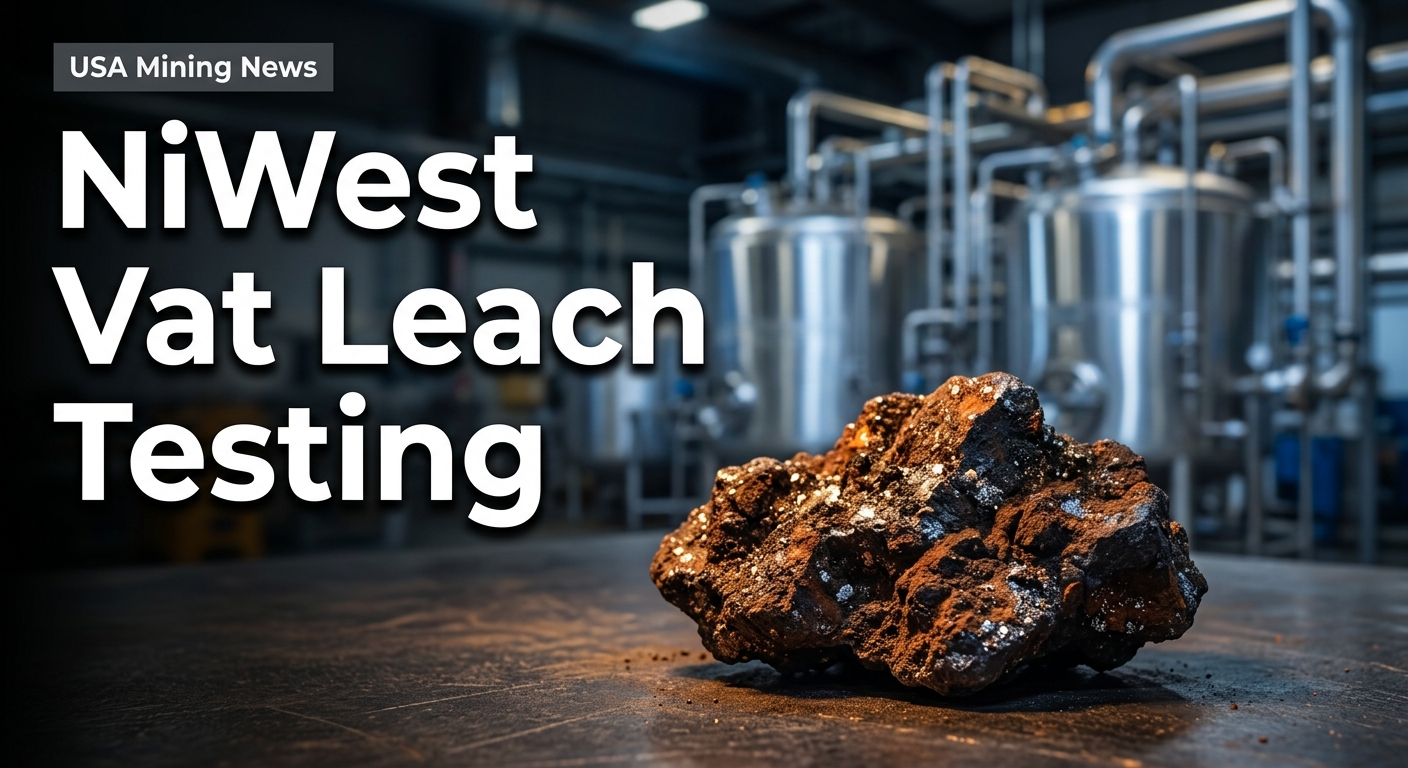
The test-work program, initiated recently, will thoroughly assess vat leaching as a potential replacement for the heap leaching process. Both vat leaching and heap leaching are hydrometallurgical techniques used to extract metals from ore, particularly suitable for lower-grade nickel laterites. However, they differ significantly in their operational setup and performance characteristics.
Heap leaching involves stacking crushed ore in large piles (heaps) on impermeable pads and percolating a leaching solution, typically sulfuric acid for laterites, through the heap. The pregnant leach solution (PLS) is then collected and processed to recover the metals. Vat leaching, by contrast, involves containing the ore in agitated tanks or vats, where it is thoroughly mixed with the leaching solution. This contained and often agitated environment provides a more controlled and potentially more efficient leaching process.
Initial analysis by Alliance Nickel suggests that a shift from heap leaching to vat leaching could enable sufficient water to be sourced from the local Mt Kilkenny tenement. This localized water sourcing could dramatically reduce the extensive and costly infrastructure otherwise required for long-distance water transport or other sources, directly impacting the A$310 million water infrastructure budget. This shift not only presents a direct cost saving but also potentially reduces environmental permitting complexities and operational risks associated with extensive off-site water management.
Metallurgical Advantages and Operational Efficiencies
Beyond the compelling capital cost savings, Alliance Nickel also anticipates that vat leaching may offer several significant metallurgical and operational benefits. These advantages could translate into higher overall recovery rates, faster processing times, and potentially lower operating costs per tonne of processed ore over the life of the mine. Specific benefits highlighted by the company include:
- Improved Solution Distribution: In a controlled vat environment, the leaching solution can be more evenly distributed throughout the ore, ensuring more consistent contact with the valuable minerals. This stands in contrast to heap leaching, where channeling and uneven flow can sometimes lead to bypassed ore and lower recovery rates.
- Faster Leach Kinetics: The typically agitated nature of vat leaching, combined with controlled temperature and reagent concentrations, can accelerate the chemical reactions involved in dissolving the nickel and cobalt from the laterite ore. Faster kinetics mean less time required for reaction, increasing throughput for a given plant size.
- Reduced Leach Cycle Times: As a direct result of faster leach kinetics and improved solution distribution, the overall time required to process a batch of ore through the leaching stage can be significantly reduced. Shorter cycle times contribute to higher plant capacity and more efficient use of processing infrastructure.
These metallurgical improvements, if proven through the test-work, could provide a substantial competitive advantage to the NiWest project, optimizing metal recovery and potentially improving the project’s net present value (NPV) and internal rate of return (IRR).
Timeline and Next Steps
The comprehensive vat leach test-work program is scheduled for completion in the third quarter of 2026. This timeline allows for thorough testing and analysis of the two-tonne bulk sample under various conditions to accurately assess its performance against the heap leaching parameters established in the 2024 DFS. Upon conclusion of the test-work, Alliance Nickel will meticulously evaluate the results.
If the findings are favorable and demonstrate the technical and economic superiority of vat leaching, these results will be incorporated into updates for the current feasibility study. Such an update, if warranted, would represent a significant de-risking event for the project, demonstrating the company's commitment to optimizing its development pathway. Alliance Nickel has committed to issuing further updates to the market as additional information becomes available, ensuring transparency for its shareholders and industry stakeholders.
Industry Context: The Nickel Market and Laterite Processing
The NiWest project's progress is particularly relevant given the evolving dynamics of the global nickel market. Nickel, a critical component in stainless steel and high-growth electric vehicle batteries, is facing increased demand. While nickel sulfide deposits have historically been the primary source, readily accessible high-grade sulfide ores are becoming scarcer, pushing the industry to invest in laterite deposits, which constitute a large portion of the world's nickel resources.
However, processing nickel laterites is notoriously more complex and capital-intensive than processing sulfides, due to their typically lower grades, complex mineralogy, and the need for hydrometallurgical processes. Technologies like heap leaching, pressure acid leaching (PAL), and atmospheric agitation leaching (AAL) are commonly employed, each with its own advantages and disadvantages regarding CAPEX, OPEX, and recovery rates. Alliance Nickel's investigation into vat leaching represents a pragmatic approach to tailor a processing solution that balances these factors, specifically for the NiWest ore body and the local environmental conditions of Western Australia.
The focus on reducing water infrastructure costs is also highly pertinent. Water scarcity and increasing environmental regulations are global challenges for the mining industry. Projects that can demonstrate efficient water usage, local sourcing, or innovative recycling solutions are often viewed more favorably by investors, regulators, and local communities alike. The proposed ability to source water locally from Mt Kilkenny if vat leaching is adopted underscores an integrated approach to resource management that could set a precedent for other projects in water-stressed regions.
Broader Implications for Nickel-Cobalt Development
The success of Alliance Nickel's vat leach investigation at NiWest could have broader implications beyond this single project. Should vat leaching prove to be a more capital-efficient and metallurgically superior process for the NiWest laterite, it could influence the technical evaluations and development strategies for other similar nickel-cobalt laterite projects globally. This is particularly relevant as the industry strives to bring new battery-grade nickel and cobalt to market efficiently and sustainably.
Innovation in process metallurgy is a constant drive in the mining sector, aimed at unlocking value from challenging resources. Alliance Nickel’s proactive approach exemplifies this spirit, demonstrating how careful re-evaluation of processing options against specific site conditions and project economics can significantly alter a project’s trajectory. The insights gained from the NiWest test-work could contribute valuable data to the broader body of knowledge for laterite processing, aiding in the development of future projects worldwide and helping to meet the escalating demand for critical minerals.
Conclusion: Paving the Way for a Robust Future
Alliance Nickel's commitment to rigorous test-work at its NiWest Nickel-Cobalt Project reflects a strategic resolve to optimize what is already a significant resource. By systematically evaluating vat leaching as an alternative to the heap leaching process, the company is directly addressing key capital cost drivers and seeking to unlock superior metallurgical and operational efficiencies. With the test results anticipated in the third quarter of 2026, the industry awaits with interest the potential for a revised, more robust feasibility study that could pave the way for a more streamlined and cost-effective development pathway for the NiWest project.
The successful implementation of such an optimized processing strategy would solidify Alliance Nickel’s position as a key player in the future supply of critical battery metals and provide a compelling case study for innovative project development within the global mining sector.