The pursuit of domestic critical mineral resources in the United States has received a significant boost with American Critical Minerals (ACM) officially securing final potassium prospecting permits from the US Bureau of Land Management (BLM) for its Green River Project in Utah. This crucial regulatory approval, announced on May 27, 2026, officially takes effect on June 1, 2026, marking a pivotal moment for the company and the broader US mining sector. The permits pave the way for a comprehensive drilling program aimed at unlocking potentially significant reserves of potash, alongside the increasingly strategic minerals lithium and bromine.
A Decade of Dedication Culminates in Permitting Success
The acquisition of these permits represents the culmination of more than ten years of dedicated effort, as highlighted by Dean Pekeski, ACM’s CEO and president. "Drill holes are now fully permitted and bonded. This represents the culmination of over 10 years of work," Pekeski stated, emphasizing the rigorous and often lengthy process involved in obtaining approvals for exploration on federal lands. The commitment to navigating complex regulatory landscapes, coordinating with multiple government agencies, and demonstrating responsible development practices underscores the determination required to advance critical mineral projects in the United States.
The newly secured permits specifically cover seven drill holes at the Green River Project. Of these, four are fully permitted by the BLM, while the remaining three have received permits from the State of Utah. A key element of responsible resource exploration, particularly on publicly managed lands, is the establishment of robust environmental safeguards. In this instance, the project is fully bonded with a substantial reclamation bond of $549,000, which has been formally accepted by both the BLM and the State of Utah. This bond ensures that funds are available for environmental remediation and site restoration once exploration activities are completed, aligning with contemporary best practices in sustainable mining and land management. The BLM had previously issued a total of 11 potash prospecting permits on May 18, 2026, with ACM's seven drill hole permits forming a significant part of this broader approval.
The Green River Project: A Strategic Multi-Commodity Endeavor
The Green River Project is strategically located within Utah’s Paradox Basin, an area renowned for its rich geological history of evaporite deposits, particularly potash. This basin has been a focal point for potash mining activities for over five decades, with notable operations such as Intrepid Potash’s Moab Solar Solution Mine demonstrating the region's proven potential. Historically, two wells within ACM's Green River Project area have already intercepted substantial potash zones, exceeding 5 meters in thickness, specifically within Cycle 5 of the geological sequence. For context, nearby operations have reported impressive intercepts, including 3.4 meters at 26.4% estimated potassium chloride (eKCl) and 5.9 meters at 24.3% eKCl, indicating the high-grade potential that has historically defined the region.
While potash remains a primary target, ACM’s drilling program at Green River is a multi-faceted exploration effort. Beyond potash horizons, the company aims to investigate clastic zones for the presence of lithium and bromine within the Paradox and Leadville formations. This multi-commodity approach reflects an evolving understanding of resource potential, where co-occurrence of various critical minerals within similar geological settings can significantly enhance project economics and strategic importance. The exploration for lithium, in particular, positions the project at the forefront of the global energy transition, given the mineral’s indispensable role in electric vehicle batteries and renewable energy storage solutions.
Operational Blueprint and Key Partnerships
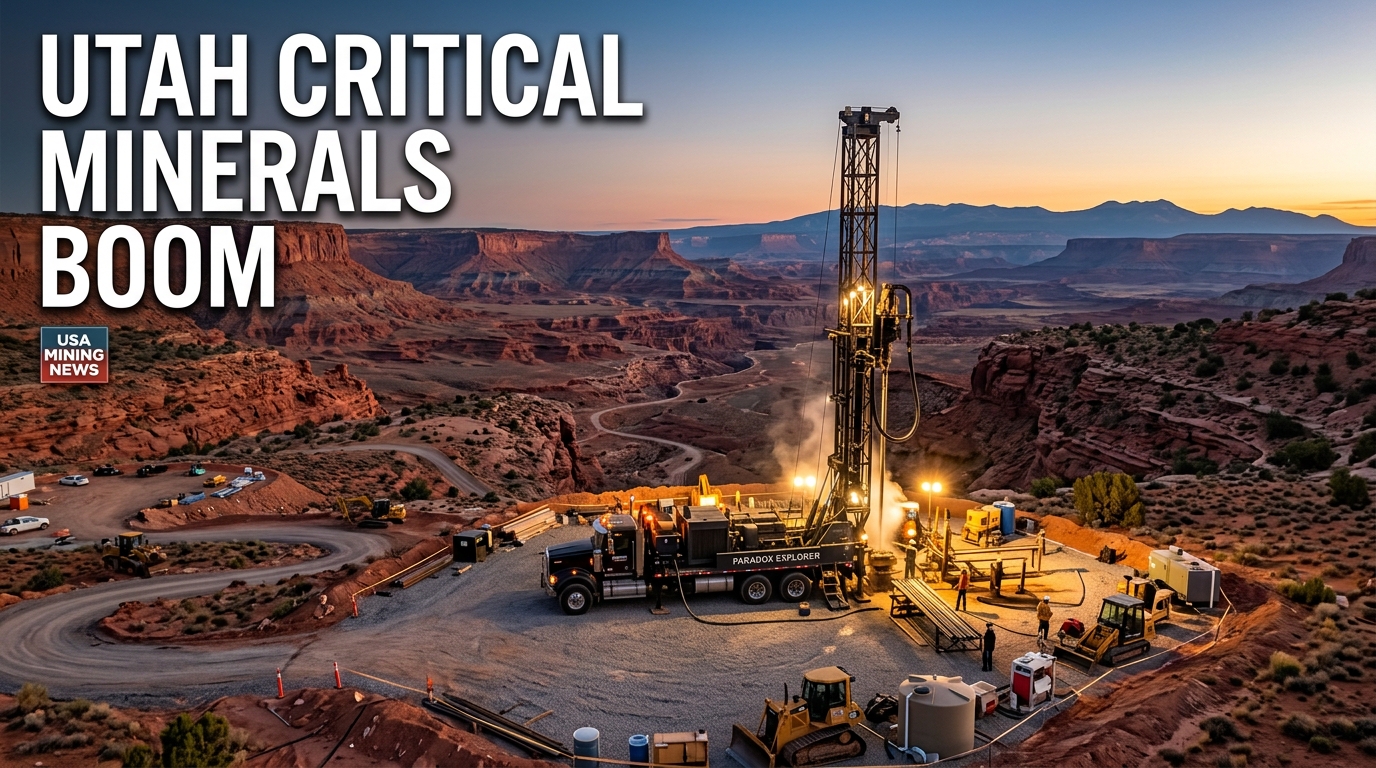
With permitting now in place, American Critical Minerals is rapidly advancing preparations for the drilling program. Site visits have been completed, and drill pad construction requirements have been assessed by Harrison Field Services, ensuring that all logistical and infrastructural needs are met for a smooth operational launch.
A central component of this operational readiness involves a strategic collaboration with RESPEC, a globally recognized firm known for its expertise in geoscience, engineering, data consulting, and integrated technology solutions. RESPEC will play a comprehensive role in the planning and execution of the drill program, encompassing logistical management, on-site supervision, and critical environmental considerations. Furthermore, RESPEC will provide essential geological services throughout the drilling process, including detailed core and brine handling and preparation for subsequent geochemical analysis. This ensures that the geological data collected is of the highest quality, providing accurate insights into the mineral content and geological structure of the deposits.
The company plans to initiate site mobilization and preparation activities by the third quarter of 2026. Each individual drill hole is projected to take approximately 45 days to complete, a timeline that allows for thorough data collection and adherence to safety and environmental protocols. Pekeski emphasized the strategic importance of this drilling phase: "Drilling is a major strategic step in validating the large amounts of historic data that we have from 22 oil and gas wells across and surrounding our Green River Project. It will also position us for drilling for both lithium and potash." This highlights the value of leveraging historical data, which can significantly de-risk exploration efforts and provide a clearer understanding of subsurface geology before committing to extensive new drilling campaigns.
Market Context and Strategic Importance of Critical Minerals
The Green River Project's multi-commodity focus on potash, lithium, and bromine places it firmly within the evolving landscape of critical mineral supply chains, which are increasingly vital for both national security and economic stability.
- Potash: An essential component in agricultural fertilizers, potash is crucial for global food security. The United States, while possessing notable domestic resources, still relies on imports for a significant portion of its potash supply. Projects like Green River can contribute to enhancing domestic fertilizer production capacity, thereby reducing vulnerability to geopolitical supply disruptions and price volatility in global commodity markets.
- Lithium: Dubbed "white gold," lithium is the cornerstone of rechargeable batteries powering electric vehicles (EVs), consumer electronics, and large-scale grid energy storage systems. The burgeoning demand for EVs and renewable energy necessitates a secure and diversified global supply of lithium. Currently, a substantial portion of the world's lithium comes from Australia (hard-rock) and South America (brine operations). A domestic US source, especially one that could be extracted synergistically with other minerals, presents a compelling opportunity to build out a resilient domestic battery supply chain and reduce reliance on foreign sources. The prospect of finding lithium in clastic zones, potentially amenable to different extraction methods than traditional brines, adds an interesting dimension to the technical possibilities.
- Bromine: Although less frequently discussed than lithium or potash, bromine is a specialized but critical industrial chemical. It finds applications in flame retardants, drilling fluids for the oil and gas industry, water treatment, and pharmaceuticals. Similar to lithium, bromine is predominantly sourced from brines, often as a co-product with other evaporite minerals. Securing domestic sources for bromine contributes to the overall resilience of the US industrial base.
The strategic advantage of a multi-mineral resource project lies in its potential for enhanced economic viability. The ability to extract and process more than one valuable mineral from the same geological endowment can lower per-unit production costs, diversify revenue streams, and mitigate risks associated with the price fluctuations of a single commodity. This integrated approach aligns well with broader government initiatives aimed at fostering domestic critical mineral production and reducing reliance on potentially unstable international supply chains.
Looking Ahead: Validation and Development
The commencement of drilling in Q3 2026 will initiate a crucial phase for American Critical Minerals. The primary objective is to validate the extensive historic data derived from 22 oil and gas wells in the project area. This validation is critical for upgrading resource classifications and moving towards definitive mineral resource estimates, which are fundamental for attracting further investment and planning future development.
Beyond validation, the exploration for both potash and lithium/bromine sets the stage for a diverse future for the Green River Project. Success in this initial drilling campaign could lead to phased development, potentially incorporating solution mining techniques prevalent in the Paradox Basin for potash, and exploring innovative extraction methods for brine-hosted lithium and bromine. As American Critical Minerals proceeds with its exploration and analysis, the broader mining industry and investors will closely monitor the results, recognizing the profound implications for domestic critical mineral supply and the ongoing energy transition. The Green River Project exemplifies the detailed, patient, and multi-faceted approach necessary to bring new, strategic resource projects to fruition in the United States.