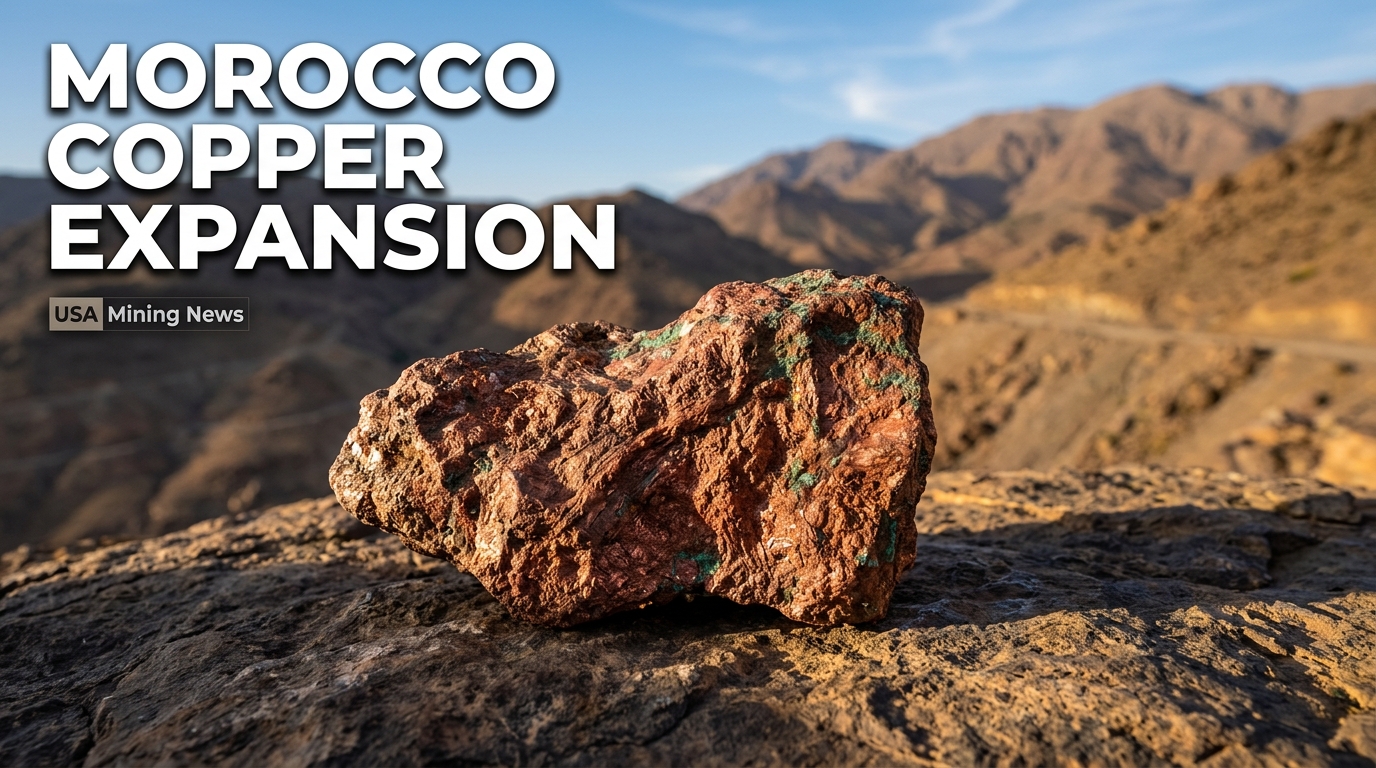
Talisman Metals has announced promising channel sampling results from its Tirzzit copper-silver project in Morocco, confirming significant malachite mineralisation at surface. The April 2026 program sampled a 700m segment of a 4.6km trend, yielding a weighted average of 1.25m thickness at 1.21% copper and 12.25ppm silver, with all seven channels exceeding the 0.3% copper cut-off. This data reinforces the project's potential as a sediment-hosted stratiform system, paving the way for a crucial maiden drill program.
Critical One Energy has entered into a Memorandum of Understanding (MoU) with Green Infrastructure Partners (GIP) to advance its Howells Lake Antimony-Gold Project in Ontario, Canada. This strategic alliance will focus on critical infrastructure development, including road construction and civil works, alongside specialized heavy equipment operator training for First Nation community members, positioning Howells Lake as a key North American source of essential critical minerals for defence, technology, and clean energy sectors. The agreement, announced June 1, 2026, aims to integrate the project within northern Ontario’s broader critical minerals infrastructure initiatives, with construction slated to begin in June 2026.
Military Metals sinks on revoked Slovak antimony project licence Staff Writer | May 29, 2026 | 9:40 am Critical Minerals Markets Canada Europe Specialty Minerals The underground workings at Trojarova. Credit: Molten Metals Military Metals (CSE: MILI) is contesting a decision by Slovakian environmental authorities to revoke the company’s exploration licence on the Trojarova antimony-gold project. In a statement this week, the Canadian explorer said the Ministry of the Environment of the Slovak Republic had cancelled the Trojarova licence “without appropriate justification”, and that it will “pursue all legal avenues” to fight the decision. Shares of Military Metals sank on the news, falling as much as 60% to a 52-week low of C$0.16. By Friday afternoon, it had recovered some losses, trading at a market capitalization of C$21.6 million ($15.7 million). Soviet-era project Trojarova, located near the capital city Bratislava, represents an advanced exploration stage project with considerable mining history. According to company website, the project is likely a continuation of the former Pezinok mine, one of Europe’s most significant antimony producers with a history going back over 200 years. Military Metals acquired the project in late 2024 , acting on the growing significance of antimony supply across the globe...
Rio Tinto has commenced a significant $1.5 billion expansion of its AP60 low-carbon aluminum smelter in Quebec, aiming to more than triple its annual primary aluminum production capacity to 220,000 tonnes. This strategic investment underscores the company's commitment to supplying lower-emissions metal to critical markets and positions Quebec as a vital hub for sustainable aluminum production, leveraging its abundant hydroelectric power. The project, supported by the Quebec government, also facilitates the gradual closure of older, higher-emissions potlines at the historical Arvida site.
The University of Edinburgh has licensed its innovative Gold Copper Diamide Extraction (GCDE) technology to mineral processing company Lithium Universe, marking a significant advance in sustainable metal recovery from electronic waste. This process offers a cleaner, more efficient alternative to traditional smelting and aggressive leaching, selectively extracting high-value gold and copper under mild conditions without harmful chemicals. Lithium Universe plans to deploy this solution globally, integrating it into its expanding precious metals recycling division to address the rapidly growing problem of e-waste and strengthen its position in the circular economy.
Pulsar Helium has significantly advanced its flagship Topaz project in Minnesota by acquiring 1,360 acres of crucial surface land for $2.48 million from Wolf Lands Inc. This strategic acquisition, which includes the vital Jetstream #7 well site, provides Pulsar with enhanced operational control and certainty as it moves decisively toward establishing Topaz as a major primary helium producer amidst a tightening global supply market. The move follows recent legislative action in Minnesota, which has created a more defined permitting framework for gas resource development, further de-risking Pulsar's development pathway.
On May 27, 2026, the <em>Energy Technology</em> podcast, hosted by Eve Thomas of <em>Offshore Technology</em>, delved into the critical question of whether the global Liquefied Natural Gas (LNG) market is headed for an oversupply or a significant shortage. Featuring insights from commercial LNG analyst James Voyle and professor of global energy Michael Bradshaw, the discussion highlighted the conflicting forces of rapid export capacity expansion, geopolitical supply chain pressures from events like the closure of the Strait of Hormuz, and the long-term threat of demand destruction posed by increasingly cost-effective renewable energy sources. This ongoing debate profoundly impacts energy strategy, infrastructure investment, and raw material demand across sectors, including mining operations reliant on stable and affordable energy.
Thunderstone, a US-based company, is advancing electrified mining technology that promises to extract critical minerals with significantly less rock movement than conventional methods. Its CEO, Eric Wasson-Burns, highlighted in a Q&A published May 28, 2026, the potential of this fluid-control system for improving heap leaching, tailings recovery, and ultimately enabling full in-situ mining. This innovative approach seeks to address the mining industry's escalating pressures for decarbonization and sustainable critical mineral supply by stimulating and directing liquid flow through ore bodies using high-voltage electrical discharges.
American Critical Minerals has secured final potassium prospecting permits from the US Bureau of Land Management for its Green River Project in Utah, set to commence on June 1, 2026. This pivotal development, the culmination of over a decade of work, will enable the company to initiate a seven-drill-hole program to evaluate historical potash data and explore for lithium and bromine within the Paradox and Leadville formations. The project underscores a strategic move towards bolstering domestic supply chains for essential agricultural and critical battery minerals in the United States.
Element 25 has announced the appointment of Regroup Australia for comprehensive mining services and ore haulage at its Butcherbird Manganese Mine in Western Australia, a crucial step in its plan to boost concentrate production to 1.1 million tonnes per annum. This integrated contractual model aims to enhance efficiency, reduce costs, and secure a robust pit-to-port supply chain, supporting both traditional ferroalloy markets and Element 25's planned high purity manganese sulphate monohydrate facility in Louisiana, US. The project, backed by a significant ore reserve and nearing financial close with the Northern Australia Infrastructure Facility, anticipates mechanical completion and commissioning in the first quarter of 2027.
Despite the recent May 2026 summit between US President Donald Trump and China's President Xi Jinping, China's dominant position in the global rare earth supply chain is expected to persist, according to Fitch Group's BMI. While the US sought assurances on critical mineral supplies, no formal agreements emerged, leaving a one-year suspension of some Chinese export restrictions set to expire in November 2026. This ongoing uncertainty underscores the urgency of US-led initiatives to build resilient domestic and international rare earth supply chains, as shortages of heavy rare earths like yttrium continue to impact key industries.
Fortescue has commenced construction on the 690MW Turner River solar farm and a 650MWh battery energy storage system at its Cloudbreak mine in Australia's Pilbara, marking a significant step in its "Real Zero" decarbonization initiative. These projects, alongside an aggressive fleet electrification program and extensive transmission network development, underscore the iron ore major's commitment to powering its operations entirely with renewable energy by 2028, setting a precedent for the global mining industry.
Blue Lagoon Resources (CSE: BLLG) has officially declared commercial production at its 100% owned Dome Mountain gold-silver project in British Columbia, Canada, marking a significant transition to active operations. This achievement, announced on May 25, 2026, follows a sustained underground mining rate exceeding 100 tonnes per day for over 30 consecutive days. The milestone is further underscored by a C$3 million strategic equity investment from offtake partner Ocean Partners Holdings, signaling strong market confidence in the project's future.
Canada's steel industry is confronting a significantly deeper and more protracted challenge from U.S. tariffs compared to its aluminum counterpart, with monthly export revenues estimated to be $500 million lower than pre-tariff levels. While federal support offers immediate liquidity, deemed a "short-term solution" by PwC Canada's Gemma Stanton-Hagan, the sector grapples with global oversupply and an inability to diversify away from its historically dominant U.S. market, signaling a potential long-term restructuring of North American trade dynamics.
<p>Stillwater Critical Minerals (TSXV: PGE) is making significant strides in advancing its Stillwater West multi-metal project in Montana, leveraging new rhodium assay results and a comprehensive chromium inventory to highlight its potential as a crucial future domestic source of critical minerals for the United States. Following an extensive 3,472-meter expansion drilling campaign conducted last year, the company is preparing to release an updated resource estimate next month, a pivotal step preceding the initiation of a preliminary economic assessment (PEA) later this year. This strategic progression positions Stillwater West as a key asset in the broader context of U.S. endeavors to secure its critical mineral supply chains, attracting both policy attention and investor interest, including a significant stake from Swiss-based bulk trader Glencore.</p>
The U.S. Department of Energy (DOE) has announced significant leadership changes, with Kyle Haustveit confirmed as Under Secretary of Energy and Alex Fitzsimmons appointed as Associate Deputy Secretary and Senior Advisor to Secretary Chris Wright. These appointments, occurring on May 22, 2026, signal a potential continued emphasis on domestic energy production, including hydrocarbons and geothermal, aligning with President Trump’s energy agenda and holding substantial implications for the U.S. mining sector, particularly coal and critical minerals.
Papyrus Australia has successfully pioneered a novel approach to sustainable mining by converting discarded banana plantation waste into biodegradable blast collars for open-cut operations. This innovation, highlighted by a A$4.2 million supply deal with TBS Mining Solutions, offers a compelling circular economy solution, addressing both agricultural waste challenges and the mining industry's demand for environmentally responsible consumables. The initiative aims to reduce methane emissions from decaying biomass while providing an effective, eco-friendly alternative for critical blasting operations.
<p></p>
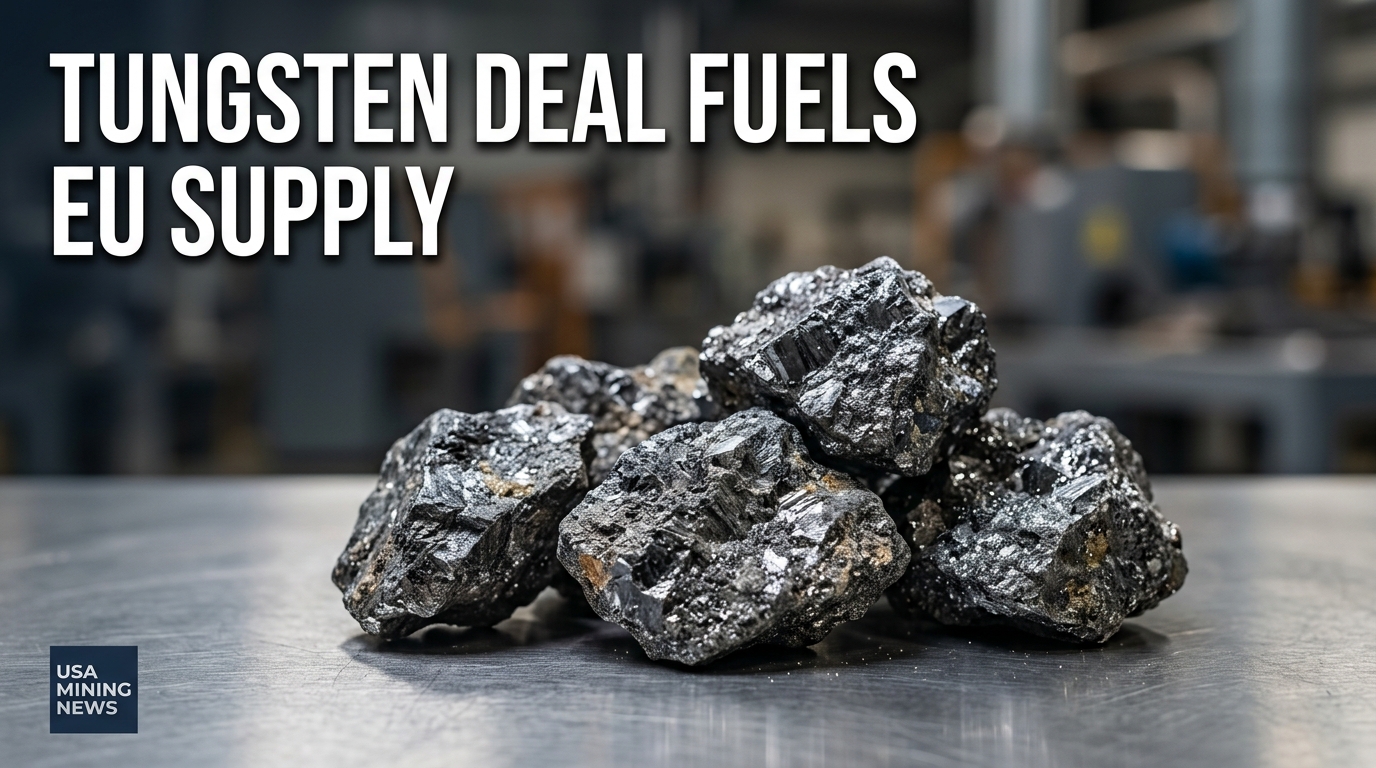
<p>In a significant development for the European critical minerals sector, Tungsten West has secured a $25 million bridging loan to propel the phased restart of its Hemerdon tungsten and tin mine in Devon, UK. This financial injection, provided by an entity controlled by substantial shareholder Gregory Coffey, is designed to maintain the project's rapid development pace, with fines gravity processing slated to commence in Q3 2026. The company is concurrently progressing towards finalising a larger $85 million debt package, which will ultimately repay the bridging loan and fully fund the mine's restart to a targeted capacity of 500 tonnes per hour by Q1 2027.</p>
<p>
Great Southern Copper has launched a sophisticated audio-frequency magneto-telluric (AMT) geophysics survey at its La Colorada prospect within Chile’s Especularita Project, covering 33km² to identify hidden porphyry copper deposits beneath a high-sulphidation lithocap. This strategic move, conducted by Southernrock Geophysics, aims to map depths over 1,000m and will directly inform first-pass scout drilling, poised to commence in the second half of 2026. The initiative underscores the company's commitment to unlocking significant copper resources in a geologically prospective region of Chile, known for hosting world-class deposits like Los Pelambres and El Pachon.
U.S. Secretary of Energy Chris Wright has issued an emergency order, effective May 22, 2026, to ensure grid stability and prevent energy shortfalls for 65 million Americans across 13 states and the District of Columbia. This directive authorizes PJM Interconnection and Talen Energy Corporation to operate Unit 4 of the Wagner Generating Station in Maryland beyond its typical operating limits, responding to a "growing resource adequacy concern" ahead of anticipated summer demand and generator outages. The action underscores the critical balance between evolving energy infrastructure and the unwavering need for reliable, affordable power crucial for energy-intensive sectors like mining.
Arafura Rare Earths has announced its Final Investment Decision (FID) for the Nolans Rare Earths Project in Australia’s Northern Territory, marking a significant step towards establishing the country's first fully integrated ore-to-oxide rare earths operation. This pivotal development, supported by strong financial commitments from the Australian government and robust international offtake agreements, positions Nolans to deliver 4,440 tonnes per annum of neodymium-praseodymium oxide, crucial for the automotive, wind energy, and high-technology sectors amidst a global drive to diversify critical minerals supply chains. Construction for the project is slated to commence in September 2026, with Hatch leading engineering, procurement, and construction management.
Botswana Minerals has announced a significant exploration breakthrough, leveraging Planetary AI’s Xplore platform to identify 36 copper anomalies across two of its northern Botswana licences. This AI-assisted study revealed targets in an under-explored corridor linking Namibia's Damara Belt with the geologically prolific Central African Copperbelt, exhibiting similarities to world-class deposits like Kamoa-Kakula and Tsumeb. The company plans to initiate fieldwork within three months to prioritize and advance these promising targets, underscoring the transformative role of artificial intelligence in modern mineral exploration and its potential implications for global copper supply.
Ionic Rare Earths (IonicRE) and Nth Cycle have forged a joint development and licensing agreement dated May 21, 2026, to revolutionize rare earth element (REE) refining in the US and globally. This partnership leverages Nth Cycle’s innovative electro-extraction technology to replace conventional oxalic acid processes, aiming to significantly reduce costs, mitigate supply chain dependencies on China, and lower the carbon footprint of REE production. The initiative supports IonicRE’s broader strategy for vertically integrated rare earth recycling in the US, aligning with the critical minerals framework established between the US and Australia.
<p><strong></strong></p>
<p>The global mining industry is undergoing a profound strategic reorientation, where the focus on critical minerals extends far beyond extraction, according to analyst Alejandro Gonzalez on May 21, 2026. Geopolitical forces are actively reshaping supply chains, transforming refining, recycling, and comprehensive supply chain control into the new primary battlegrounds. This shift necessitates a holistic approach to mineral security, emphasizing downstream processing and a circular economy to mitigate risks and secure vital resources for modern economies.</p>
<p><strong>
The United States and Bangladesh have formalized a significant energy cooperation agreement, with the U.S. Department of Energy and Bangladesh's Energy and Mineral Resources Division signing a Memorandum of Understanding on May 14, 2026. This accord aims to bolster Bangladesh's energy security and industrial development through increased imports of U.S. energy products, including LNG and LPG, while facilitating millions of dollars in energy infrastructure projects. The agreement underscores the U.S.'s strategy to expand its energy exports and global partnerships, presenting substantial implications for the global mining sector due to the extensive mineral demands of large-scale energy infrastructure and technology development.
Agnico Eagle Mines has significantly increased its strategic investment in junior explorer Wallbridge Mining, more than doubling its stake to 19.62% with an additional C$22.44 million investment. This move, part of a larger C$56 million private placement, aims to facilitate the completion of a Pre-Feasibility Study for Wallbridge's flagship Fenelon gold project in northern Quebec. The investment underscores Agnico's commitment to expanding its exposure to high-potential gold assets within Canada's prolific Abitibi region, solidifying its position along the strategic Sunday Lake deformation zone.
Massachusetts-based critical minerals refiner Nth Cycle and supply chain developer Ionic Rare Earths (ASX:IXR) have announced a joint development and licensing agreement to establish rare earth refining operations in the United States and globally. This strategic partnership aims to deploy Nth Cycle's proprietary electro-extraction technology within IonicRE's facilities, creating the first production pathway that bypasses China for both long-loop recycling to high purity rare earth forms and the essential chemical agents used in purification. The collaboration directly addresses a significant "hidden dependency" on Chinese-produced reagents, bolstering Western efforts to build a resilient and independent critical mineral supply chain.
The U.S. Department of Energy (DOE) issued an emergency order on May 18, 2026, authorizing PJM Interconnection, LLC to deploy backup generation in the Mid-Atlantic to mitigate potential blackouts during a heatwave and amid seasonal maintenance outages. This move, prompted by a request from PJM, underscores the critical importance of grid stability for industries like mining, which are heavily reliant on continuous, reliable power. The order highlights ongoing national energy security concerns and the economic impact of power outages, which cost the U.S. economy an estimated $44 billion annually.
Advanced Magnet Lab (AML) has secured a significant $2 million contract from the U.S. Defense Logistics Agency (DLA) to qualify domestic production of high-grade sintered NdFeB permanent magnets. This strategic award, announced on May 19, 2026, aims to bolster U.S. defense capabilities and commercial reliance on a secure, domestically sourced supply chain for critical magnet materials, leveraging AML's innovative PM-Wire manufacturing process and collaborative partnerships across the rare earth sector. The initiative is set to rapidly scale the manufacturing of these essential components, reducing dependence on foreign supply and enhancing national security.
Graphite One has announced it has secured a critical site in Conneaut, Ohio, for its Active Anode Materials (AAM) facility, a pivotal step in establishing a fully integrated U.S.-based graphite supply chain. This strategic location, offering extensive logistics and infrastructure advantages, will process graphite from the company's flagship Graphite Creek project in Alaska, which boasts the largest graphite deposit in the United States. Supported by over $2 billion in potential funding from the U.S. Export-Import Bank, this initiative is set to deliver essential anode materials for electric vehicles, grid-scale energy storage, and data centers by Q4 2027, significantly bolstering domestic critical mineral independence.
Metals One has advanced its collaboration with DISA Technologies, signing a definitive agreement to assess and potentially treat abandoned uranium mine waste at its Uravan Belt Uranium-Vanadium Project in Colorado, US. This initiative aims to recover valuable uranium and critical mineral concentrates while remediating historical environmental liabilities using DISA's High-Pressure Slurry Ablation (HPSA) technology. The partnership underscores a strategic move towards domestic critical mineral recovery and environmental stewardship within one of America's historically significant uranium districts.
On May 15, 2026, spot gold prices experienced a significant selloff, falling 3% to approximately $4,500 per ounce, driven by escalating concerns over global inflation, surging bond yields, a strengthening US dollar, and continued geopolitical tensions in the Middle East. This decline, which also impacted silver and copper, has prompted analysts to revise short-term price targets, even as bullion maintains a positive year-to-date performance. The situation underscores the profound influence of macroeconomic factors and geopolitical instability on the global commodity markets and the mining sector.
US President Donald J. Trump concluded a two-day summit in Beijing on May 15, 2026, without securing a critical agreement on rare earth minerals, despite labeling the visit a "success." This outcome underscores China's persistent dominance in the global rare earth supply chain and the continued vulnerability of Western industries, particularly in electric vehicles, semiconductors, and defense, to potential disruptions. The absence of a deal reinforces the growing prominence of critical minerals as a central point of geopolitical tension between the US and China, shifting focus from traditional tariffs to strategic control over essential raw materials.
Nouveau Monde Graphite has approved the final investment decision and secured full financing for its Matawinie graphite mine in Quebec, positioning it to become the largest graphite operation in the G7. With over $644.5 million mobilized and a strategic offtake agreement with the Government of Canada, this project is critically important for establishing a robust North American supply chain for battery anode materials, with commercial production anticipated by late 2028.
Water scarcity has quietly transitioned from a logistical footnote to a critical impediment for promising mining projects globally, significantly impacting permitting timelines, financial viability, and community relations. As of mid-May 2026, industry experts like Justin Vandenbrink of Woodard & Curran highlight that water strategy is increasingly a core development issue rather than a downstream environmental task. This challenge is driving the emergence of innovative solutions, with US-based Genesis Systems pioneering atmospheric water generation technology to produce potable water directly from the air, offering a potentially transformative approach to securing this essential resource for operations.
MAX Power Mining has partnered with the City of Moose Jaw to accelerate the potential commercialization of natural hydrogen within Saskatchewan’s Regina-Moose Jaw Industrial Corridor, a strategic energy hub. This collaboration aims to leverage the Lawson natural hydrogen discovery, Canada’s first, and the promising Genesis Trend to establish Saskatchewan as a global leader in clean energy. The initiative seeks to connect significant resource potential with future demand, driven by MAX Power’s recent identification of a robust second drill target at the Bracken well, which showed high helium values.
The U.S. Department of Energy (DOE) has awarded over $94 million to eight American companies to accelerate the deployment of advanced light-water Small Modular Reactors (SMRs). This significant federal investment, announced on May 14, 2026, targets critical gaps in licensing, supply chain development, and site preparation, with the aim of bolstering domestic nuclear energy generation by the 2030s and fulfilling President Trump’s "nuclear energy renaissance" agenda. The initiatives are poised to create substantial opportunities across the nuclear fuel cycle, driving demand for uranium and specialized manufacturing components, and directly impacting the mining sector.
<p></p>
<p>NGOs have issued a significant challenge to Anglo American's claims of verifiable environmental and community outcomes at its flagship digital Quellaveco copper mine in Peru. The report, published on May 14, 2026, specifically questions whether the advanced technological approaches touted by the mining giant are effectively translating into tangible and demonstrable benefits for local ecosystems and communities. This development casts a spotlight on the broader industry's push for "smart mining" and the critical importance of transparent, auditable ESG performance in securing and maintaining a social license to operate.</p>
<p>
Shuka Minerals has commenced phase one drilling at its Kabwe Zinc Mine in Zambia, targeting a 50% increase in the No.2 ore body's resource. This 2,000-meter program, contracted to Ox Drilling, aims to further assess the significant zinc and lead mineralization while also investigating the potential for strategic by-products like silver, vanadium, gallium, and germanium, underscoring a broader focus on critical mineral development in Africa.
Amnesty International has accused major lithium projects in Nevada, including those by Ioneer and Lithium Americas, of advancing without obtaining free, prior, and informed consent (FPIC) from affected Indigenous Peoples. This highlights a significant disparity between US federal permitting requirements for consultation and international human rights standards like the UN Declaration on the Rights of Indigenous Peoples (UNDRIP). While companies assert full compliance with US law, Amnesty argues these projects on ancestral lands fall short of ethical sourcing norms, potentially posing long-term risks to the emerging battery metals hub in Nevada.
The U.S. Department of Energy (DOE) has renewed two critical emergency orders for Puerto Rico, authorizing the local electric authority to exceed normal generation limits and enhance vegetation management to ensure grid stability. Effective immediately and extending through August 9, 2026, these measures aim to bolster energy reliability ahead of peak summer demand and the upcoming hurricane season, building on previous successes in preventing island-wide blackouts. This initiative highlights the crucial role of resilient energy infrastructure, offering valuable lessons for the global mining sector concerning operational continuity and investment stability.
Operational shutdowns and acute logistics disruptions across vital aluminium smelters in the Middle East are poised to drive the global aluminium market towards a historic supply deficit. This critical development, flagged by CRU's Paul Williams on May 13, 2026, could sustain aluminium prices near the significant benchmark of $4,000 per tonne, underscoring the delicate balance of global commodity supply chains. The region’s pivotal role in global aluminium production means these challenges have far-reaching implications for downstream industries and international investors.
On May 11, 2026, the U.S. Department of Energy announced the award of contracts for the exchange of approximately 53.3 million barrels of crude oil from the Strategic Petroleum Reserve. This significant action is part of the United States’ 172-million-barrel commitment to the International Energy Agency’s collective effort to stabilize global oil supplies, marking a critical step in addressing short-term market disruptions and bolstering national energy security. The initiative, hailed by the current administration, further secures a 28% return premium in crude barrels, enhancing the SPR's long-term strength.
<p></p>
<p>Power Minerals is set to commence an extensive diamond drilling program at its recently acquired Morro do Ferro Rare Earths Project (MDF Project) in Minas Gerais, Brazil, later this month. This significant step, following last month's acquisition, aims to expand the known high-grade magnetic and total rare earth oxide mineralization, validate historical results, and swiftly advance the project towards a maiden Mineral Resource Estimate, positioning it as a potentially critical supplier in the global REE market.</p>
<p>
Ontario has initiated construction on the first small modular reactor (SMR) within the G7, marking a significant milestone in Canada's nuclear energy strategy amidst rising power demand and tightening fuel markets. The Darlington SMR project, led by Ontario Power Generation, aims to deliver 1,200 MW of capacity by the end of the decade, leveraging the GE Hitachi BWRX-300 reactor design. This development is poised to bolster Canada's energy security, stimulate domestic supply chains for critical minerals, and position the nation as a key player in the global SMR deployment race, though it also introduces new considerations regarding enriched uranium fuel sourcing.
Rare Earths Americas (NYSE: REA) successfully launched its initial public offering on the NYSE American on May 8, 2026, raising $63.3 million and quickly seeing its stock surge over 26% above its IPO price. The company is advancing a portfolio of four heavy rare earth exploration projects in Brazil and the United States, with a particular focus on its Shiloh district in Georgia, which management believes could represent a significant, novel discovery that transforms the US rare earth supply landscape. REA’s strategy emphasizes the production of rare earth concentrates for existing Western processors, aiming to mitigate technical risks associated with separated oxide production and bolster secure supply chains for critical magnet materials.
The U.S. Department of Energy (DOE) is investing $36 million in the University of North Dakota’s Energy & Environmental Research Center to advance carbon dioxide-based Enhanced Oil Recovery (EOR) in the Bakken shale formation. This funding, part of the $145 million Bakken EOR–Cracking the Code program, aims to unlock billions of additional barrels of oil by integrating laboratory research, AI modeling, and six field pilot projects. The initiative also leverages captured CO2 from coal-fired power plants, connecting energy production with carbon utilization strategies, thereby supporting domestic energy security and innovative resource management.
<p></p>
<p>Emirates Global Aluminium (EGA) and ADNOC Logistics & Services (ADNOC L&S) have forged a significant strategic alliance aimed at bolstering the resilience and efficiency of the global aluminium supply chain. Announced on May 8, 2026, at the "Make it in the Emirates" event, this high-level agreement will explore enhanced commercial ties across logistics, transportation, fleet management, and infrastructure, with the potential for a dedicated joint venture. The collaboration leverages ADNOC L&S's extensive maritime capabilities and EGA's substantial global shipping requirements, promising enhanced operational synergies and support for the UAE's industrial diversification goals.</p>
<p>
Mining-Technology.com has introduced a new free 'Premium Content' subscription, providing readers with access to deeper analysis, features, and data-led insights backed by its parent company, GlobalData. Launched on May 8, 2026, this initiative aims to protect intellectual property and better understand audience engagement in a media landscape increasingly challenged by AI, while delivering valuable, actionable intelligence to mining professionals. The service requires a simple free registration, with plans for enhanced user profile functionality in the future.
Gold Reserve has announced the formation of American Heralds Mining Corporation, a new US-based entity, and plans a strategic spin-out to transfer its Venezuelan mining interests, including the Siembra Minera project, and its Alaskan property to American Heralds. This initiative, targeting a Q3 2026 completion, aims to bolster US critical mineral supply chains, aligning with national security objectives and setting the stage for American Heralds' potential US IPO, while Gold Reserve transitions to an investment holding company under a new name, Hamilton American Holdings.
Trafigura, a global commodity trading giant, has signed a term sheet with the Egyptian Aluminium Company (Egyptalum) and Metallurgical Industries Holding (MIH) to develop a new primary aluminium smelter and an adjoining anode plant at Egyptalum’s Nag Hammadi site. This significant initiative, estimated to cost between $750 million and $900 million, will nearly double the location's current production capacity to 300,000 tonnes per annum of primary aluminium, strategically enhancing global supply chain diversification amidst tightening inventories.
Tharisa Minerals has awarded a pivotal five-year underground mining contract to Cementation Africa, marking a significant strategic shift towards unlocking the long-term, multi-generational potential of its Tharisa Mine in South Africa. This agreement, structured on an innovative alliance-style model, builds on Tharisa's recently announced $547 million investment into underground platinum group metals (PGM) mining and aims to extend the mine's life and enhance operational performance within the prolific Bushveld Complex. The transition will see open-pit operations continue in parallel with new underground development, securing access to deeper mineralized zones.
Gold prices experienced a significant rebound on May 5, 2026, surging by 3.6% to over $4,700 per ounce, as optimism surrounding a potential US-Iran peace deal alleviated concerns over inflation and a prolonged period of high interest rates. This upswing, which also saw silver climb over 6%, marks a reversal after a 10-week conflict had previously caused bullion to decline by 11%. The market now shifts its focus to upcoming US economic data and the Federal Reserve's monetary policy, though official-sector gold purchases continue to underpin a positive long-term outlook for the metal.
Commodity trading heavyweight Trafigura is in advanced negotiations with Egyptian Aluminium Company (Egyptalum) and Metallurgical Industries Holding Company (MIH) to develop a new 300,000-tonne-per-annum (tpa) primary aluminum smelter and an associated 150,000-tpa anode plant in Egypt. This significant project, estimated at $750-$900 million, aims to nearly double Egyptalum’s existing production capacity and provide a critical new source of primary aluminum amidst global supply shortages and geopolitical disruptions in the Middle East.
The Canadian Institute of Mining Metallurgy and Petroleum (CIM) has announced the appointment of Lucy Potter as its president-elect for the 2028-2029 term, effective May 2028. Potter, currently General Manager, Technical and Sustainability, at Rio Tinto Iron & Titanium and Diamonds, brings over 25 years of extensive experience across the mining value chain, including senior leadership roles at major global miners. Her appointment signals a strategic focus on balancing growing global demand with sustainable development and fostering operational excellence within the Canadian minerals and metals industry.
A recent op-ed by Randy Allen, published May 4, 2026, highlights that the escalating copper supply crisis is fundamentally a sulfur management crisis, exacerbated by critical global supply chain disruptions. Recent export halts from China and Russia, alongside restrictions from other nations, have exposed the strategic importance of sulfuric acid, challenging the mining industry's long-held perception of sulfur as merely a waste product. This shift necessitates a re-evaluation of processing methods to transform sulfur into a valuable revenue stream, crucial for securing future copper production and domestic industrial self-sufficiency.
<p>
</p>
Ontario is set to enact new legislation this autumn to significantly reduce regulatory burdens on early-stage mining projects, aiming to catalyze private investment and shorten development timelines. This move coincides with a strategic pivot in the province's mineral strategy from electric vehicle components towards "defence metals," amidst stalled battery plant projects. Furthermore, Ontario is strongly backing Toronto's bid to host the NATO Defence, Security and Resilience Bank, leveraging its robust mining finance and defence sectors to strengthen North American supply chains and influence ongoing Canada-United-States-Mexico Agreement (CUSMA) review discussions.
Cove Kaz Capital Group and Skyline Builders Group have signed a definitive merger agreement, anticipating the formation of Kaz Resources, a Nasdaq-listed entity under the ticker ‘KAZR’. This strategic consolidation aims to establish a global leader in critical minerals, particularly tungsten and rare earths, destined for the US defense and industrial sectors. The merger, which includes the significant acquisition of Kaz Critical Minerals' 15 licenses in Kazakhstan, is strategically poised to leverage substantial US government financial backing for its advanced exploration and late-stage projects.
Silver Sands Resources has signed a definitive agreement to acquire a 100% interest in the Fairfield Gold Project in Mexico’s State of Nayarit from Fairfields Gold. This strategic move, involving approximately $675,000 in cash and 5.15 million common shares over four years, positions Silver Sands to explore a historically significant property with high-grade gold and silver mineralization identified by ASARCO nearly a century ago. The acquisition underscores the project's exploration potential within Mexico, a key mining jurisdiction.
Endeavour Mining reported a mixed operational and financial performance for Q1 2026, with gold production falling to 282,000 ounces from 341,000 ounces in Q1 2025. Despite this, the company achieved record financial results, including an 81% increase in EBITDA to $872 million, driven by a significantly higher average realised gold price of $4,810/ounce. Endeavour is also progressing its cornerstone Assafou development project, targeting a final investment decision by year-end 2026, further solidifying its future growth pipeline.