A Critical Mineral Breakthrough in Utah: American Tungsten & Antimony Strikes High-Grade Antimony
In a significant development for the United States' critical mineral independence, American Tungsten & Antimony (ATA) announced on March 12, 2026, the discovery of high-grade antimony from its initial drilling program at the Little Emma Prospect. Located within the company’s wholly owned Antimony Canyon Project in Utah, these findings suggest the potential for a substantial domestic antimony system, providing a crucial step towards de-risking vital U.S. industrial and defense supply chains.
The U.S. Government has officially classified antimony as a critical mineral, signifying its indispensability to national security and economic prosperity. This classification highlights the strategic importance of domestic sources, especially given the nation's current heavy reliance on foreign supply, predominantly from China. American Tungsten & Antimony’s latest results directly address this vulnerability, positioning the company as a key player in bolstering the American supply of essential commodities.
American Tungsten & Antimony Uncovers High-Grade Antimony
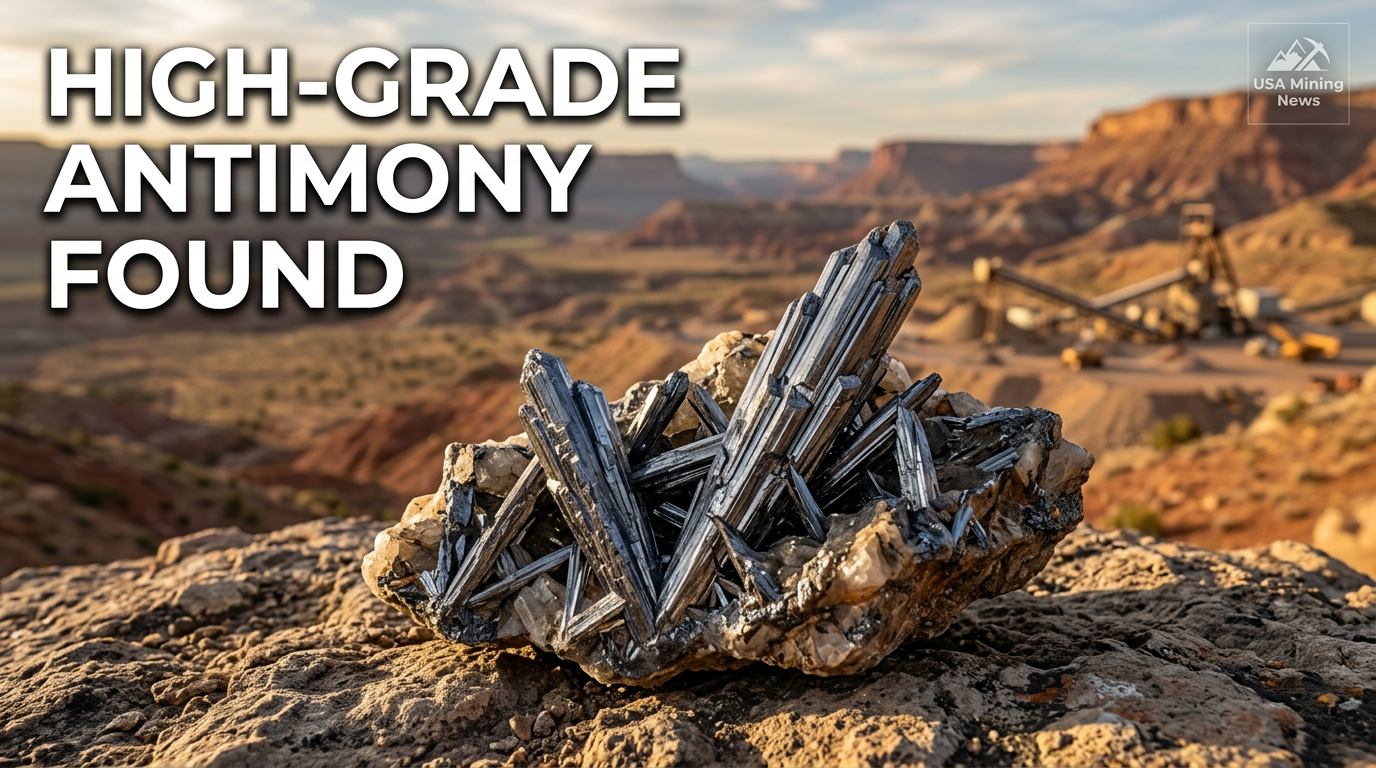
The initial drilling program at the Little Emma Prospect has yielded promising results, encountering shallow, high-grade stibnite mineralization. Stibnite, the primary ore for antimony, indicates a robust geological setting. These early findings are a strong validation of American Tungsten & Antimony’s geological model for the Antimony Canyon Project and suggest significant continuity within the mineralized system. Such early success in a maiden drilling campaign is generally a positive indicator for future resource development.
Andre Booyzen, Managing Director of American Tungsten & Antimony, expressed enthusiasm for the discovery. "Intersecting mineralisation in four of our first seven holes is an exceptional start at Antimony Canyon," Booyzen stated. He further highlighted the quality of the discovery, noting, "Outstanding grades of up to 66.47% Sb [antimony] highlight the strength of the system. These results compare very favourably with grades reported from major North American antimony deposits such as the Stibnite Gold Project in Idaho, currently being advanced by Perpetua Resources." This comparison provides important industry context, underscoring the potential economic viability and scale of the Utah discovery against established projects.
Detailed Drilling Results and Geological Significance
The specifics of the initial drilling intercepts provide a deeper understanding of the mineralization's quality and depth. Key findings reported by American Tungsten & Antimony include:
- An intercept of 11.03 meters at 3.1% antimony from a shallow depth of 25.91 meters, which notably included a higher-grade section of 2.62 meters at 12.54% antimony from 29.2 meters.
- Additional robust mineralization was found with 8.47 meters at 2.67% antimony from 31.15 meters, featuring an enriched zone of 2.2 meters at 9.69% antimony from 36.88 meters.
- A further intercept revealed 2.14 meters at 3.02% antimony from 40.23 meters.
These grades, particularly those exceeding 9% and culminating in the "outstanding grades of up to 66.47% Sb" mentioned by Mr. Booyzen, are considered very high for antimony deposits. Such shallow, high-grade mineralization is attractive from an economic standpoint, potentially leading to lower mining costs and faster project development. The presence of mineralization in four out of the first seven holes drilled suggests a widespread and continuous mineralized body, supporting the geological model that predicted such discoveries.
Antimony's Strategic Importance to U.S. National Security
The significance of this discovery extends far beyond the immediate geological and metallurgical results because of antimony's role as a critical mineral. The U.S. Government’s designation underscores the metal's vital applications:
- Defense Systems: Antimony is used in munitions, specialty alloys for military components, and as a hardening agent for lead in bullets.
- Semiconductors: Essential for certain specialized semiconductor applications, particularly in infrared detectors and diodes.
- Batteries: Increasingly used in innovative battery technologies, including molten salt batteries and lead-acid batteries for grid storage applications.
- Flame Retardants: Antimony trioxide is a prominent synergist in flame retardant formulations for plastics, textiles, and coatings, critical for fire safety.
- Advanced Manufacturing: Its unique properties make it valuable in various advanced material science applications.
Despite this broad spectrum of critical uses, the United States faces a significant supply chain vulnerability. The country currently relies heavily on imports, with China supplying a dominant share of the global antimony market. This dependency poses geopolitical risks and potential supply disruptions, making domestic exploration and production initiatives, such as American Tungsten & Antimony’s Antimony Canyon Project, strategically imperative for safeguarding U.S. national and economic security.
The Broader Antimony Canyon Project and District-Scale Potential
The Little Emma Prospect is not an isolated occurrence but part of a larger, historically significant mineralized district. American Tungsten & Antimony's patented claim block at Antimony Canyon encompasses an area with more than 20 historic antimony mines. This historical mining activity provides strong evidence of a substantial antimony-rich system within the district, indicating significant potential for further discoveries and resource delineation beyond the initial drilling area. The understanding of district-scale potential is fundamental in mining exploration, as it suggests the presence of a mineralized belt rather than just an isolated deposit, offering a larger target for future growth and investment.
The geological groundwork laid by past operations, even if small-scale, often guides modern explorers to high-potential areas. It minimizes grassroots risk and provides valuable insights into the type and style of mineralization. The potential for a "substantial antimony system" as suggested by ATA is thus grounded not just in new drill results but also in the rich mining history of the region.
American Tungsten & Antimony's Vision for Domestic Supply Chains
American Tungsten & Antimony’s strategic imperative is clear: to re-establish a robust domestic supply of both antimony and tungsten. These two metals are considered vital to not only defense but also broader industrial supply chains. The company's portfolio extends beyond the Antimony Canyon Project in Utah, encompassing several other development-stage assets:
- The Tennessee Mountain Tungsten Project in Nevada.
- The Sage Hen Tungsten Project in Nevada.
- The Nightingale Tungsten Project in Nevada.
- The Dutch Mountain Tungsten Project in Utah.
This diversified portfolio of tungsten and antimony projects aligns with the broader U.S. government strategy to reduce foreign dependency on critical minerals. Tungsten, like antimony, is known for its extreme hardness and high melting point, making it essential in cutting tools, armor-piercing ammunition, and various high-temperature applications. American Tungsten & Antimony's focus on these dual critical minerals positions it strategically to contribute significantly to American industrial resilience.
Outlook: Re-establishing a Domestic Antimony Supply Chain
The latest results from the Little Emma Prospect are a compelling starting point for American Tungsten & Antimony. The next steps will likely involve further extensive drilling programs to define the full extent of the mineralization, update geological models, and potentially move towards an initial resource estimate. Concurrently, metallurgical testing will be crucial to understand how best to process the stibnite ore into a marketable antimony product.
For the broader U.S. mining industry and policymakers, this discovery offers a tangible step toward securing a domestic supply of a critically important metal. Should American Tungsten & Antimony successfully develop the Antimony Canyon Project into a producing mine, it would significantly reduce the nation's reliance on often volatile global supply chains, fostering greater economic stability and national security. The success of projects like Antimony Canyon will be closely watched as the U.S. continues its strategic push to onshore critical mineral production and build a more resilient future against geopolitical and economic uncertainties.