In a significant move poised to bolster the global supply of critical minerals for the burgeoning energy transition, mining giant Rio Tinto announced on March 11, 2026, it has obtained a substantial financing package totaling $1.17 billion (£872.27 million) for its Rincon lithium project in Salta Province, Argentina. This crucial financial backing is set to accelerate the development of a flagship project vital for the electric vehicle (EV) battery supply chain, demonstrating a clear commitment to diversifying Rio Tinto's portfolio into future-facing commodities.
Strategic Financing Bolsters Rincon Development
The $1.17 billion financing package represents a pivotal milestone for the Rincon project, which carries an estimated total investment requirement of $2.5 billion. This multi-sourced financial commitment underscores the robust support from both international development finance institutions and export credit agencies, reflecting the strategic importance of the project on a global scale. The consortium providing these funds includes:
- International Finance Corporation (IFC): A member of the World Bank Group, the IFC focuses on private sector development in emerging markets. Its involvement signals an endorsement of the project's developmental impact and sustainability credentials.
- Export Finance Australia (EFA): Australia's export credit agency, EFA's participation highlights the strategic importance of critical minerals projects for Australian companies operating abroad and supports their global competitiveness.
- IDB Invest: The private sector arm of the Inter-American Development Bank Group, IDB Invest's involvement underscores the project's regional significance and potential for sustainable economic development in Latin America.
- Japan Bank for International Cooperation (JBIC): A Japanese public financial institution, JBIC's mandate often includes securing stable supplies of natural resources for Japan, indicating the project's importance for Japanese industrial supply chains.
Jérôme Pécresse, Rio Tinto's aluminium and lithium chief executive, emphasized the strategic importance of this funding. "This financing package broadens our funding sources for the Rincon project and supports the continued execution of our lithium growth pipeline, which is underpinned by the attractive long-term outlook driven by the energy transition," Pécresse stated. He further expressed appreciation for the "strong support" from the lending institutions, highlighting the collaborative effort required for such large-scale, capital-intensive ventures. The diversification of funding sources is a prudent strategy in the mining sector, mitigating risks and demonstrating financial robustness to stakeholders and shareholders alike.
Rincon Project: A Deep Dive into Operations and Timeline
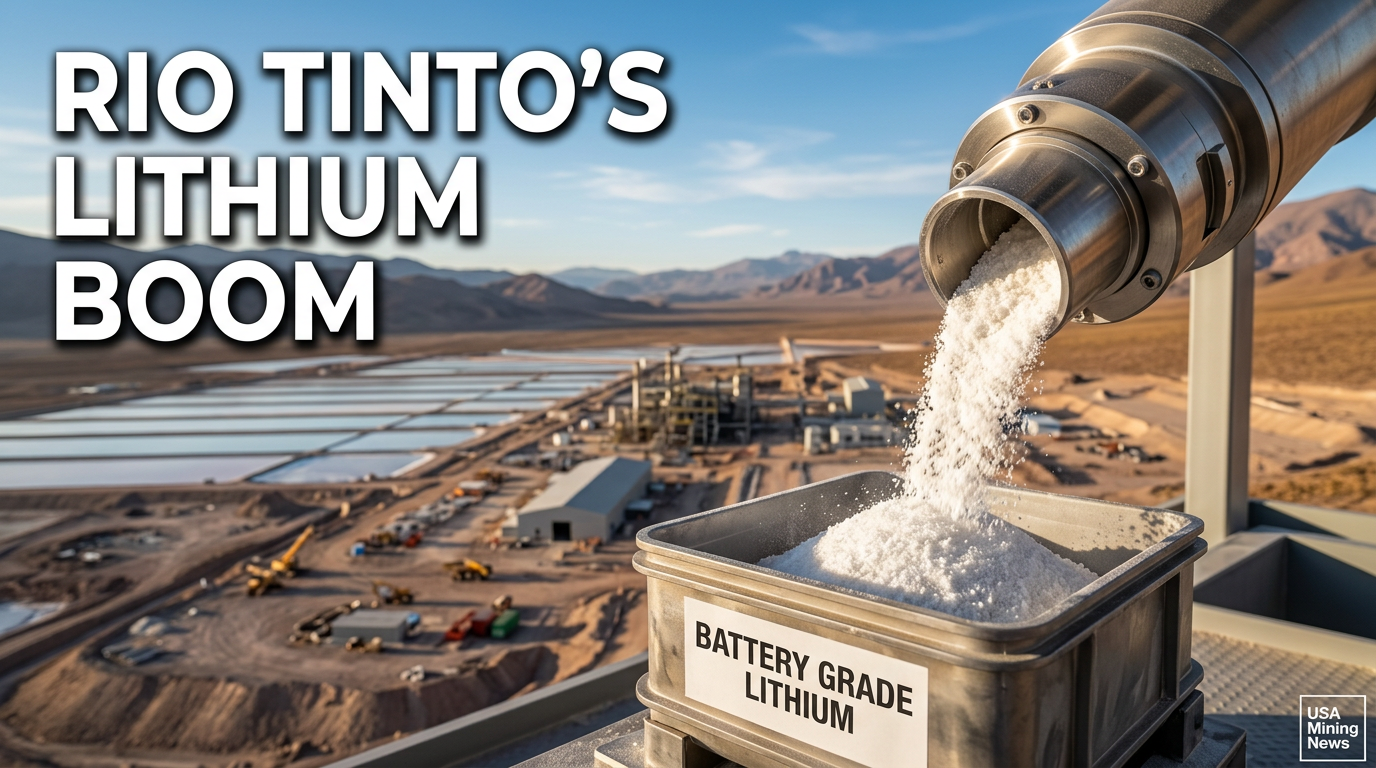
The Rincon lithium project is strategically located in Salta Province, within the heart of Argentina’s portion of the "Lithium Triangle"—a region spanning parts of Argentina, Bolivia, and Chile, known for hosting the world's largest lithium brine reserves. The project is designed to produce approximately 60,000 tonnes per annum (tpa) of battery-grade lithium carbonate, a critical component in lithium-ion batteries powering electric vehicles and grid-scale energy storage solutions.
Operational details and the development timeline for Rincon are critically important for tracking its contribution to future lithium supply:
- Commodity Focus: Battery-grade lithium carbonate, emphasizing the project's direct relevance to high-value applications in the EV market.
- Production Target: 60,000 tpa, a significant volume that will position Rincon as a major global supplier once at full capacity.
- Total Investment: The estimated $2.5 billion capital expenditure reflects the scale and complexity of developing a world-class lithium brine operation.
- Construction Commencement: Plant construction initiated in 2025, alongside critical preliminary works such as camp expansion and site infrastructure development. This early groundwork is fundamental for ensuring efficient project execution.
- Production Start: Scheduled to commence in 2028. This aligns with broader industry expectations for new supply to meet escalating demand projections.
- Ramp-up Period: Production will undergo a gradual increase to full capacity over a three-year period, from 2028 to 2031. This phased approach is typical for complex chemical processing plants, allowing for optimization and de-risking of operations.
- Operational Lifespan: A robust 40-year operational life is anticipated, providing a long-term, stable source of lithium and offering significant economic contributions to the region over decades.
The development of brine-based lithium projects like Rincon involves sophisticated processing technologies to extract lithium from underground brine reservoirs and then purify it to battery-grade specifications. These projects often require substantial water and energy management strategies, as well as meticulous environmental impact assessments, given their location in often arid regions.
Argentina's Growing Role in the Global Lithium Supply Chain
Argentina has rapidly emerged as a key player in the global lithium market, capitalizing on its immense brine resources within the Lithium Triangle. The Rincon project's advancement further solidifies the nation's position as a preferred destination for critical minerals investment. The Argentine government has actively sought to attract foreign investment in its mining sector, recognizing the economic potential and job creation opportunities. Projects of Rincon's scale bring not only capital but also advanced technology and infrastructure development to remote regions of the country.
The success of projects like Rincon is crucial for diversifying the global lithium supply, which has historically been concentrated in a few jurisdictions. As demand for lithium continues to skyrocket with the accelerating shift towards electric vehicles, ensuring a stable and ethical supply chain from multiple sources becomes paramount for automakers and battery manufacturers worldwide.
Broader Strategic Context for Rio Tinto
The Rincon project is a cornerstone of Rio Tinto's strategy to become a significant producer of battery materials, aligning with a broader industry trend among major diversified miners to pivot towards commodities essential for the clean energy transition. This move signifies a conscious effort by Rio Tinto to evolve its portfolio beyond traditional stalwarts like iron ore, copper, and aluminum.
This commitment to future-facing minerals is further exemplified by other recent strategic investments by the company. Earlier in March 2026, Rio Tinto approved a £354.61 million investment for the Zulti South project at Richards Bay Minerals (RBM) in South Africa. This decision lifted a suspension that had been in effect since January 2020, demonstrating a renewed commitment to unlocking value from long-term assets. The Zulti South investment is designed to extend RBM's operational life until 2050. RBM currently operates from the Zulti North lease area, encompassing a mineral separation plant and a smelting facility, producing critical minerals like ilmenite, rutile, and zircon – used in a range of industrial applications, including ceramics, pigments, and advanced materials.
These parallel investments—one in a new, greenfield lithium project in South America and another in extending the life of an existing heavy mineral sands operation in Africa—illustrate Rio Tinto's comprehensive approach to optimizing its asset base and positioning itself across various commodity cycles vital for modern industrial and technological demands.
Market Implications and Future Outlook
The projected 60,000 tpa of battery-grade lithium carbonate from Rincon will represent a substantial addition to global supply, coming online at a critical juncture when electrification efforts are scaling exponentially. This new supply is essential for meeting the ambitious production targets of EV manufacturers and contributes significantly to de-risking the automotive supply chain from potential raw material shortages.
However, the lithium market, while experiencing robust demand growth, is also subject to price volatility, geopolitical influences, and technical challenges in project execution. Rio Tinto's experience in large-scale mining operations and its commitment to best practices in environmental and social governance will be crucial in navigating these complexities. The involvement of development and export finance institutions not only provides capital but also often brings enhanced scrutiny and standards for project development, which can contribute to long-term sustainability and community acceptance.
Looking ahead, the successful ramp-up of Rincon will not only validate Rio Tinto's strategic pivot into lithium but also serve as a benchmark for future large-scale brine projects globally. The industry will be closely watching as production commences in 2028, contributing to the energy transition and shaping the future of global critical mineral supplies from the heart of the Lithium Triangle.