Utah Bolsters Domestic Lithium Production with Landmark $212 Million Tax Credit for Anson’s Green River Project
A Significant Boost for Utah’s Emerging Lithium Sector
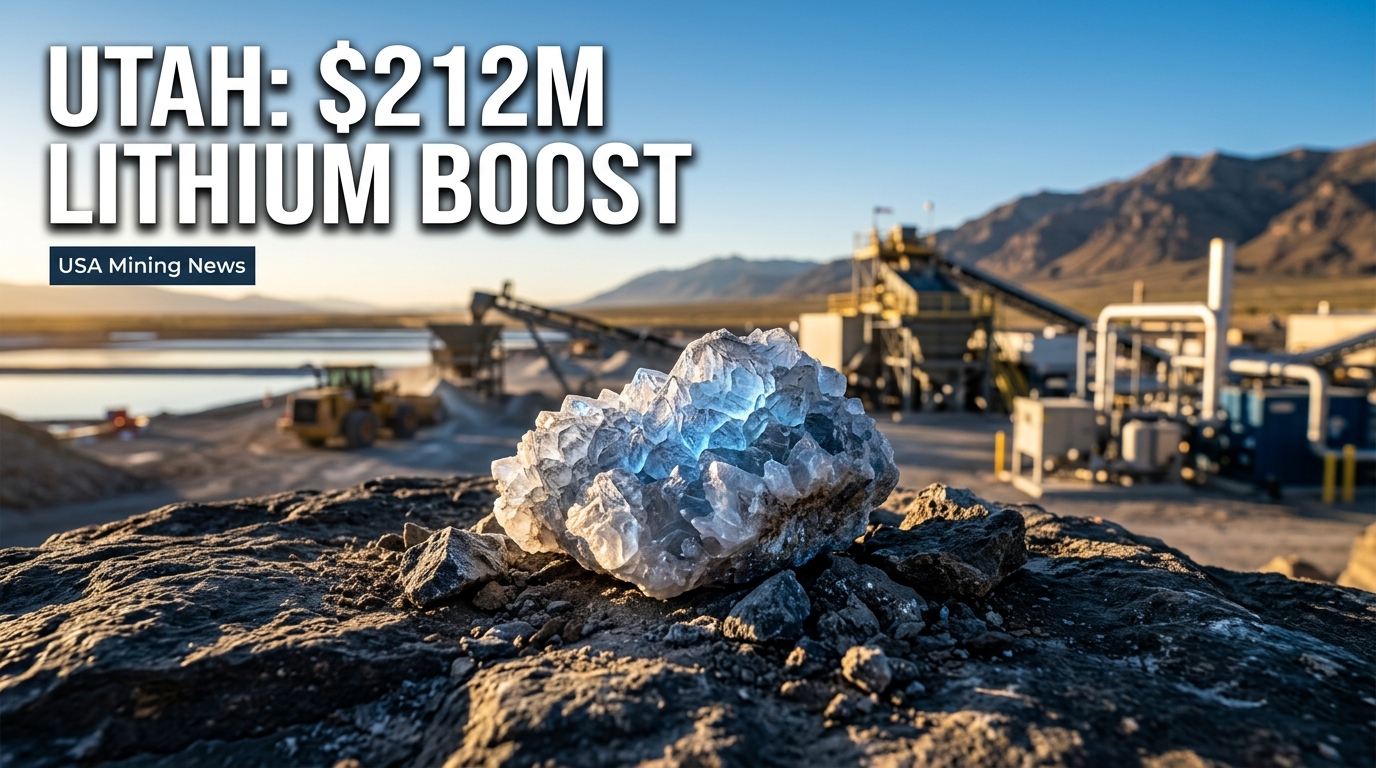
Salt Lake City, Utah – September 11, 2026 – In a strategic move poised to significantly advance domestic critical mineral production, Anson Resources, an Australian-listed company, has received approval for a substantial tax credit valued at approximately $212 million (A$295.38 million) from the Utah Governor’s Office of Economic Development (GOED). This crucial financial incentive is directed towards Anson’s Green River Lithium Project, situated within the geologically prospective Paradox Basin in Utah, reinforcing the state’s commitment to fostering economic growth and securing vital resources for the nation.
The Green River Lithium Project is operated by A1 Lithium, a wholly-owned U.S. subsidiary of Anson Resources, underscoring the direct local engagement and investment in the American mining landscape. This latest tax credit is not an isolated measure but rather a cornerstone of a broader incentive package. Combined with an earlier tax rebate from the Utah Inland Port Authority, the total value of approved tax incentives for the Green River project now stands at an impressive $406.5 million, signaling robust governmental backing for the project's development and long-term viability.
The announcement on September 11, 2026, marks a pivotal moment for Anson Resources and for Utah’s ambition to become a significant player in the global lithium market. It reflects a growing synergy between state economic development goals and the urgent national imperative to establish resilient domestic supply chains for critical minerals essential to the energy transition.
Project Ownership and Strategic Location in the Paradox Basin
The Green River Lithium Project is strategically located within the Paradox Basin, a geological formation renowned for its extensive subsurface brine resources. This region, spanning parts of Utah and Colorado, has long been recognized for its potential to host significant quantities of lithium, alongside other valuable minerals. Anson Resources, through its US-based entity A1 Lithium, has been actively exploring and developing this potential, aiming to harness the brine resources for lithium extraction.
Anson Resources, listed on the Australian Securities Exchange, has demonstrated a long-term commitment to the Green River project. By establishing A1 Lithium as a fully owned U.S. subsidiary, the company has aligned itself closely with American operational standards and regulatory frameworks, facilitating smoother interactions with state and federal agencies. This structure also emphasizes the project's contribution to the U.S. economy and its role in bolstering domestic supply capabilities.
The Paradox Basin’s geological characteristics, particularly its deep, concentrated brines, present unique opportunities for lithium extraction technologies, potentially offering a more environmentally conscious approach compared to traditional hard rock mining. The location also benefits from existing infrastructure and a skilled workforce in the broader Western U.S. mining sector, which can be leveraged for project development and operations.
Dissecting the Rural Economic Development Tax Increment Financing (REDTIF) Program
The $212 million tax credit was granted under Utah’s Rural Economic Development Tax Increment Financing (REDTIF) program, a powerful tool designed by the state to stimulate economic growth and create high-quality employment opportunities in its smaller communities. This program is structured as a post-performance, refundable tax rebate, meaning companies receive the incentive after demonstrating tangible results, such as job creation and increased tax revenues.
Under the REDTIF agreement, A1 Lithium has committed to creating 138 new high-paying jobs over the next 25 years. This commitment aligns directly with Utah’s goals of diversifying rural economies and providing stable, well-compensated employment in regions that may traditionally have fewer industrial opportunities. The tax credit itself represents 50% of the estimated $425 million in projected Utah state tax revenue that the Green River project is anticipated to generate over a 20-year operating period. This structure incentivizes significant investment by allowing businesses to retain a portion of the new tax dollars they generate for the state, effectively sharing the upside of successful projects.
The REDTIF program’s design, offering up to half of the incremental state taxes attributable to eligible projects, underscores Utah's proactive approach to attracting capital-intensive industries like mining. It de-risks large-scale projects by providing a clear financial benefit tied to successful operation and economic contribution, making Utah an attractive jurisdiction for critical mineral development.
Cumulative Incentives and Strong Governmental Support
The $212 million REDTIF credit, while significant on its own, is part of a larger tapestry of state-level support for Anson’s Green River project. As the company reported, the combined value of approved tax incentives, including an earlier tax rebate from the Utah Inland Port Authority announced earlier this month, totals $406.5 million. This substantial sum reflects a multifaceted commitment from the State of Utah to the project's success.
Bruce Richardson, Anson’s Executive Chairman and CEO, commented on this significant development, stating,
"The tax credit that has been approved by the GOED Board is yet another indication of the strong support that Anson has received from the Government of Utah, a relationship that the company has been developing over several years. The company appreciates this support and is continuing to work with both the State and Federal government representatives on other grants and incentive programmes that do not dilute the company’s shareholders while adding value to the project."
Mr. Richardson’s remarks highlight the long-standing collaboration between Anson Resources and Utah officials. This enduring partnership is crucial for large-scale mining projects, which require stable regulatory environments and consistent governmental engagement over their multi-decade lifespans. The pursuit of additional grants and incentive programs at both state and federal levels further demonstrates Anson’s strategic approach to optimizing the project’s financial structure and maximizing shareholder value.
Industry Context: Fueling the Domestic Lithium Supply Chain
The approval of such a substantial tax credit for the Green River Lithium Project must be viewed within the broader context of a global push for critical minerals, particularly lithium. As the world accelerates its transition to electric vehicles (EVs) and renewable energy storage solutions, the demand for battery-grade lithium has surged dramatically. The United States, in particular, is keen to reduce its reliance on foreign sources for these vital materials, aiming to build a secure and resilient domestic supply chain from mine to battery manufacturing.
Projects like Green River are therefore strategically important for national security and economic competitiveness. Government incentives at both state and federal levels play a critical role in de-risking these capital-intensive projects, attracting necessary investment, and accelerating their development. The REDTIF program and other tax rebates effectively bridge financial gaps, making projects more attractive to investors and fostering the growth of a nascent domestic critical minerals industry.
Furthermore, the focus on creating 138 high-paying jobs in a rural area underscores the multi-faceted benefits of such mining developments. Beyond resource extraction, these projects contribute to local economies through employment, infrastructure development, and increased tax revenues, fostering sustainable community growth.
Operational Outlook and Future Project Trajectory
Looking ahead, Anson Resources has indicated that the financial impact of this significant tax credit will be comprehensively assessed as part of the definitive feasibility study (DFS) for the Green River project. The DFS is a critical milestone in mining project development, providing a detailed economic, technical, and operational blueprint that will inform final investment decisions and secure project financing.
The substantial governmental support garnered to date significantly enhances the project’s economic attractiveness and its probability of moving successfully through the various development phases—from feasibility to construction and eventually, commercial production. The ongoing discussions between Anson and state officials regarding additional incentives suggest a concerted effort to ensure the Green River project maximizes its potential contribution to Utah’s economy and the nation’s critical mineral supply.
As the Green River Lithium Project advances, its success will serve as a model for how state-level incentives can effectively align with national strategic priorities, fostering the development of a robust and sustainable domestic critical minerals industry. The anticipated production from this project will be a vital component in meeting the escalating demand for lithium, solidifying Utah’s role in the future of clean energy and advanced manufacturing in the United States.