LG Energy Solution Secures Long-Term U.S. Lithium Supply from Smackover Lithium's SWA Project
September 1, 2026 – In a significant move set to bolster the burgeoning North American battery supply chain, LG Energy Solution has entered into a definitive binding offtake agreement with Smackover Lithium. The landmark deal, announced today, commits Smackover Lithium to supply 8,000 tonnes of battery-quality lithium carbonate annually to LG Energy Solution for a period of ten years. This strategic partnership underscores the increasing imperative for battery manufacturers to secure stable, domestically sourced raw materials, particularly as demand for electric vehicles (EVs) and grid-scale energy storage solutions continues its exponential rise across the United States.
The Landmark Offtake Agreement: Details and Implications
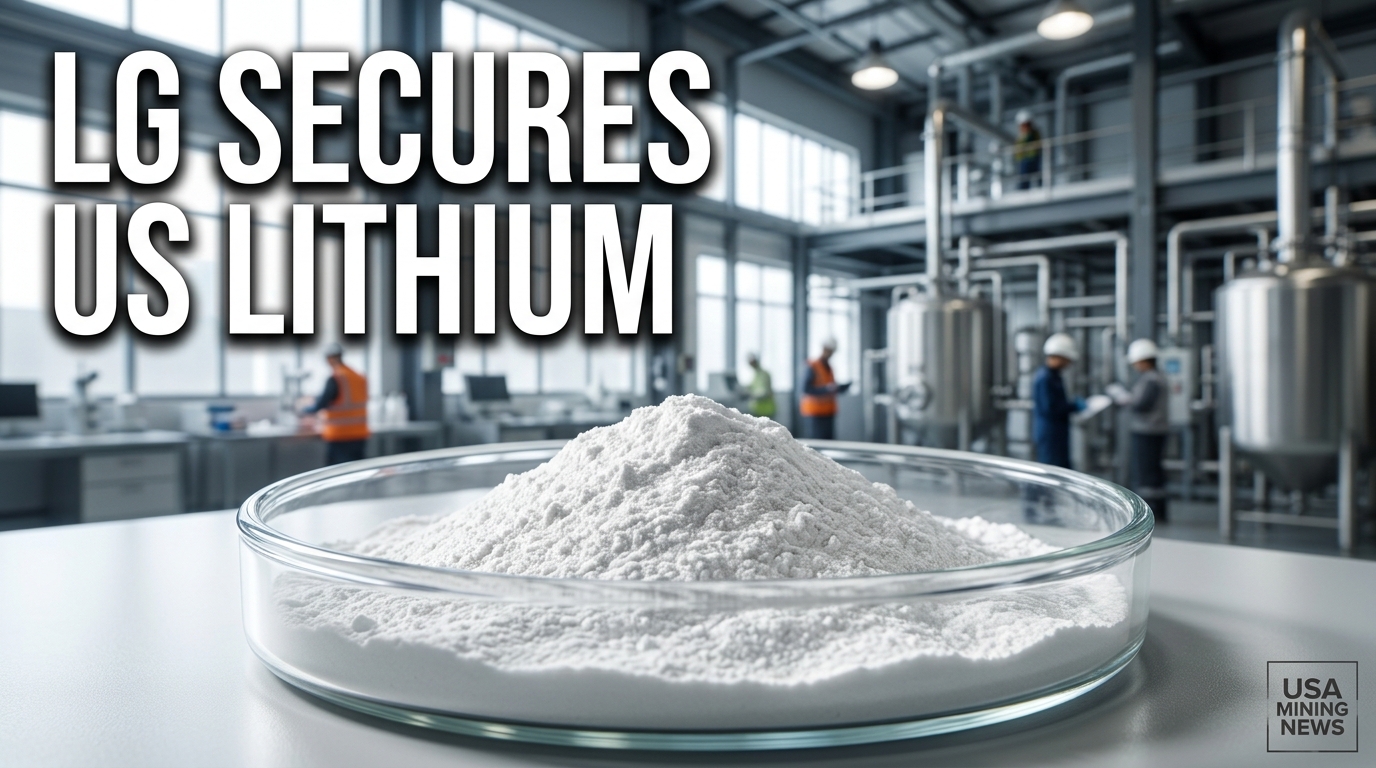
The agreement solidifies a critical supply pathway for LG Energy Solution, one of the world’s leading battery producers with a substantial manufacturing footprint in the U.S. The 8,000 tonnes of battery-quality lithium carbonate will originate from the South West Arkansas (SWA) Project, a key asset being developed entirely within the United States. This commitment from Smackover Lithium to LG Energy Solution spans a decade, providing long-term supply stability for LGES’s multiple manufacturing facilities across the US, many of which are specifically geared towards the production of lithium iron phosphate (LFP) battery chemistry. The predictable, long-term supply of a critical mineral like lithium carbonate is paramount for scaling battery production and mitigating the volatility often associated with global commodity markets.
David Park, CEO of Standard Lithium, a majority stakeholder in Smackover Lithium, expressed enthusiasm for the new collaboration. "We are excited to be entering into this agreement with LG Energy Solution, one of the world's leading battery producers with a diverse and global customer base and a presence in many dynamic and growing industry segments," Park stated. He further emphasized the long-term vision, adding, "We expect this to be the beginning of a long and mutually beneficial partnership whereby we will provide LG Energy Solution with a long-term supply of US-based and sustainably produced battery-quality lithium carbonate." This sentiment highlights a shared commitment to developing a robust and responsible domestic supply chain for critical battery materials.
Smackover Lithium: A Strategic Joint Venture
Smackover Lithium is a compelling joint venture, reflecting a strategic alignment of expertise and capital within the mining and energy sectors. Standard Lithium, a company at the forefront of lithium brine development, holds a commanding 55% stake in the venture. Standard Lithium brings its specialized knowledge in direct lithium extraction (DLE) technologies, which are crucial for unlocking the potential of unconventional lithium resources like those found in the Smackover Formation. Complementing this technical prowess, Equinor, a global energy company with extensive experience in large-scale industrial projects and a growing focus on renewables, holds the remaining 45%. Equinor's involvement provides significant financial backing and project management expertise, vital for advancing a capital-intensive project like the SWA Project from development to commercial production. This partnership marries innovative extraction technology with robust project execution capabilities, positioning Smackover Lithium as a significant emerging player in the US lithium landscape.
The South West Arkansas (SWA) Project: A Domestic Resource Hub
The lithium carbonate central to this agreement will be sourced exclusively from the South West Arkansas (SWA) Project. This vital resource is strategically located approximately 24 kilometers west of Magnolia in Columbia County and 11 kilometers south of Lewisville in Lafayette County, within the state of Arkansas. The geological context of the region, specifically the Smackover Formation, is renowned for its deep, high-temperature brines that contain elevated concentrations of lithium. The development of projects like SWA is critical for establishing a resilient domestic supply chain, reducing reliance on foreign imports, and supporting the broader economic development of rural areas within the U.S. The project’s location within the US is a key factor, addressing logistical challenges and geopolitical risks associated with international supply chains, while also potentially qualifying for incentives designed to promote domestic manufacturing and sourcing.
Advanced Extraction: Direct Lithium Extraction (DLE) for Sustainable Production
A cornerstone of the SWA Project's operational strategy is its reliance on a direct lithium extraction (DLE) and purification process for producing lithium carbonate. DLE represents a paradigm shift from traditional lithium extraction methods, particularly those involving large-scale evaporation ponds used for hard rock or conventional brine operations. Traditional methods often require extensive land footprints and significant time for lithium concentration, making them less environmentally efficient and slower to scale.
In contrast, DLE technologies aim to selectively extract lithium directly from brine solutions, bypassing the need for large evaporation ponds. This approach typically involves adsorbent materials, ion-exchange resins, or solvent extraction to pull lithium ions from the brine, after which the spent brine is reinjected back into the earth. The key advantages of DLE include:
- Reduced Environmental Footprint: DLE processes require significantly less land and minimize water consumption compared to evaporation ponds, which can lead to considerable water loss through evaporation.
- Faster Production Cycle: DLE can produce lithium much more quickly than evaporation-based methods, which can take months or even years.
- Higher Recovery Rates: Certain DLE technologies can achieve higher lithium recovery rates, optimizing resource utilization.
- Lower Impurity Profile: The selective nature of DLE can lead to a cleaner lithium product, simplifying subsequent purification steps.
The adoption of DLE at the SWA Project is not merely a technical choice but a strategic one, intended to achieve a more sustainable method of sourcing the material. This commitment to sustainable production aligns with increasing environmental scrutiny on mining operations and caters to battery manufacturers like LG Energy Solution, who are actively seeking more responsibly produced raw materials for their products.
LG Energy Solution's Strategic Imperatives
LG Energy Solution's decision to partner with Smackover Lithium for US-produced lithium carbonate is deeply rooted in several strategic imperatives. Firstly, the agreement enables LGES to forge a fully integrated local supply chain for its battery production processes. With multiple battery manufacturing facilities already established or under development across the US, securing a domestic source of lithium is critical for operational efficiency, cost control, and supply chain resilience. Many of these facilities are specifically focused on lithium iron phosphate (LFP) battery chemistry, a technology gaining traction for its cost-effectiveness, safety profile, and suitability for various applications, including grid storage and certain EV segments.
Secondly, this agreement directly addresses LG Energy Solution's strategy to diversify its supplier base by region. Geopolitical tensions, trade disputes, and logistics disruptions have highlighted the vulnerabilities of concentrated supply chains. By sourcing lithium from the US, LGES reduces its exposure to these external risks and strengthens its overall supply security.
Lastly, and critically, the contract supports LG Energy Solution in meeting evolving regulatory requirements, particularly the non-Prohibited Foreign Entity requirements for cathode materials in its batteries. These requirements, often tied to government incentives such as those outlined in the U.S. Inflation Reduction Act (IRA), aim to promote domestic manufacturing and reduce reliance on materials from specific countries. By procuring US-produced lithium carbonate, LGES enhances its eligibility for these incentives, providing a competitive edge and ensuring compliance with the evolving landscape of industrial policy in North America.
Market Context: North American Demand and Supply Security
The North American market is experiencing unprecedented growth in demand for power storage systems, driven by the rapid adoption of electric vehicles and the expansion of renewable energy infrastructure. This surging demand has placed immense pressure on battery manufacturers to prioritize the procurement of stable and secure supplies of critical materials from within the region. The impetus for regional sourcing stems from several factors:
- Energy Security: Reducing reliance on distant and potentially unstable supply chains enhances national energy security.
- Economic Development: Investing in domestic mining and processing creates jobs and fosters economic growth within local communities.
- Sustainability Goals: Shorter supply chains can reduce the carbon footprint associated with transportation and allow for greater oversight of environmental and labor practices.
- Government Incentives: Policy frameworks, such as the U.S. Inflation Reduction Act, offer significant financial benefits for companies that utilize domestically sourced materials and components.
This dynamic environment makes agreements like the LG Energy Solution and Smackover Lithium deal not just commercially advantageous but strategically imperative for long-term success in the battery and EV sectors.
Future Outlook and Industry Implications
The binding offtake agreement between LG Energy Solution and Smackover Lithium is more than just a commercial transaction; it represents a significant milestone for the broader North American mining and battery industries. It validates the potential of DLE technology to unlock new domestic lithium resources efficiently and sustainably. As Standard Lithium CEO David Park articulated, this could be "the beginning of a long and mutually beneficial partnership," suggesting potential for expansion or further collaboration as the SWA Project scales up and LGES's demand grows.
The successful execution of this agreement could serve as a blueprint for other battery manufacturers seeking to localize their supply chains and for other DLE projects looking to secure long-term offtake commitments. It signals a robust future for resource development in Arkansas and other regions with similar brine resources, positioning the U.S. as an increasingly important player in the global lithium market. Furthermore, it reinforces the trend of strategic alliances between upstream raw material producers and downstream battery manufacturers, driven by the shared goal of building a resilient, ethical, and localized battery ecosystem in North America.
As the electrification of transportation and energy grids accelerates, such partnerships will be crucial in ensuring that the burgeoning demand for batteries can be met with a consistent, responsible, and domestically secured supply of essential raw materials like lithium carbonate.