Atacama Resources Acquires Atacama 3 Property, Bolstering Foothold in Ontario's Gold Belt
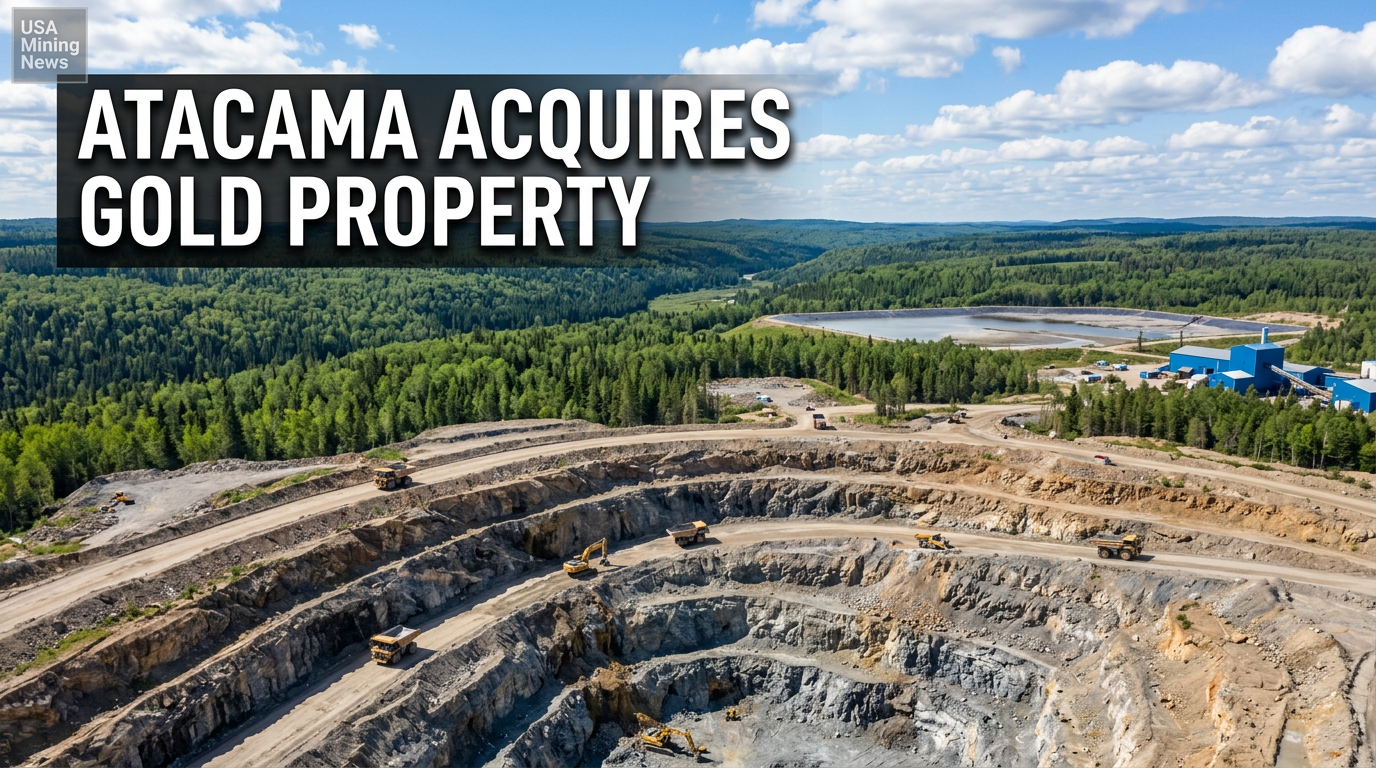
Toronto, Ontario – In a move set to invigorate its exploration pipeline, Atacama Resources, a burgeoning player in the mineral exploration sector, announced on February 27, 2026, the acquisition of a full stake in the Atacama 3 mineral property. This strategic acquisition positions the company firmly within one of the world's most renowned gold-producing regions: the Abitibi Greenstone Belt of Ontario, Canada. The property's immediate vicinity to major operational assets, particularly Agnico Eagle Mines’ Macassa Mine, underscores its strategic value and potential for significant future exploration success.
A Strategic Location in Gold Country: The Abitibi Greenstone Belt
The newly acquired Atacama 3 property is situated approximately 16 kilometers (10 miles) south of Kirkland Lake, a historic mining town synonymous with significant gold discoveries in Ontario. This locale places it precisely within the Abitibi Greenstone Belt, a geological marvel that has collectively yielded over 200 million ounces of gold throughout its extensive mining history. This ancient volcanic and sedimentary rock formation, extending across parts of Ontario and Quebec, is characterized by its pervasive gold mineralization hosted within complex fault systems, shear zones, and various intrusive and volcanic rock types.
The belt's enduring allure for exploration companies stems from its remarkable geological endowment, which has supported multi-generational operations such as the Timmins Camp, the Cadillac-Larder Lake Break, and the Kirkland Lake Gold Camp itself. For a junior explorer like Atacama Resources, securing ground in such a historically rich and well-understood geological setting significantly derisks early-stage exploration and offers a clearer pathway for potential resource development. The presence of established mining infrastructure, including roads, power, and skilled labor, further enhances the economic viability of new discoveries in the region.
Proximity to Macassa Mine: A Critical Advantage
One of the most compelling attributes of the Atacama 3 property is its close proximity to Agnico Eagle Mines’ Macassa Mine, located roughly 2.5 miles (4 kilometers) away. The Macassa Mine is a cornerstone of the Kirkland Lake gold district and is celebrated for its high-grade resources and robust production profile. Historically, the mine has been a consistent contributor to gold output in the region, benefiting from advancements in underground mining techniques and sustained investment in exploration and development.
The significance of this proximity for Atacama Resources is multi-faceted:
- Geological Analogues: The structural corridor that hosts the Macassa Mine is likely to extend into the Atacama 3 property. This suggests that the geological controls on mineralization, such as major fault systems and shear zones, which are instrumental for gold deposition at Macassa, could also be present and prospective at Atacama 3. This provides a strong geological framework for exploration targeting.
- Infrastructure Leverage: While Atacama 3 is an early-stage project, its closeness to an operating mine implies access to robust regional infrastructure. This includes road networks (the claims are accessible year-round), power grids, and a skilled mining workforce, all of which can significantly reduce the capital expenditure and logistical complexities typically associated with remote exploration projects.
- Exploration Model Validation: Discoveries in the vicinity of known deposits often benefit from established geological models and successful exploration methodologies, reducing the learning curve and potentially accelerating the exploration timeline.
This strategic positioning aligns perfectly with Atacama Resources' stated focus on acquiring and evaluating early-stage properties within established mining jurisdictions, where the derisking factors of geology, infrastructure, and a supportive regulatory environment are already in play.
Property Details and Historical Exploration Insights
The Atacama 3 property encompasses an area of 255 hectares and comprises 13 contiguous mining claims. These claims are strategically located within a known structural corridor recognized for its significant fault systems, which are often key conduits for gold-bearing fluids in greenstone belts. The accessibility of the site via year-round roads further facilitates exploration logistics and cost management.
Historical drilling efforts conducted between 2006 and 2007 provide foundational data for current and future exploration. During this period, a total of approximately 1,780 meters of drilling was completed across 15 drill-holes. These efforts successfully identified mineralization associated with shear structures and quartz veining—geological textures and features that are highly characteristic of gold deposits within the broader Abitibi Greenstone Belt. While these historical results do not constitute a confirmed mineral resource under current regulatory standards, they offer valuable insights into the property's prospectivity and help to constrain initial exploration targets.
Planned 2026 Exploration Program and Methodical Approach
Building on the promising historical data and the compelling geological context, Atacama Resources has outlined an ambitious exploration plan for 2026. The company is committed to a systematic and phased approach, aiming to progressively refine targets and enhance the understanding of the property's mineral potential. Key planned activities include:
- Surface Stripping and Channel Sampling: These initial steps involve removing overburden to expose bedrock and then systematically collecting rock samples across exposed mineralized zones. This helps in understanding the geometry, grade, and continuity of mineralization at the surface.
- Geophysical Studies: Atacama Resources plans to conduct additional ground geophysical surveys. These may include Induced Polarization (IP) surveys, which are particularly effective in detecting disseminated sulfide mineralization often associated with gold in shear zones and quartz veins. Geophysical data can provide critical insights into subsurface geology, structure, and potential mineralization zones, helping to prioritize drill targets.
- Target Refinement and Drilling: Based on the combined insights from historical data, surface work, and new geophysical surveys, the company will refine its drilling objectives. This methodical approach is designed to enhance the probability of successful drill intercepts and efficiently allocate exploration capital.
Crucially, Atacama Resources has confirmed that the necessary drilling permits have already been obtained, ensuring that the 2026 exploration program can proceed without undue delays. Management anticipates routine renewals of these permits, contingent upon continued regulatory compliance—a standard practice in established jurisdictions like Ontario, which boasts a clear and predictable mining regulatory framework.
Market and Industry Implications
This acquisition by Atacama Resources holds several broader implications for the mining industry and investors:
- Junior Explorer Strategy: It exemplifies a common strategy among junior exploration companies: acquiring early-stage assets in highly prospective regions with known mineralization and established infrastructure. This approach allows smaller companies to leverage existing geological knowledge and regional infrastructure while focusing their capital on de-risking projects before they attract interest from larger producers.
- Renewed Focus on Brownfield Exploration: The acquisition highlights the continued attractiveness of "brownfield" exploration—areas near existing mines or with historical activity. As new "greenfield" (undiscovered) deposits become harder to find, re-evaluating historical data and applying modern exploration techniques in well-endowed districts is a growing trend.
- Gold Market Outlook: While the announcement does not confirm economic viability, the pursuit of gold assets in a stable jurisdiction reflects a generally positive long-term outlook for gold prices. Gold remains a critical commodity, serving as a store of value and an industrial component, which drives ongoing exploration investment.
- Ontario's Mining Appeal: The investment reaffirms Ontario's status as a top-tier global mining jurisdiction. Its combination of rich mineral endowment, supportive government policies, clear regulatory processes, and robust infrastructure continues to attract significant exploration dollars, benefiting the local economy and the broader Canadian mining sector.
Forward Outlook and Strategic Importance
Atacama Resources views the Atacama 3 property's location within a structurally active corridor as strategically significant, a perspective shared by many in the industry when evaluating early-stage gold projects. The comprehensive 2026 exploration program, moving from surface sampling and geophysics to targeted drilling, represents a well-structured approach to unlocking the property's potential. However, the company prudently emphasizes that there are currently no confirmed mineral resources, and no assurances of economic viability can be made at this initial stage. This transparency is crucial for maintaining investor confidence and adherence to industry best practices.
The success of Atacama Resources' exploration efforts at Atacama 3 will depend on the results of the upcoming drilling campaigns and the subsequent definition of a compliant mineral resource. A positive outcome could significantly enhance the company’s asset portfolio, potentially attracting further investment or partnership opportunities with larger mining entities looking for new, high-quality gold projects in established camps. For now, the acquisition represents a calculated and promising step for Atacama Resources in its pursuit of new gold discoveries in one of the world's most prolific mining regions.