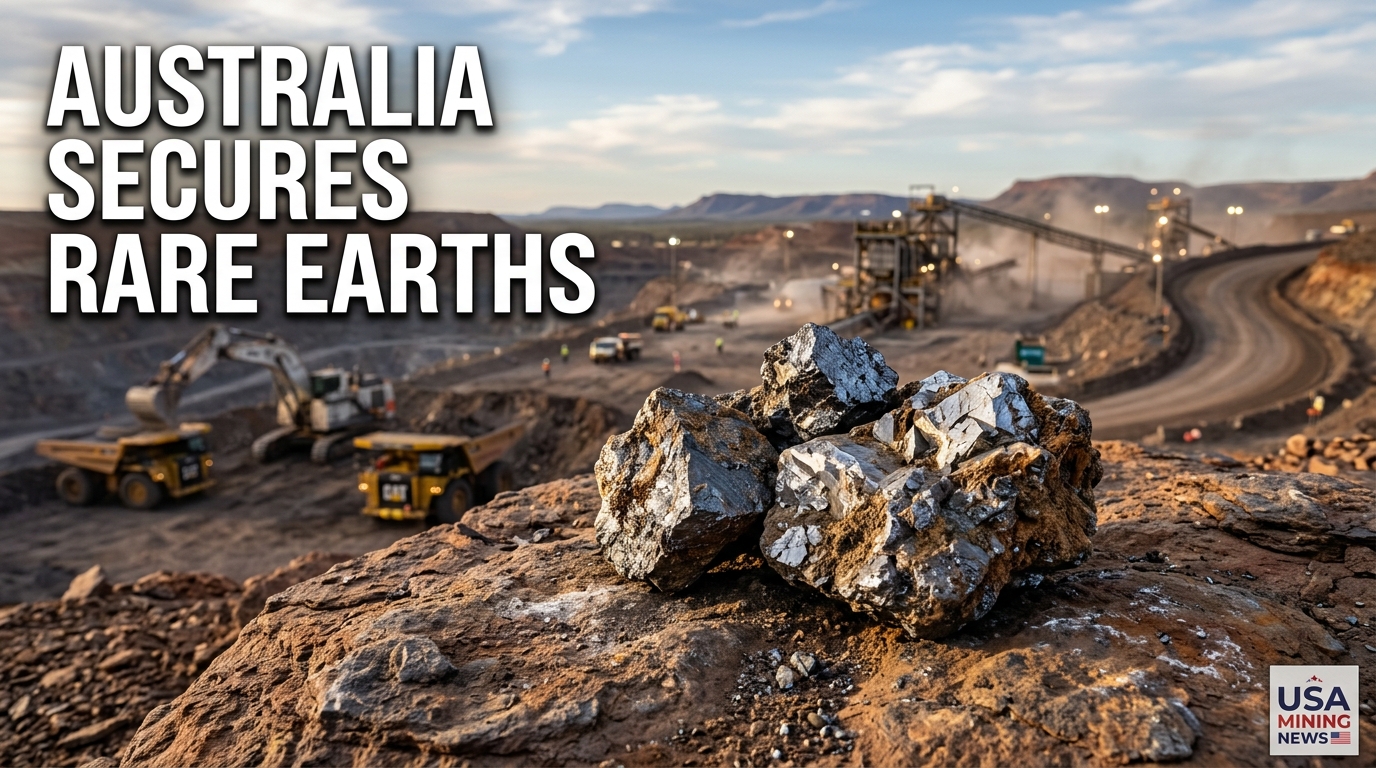
In a significant move underscoring the escalating strategic importance of critical minerals and national security, the Australian government has ordered six China-linked shareholders to divest their collective approximately 17% stake in Northern Minerals Limited. The directive, announced by Treasurer Jim Chalmers on May 18, 2026, mandates the investors to sell their shares within an exacting two-week timeframe, signaling robust governmental intervention amidst concerns over foreign influence in the nation’s vital rare earths sector.
Government Intervention Amidst National Interest Concerns
The Australian Treasurer, Jim Chalmers, explicitly stated that the divestment order stems from concerns over attempts by Chinese parties to gain control of Northern Minerals, a company at the forefront of developing the Browns Range heavy rare earths (HRE) project in Western Australia. Speaking on the matter, Chalmers affirmed Australia's commitment to its foreign investment framework, declaring, “We operate a robust and non-discriminatory foreign investment framework and will take further action if required to protect our national interest in relation to this matter.” This statement reinforces the government’s resolve to safeguard strategic assets, particularly those critical for defense and advanced technology industries.
The six specific investors targeted by this divestment order include Chuanyou Cong, Hong Kong Ying Tak, Qogir Trading & Service, Real International Resources, Vastness Investment Group, and Zhongxiong Lin. These entities collectively hold approximately 17% of Northern Minerals’ shares. This action marks the second such intervention by the Australian government in Northern Minerals’ shareholder structure; a similar order was issued in 2024, requiring Chinese parties to sell their stakes, some of which were subsequently transferred to Ying Tak. The repeated governmental oversight highlights persistent national interest concerns surrounding the company's ownership.
Northern Minerals Limited has publicly acknowledged the Treasurer’s directive and indicated it is currently assessing its future actions in response to the order. Following the announcement, the company’s share value experienced an immediate negative impact, declining by more than 8% to A$0.022 ($0.015). This price point is less than half the value from a previous equity placement conducted in October, reflecting investor reaction to the uncertainty surrounding the company’s ownership structure and the regulatory environment.
The Strategic Importance of Browns Range and Heavy Rare Earths
At the heart of Australia's national interest concerns is Northern Minerals’ Browns Range HRE project. This project is critically positioned 160km south-east of Halls Creek, nestled on the northern edge of the Tanami Desert in Western Australia’s East Kimberley region. Its Wolverine deposit has been uniquely identified as Australia’s highest-grade source of dysprosium and terbium, two of the most strategically significant heavy rare earth elements.
Dysprosium and terbium are indispensable components in a wide array of high-technology applications, particularly in the manufacturing of high-strength permanent magnets. These magnets are crucial for electric vehicles (EVs), wind turbines, precision-guided munitions, advanced electronics, and various defense systems. For example, dysprosium is often alloyed with neodymium in magnets to enhance their heat resistance, a vital property for high-performance motors. Terbium contributes to their efficiency and power, particularly in applications requiring higher operating temperatures. The project's importance is further magnified by the global imperative among Western nations to diversify and secure critical mineral supply chains, thereby reducing heavy reliance on China, which currently dominates the processing and refining of rare earth elements.
Australia's Firm Stance on Critical Minerals Security
The Australian government’s proactive stance is part of a broader, concerted effort by nations like the United States, Europe, and Japan to de-risk and re-align their critical mineral supply chains away from single-source dependencies. Australia, rich in critical mineral endowments, sees itself as a crucial partner in this global strategy. Its "robust and non-discriminatory foreign investment framework" is increasingly being applied to ensure that ownership and control of strategic assets align with national security and economic interests.
The repeated intervention in Northern Minerals' shareholder composition sends a clear signal to both domestic and international investors: while Australia welcomes foreign capital, investment in its critical minerals sector will undergo stringent scrutiny, especially when involving entities from countries considered strategic competitors. This approach aims to foster a secure and resilient domestic critical minerals industry, capable of supporting allied nations' technological and defense requirements.
Geopolitical Ramifications and China's Response
The Australian divestment order has not gone unnoticed by Beijing. China’s Foreign Ministry, in a news briefing following the announcement, urged Australia to "earnestly respect" Chinese investors' rights, simultaneously calling for the establishment of "a fair business climate for foreign investments." This response highlights the ongoing geopolitical competition surrounding critical resources and investment, with China advocating for market principles even as Western nations increasingly prioritize national and economic security.
The dynamic interplay between Australia's regulatory actions and China's diplomatic responses underscores the complex and often contentious nature of global resource geopolitics. As nations vie for control and influence over the essential building blocks of modern technology and defense, such interventions are becoming a more common feature of the international investment landscape, particularly in sectors deemed strategically vital.
Future Outlook for Northern Minerals and the Industry
For Northern Minerals, the immediate future involves navigating the divestment process for the six named investors within the prescribed two-week period. This will likely necessitate either forced sales on the open market or negotiations with new, government-approved investors. The company will need to stabilize its shareholder base and regain market confidence, which was evidently shaken by the share price decline. The incident could pave the way for a more diverse ownership structure, aligning more closely with Australia's strategic objectives.
More broadly, this decision serves as a powerful precedent for the entire mining investment community. It reinforces the heightened scrutiny foreign investment in critical minerals projects will face globally, particularly from Western governments keen to build sovereign capabilities and secure supply chains. Miners exploring or developing critical minerals assets, especially those with geopolitical significance, must now factor governmental and national security considerations more prominently into their strategic planning and investment attraction efforts.
The ongoing push for sovereign capabilities in critical minerals, driven by technological advancement and geopolitical realities, means that projects like Browns Range are not just economic ventures but national assets. The Australian government’s firm action on May 18, 2026, against specific China-linked investors in Northern Minerals is a testament to this evolving paradigm, signaling a new era where national interest plays an increasingly decisive role in shaping the global mining investment landscape.