In a significant move for North American critical mineral supply chains, Nouveau Monde Graphite (TSX: NOU; NYSE: NMG) announced on Friday, May 15, 2026, its final investment decision (FID) to proceed with the construction of its Matawinie graphite mine in Quebec. This approval marks a pivotal step in the company's ambition to become a leading North American supplier of essential battery anode materials, a sector increasingly critical to the global energy transition.
A Pivotal Moment for North American Battery Supply Chains
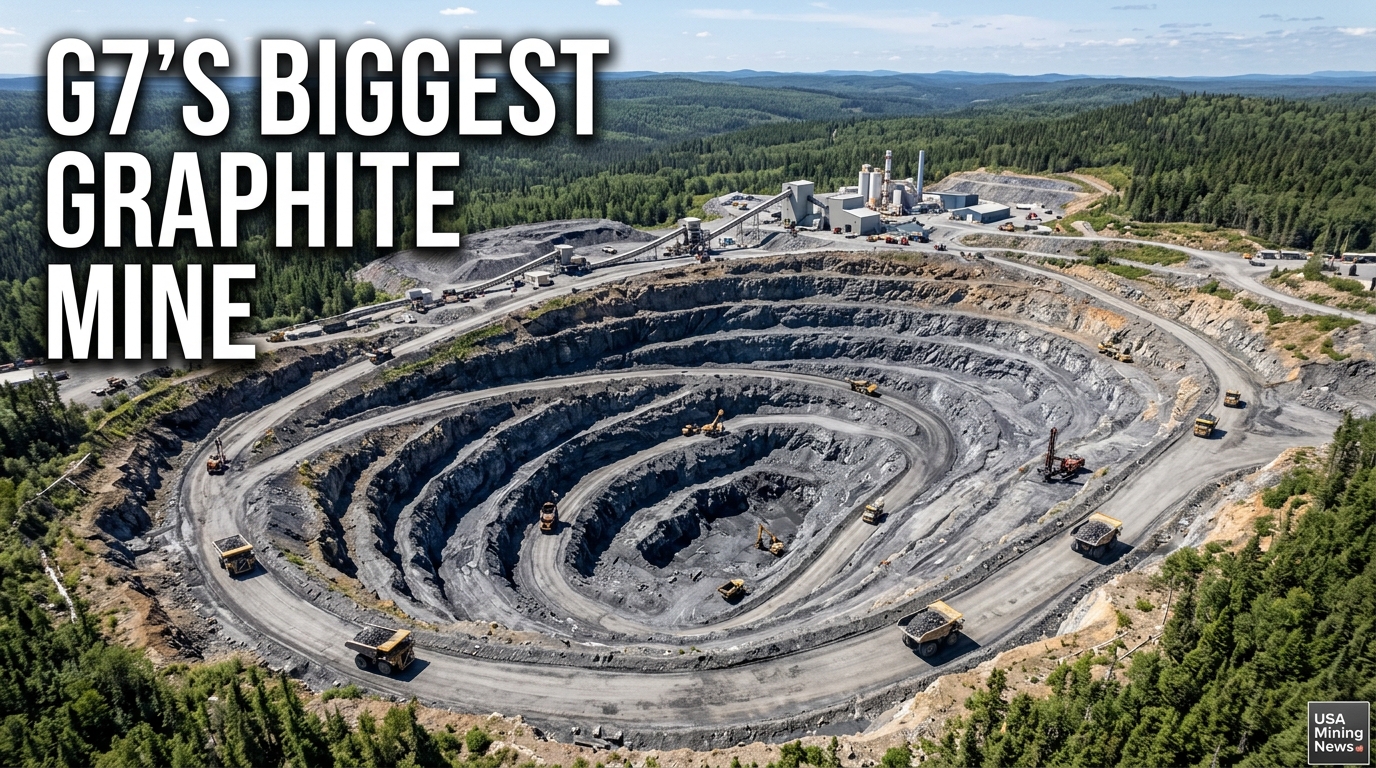
The Matawinie project, situated in Saint-Michel-des-Saints, approximately 120 kilometers north of Montreal, is poised to become the largest graphite operation within the G7 nations. This development is not merely an expansion of mining capacity; it represents a cornerstone asset in Canada's overarching critical minerals strategy, directly addressing the urgent need to secure diversified, domestic supply chains for battery materials. As governments and industries worldwide intensify their efforts to reduce reliance on concentrated offshore supplies, particularly from China which currently dominates graphite production and processing, Matawinie offers a significant Western alternative.
Eric Desaulniers, CEO of Nouveau Monde Graphite, underscored the project's strategic importance, stating to The Northern Miner, "There aren’t many examples globally of critical minerals projects under construction that can help solve a major supply chain problem in the short term. Matawinie is one such project." Currently, Canada stands as the sole G7 country with commercial graphite production. Nouveau Monde estimates that Matawinie's output will substantially boost Canada's share of global mined graphite, from approximately 1% today to a projected 6%, signaling a notable shift in the commodity's global production landscape.
Financial Foundation Secured: Over $644 Million Mobilized
The FID was made possible by the successful completion of a previously disclosed 309.7 million dollar equity financing package. This comprehensive funding round included substantial investments totaling 213.2 million dollars from key strategic partners: the Canada Growth Fund, state-owned Investissement Québec, and Italian energy major Eni. This was complemented by 96.5 million dollars raised through a bought-deal public offering completed in April.
Beyond equity, the project has also garnered significant debt participation from Export Development Canada (EDC) and the Canada Infrastructure Bank. Including these debt components, Nouveau Monde has successfully raised approximately 644.5 million dollars to finance the construction of both the commercial-scale Matawinie mine and its associated battery material plant in Bécancour, Quebec. This diverse blend of public and private capital underscores the robust confidence in the project's viability and its strategic alignment with national economic and industrial objectives, particularly in the burgeoning electric vehicle (EV) and energy storage markets.
Operational Blueprint: Production, Schedule, and Green Credentials
The Matawinie project is engineered as a large-scale open-pit operation, designed for efficiency and sustainability. A key environmental differentiator for the mine is its planned reliance on Quebec’s extensive hydroelectric grid for power, significantly reducing its carbon footprint in line with global environmental, social, and governance (ESG) standards increasingly demanded by investors and consumers alike. This commitment to sustainable operations positions Matawinie as a preferred source of graphite for environmentally conscious battery manufacturers.
Operationally, Matawinie is projected to produce approximately 106,000 tonnes of graphite concentrate annually over an estimated mine life spanning more than 25 years. This substantial, long-term output will serve as critical feedstock for the Bécancour battery material plant, which will then supply the rapidly expanding electric vehicle and energy storage markets. Following the FID, the project is set to enter an intensive 30-month development sequence. This timeline includes a 24-month construction phase, followed by six months of commissioning. Nouveau Monde anticipates reaching full commercial production by the end of 2028, aligning with the projected surge in demand for battery-grade graphite in the latter half of the decade.
Strategic Offtake Agreements and Government Backing
A significant portion of Matawinie’s future production capacity has already been secured through robust offtake agreements. Three-quarters, or 75%, of the mine's anticipated output is already reserved. Furthermore, an additional 15% of production is currently under discussion with Eni, one of the key equity investors in the project. This high level of pre-sold production provides substantial revenue predictability and de-risks the project from a market perspective, offering stability to investors.
A particularly notable development in the offtake strategy is the definitive seven-year agreement signed on Wednesday, May 13, 2026, with the Government of Canada. This agreement covers 30,000 tonnes of graphite per year from Matawinie. The terms of this landmark deal include a North American fixed price, coupled with an upside-sharing mechanism where resale proceeds exceed the fixed price. CEO Desaulniers revealed the strategic impetus behind this government engagement: "Canada was looking to show our partners in the G7 that we can offer an alternative to China for niche applications, including military. That’s the genesis of our offtake agreement with the federal government for Matawinie." This highlights the broader geopolitical implications of establishing secure, non-adversarial supply chains for critical minerals, extending beyond commercial battery production to national security interests.
Economic Impact and Scaled Optimization
The Matawinie project is expected to deliver significant economic benefits to the region. It is projected to create 150 direct, permanent jobs upon reaching commercial operation. During the peak construction phase, the project will mobilize up to 450 workers, providing a substantial employment boost to local communities around Saint-Michel-des-Saints and Bécancour.
Regarding capital expenditure, the combined estimated cost for the Matawinie mine and the Bécancour plant is approximately 634 million dollars, as stated by Desaulniers. This figure represents a strategic optimization, being less than half the amount projected in a previous 2025 feasibility study. This reduction was a deliberate decision by Nouveau Monde to scale back the size of the proposed Bécancour plant in response to a softening U.S. market for electric vehicles witnessed last year. This adaptive management approach demonstrates the company's responsiveness to market dynamics, ensuring that capital deployment remains aligned with realistic market demand scenarios.
Canada's Growing Role in Critical Minerals
The progress of the Matawinie project underscores Canada's ambitious drive to bolster its position in the global critical minerals sector. Graphite, essential for the anodes of lithium-ion batteries that power EVs and energy storage systems, is experiencing unprecedented demand growth. With current global supply heavily concentrated in a few jurisdictions, primarily China, projects like Matawinie are vital for diversifying the supply base and enhancing the resilience of Western supply chains. The project's referral to the federal Major Projects Office in November 2025 further highlights its national strategic importance and commitment from government entities to facilitate its development.
The push for localized and responsible sourcing of critical minerals is a defining trend in the mining industry. Canada, with its rich mineral endowments, transparent regulatory environment, and commitment to sustainable practices, is uniquely positioned to capitalize on this trend. Matawinie not only contributes to Canada's economic growth but also reinforces its reputation as a reliable and ethically minded supplier of materials crucial for the transition to a green economy.
The Road Ahead: Commissioning and Commercial Production
With construction now officially underway, the focus shifts to disciplined project execution to meet the aggressive timeline. The 30-month development sequence, culminating in full commercial production by the end of 2028, demands meticulous planning and execution. As the mining and processing facilities take shape, the industry will be closely watching Nouveau Monde Graphite's progress.
The successful commissioning and ramp-up of Matawinie will send a strong signal to global automotive manufacturers and battery makers seeking stable, secure, and sustainably sourced graphite. This project, alongside the Bécancour processing plant, is expected to play a crucial role in establishing an integrated, "mine-to-battery-material" value chain within North America, significantly contributing to the region's energy independence and leadership in the electric vehicle revolution. The implications for critical mineral independence, green energy growth, and geopolitical stability are profound, making Matawinie a benchmark project for the global mining industry.