Grasberg Full Restart Delayed to Early 2028 Amidst Complex Recovery Efforts
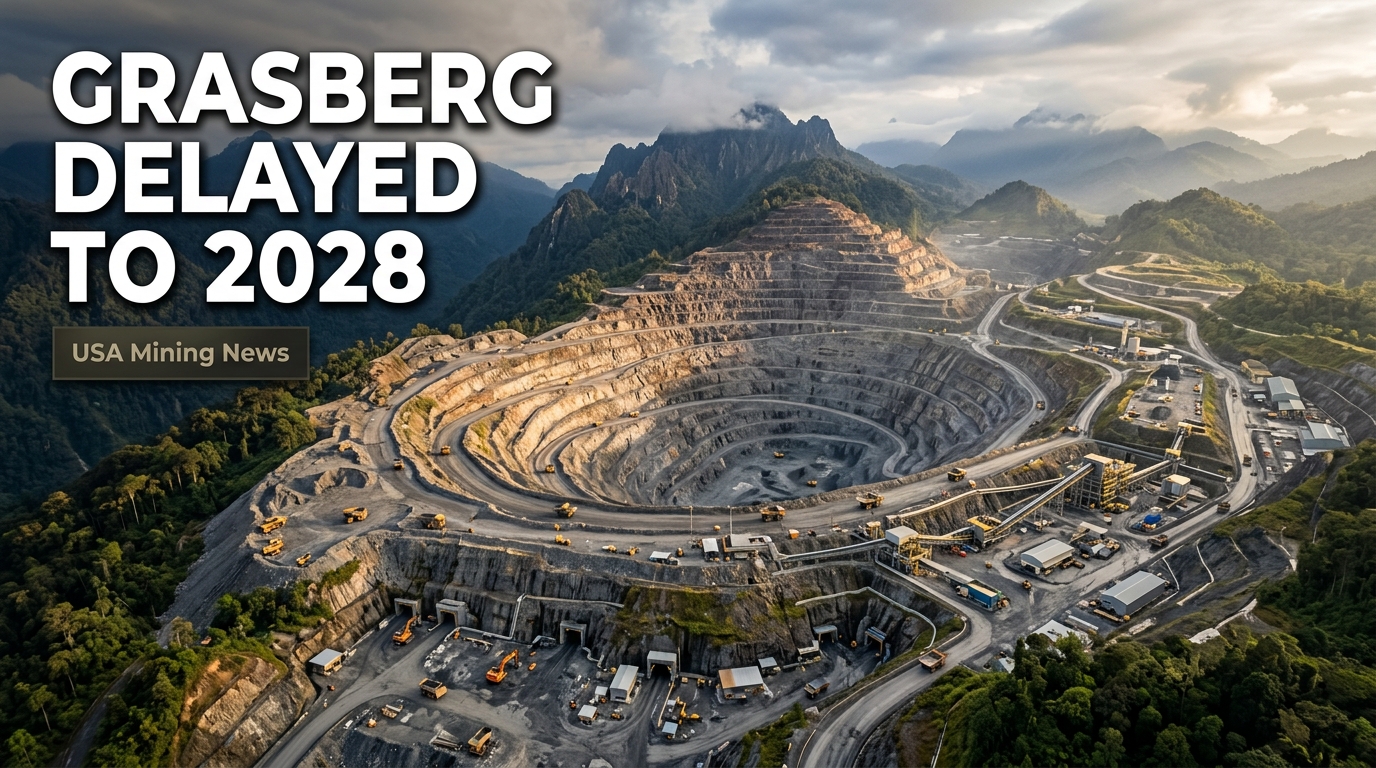
NEW YORK – May 8, 2026 – PT Freeport Indonesia, a subsidiary of the global mining giant Freeport-McMoRan (NYSE: FCX), has confirmed a significant delay in the full resumption of operations at its formidable Grasberg mine complex in Central Papua province, Indonesia. The company now anticipates the giant copper and gold operation will return to full capacity by early 2028, a revised timeline pushed back from its previous target of end-2027. This postponement underscores the intricate challenges involved in recovering from the deadly underground accident that occurred last year, which sent ripples across the global metals supply chain.
The Grasberg complex, renowned as one of the world’s largest copper and gold mines, faced an unprecedented setback in September of last year when a severe mudflow crippled a critical section of its underground operations. The incident, which specifically impacted Grasberg’s Block Cave underground mine, tragically resulted in the deaths of seven workers, forcing an immediate halt to all mining activities and prompting Freeport to declare force majeure on its shipments. This suspension introduced considerable strain on an already sensitive global copper market, given Grasberg’s substantial contribution to worldwide supply.
Grasberg's Pivotal Role in Global Commodity Markets
Grasberg is not merely a mine; it is a cornerstone of global copper and gold supply. At the time of the September incident, the complex accounted for approximately 3% of the world’s total copper supply. Annually, it produces an impressive 1.7 million pounds of copper, alongside a substantial 1.4 million ounces of gold. Such production figures highlight the mine’s unparalleled significance to industrial demand, particularly in sectors reliant on copper for electrification and renewable energy technologies, and to the precious metals market.
The sudden removal of such a significant volume of copper from the market naturally generated considerable concern among commodity traders, manufacturers, and investors. Copper, often referred to as "Dr. Copper" for its perceived ability to predict economic health, is indispensable for infrastructure development, manufacturing, and, crucially, the burgeoning green energy transition. The protracted disruption at Grasberg exacerbates an already tight supply outlook for the metal, influencing market sentiment and price trajectories.
The Undesigned Setback: September Mudflow Incident and Immediate Aftermath
The catastrophic mudflow in September last year represented a profound challenge for PT Freeport Indonesia. The incident, occurring within the complex underground networks of the Block Cave mine, necessitated a complete cessation of operations to ensure safety and facilitate recovery efforts. The tragic loss of seven lives cast a somber shadow over the entire mining community and underscored the inherent risks associated with deep underground operations.
Following the event, Freeport Indonesia was compelled to issue a force majeure notice on its shipments, a contractual clause implemented when unforeseen circumstances prevent a party from fulfilling its obligations. This declaration signaled to the global market the severity of the operational disruption and the unavoidable impact on immediate copper and gold deliveries. The incident triggered immediate and extensive safety reviews, operational assessments, and engineering evaluations to determine the extent of the damage and formulate a comprehensive recovery plan.
Revised Recovery Timeline and Production Trajectory
In its latest statement on Thursday, May 8, 2026, PT Freeport Indonesia confirmed the adjustment to its full restart timeline. A Freeport spokesperson, speaking to Reuters, attributed the delay to "additional work on logistics and ore handling infrastructure" at the underground mine. This explanation points to the complex interplay of factors involved in restoring a large-scale underground mining operation, where not only the primary mining areas but also the extensive network of tunnels, transport systems, and ore processing routes must be meticulously inspected, repaired, and re-certified for safety and efficiency.
The company had initially envisioned a more rapid ramp-up, planning to reach 85% capacity by the middle of this year (2026) and achieve full production by the end of 2027. However, the intricacies of the recovery process have necessitated a revised, more conservative approach. According to its most recent earnings statement, the new targets are:
- Approximately 40% to 50% of full capacity currently.
- 65% capacity targeted for the second half of 2026.
- 80% capacity aimed for by mid-2027.
- Near full capacity by the end of 2027.
- Full production capacity targeted by early 2028.
This revised trajectory directly impacts production forecasts for the current year. As a direct consequence of the delay in achieving full operational stride, the company now expects Grasberg’s copper production for 2026 to be approximately 700,000 pounds. This represents a significant reduction from its earlier forecast of 1 billion pounds, which was communicated during its fourth-quarter earnings report. Such a downward revision underscores the material impact of the operational challenges on the company’s financial outlook and its contribution to global supply.
Phased Restart Strategy and Operational Progress
Despite the overall delay to full capacity, Freeport has been systematically implementing a phased restart strategy, focusing on bringing unaffected areas back online first. This methodical approach is critical for managing risk, maintaining some level of production, and gradually rebuilding operational momentum. Key milestones in this recovery process include:
- The Deep Mill Level Zone (DMLZ) underground mine had already resumed operations last year.
- The Big Gossan underground mine also restarted last year, providing additional ore feed.
- Parts of the Block Cave (GBC) mine, the section most directly affected by the mudflow, returned to operations last month, indicating progress in its rehabilitation.
These phased resumptions are vital for generating cash flow and maintaining technical expertise while the more extensive infrastructure repairs and logistical enhancements are undertaken at the Block Cave. PT Freeport Indonesia’s Chief Executive, Tony Wenas, affirmed in a press release that operations are currently in a recovery phase, with production modest but ongoing at the 40% to 50% level. He reiterated the company’s commitment to achieving full capacity by early 2028.
Key Players and Government Relations
The Grasberg complex is operated by PT Freeport Indonesia, with its ultimate parent company being Freeport-McMoRan (NYSE: FCX), headquartered in the United States. The deep strategic importance of Grasberg to Indonesia, coupled with the significant investment by Freeport-McMoRan, necessitates a close working relationship between the company and the Indonesian government.
Earlier this year, the Freeport-McMoRan unit successfully reached a pivotal agreement with the Indonesian government for a life-of-resource extension of its operating rights. This agreement, secured prior to the latest production delays, provides long-term stability and certainty for Freeport’s operations in the country, ensuring continued investment and development at Grasberg for decades to come. This government backing, even amidst operational setbacks, is a critical factor in Freeport’s ability to navigate the current challenges and execute its long-term development plans for the world-class asset.
Market Implications and Copper's Bullish Outlook
The sustained disruption at Grasberg, characterized by this most recent delay, casts a longer shadow over the global copper market. The 3% contribution to global supply from Grasberg means that any prolonged curtailment inevitably tightens the market, exerting upward pressure on copper prices. The initial September incident had already forced Freeport-McMoRan’s stock to crater, reflecting investor apprehension about the mine’s future output and the broader potential for supply shortages.
With global demand for copper projected to rise significantly due to the rapid expansion of renewable energy infrastructure, electric vehicles, and increased urbanization, the market is already facing structural deficits. Major mining companies and analysts alike have consistently highlighted the looming supply gap in copper, which is critical for achieving global decarbonization targets. Delays from a top-tier producer like Grasberg further exacerbate this deficit scenario, potentially leading to more pronounced price volatility and encouraging exploration and development in other regions. Investors will be keenly watching how this persistent supply constraint influences global copper benchmarks like the London Metal Exchange (LME) copper prices and the strategic positioning of other major copper producers.
Looking Ahead: Navigating Operational Complexities and Market Dynamics
The revised timeline for Grasberg’s full restart to early 2028 underscores the vast operational complexities inherent in large-scale underground mining, particularly when recovering from a severe incident. For PT Freeport Indonesia and Freeport-McMoRan, the priority remains the safe and systematic restoration of full capacity while adhering to stringent safety and environmental protocols. The substantial investment in "logistics and ore handling infrastructure" points to a comprehensive remediation effort designed to enhance the mine's long-term resilience and productivity.
As the mining industry continues to navigate a landscape shaped by increasing demand for critical minerals and evolving operational challenges, the Grasberg situation serves as a stark reminder of the delicate balance between production targets, safety, and infrastructure integrity. The diligent completion of recovery efforts at Grasberg will not only be crucial for Freeport-McMoRan’s financial performance but also for the stability of global copper and gold supply, playing a pivotal role in meeting the world’s growing needs for these essential commodities in the years ahead.