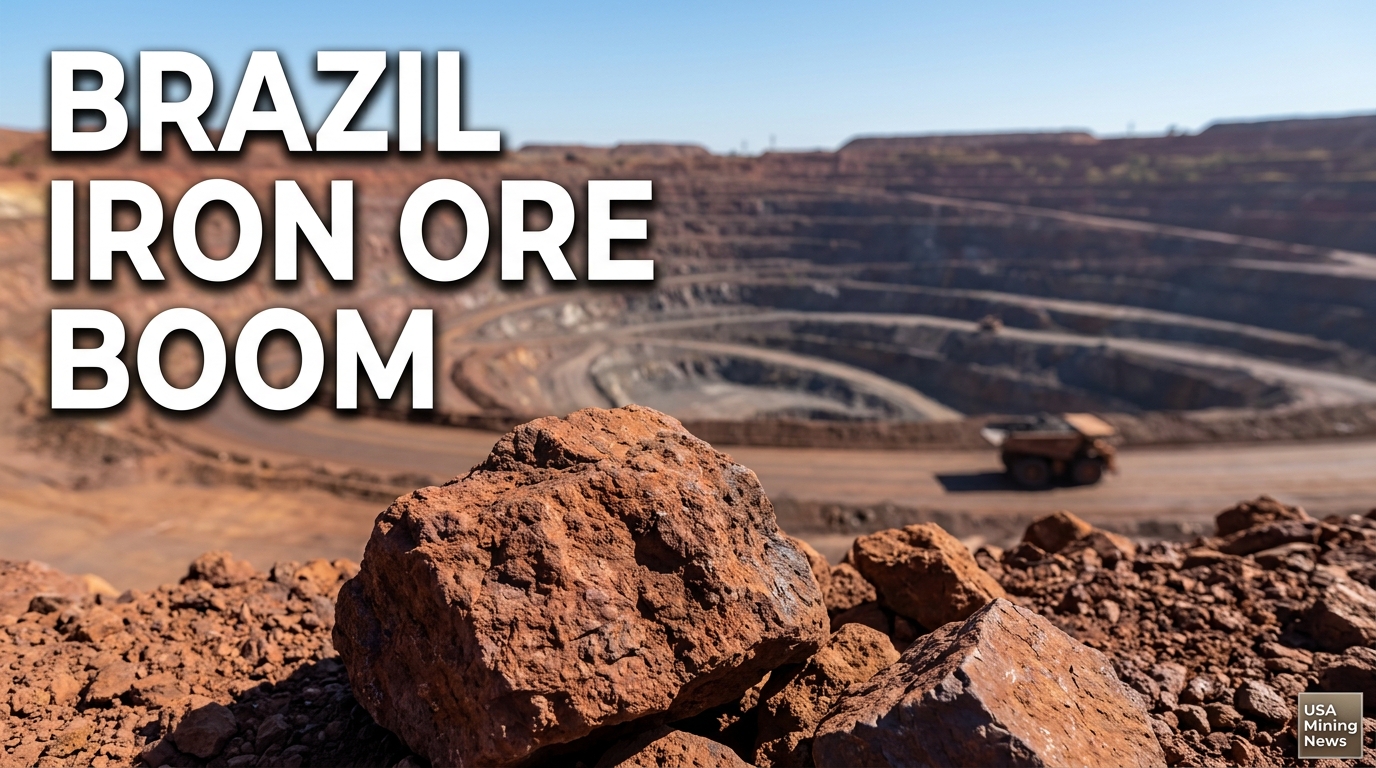
Brazil, a pivotal force in the global minerals landscape, is set to solidify its position as a leading iron ore producer, with projections indicating a substantial increase in output over the coming decade. This resurgence is largely attributed to the robust performance of its largest miner, Vale S.A., complemented by strategic operational resumptions and expansions from other industry players. The anticipated growth trajectory, detailed in recent analyses, signals a positive outlook for the South American nation, despite recurring challenges related to environmental concerns, infrastructure, and social dynamics that characterize its mining sector.
Brazil's Crucial Role in Global Iron Ore Markets
As the second-largest iron ore producer globally, Brazil plays an indispensable role in supplying the raw material vital for steel production worldwide. In 2024, the country accounted for a significant 16.7% of global iron ore production, underscoring its immense influence on international commodity markets. Any fluctuations in Brazilian supply can send ripples through the global steel industry, impacting pricing, supply chain stability, and industrial growth in major steel-producing nations. The expected increase in output not only signifies improved operational efficiency and investment within Brazil but also offers a measure of stability to global markets reliant on its vast reserves.
Vale Drives 2025 Production Surge
In 2025, Brazil’s total iron ore production is estimated to have increased by 1.9%, reaching 437.2 million tonnes (mt). This growth was overwhelmingly supported by the performance of Vale, the nation's and one of the world's largest iron ore producers. Vale's production alone reached an impressive 336.1 mt in 2025, constituting a commanding 76.9% of the country's total output. This dominance highlights Vale's instrumental role in defining Brazil's production profile and underscores the company's operational recovery and strategic initiatives following a period of heightened scrutiny and challenges. The commencement of operations at the Capanema mine, situated within Vale’s Mariana Mining Complex, in September 2025 is a notable milestone. This new operation is slated to contribute an additional 15 million tonnes per annum (mtpa) to Vale's production targets for 2026, signaling the company's commitment to expanding its operational footprint.
Strategic Expansions and Operational Resumptions
Beyond Vale's considerable contributions, several other projects have played, and will continue to play, a crucial role in bolstering Brazil's iron ore output. The gradual resumption of Pelletizing Plant No. 4 and the ramp-up of the second concentrator at the Samarco mine in December 2024 further supported the country’s overall production figures for 2025. Samarco, a joint venture between Vale and BHP, has been steadily rebuilding its operations, and these incremental gains signify a broader recovery trend within the sector. Looking ahead, Vale has outlined additional strategic expansions aimed at sustaining output growth into 2026. These include the expansion of the formidable Carajas Serra Sul S11D Project, scheduled to commence in the second half of 2026, alongside the ongoing ramp-up of Vargem Grande 1, part of the extensive Vargem Grande Mining Complex.
However, the journey to increased output in 2025 was not without its impediments. The upward production trend was partially offset by several operational challenges faced by major producers. These included lower run-of-mine (ROM) availability at Serra Norte, elevated maintenance activities at the Itabira complex, and a strategic pipeline inspection at the Minas-Rio operation, which was completed in mid-2024. Such operational variances are inherent to large-scale mining but underscore the complexities involved in managing vast and integrated production systems.
Projected Growth and Key Contributors for 2026 and Beyond
The positive momentum is expected to accelerate significantly into 2026. Brazil's iron ore production is forecast to grow by a robust 5.9% in the coming year, reaching an estimated 462.9 mt. Vale, once again, is anticipated to be a primary driver, setting an ambitious production target range of 335 mt to 345 mt for 2026. This target indicates a sustained and focused growth strategy from the mining giant. Furthermore, expansions at other major mines across the country are expected to further boost national output. These include significant contributions from Gerdau Mining’s Miguel Burnier operation and CSN Mineracao’s Casa de Pedra mine, both of which are integral to Brazil’s diverse iron ore landscape.
The long-term outlook for Brazil’s iron ore industry remains equally optimistic. Over the forecast period from 2026 to 2035, production is projected to grow steadily at a compound annual growth rate (CAGR) of 3.0%, ultimately reaching an impressive 605.7 mt by 2035. This sustained growth will be supported by a combination of factors:
- Sustained mine expansions: Ongoing investment in existing operations to unlock additional capacity.
- Efficiency improvements: Adoption of advanced technologies and operational best practices across key producing regions.
- Commencement of new mines: Several new projects are slated to come online, significantly contributing to future output. These include Block 8, Jambeiro, Morro do Pilar, Joao Monlevade, Serro 2030, Colomi, Amapa, and the Bamin Restart projects, all targeted for commencement by 2031.
These initiatives collectively paint a picture of an industry poised for substantial long-term growth, leveraging Brazil's vast geological endowments and the strategic foresight of its major mining companies.
Navigating Challenges: Environment, Infrastructure, and Social Dynamics
Despite the promising production forecasts, Brazil’s iron ore industry continues to grapple with multifaceted challenges that demand careful management and strategic mitigation. Environmental concerns remain paramount, with the mining sector heavily scrutinized for its impact on sensitive ecosystems, particularly in regions like the Amazon and traditional communities. These concerns manifest in increasingly stringent regulatory requirements, prolonged permitting processes, and a need for innovative solutions to minimize environmental footprints.
Infrastructure bottlenecks also present persistent hurdles. The sheer volume of iron ore transported from remote mining sites to ports requires robust and efficient logistics networks, including railways, roads, and port facilities. Any deficiencies in this infrastructure can lead to operational delays, increased costs, and limitations on export capacity. Furthermore, social conflicts, often arising from land use, displacement, and environmental impacts on local communities, pose significant risks to operational continuity. These challenges collectively contribute to stricter scrutiny from regulatory bodies and civil society, and have, in recent years, led to notable operational disruptions. Addressing these issues effectively will be crucial for the sustainable and socially responsible growth of the industry.
Policy Shifts Paving the Way for Sustainable Growth
Recognizing the significance of the mining sector to the national economy and the need for sustainable development, the Brazilian government has been actively engaged in updating its mineral policy framework. A key initiative is a recently launched public consultation aimed at revising the National Mining Plan 2050. This long-term strategic document is designed to guide the sustainable development of the sector for decades to come, incorporating lessons learned from past challenges and adapting to future demands for critical minerals.
Further demonstrating this commitment, the Senate’s Economic Affairs committee approved a proposal in December 2025 to establish a National Policy for Critical and Strategic Minerals. This forward-looking policy aims to stimulate domestic processing of minerals and secure crucial supply chains, thereby enhancing Brazil's self-sufficiency and strategic position in the global minerals economy. Such policy developments could significantly influence investment trends and production dynamics within the iron ore industry and other mineral sectors over the coming outlook period, fostering an environment more conducive to responsible and robust growth.
Long-Term Outlook: Resilience and Strategic Positioning
In conclusion, Brazil remains exceptionally well-positioned for long-term growth in the iron ore sector, underpinned by its vast mineral reserves and the persistent expansion initiatives undertaken by its major producers. The resilient global demand for iron ore, driven by industrialization and infrastructure development in emerging economies, is expected to continue strengthening Brazil's presence as a critical supplier in the international market. While the industry must continuously navigate and mitigate the inherent challenges of environmental stewardship, infrastructural development, and social cohesion, the strategic investments and policy support indicate a determined path towards sustainable and increased output, reinforcing Brazil's indispensable role in the global mining economy for years to come.