WASHINGTON D.C. – In a decisive move to fortify its industrial base and secure critical material supply chains, the U.S. Department of Energy’s (DOE) Office of Critical Minerals and Energy Innovation (CMEI) officially unveiled a Notice of Funding Opportunity (NOFO) on March 13, 2026, committing up to $500 million towards expanding domestic critical mineral and materials processing, derivative battery manufacturing, and recycling infrastructure. This significant investment is poised to accelerate the United States’ self-sufficiency in materials vital for defense, grid resilience, transportation, and advanced manufacturing sectors, a strategic imperative that resonates deeply within the global mining and energy industries.
U.S. Bolsters Critical Minerals Processing and Battery Supply Chains
The announcement from the DOE’s CMEI underscores a robust commitment to de-risk and strengthen the nation’s supply chains for key components of the modern economy. The allocated $500 million is specifically earmarked to support the establishment or expansion of domestic facilities involved in the processing of critical minerals, the manufacturing of derivative battery components, and comprehensive recycling operations for both manufacturing scrap and end-of-life batteries. This holistic approach aims to create a resilient, vertically integrated domestic ecosystem, from raw material to finished product and back through the circular economy.
The focus on domestic processing facilities is particularly critical, as traditionally, the U.S. has relied heavily on overseas entities for the intermediate steps between mineral extraction and final product manufacturing. By investing in this segment, the DOE seeks to close a significant gap in the domestic supply chain, enhancing control over the quality, quantity, and security of vital materials essential for the nation's technological and economic future.
Strategic Imperatives: National Security and Economic Dominance
The strategic impetus behind this substantial funding round was articulated clearly by high-ranking DOE officials. U.S. Energy Secretary Chris Wright emphasized the long-standing reliance on what he termed “hostile foreign actors” for critical materials, a vulnerability the administration is determined to rectify. Secretary Wright stated, “For too long, the United States has relied on hostile foreign actors to supply and process the critical materials that are essential in battery manufacturing and materials processing. Thanks to President Trump’s leadership, the Department of Energy is playing a leading role in strengthening these domestic industries that will position the U.S. to win the AI race, meeting rising energy demand, and achieve energy dominance.”
Concurrently, Assistant Secretary of Energy (EERE) Audrey Robertson was actively engaged in high-level discussions in Japan at the Indo-Pacific Energy Security Ministerial and Business Forum (IPEM). Her engagements there highlighted the critical nexus between material supply chain resilience and global energy security. Assistant Secretary Robertson affirmed, “I am delighted to be in Japan meeting with our allies, underscoring the important connection between critical materials and energy security. Critical minerals processing is a vital component of our nation’s critical minerals supply base. Boosting domestic production, including through recycling, will bolster national security and ensure the United States and our partners are prepared to meet the energy challenges of the 21st century.” These statements collectively underscore a dual strategy: strengthening domestic capabilities while simultaneously fostering international partnerships to create more secure and diversified critical mineral supply chains globally.
Targeted Investments Across the Value Chain
The NOFO prioritizes projects across three distinct yet interconnected topic areas, each fundamental to establishing a comprehensive domestic battery supply chain:
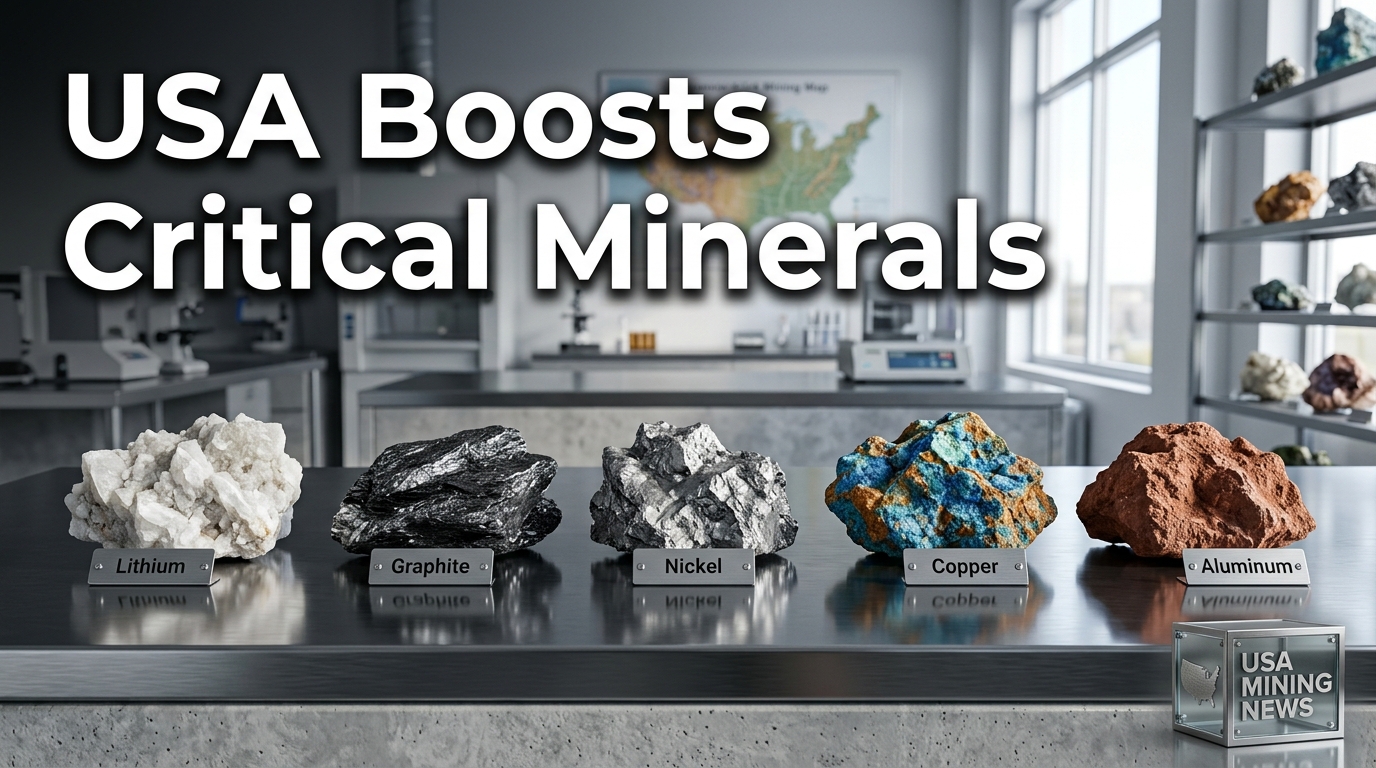
- Domestic Critical Minerals Processing from Raw Feedstocks: This area focuses on increasing the United States’ capacity to transform raw critical minerals into usable materials for advanced battery manufacturing. This is a capital-intensive and technically complex segment of the value chain, often involving multiple stages of beneficiation, chemical processing, and refining. Minerals such as lithium, graphite, nickel, copper, and aluminum are explicitly named as targets, alongside other minerals found in commercially available batteries. Lithium, for instance, is crucial for cathodes in most electric vehicle (EV) batteries, while graphite is the primary anode material. Nickel is a critical component in high-energy density cathodes, and copper is essential for current collectors and wiring. Aluminum is often used in battery casings and some electrode formulations. Developing internal processing capabilities for these materials is paramount to ensure a steady, secure supply, reducing vulnerability to geopolitical shocks and supply disruptions.
- Domestic Critical Materials Recycling: Acknowledging the finite nature of virgin mineral resources and the environmental impact of mining, this topic area aims to boost the recovery of critical battery minerals. This includes recycling both manufacturing scrap – the waste generated during battery component production – and off-specification or end-of-life batteries. Recycling offers a vital pathway to a circular economy, reducing the need for new extraction, mitigating environmental footprints, and recovering high-value materials. As the global fleet of electric vehicles and grid storage systems expands, the volume of end-of-life batteries will grow exponentially, making robust domestic recycling infrastructure a strategic imperative.
- Domestic Battery Materials and Component Manufacturing: This segment focuses on increasing the domestic production capacity for the strategic materials, components, and technologies that constitute advanced batteries. This could range from cathode and anode materials production to separator films, electrolytes, and other essential battery parts. By expanding this manufacturing base, the U.S. aims not only to support its own burgeoning EV and energy storage industries but also to become a global leader in battery technology innovation and production, strengthening its position in a highly competitive market.
A Continuing Commitment: Third Funding Round
This $500 million NOFO is not an isolated initiative but represents the third consecutive round of funding issued through the DOE's overarching Battery Materials Processing and Battery Manufacturing and Recycling programs. This consistent allocation of resources underscores a sustained, multi-year strategy by the U.S. government to methodically build out its domestic battery supply chain from the ground up. Such long-term commitment is essential for attracting significant private sector investment in an industry characterized by high capital expenditure, long lead times, and complex technological development. For mining companies considering new projects or expansions, this sustained government support signals a reliable framework for investment and partnership opportunities.
Pathway to Funding: Important Dates and Processes
To facilitate participation and ensure transparency, the DOE has outlined a clear timeline for prospective applicants:
- An informational webinar providing additional details on this funding opportunity is scheduled for 1:00 PM ET on March 26, 2026. This webinar will be crucial for understanding the specific requirements, evaluation criteria, and strategic priorities of the DOE.
- Non-binding letters of intent are requested by 5:00 p.m. ET on March 27, 2026. While not mandatory, these letters assist the Department in planning its review process and gauging the level of interest from the industry.
- The final deadline for submitting full applications is 5:00 p.m. ET on April 24, 2026.
These dates highlight a relatively short window for application, indicating the DOE’s urgency in deploying these funds to accelerate domestic development.
Broader DOE Initiatives and Industry Context
This funding announcement comes amidst a flurry of related initiatives from the Department of Energy, signaling a comprehensive national strategy to bolster energy security and infrastructure. Just a day prior, on March 12, 2026, the DOE had announced a $1.9 billion investment in critical grid infrastructure aimed at reducing electricity costs. Furthermore, Secretary Wright also directed Sable Offshore to restore the Santa Ynez Unit and Pipeline on the same day as the critical minerals funding announcement. These actions, viewed collectively, paint a picture of a proactive administration focused on all facets of energy production, transmission, and resource management.
For the mining industry, these concurrent initiatives are highly relevant. The demand for electric vehicles, grid-scale storage, and advanced computing technologies like AI processors is escalating rapidly, all of which are heavily reliant on critical minerals. The U.S. currently possesses significant undeveloped critical mineral resources, but the challenges of bringing these to market – including rigorous permitting processes, environmental considerations, and substantial capital requirements – are formidable. Investments in domestic processing and recycling are crucial complements to primary mining, creating the necessary midstream and downstream capacity to absorb future domestic mining output.
Implications for the U.S. Mining and Manufacturing Sectors
The $500 million NOFO represents a pivotal opportunity for U.S. mining companies, chemical processors, battery manufacturers, and recycling innovators. The direct implications include:
- Innovation and Job Creation: The funding will likely spur significant technological advancements in processing efficiency, environmental stewardship, and recycling capabilities, leading to high-value job creation in both established and emerging sectors.
- Reduced Supply Chain Risk: By localizing more stages of the critical minerals value chain, the U.S. significantly reduces its exposure to geopolitical risks, trade disputes, and logistics disruptions that have plagued global supply chains in recent years.
- Enhanced Competitiveness: A robust domestic processing and manufacturing base will enable U.S. companies to compete more effectively on a global stage in critical technology areas.
- Stimulus for Exploration and Mining: While this funding focuses on processing and manufacturing, a stronger domestic midstream will inevitably provide increased incentive and off-take opportunities for domestic primary extraction projects. This could de-risk investments in new U.S. mines for critical minerals, making them more attractive to investors.
Outlook: Charting a Course for Supply Chain Resilience
The DOE’s latest funding announcement is a clear signal of continued, aggressive federal intervention to secure America's critical mineral and battery supply chains. This strategic investment, part of a broader, sustained effort, aims not merely to react to current vulnerabilities but to proactively shape an independent and robust domestic industry capable of supporting national security, economic growth, and technological leadership for decades to come. As the global energy transition accelerates and demand for advanced technologies multiplies, the investments made today in processing, manufacturing, and recycling will be foundational to securing the United States' position as a dominant player in the 21st-century economy.