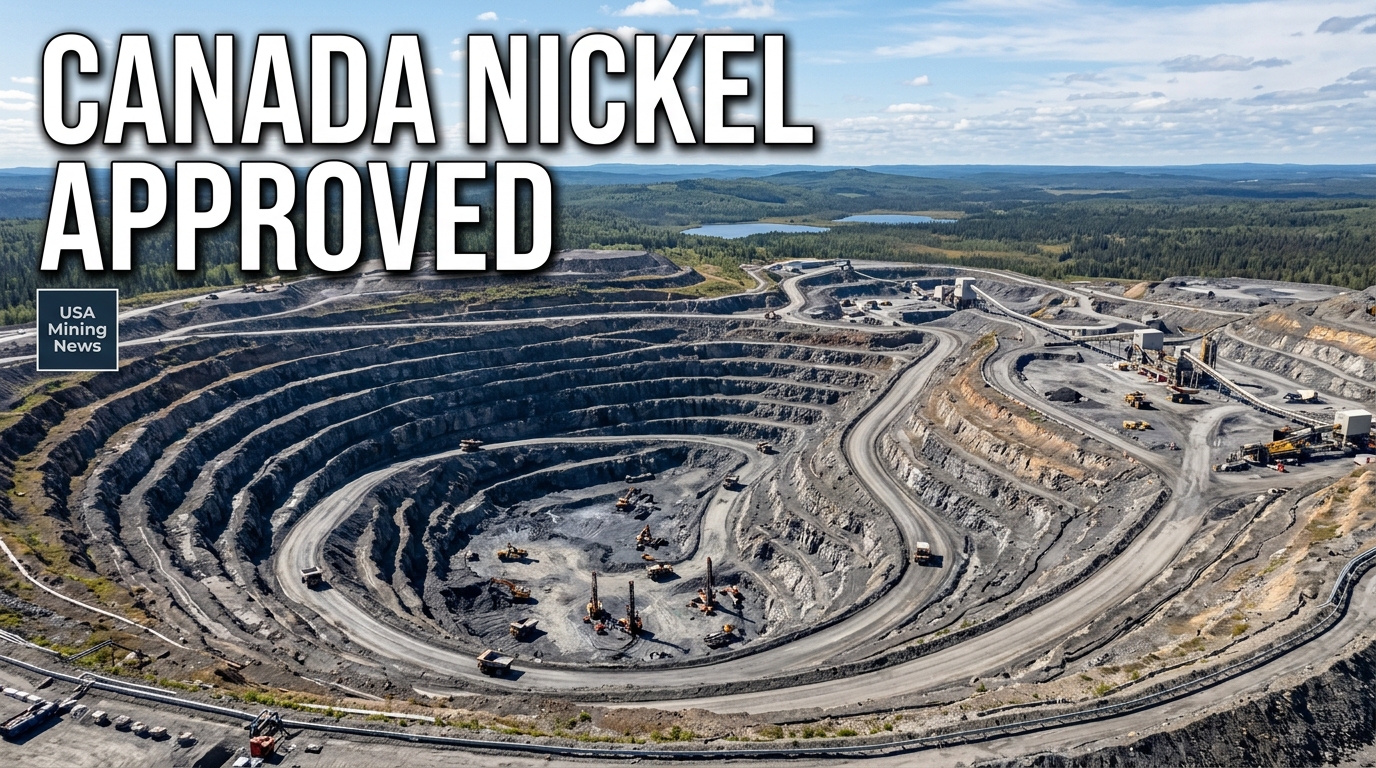
In a significant development for the Canadian mining sector and the global critical minerals supply chain, Canada Nickel Company has received federal approval for its flagship Crawford nickel project, located in the Timmins Nickel District of north-eastern Ontario. Announced on August 3, 2026, this positive decision from the Minister of Environment, Climate Change and Nature represents a landmark achievement, being the first mining project to be granted approval under Canada’s amended Impact Assessment Act since its overhaul in 2019.
The approval not only underscores the strategic importance of the Crawford project but also sets a crucial precedent for the processing and advancement of major natural resource initiatives under the country’s updated regulatory framework. This milestone comes as the global demand for essential battery metals and strategic industrial materials intensifies, placing Canada and its rich mineral endowments firmly in the spotlight.
A Landmark Federal Approval Under Amended Legislation
The federal government's positive decision statement for the Crawford Nickel Project is a testament to Canada Nickel’s diligent work and collaborative approach. Notably, this approval is the first of its kind for a new mining operation since Canada’s Impact Assessment Act was amended in 2019. The Act, designed to ensure that major projects consider a broad range of environmental, social, and economic effects, has often been a point of contention and complexity for developers. The successful navigation of this updated regulatory landscape by Canada Nickel provides a vital blueprint for other companies looking to advance large-scale projects in Canada.
The Government of Canada’s referral of Crawford to the Major Projects Office highlights the project's national significance. Furthermore, it is among the initial projects to progress under Ontario’s innovative "One Project, One Process" framework. This provincial initiative aims to streamline and accelerate the permitting process for major developments by coordinating efforts across various governmental agencies, thereby reducing administrative burden and project timelines. The synergy between federal and provincial frameworks demonstrated by Crawford’s approval suggests a renewed commitment to fostering responsible resource development within Canada, potentially opening doors for similar projects within the resource-rich Timmins Nickel District and beyond.
The Crawford Project: A Strategic Asset for North America
The Crawford project is poised to become a cornerstone of North America’s critical minerals supply. Canada Nickel has stated that Crawford is set to become the largest nickel sulphide operation in the Western world. This scale is particularly significant given the increasing global reliance on nickel, a vital component in electric vehicle (EV) batteries, stainless steel, and various high-performance alloys. Moreover, Crawford is slated to be the only primary source of chromium in North America. Chromium is an indispensable metal, playing crucial roles in the defence, aerospace, and automotive industries, primarily for its corrosion resistance and hardness properties.
The dual significance of nickel and chromium production from a single, large-scale operation positions Crawford as a strategically vital asset. As geopolitical tensions shift and supply chain vulnerabilities become more apparent, securing domestic and allied sources of critical minerals has become a top priority for nations like the United States and Canada. Crawford directly addresses this imperative, offering a reliable, ethically sourced supply of metals essential for modern industrial economies and national security interests.
Pioneering Zero-Carbon Mining and Advanced Technologies
Beyond its sheer scale and critical mineral output, Canada Nickel’s Crawford project distinguishes itself through an ambitious vision: to develop a zero-carbon industrial cluster in north-eastern Ontario. This aligns with a growing global imperative for sustainable mining practices and the decarbonization of industrial processes. The company intends to leverage innovative carbon mineralization and advanced processing technologies to achieve this objective. Carbon mineralization, a natural geological process, involves the permanent capture and storage of carbon dioxide within mineral formations. Applying this at an industrial scale offers a tangible pathway to significantly reduce the operational carbon footprint of mining activities.
The commitment to net-zero operations is not merely an environmental consideration; it is a strategic business advantage in today’s market. Investors, consumers, and regulatory bodies are increasingly scrutinizing the environmental, social, and governance (ESG) performance of companies. A "zero-carbon" credential for a major nickel and chromium producer would confer a significant competitive edge, particularly among automakers and technology companies seeking sustainable and ethically sourced materials for their products.
Expedited Development and Leadership Insight
The pace at which the Crawford project has advanced through critical regulatory hurdles is remarkable for a project of its size and complexity. Canada Nickel Company CEO Mark Selby expressed immense pride in his team’s achievements, stating, "I am very proud of our team, which completed this key federal permit in just four years and advanced Crawford from its fifth drill-hole through feasibility study to today’s milestone in under seven years – substantially faster than typically required for large-scale projects."
This timeline underscores exceptional project management and a proactive engagement strategy with regulatory bodies. Large-scale mining projects often face protracted permitting processes, which can span a decade or more, leading to significant cost escalations and delays. Crawford's expedited trajectory, from initial exploration to federal approval and feasibility study in under seven years, sets a new benchmark for efficiency in Canadian mining. This success can be attributed to strong collaboration with the Impact Assessment Agency of Canada and a clear, consistent project vision championed by Canada Nickel’s leadership.
Indigenous Partnerships: A Model for Responsible Development
Recognizing the vital role of Indigenous communities in resource development, Canada Nickel has proactively prioritized strong partnerships with local First Nations. This commitment is exemplified by the significant equity investment made by the Taykwa Tagamou Nation, amounting to C$28.08 million (approximately US$20 million). Such direct equity participation provides Indigenous communities with a tangible stake in the project’s success, fostering long-term economic benefits and shared prosperity.
In addition to equity investments, Canada Nickel has established infrastructure contracting agreements with Wabun Tribal Council First Nations. These agreements are designed to ensure sustained economic participation through direct involvement in project construction and operation, providing employment opportunities, training, and business development for community members. These partnerships exemplify a modern approach to resource development, moving beyond consultation to genuine collaboration and mutual benefit, which is increasingly becoming a prerequisite for social license to operate in Canada and other leading mining jurisdictions.
Next Steps and Future Outlook
With federal approval secured, Canada Nickel Company is now focused on the critical next phases of the Crawford project. The immediate priorities include:
- Advancing Detailed Engineering Work: Further refining the project's design and operational plans.
- Securing Project Financing: Finalizing the substantial capital required for construction and operational readiness.
- Obtaining Remaining Permits: Completing provincial and other specialized permits necessary for commencement of construction.
The company has set an ambitious target of reaching a construction decision in 2027. Should this timeline hold, Crawford could begin contributing to global nickel and chromium supply within the latter half of the decade, significantly bolstering North American critical mineral independence.
The successful approval of the Crawford project carries broader implications for the mining industry. It demonstrates that large-scale, critical mineral projects can navigate complex regulatory environments efficiently when supported by robust environmental planning, technological innovation, and meaningful engagement with Indigenous communities. For investors, Crawford represents a significant de-risking event, moving a strategic asset closer to production. For the industry at large, it offers a blueprint for developing the next generation of mines that are not only economically viable but also environmentally responsible and socially inclusive.
As the world transitions to a greener economy and geopolitical landscapes demand secure supply chains, projects like Crawford are indispensable. Its federal approval is not just a win for Canada Nickel but a strategic triumph for Canada’s position as a reliable, responsible supplier of the essential minerals that power the future.