Rio Tinto Reports Strong Q2 2026 Sales Amid Shifting Commodity Landscape
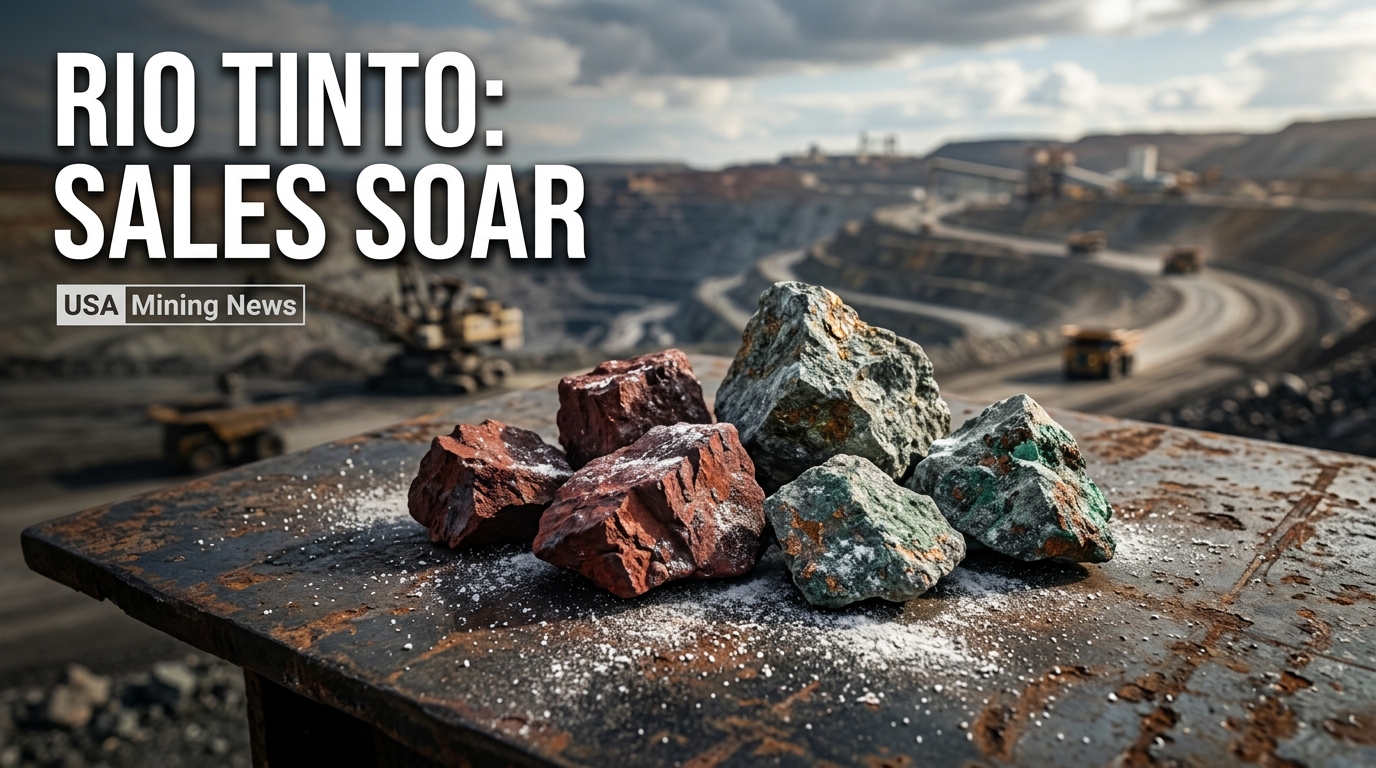
London-based mining colossal Rio Tinto has announced a largely positive operational and sales performance for the second quarter of 2026 (Q2 2026), ending June 30. The results, published on July 15, 2026, by Srivani Venna, highlight a strategic focus on its core iron ore business while aggressively expanding its footprint in future-facing commodities like lithium. Despite some challenges in its copper portfolio, the company demonstrated considerable operational resilience and strategic agility, underscoring its commitment to navigating an increasingly complex global commodity market.
The report revealed a direct increase in global iron ore sales, alongside a notable surge in lithium production. Furthermore, Rio Tinto effectively recalibrated its cost projections for copper, a critical move in a volatile market. These results offer valuable insights for mining industry professionals and investors, showcasing Rio Tinto's capacity to deliver growth while adapting to both market dynamics and geopolitical pressures. The performance underscores the company's strategic priorities: maximizing value from its world-class assets, optimizing operations for efficiency, and expanding into commodities vital for the global energy transition.
Iron Ore: Pilbara Operations Drive Robust Sales Volumes
Central to Rio Tinto's strong Q2 performance was its iron ore division, predominantly anchored by its vast operations in the Pilbara region of Western Australia. The company reported global iron ore sales of 89 million tonnes (mt) for Q2 2026, marking a 5% increase compared to the same period last year. Of this, 85.3 mt were shipped directly from its highly integrated Pilbara operations, affirming the region's pivotal role in global steelmaking supply chains.
For the first half of 2026, Rio Tinto’s total iron ore sales reached 157.7 mt, also representing a commendable 5% increase year-on-year. This strong first-half showing positions the company favorably, yet it faces the challenge of maintaining momentum to meet its ambitious annual forecast of 323–338 mt. Achieving this upper range will necessitate sustained, robust performance throughout the latter half of the year, particularly given the inherent complexities of managing vast mining and logistics networks, especially in an environment susceptible to weather disruptions or operational exigencies. The average pricing for iron ore from its Pilbara operations also improved, reaching $85.2 per wet tonne on a free-on-board (FOB) basis, up from $83.2 last year. This marginal but significant price increase, alongside enhanced volumes, directly contributed to the company’s revenue strength.
For the broader industry, Rio Tinto's iron ore performance serves as a key indicator of steel demand, particularly from major markets like China, which continues to drive global industrial activity. The continued high production rates from the Pilbara, coupled with a slight price uplift, suggests a relatively stable, or even subtly improving, demand environment for the steelmaking commodity. Rio Tinto's ongoing productivity improvement program in the Pilbara has been instrumental in this success, allowing the company to achieve its highest first-half iron ore production since setting a record in 2018, as highlighted by CEO Simon Trott.
Strategic Shifts in Battery Metals: Lithium Production Soars
Beyond its traditional strengths, Rio Tinto is strategically diversifying its portfolio towards commodities critical for the global energy transition, with lithium being a prime example. The company announced a substantial 20% year-on-year (YoY) increase in lithium production for Q2 2026. This impressive growth is principally attributed to the successful ramp-up of the Rincon starter plant in Argentina, alongside early deliveries from other promising projects in its battery metals pipeline, namely Sal de Vida and Fénix 1B, also located in Argentina. These developments underscore Rio Tinto's proactive approach to capturing value in the rapidly expanding market for electric vehicle batteries and renewable energy storage solutions.
The Rincon project, in particular, is significant. As a brine-based lithium development, it represents a substantial long-term opportunity for Rio Tinto to become a key supplier of battery-grade lithium carbonate. The successful ramp-up of its starter plant demonstrates effective project execution and lays the groundwork for larger-scale production in the future. Similarly, the early deliveries from Sal de Vida and Fénix 1B illustrate the company's strategic agility in accelerating supply to meet burgeoning market demand. This foray into lithium, alongside other future-facing metals, positions Rio Tinto to capitalize on the profound structural shifts occurring across global energy and transportation sectors, aligning its growth strategy with global decarbonization efforts.
Copper Portfolio: Navigating Production Declines and Cost Optimisation
While iron ore and lithium showed strong performance, Rio Tinto’s copper production experienced a setback in Q2 2026, with overall output decreasing by 7% to 213,000 tonnes. A primary contributor to this decline was the Escondida operations in Chile, where production reportedly dropped by 13% due to lower ore grades. Escondida, one of the world's largest copper mines, is a joint venture where Rio Tinto holds a significant stake, and its operational performance has a material impact on the company's overall copper output.
In contrast to Escondida, the Oyu Tolgoi copper mine in Mongolia continued its scheduled ramp-up, delivering more than 30% growth for the first half of the year. This large-scale, world-class asset is crucial for Rio Tinto's long-term copper strategy. However, the mine faced a localized challenge in June 2026, when cargo shipments were disrupted following a road blockade by protesters. While these types of social and operational challenges are not uncommon in large-scale mining, they underscore the complex operating environments global miners navigate.
Despite the Q2 production dip, Rio Tinto made a significant strategic announcement regarding its copper cost structure. The company reduced its 2026 copper C1 net unit cost forecast to between $0.30 and $0.50 per pound, a substantial decrease from the previous estimate of $0.65–$0.75 per pound. This positive revision was primarily attributed to two factors: higher-than-anticipated gold prices, which are often produced as a by-product at copper operations, thereby reducing net costs, and sustained productivity improvements across its copper assets. The C1 unit cost is a critical metric in the mining industry, representing the cash cost of production after deducting by-product credits. A lower C1 cost indicates greater operational efficiency and improved profitability, particularly vital in an environment of fluctuating commodity prices. This adjustment highlights Rio Tinto's disciplined approach to cost management and its ability to leverage market conditions (like higher gold prices) to optimize its financial performance.
Operational Resilience in a Complex Geopolitical Environment
In addition to managing operational and market dynamics, Rio Tinto demonstrated strong operational resilience amid the ongoing Middle East conflict. The company reported no significant disruptions to production or outbound supply chains for its core commodities during the quarter. This is a testament to robust supply chain management, risk assessment, and contingency planning, particularly given the global reach of Rio Tinto’s operations and markets.
Nevertheless, the company acknowledged the potential for broader impacts and stated it is closely monitoring the situation in the Strait of Hormuz. This critical maritime choke point, through which a significant portion of the world's oil supply passes, is central to global energy and logistics markets. Rio Tinto confirmed it has contingency plans in place to address any potential escalation that could affect global energy prices or disrupt crucial shipping lanes. This proactive stance on geopolitical risk management is increasingly essential for major mining companies, as regional conflicts can have far-reaching consequences across global supply chains, impacting everything from fuel costs to freight availability and insurance premiums.
Executive Outlook and Future Trajectory
Commenting on the collective performance, Rio Tinto CEO Simon Trott emphasized the company's overarching strategy of "delivering growth as we drive performance across the group." He highlighted a 3% increase in copper equivalent production for the first half of 2026, an aggregate measure reflecting the diverse commodity portfolio.
Trott specifically praised the Pilbara operations, noting the highest first-half iron ore production since 2018, which he attributed to the successful implementation of an ongoing productivity improvement program. This consistent focus on operational excellence in its largest segment is a cornerstone of Rio Tinto's strategy. Furthermore, he commended the sustained strong performance of the company’s integrated, large-scale aluminium business, indicating broad operational health across its key divisions. The CEO's statements reinforce Rio Tinto's commitment to optimizing its existing world-class assets while strategically allocating capital to growth opportunities, particularly in future-facing commodities.
Looking ahead, Rio Tinto's performance in Q2 2026 paints a picture of a company deftly balancing the demands of mature, high-volume assets with the strategic imperative of diversifying into growth sectors. While the challenge to meet the full-year iron ore guidance remains, the strong first-half figures provide a solid foundation. The substantial growth in lithium production underscores the company's commitment to the energy transition and its ability to bring new projects online effectively. The disciplined approach to copper costs, despite production headwinds, further demonstrates financial acumen. For the wider mining industry, Rio Tinto's results offer a snapshot of the current environment: a robust demand for foundational commodities, immense potential in battery metals, persistent operational challenges, and the pressing need for resilient supply chains in a volatile geopolitical landscape.