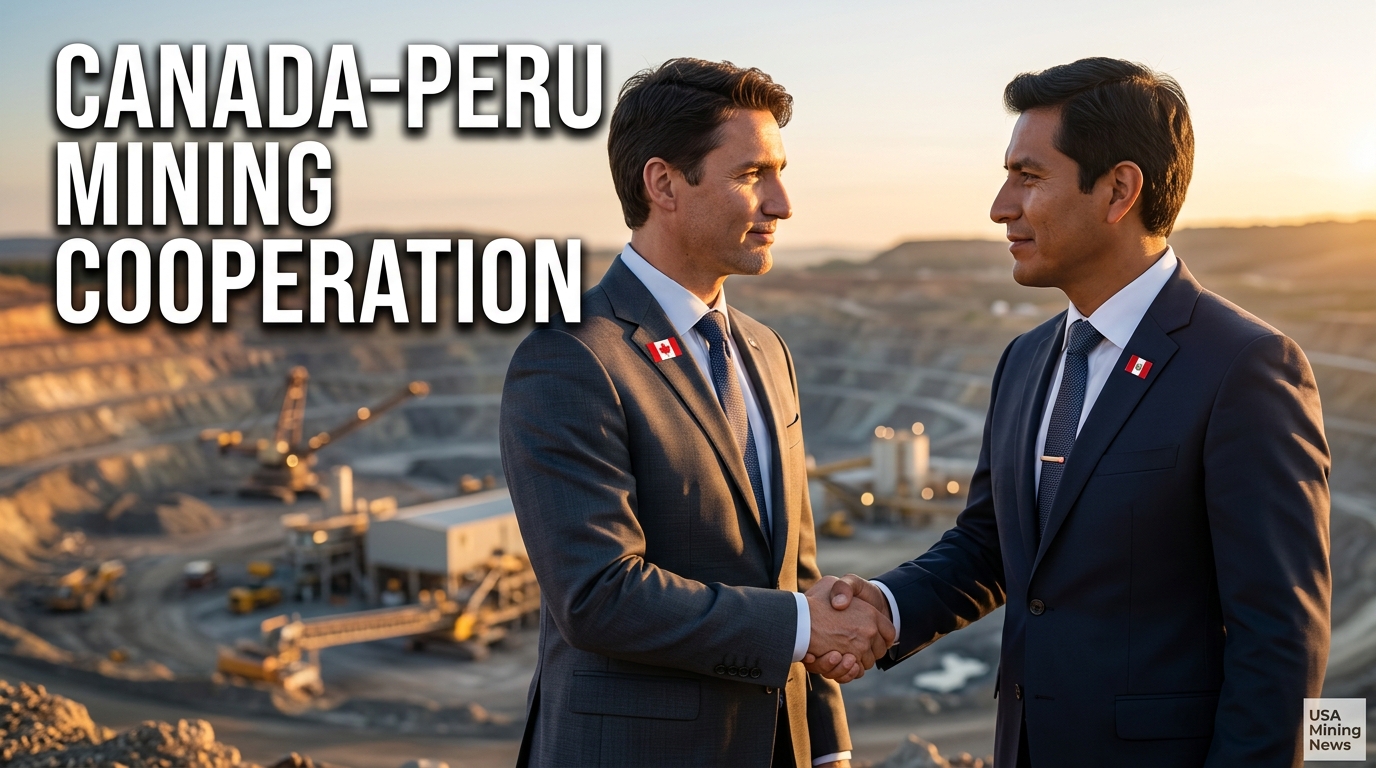
On March 20, 2026, a significant milestone in international mining cooperation was achieved as Canada and Peru formally inked a Memorandum of Understanding (MoU) aimed at bolstering collaboration in critical minerals and sustainable mining practices. This agreement represents a strategic alignment between two prominent mining nations, setting a new precedent for bilateral engagement focused on responsible resource development and economic growth.
The formalisation of this partnership took place with Jean-Dominique Ieraci, Canada’s Ambassador to Peru, representing Canada’s Minister of Energy and Natural Resources, Tim Hodgson, and Peru’s Minister of Energy and Mines, Angelo Victorino Alfaro Lombardi, as the key signatories. The MoU is designed to be a comprehensive framework, addressing multiple facets of modern mining operations from financial investment to environmental stewardship and human capital development. This initiative underscores Canada's ongoing commitment to building resilient supply chains for critical minerals globally, a strategy that has seen the nation engage in numerous international collaborations in recent years.
A Strategic Alliance for Critical Minerals and Sustainability
The core objectives embedded within the Canada-Peru MoU are multifaceted, reflecting the complex demands of the contemporary mining industry. At its heart, the agreement seeks to:
- Enhance Bilateral Investment: Encourage greater capital flows between the two countries, stimulating project development and fostering economic ties within the mining segment. Given Canada's already substantial investment footprint in Peru, this aspect aims to deepen existing financial commitments and open avenues for new ventures.
- Promote Technological Advancements: Specifically targeting innovations around traceability and decarbonisation. Traceability in critical mineral supply chains is becoming increasingly vital for meeting ethical sourcing demands and regulatory compliance, while decarbonisation efforts align with global climate goals and the industry's transition towards net-zero operations. This could involve sharing best practices in electric vehicle battery material tracking or developing new, less carbon-intensive extraction methods.
- Refine Regulatory and Governance Structures: Address the need for clear, stable, and transparent regulatory environments that attract and sustain long-term investment. Robust governance is crucial for mitigating risks and ensuring equitable benefits for all stakeholders, including local communities.
- Encourage Environmental and Social Best Practices: Commit to elevating standards in environmental protection and social responsibility, aspects that are increasingly scrutinized by investors, consumers, and communities alike. This includes shared knowledge on impact assessments, biodiversity protection, and community engagement strategies.
- Develop a Skilled and Diverse Workforce: Recognize the critical importance of human capital in the mining sector. This objective targets training initiatives, capacity building, and promoting diversity and inclusion within the industry's talent pool, preparing workers for the technological shifts and sustainability requirements of future mining.
As Ambassador Ieraci articulated, “This MoU reflects the strength of Canada and Peru’s bilateral trade relationship and underscores our shared commitment to deepening cooperation in the mining sector. Together, we are fostering innovation, promoting responsible resource development and building the skilled workforce needed for a low-carbon future.” This statement highlights the joint vision for a mining future that is both economically prosperous and environmentally and socially responsible.
Canada's Expanding Global Footprint and Peruvian Investment
The signing of this MoU is not an isolated event but rather a continuation of Canada's proactive global strategy for critical minerals. Since mid-2025, Canada has remarkably entered into 21 mining agreements worldwide, demonstrating an agile and expansionary foreign policy in resource development. This concerted effort also saw Canada spearhead the G7 Critical Minerals Production Alliance, a strategic move to secure essential resources among allied nations. These initiatives have already yielded substantial results, with Canada securing an impressive C$18.5 billion (approximately $13.47 billion USD) in investments for mining projects within a mere six-month period.
Peru holds particular significance within Canada’s strategic framework. Canadian companies represent a cornerstone of Peru’s mining sector, holding approximately C$11.2 billion in assets across a substantial portfolio of 67 exploration and mining operations. This deep-seated presence underscores Canada’s role not just as a financial investor but also as a significant contributor of operational expertise, technological solutions, and services. For Peru, which boasts rich deposits of copper, gold, zinc, and other critical minerals, Canadian investment and partnership are instrumental in unlocking its full mining potential responsibly.
Driving Innovation and Resource Development
Innovation lies at the forefront of modern mining, and the Canada-Peru partnership is keenly focused on advancing this aspect. In October 2025, the Canada-Peru Mining Innovation Summit served as an important precursor to this MoU, facilitating extensive industry collaboration. The summit specifically focused on identifying and promoting innovative solutions and sustainable resource development, aligning perfectly with the overarching goals of Canada’s Critical Minerals Strategy.
This strategy emphasizes not only the responsible extraction of critical minerals but also their processing, refinement, and integration into value chains that support green technologies. By collaborating with nations like Peru, Canada aims to diversify its supply sources, enhance processing capabilities, and ensure a stable and ethical supply of minerals essential for the global energy transition, which relies heavily on commodities like copper, lithium, nickel, and rare earth elements.
Statements from Key Leaders and Bilateral Trade Context
Canada’s Minister of Energy and Natural Resources, Tim Hodgson, emphasized the nation’s strategic advantage and aspirations: “Canada has what the world wants, and our abundant mineral deposits and mining expertise are no exception. That is why, as part of our push to double non-US trade, generate economic growth at home and build new international trade and investment relationships, we are signing agreements like this MoU with Peru.” His remarks highlight a clear objective to expand Canada’s economic reach and leverage its substantial mining capabilities to foster new international alliances and drive domestic prosperity.
Minister Hodgson also reiterated the economic ties: “As our second-largest bilateral merchandise trading partner in South and Central America, and a country where Canadian mining assets total over $11bn, I look forward to continuing to strengthen our mining relationship with our allies in Peru.” This places the mining cooperation within a broader, robust trade relationship, where mining acts as a critical pillar. The existing trade volumes and significant Canadian investment indicate a strong foundation upon which this enhanced partnership can build, fostering mutual benefits across diverse economic sectors.
Implications for the Mining Industry
This formalised cooperation carries significant implications for the global mining industry, extending beyond the direct interests of Canada and Peru:
- Strengthened Critical Mineral Supply Chains: In an era of increasing geopolitical uncertainty and supply chain vulnerabilities, bilateral agreements like this contribute to diversifying and securing the supply of critical minerals essential for renewable energy technologies, electric vehicles, and national defense.
- Elevated ESG Standards: The emphasis on environmental and social best practices, traceability, and decarbonisation will likely set higher benchmarks for responsible mining. This could prompt other nations and mining companies to adopt similar rigorous standards, enhancing the industry’s overall social license to operate.
- Technological Transfer and Innovation: The focus on technological advancements in traceability and decarbonisation suggests a potential for intensified research and development, leading to more efficient, safer, and environmentally friendly mining operations. This benefits technology providers and facilitates knowledge sharing.
- Investment Opportunity and Stability: For investors, a formalized MoU provides a more predictable and stable regulatory environment, potentially reducing investment risk in a resource-rich nation like Peru. The commitment to refining governance structures could attract further foreign direct investment.
- Workforce Development: The commitment to a skilled and diverse workforce addresses a critical challenge facing the global mining industry – the shortage of qualified personnel. Such initiatives can lead to improved local content, increased employment opportunities, and enhanced community development in mining regions.
The Road Ahead: Future Outlook and Potential Impact
The signing of this MoU marks a strategic inflection point for both Canada and Peru. For Canada, it solidifies its proactive approach to critical mineral security and global trade expansion, leveraging its profound mining expertise. For Peru, it promises continued foreign investment, technological upliftment, and a pathway to evolving its rich mineral endowments in a more sustainable and socially conscious manner.
Looking ahead, the success of this agreement will hinge on the effective implementation of its stated objectives. Regular bilateral dialogues, joint project initiatives, and shared reporting mechanisms will be crucial for monitoring progress and adapting to emerging challenges. Furthermore, this partnership could serve as a valuable blueprint for other resource-rich nations seeking to balance economic development with environmental stewardship and community engagement in the critical minerals sector.
The mining industry globally stands to benefit from the increased stability, innovation, and enhanced transparency that such a comprehensive bilateral agreement can foster. As the world continues its transition towards a low-carbon economy, the responsible and collaborative development of critical minerals, as championed by this Canada-Peru partnership, will remain an indispensable foundation.