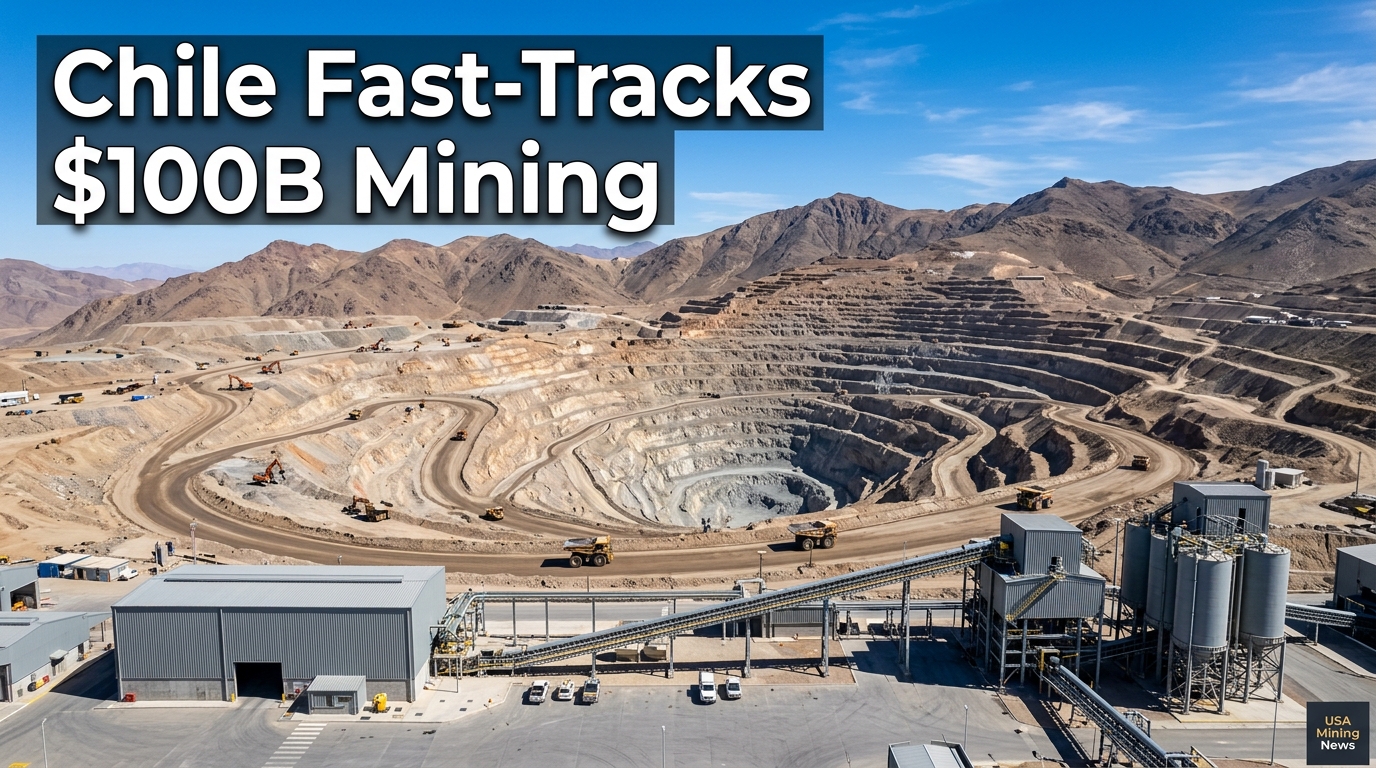
Santiago, Chile – In a bold strategic move set to reshape its mining landscape, Chile is fast-tracking reforms to accelerate permit approvals, targeting the release of more than $100 billion in capital investment. This ambitious initiative, announced by Economy and Mining Minister Daniel Mas in an interview published on Monday, April 20, 2026, is designed to reinvigorate the nation's cornerstone copper sector and bolster its growing role in critical minerals such as lithium.
A Renewed Imperative for Regulatory Efficiency
Minister Mas, speaking to La Tercera newspaper, underscored the government's "sense of urgency" in cultivating a more predictable and efficient regulatory environment for mining. The reforms come at a critical juncture for Chile, the world's largest copper producer, as it seeks to maintain its competitive edge amid global commodity demands and evolving investment landscapes. The core of this strategy revolves around a new sectoral permitting framework designed to simplify approximately 200 distinct procedures, with the explicit goal of cutting average processing times by 30%.
Crucially, the government has affirmed that these expedited processes will be implemented "without lowering environmental standards." This commitment is vital for maintaining social license to operate – a significant challenge for mining companies globally – and for ensuring the long-term sustainability of Chile’s natural resources. Mas articulated the human element behind these policy changes, stating, "Our goal is to simplify, streamline, and provide rapid responses because we know that behind every stalled project, there are lost jobs and families whose hopes are dashed." This sentiment highlights the profound socio-economic impact of project delays and the government's recognition of mining's role in national prosperity.
The broader context for this regulatory pivot is Chile's recent shift towards a more right-leaning political stance, which typically prioritizes economic growth and investment. This political environment has placed mining policy under intense scrutiny, with a clear mandate to restore Chile's appeal to international investors. For a nation where mining underpins national economic growth, investment inflows, and government revenue, these reforms are not merely administrative adjustments but fundamental pillars of national economic strategy.
The Multibillion-Dollar Investment Pipeline Takes Shape
The urgency to clear regulatory bottlenecks is directly linked to an impressive pipeline of potential investments. The target of unlocking over $100 billion signifies the immense scale of projects awaiting regulatory green lights. This includes not only major established players in copper but also emerging giants in the lithium sector.
Evidence of improving investor sentiment is already tangible, with more than $17 billion in projects having entered environmental review processes in recent weeks. These represent significant commitments from some of the industry’s most prominent names:
- Freeport-McMoRan (NYSE: FCX) and Codelco's $7.5 billion El Abra continuity project: This substantial investment in the existing El Abra copper mine, located in northern Chile, signals a long-term commitment to extending the life of a vital asset. Such continuity projects are critical for maintaining copper output levels and are often complex due to their scale and integration with existing infrastructure.
- BHP’s (ASX: BHP) $5.2 billion Escondida concentrator: Escondida, situated in Chile’s Atacama Desert, is already the world's largest copper mine by production. An investment of this magnitude into a new concentrator underscores the potential for further operational optimization and capacity expansion, vital for meeting global copper demand projections.
- Albemarle’s (NYSE: ALB) $3.1 billion “Transition to Direct Lithium Extraction (TED)” project: As global demand for electric vehicles surges, lithium has become a strategic mineral. Albemarle's project, focused on Direct Lithium Extraction (DLE) technologies, represents a significant step towards more sustainable and efficient lithium production in Chile's Atacama盐湖, potentially revolutionizing the industry by reducing water consumption and improving environmental footprints.
These projects, along with others in the pipeline, symbolize the high stakes involved. The ability to bring these investments to fruition rapidly will dictate Chile's ability to capitalize on the current commodity cycle and secure its position as a leading global supplier of critical minerals.
Driving Economic Growth and Job Creation
Beyond the headline investment figures, the government's strategy is deeply rooted in domestic economic priorities. Officials estimate that faster permit approvals alone could generate more than 20,000 permanent jobs. This figure represents a substantial boost to the national workforce, providing skilled employment opportunities across a wide spectrum of mining-related activities, from exploration and development to operations and maintenance. The multiplier effect of these jobs extends further, stimulating local economies through increased demand for services, goods, and infrastructure.
Mining remains the bedrock of the Chilean economy, underpinning sustained growth, attracting foreign direct investment, and contributing a significant portion of government revenues crucial for social programs and public infrastructure. The images of mines like Anglo American's Andina and Los Bronces copper operations, nestled in the vast Andes Mountains near Santiago, serve as powerful reminders of the industry's physical and economic footprint.
Broader Strategic Adjustments for a Bullish Future
Minister Mas indicated that the permit acceleration is part of a broader package of legal and administrative changes aimed at further reducing regulatory burdens. The government is also prioritizing several key areas for long-term growth and sustainability:
- Exploration: Essential for replenishing reserves and discovering new deposits, robust exploration activity is the lifeblood of a healthy mining sector.
- Project Expansions: Maximizing the value of existing assets through brownfield expansions often presents lower risk and faster returns compared to greenfield developments.
- Reprocessing of Tailings and Secondary Minerals: This area holds significant potential for both environmental remediation and the recovery of valuable minerals from waste streams, including copper, molybdenum, rare earth elements, and other specialty minerals, thereby extending resource life and reducing waste.
These priorities demonstrate a comprehensive approach to securing Chile's mining future. The focus on tailings reprocessing, in particular, aligns with global trends towards a circular economy in mining and offers significant environmental benefits alongside economic prospectivity.
Market Context and Global Implications
Chile's proactive stance on permitting holds significant implications for global commodity markets. As the world transitions towards a greener energy future, demand for copper – a vital component in electrification, renewable energy infrastructure, and electric vehicles – is projected to rise sharply. Similarly, lithium is at the forefront of the battery revolution. By streamlining its permitting process, Chile aims to ensure a steady and reliable supply of these critical materials, mitigating potential supply shortages that could impede global decarbonization efforts.
The competitive landscape among mining jurisdictions is intense. Countries globally are vying for foreign investment, often differentiating themselves through regulatory efficiency, geological prospectivity, and political stability. Chile's initiative directly addresses a common pain point for investors – the lengthy and unpredictable permitting processes that can inflate project costs and deter investment. By enhancing legal certainty and reducing bureaucratic hurdles, Chile is signaling its commitment to being a preferred destination for mining capital, potentially drawing attention away from jurisdictions struggling with similar regulatory challenges.
Future Outlook and Remaining Challenges
The proactive measures being undertaken by the Chilean government present a bullish outlook for the nation's mining sector. The confluence of ambitious policy reforms, significant investor interest, and favorable commodity market dynamics positions Chile for a period of robust growth and increased production. The "bullish 2026" alluded to by market observers, potentially armed with "13 projects" in its copper cannon, underscores this optimistic sentiment.
However, the path forward is not without potential challenges. The successful implementation of these reforms will require sustained political will, efficient bureaucratic execution, and ongoing collaboration between government, industry, and local communities. Maintaining the delicate balance between accelerating approvals and upholding environmental and social standards will be paramount. As the world watches, Chile is making a clear statement: it is open for mining business, and it is committed to unlocking its vast mineral wealth through a more efficient, yet responsible, regulatory framework.