In a significant development for the global mining sector and the resource-rich Democratic Republic of Congo (DRC), CoTec and Copper Intelligence have formally cemented a definitive joint venture (JV) agreement. Announced on September 30, 2026, this strategic alliance is poised to tackle the ambitious task of processing historical copper tailings within the DRC, particularly targeting opportunities across its prominent copper districts, most notably the Central African Copperbelt.
This collaboration not only brings together specialized expertise but also signals a broader industry commitment to resource efficiency and sustainable mining practices. The JV is set to explore and develop projects that could transform legacy waste materials into valuable commodities, addressing both economic potential and environmental considerations in a region critical to the world's copper and cobalt supply.
Strategic Partnership Formed: CoTec and Copper Intelligence Join Forces
The definitive joint venture agreement between CoTec and Copper Intelligence establishes a formal framework for their collaborative efforts. This partnership extends beyond the two primary companies, also encompassing two third-party investment vehicles. These vehicles are associated with key figures at CoTec: its CEO, Julian Treger, and its chairman, Lucio Genovese, indicating a deep commitment from the leadership team to the success of this initiative.
The JV's mandate is clear: to seek out and capitalize on opportunities within the DRC's historical copper districts. This focus is particularly pronounced in the Central African Copperbelt, an area renowned globally for its vast and high-grade copper and cobalt deposits. The formation of this JV company will see it incorporated in the British Virgin Islands, with all necessary incorporation documents to be executed upon its registration.
Unlocking Value in DRC's Copper Tailings
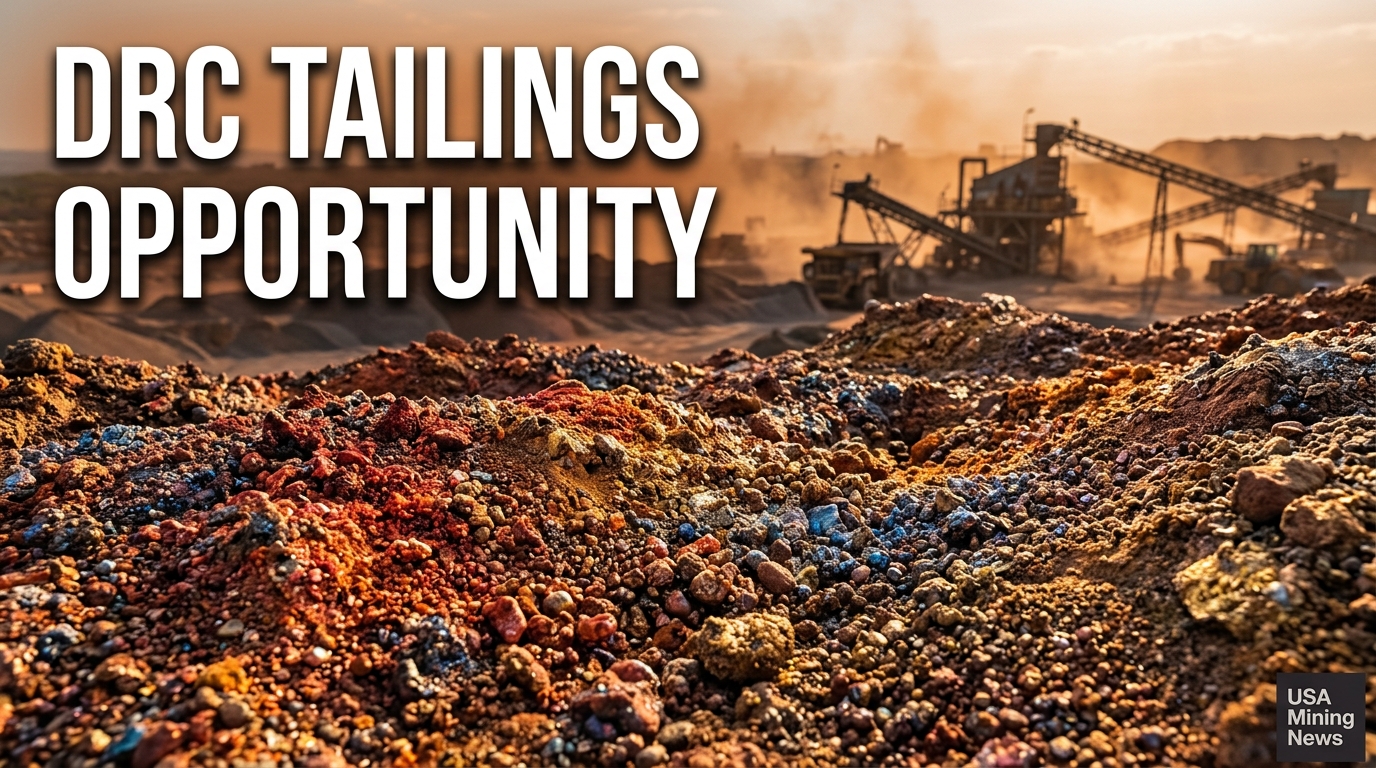
The Democratic Republic of Congo possesses an extensive mining history, dating back many decades. During its industrial mining era, large volumes of copper tailings have accumulated across the landscape, with significant deposits originating from operations that commenced as early as the 1950s. Much of this accumulation occurred under the stewardship of Gécamines, the state-owned mining company that historically dominated the nation's mineral extraction activities.
These historical tailings, often considered waste by past operations, represent a significant untapped resource. Advances in mineral processing technologies, coupled with increasing demand for critical minerals, have made the reprocessing of these sites economically viable. The Central African Copperbelt, stretching across the DRC and into Zambia, is globally recognized as one of the most prolific mineralized regions, making its historical tailings dumps particularly attractive for modern resource recovery efforts.
The reprocessing of tailings offers multiple benefits: it can extract residual metals that were uneconomical or technologically challenging to recover previously; it contributes to environmental remediation by reducing the footprint of these legacy sites; and it provides an opportunity to bolster a nation's mineral output without the extensive capital expenditure and environmental impact associated with new greenfield mine development.
A Vision for Copper Division Growth and Technological Application
CoTec’s CEO, Julian Treger, articulated the strategic rationale behind this joint venture, stating, "The company’s strategy is to build a copper division and the JV with Copper Intelligence provides CoTec with a long-term partner who has demonstrated resource execution in a world-class copper district." This statement highlights CoTec’s ambition to expand its presence in the copper market, a commodity vital for global industrial development, renewable energy infrastructure, and electric vehicle manufacturing.
Treger further emphasized the importance of applying advanced recovery methods, remarking, "We are excited to progress towards securing assets which can utilise our technologies as we build out our asset portfolio. The DRC has a rich copper mining history that we expect would be reflected in its potential scalable tailings opportunities." CoTec intends to deploy its proprietary technologies to enhance the economic prospects of these tailings and redundant copper sites. These technologies are crucial for improving recovery rates, reducing operational costs, and making previously uneconomical material commercially viable.
The deployment of innovative processing solutions can differentiate such projects, allowing for the efficient extraction of copper and potentially other co-products like cobalt, which is in high demand for battery manufacturing. This technological edge is expected to be a key driver in maximizing value from the vast historical resources available in the DRC.
Rigorous Evaluation and Funding Strategy
The JV has outlined a methodical and stringent process for evaluating potential copper tailings opportunities. This ensures that only projects with solid technical and legal foundations will proceed. Each potential project will undergo comprehensive legal and technical due diligence, a critical step to mitigate risks associated with land tenure, environmental liabilities, and resource estimations. Following successful due diligence, binding agreements will be pursued on an asset-by-asset basis, allowing for tailored approaches to each unique site.
To ensure robust governance and alignment of interests, all project developments will require approval from both the independent members of the JV’s board and the independent directors of CoTec. This multi-layered approval process underscores a commitment to transparency and sound corporate governance, providing assurance to stakeholders and potential investors that decisions are made on objective merit.
Beyond the operational planning, the JV also has a clear funding strategy. It aims to secure financing from the US International Development Finance Corporation (DFC) and other financiers once the portfolio of projects reaches a sufficient scale. The DFC, an agency of the U.S. government, supports private sector investment in developing countries, often prioritizing projects that align with strategic U.S. foreign policy objectives, including critical mineral security and sustainable development. Securing DFC funding would not only provide essential capital but also lend significant credibility and de-risking to the projects, attracting further institutional investment.
Copper Intelligence's Vertically Integrated Vision
Copper Intelligence chairman, Andrew Groves, expressed enthusiasm for the collaboration, stating, "We are excited to pursue a strategic partnership with the CoTec team. We look forward to a strong and profitable relationship with a team that has achieved a track record of success for many decades." Groves' comments highlight the mutual respect and the perceived synergy between the two companies' capabilities.
Groves also underscored how this transaction contributes to Copper Intelligence's broader strategic objectives, noting, "This transaction further contributes to our vertically integrated vision for Copper Intelligence." A vertically integrated strategy in the mining sector typically involves controlling multiple stages of the value chain, from exploration and mining to processing and potentially even downstream activities. By partnering to reprocess tailings, Copper Intelligence can enhance its raw material supply base, diversify its operations, and potentially secure long-term feedstock for its future processing or marketing endeavors.
The Broader Industry Context: DRC's Critical Role in Global Copper Supply
The Democratic Republic of Congo stands as a geopolitical cornerstone in the global supply chain for critical minerals, particularly copper and cobalt. As the world transitions towards renewable energy technologies, electric vehicles, and advanced electronics, the demand for these metals is projected to surge. The DRC is already the world's largest producer of cobalt and a top-tier producer of copper, making any new initiatives within its mining sector highly relevant to global markets and supply security.
Tailings reprocessing projects like the one envisioned by CoTec and Copper Intelligence are becoming increasingly vital. They offer a sustainable pathway to augment mineral supply without the extensive environmental and social impacts often associated with developing new greenfield mines. By extracting value from existing waste, these projects can reduce land disturbance, mitigate pollution from historical sites, and potentially generate local employment and economic benefits for communities surrounding these legacy operations.
Furthermore, such projects align with global efforts to promote a circular economy within the mining industry, where waste is viewed as a resource rather than merely an environmental burden. This shift in perspective is crucial for meeting future demand responsibly and reducing the overall environmental footprint of mineral extraction.
Future Outlook and Implications
The CoTec and Copper Intelligence JV represents a significant step towards unlocking substantial economic and environmental value from the DRC's historical mining legacy. The immediate next steps for the JV include the formal incorporation of the new company in the British Virgin Islands and the diligent pursuit of specific asset opportunities within the Central African Copperbelt.
If successful, this initiative could serve as a blueprint for similar projects in other regions with significant historical tailings. It could also bolster the DRC's position as a reliable supplier of critical minerals, attracting further investment and fostering technological innovation within its mining sector. For CoTec, it marks a critical milestone in building its dedicated copper division and demonstrating the commercial viability of its processing technologies. For Copper Intelligence, it strengthens its integrated operational model and expands its strategic footprint in a key mineral-producing region.
The commitment to securing funding from institutions like the US International Development Finance Corporation underscores the project's potential to contribute to broader development goals, including economic growth and the responsible sourcing of materials crucial for the global energy transition. As the JV progresses, its impact on the local economy, global commodity markets, and the sustainable future of mining in the DRC will be closely watched by industry professionals and investors alike.