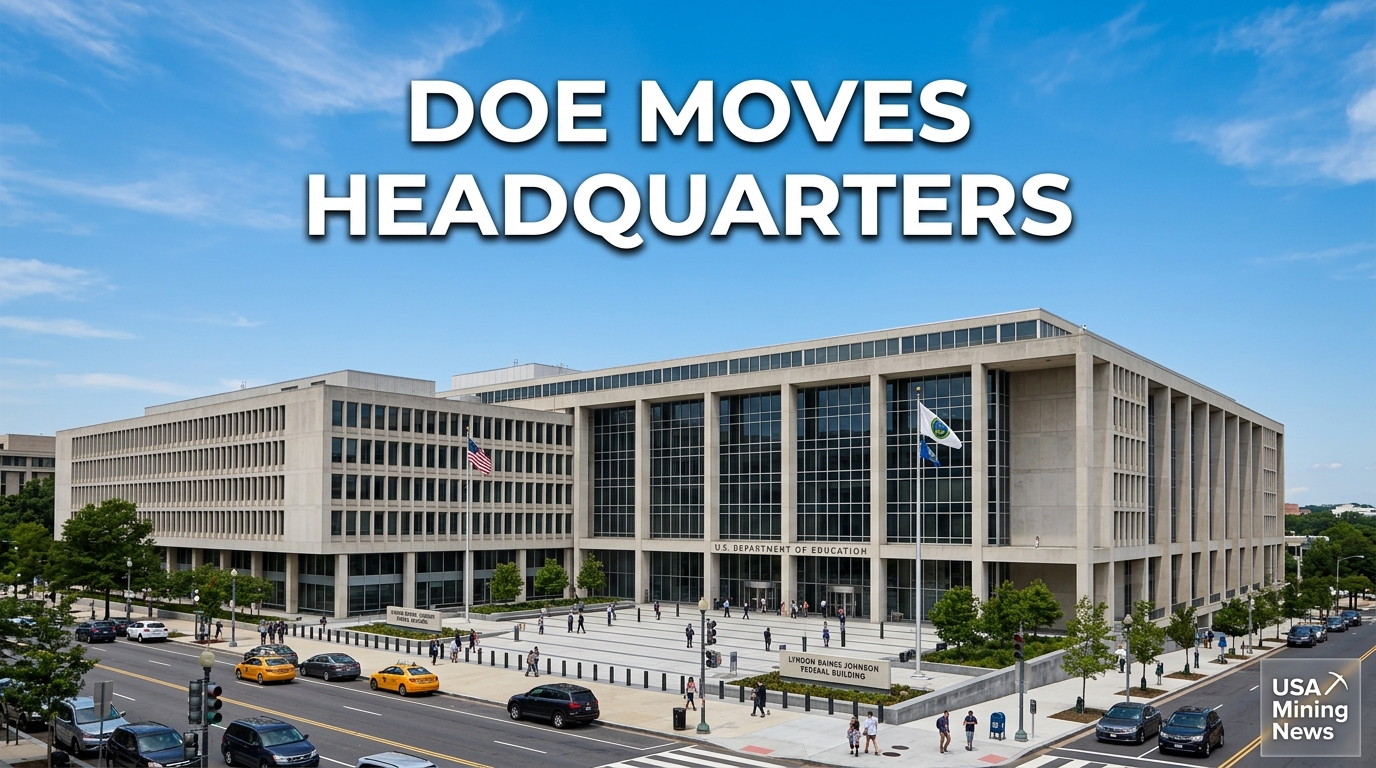
WASHINGTON—In a move signaling a renewed focus on governmental efficiency and fiscal prudence, the U.S. Department of Energy (DOE), acting in partnership with the U.S. General Services Administration (GSA), officially announced today, March 26, 2026, a significant change in its operational footprint. The DOE’s headquarters will relocate from its current home in the James V. Forrestal Building to the Lyndon B. Johnson (LBJ) building, which presently serves as the headquarters for the U.S. Department of Education (ED). This strategic decision is poised to generate substantial taxpayer savings and is a key component of the Trump Administration’s broader efforts to modernize federal infrastructure while curtailing wasteful spending.
A Strategic Relocation: Consolidating DOE's Operational Hub
The planned relocation of the DOE's headquarters to the LBJ building is more than just a change of address; it represents a calculated effort to optimize government operations and invest taxpayer dollars more effectively. The James V. Forrestal Building, a prominent landmark in the federal complex, has accumulated significant deferred maintenance and modernization requirements over the years. By moving to the LBJ building, the DOE anticipates saving over $350 million that would otherwise be allocated to addressing these structural and technological upgrades.
Energy Secretary Chris Wright emphasized the dual benefits of this relocation. "Relocating to the LBJ building will deliver significant taxpayer savings and will ensure the Energy Department continues to deliver on its mission," Secretary Wright stated. "We look forward to working closely with the General Services Administration and the Education Department throughout this process." This statement underscores both the fiscal motivation and the collaborative spirit driving this complex inter-agency transfer.
The LBJ building offers a contemporary, ready-to-occupy solution. It has recently undergone extensive modernization, achieving a Class A building designation with minimal deferred maintenance. This ensures a seamless transition for DOE staff, providing them with an environment conducive to productivity and modern operational demands. All DOE Forrestal staff are slated for reassignment to the LBJ building, with others moving to the DOE Germantown Campus, Portals, or 950 L’Enfant, ensuring comprehensive accommodation across the department’s diverse operational needs.
GSA Administrator Edward C. Forst highlighted the synergistic nature of this undertaking. "GSA is partnering with the Department of Education and the Department of Energy to match their missions of tomorrow with ideal environments that powers their talented workforce, cuts waste, and lowers costs," Administrator Forst explained. He further commended the collaborative approach, stating, "This is the government working smarter for the American people. I want to thank Secretary Wright and Secretary McMahon for their positive energy and collaboration in executing President Trump’s directive to strengthen the government’s real estate portfolio." Secretary McMahon is notably the head of the U.S. Department of Education, whose staff will be vacating the LBJ building to facilitate the DOE's move.
Driving Efficiencies and Taxpayer Savings: The $350 Million Mandate
The core rationale behind this headquarters shift is rooted firmly in a commitment to fiscal responsibility and operational efficiency. The figure of over $350 million in deferred maintenance and modernization costs represents a substantial burden on taxpayers that the relocation seeks to circumvent. This effort aligns directly with President Trump's declared commitment to eliminating waste and promoting efficiency across government agencies.
This headquarters move is not an isolated incident but rather a cornerstone of the Trump Administration's broader strategy. The administration aims to streamline the federal real estate footprint significantly, reduce what it identifies as wasteful spending, and simultaneously support a high-performing government workforce. Providing facilities that reflect modern expectations for efficiency and accountability is paramount to this vision. By redirecting funds from upkeep of aging facilities to more mission-critical areas or returning them to taxpayers, the administration seeks to demonstrate tangible benefits from its real estate optimization initiatives.
The DOE's Broad Mandate: Implications for the Mining Sector
For professionals and investors within the mining industry, the efficiency and operational effectiveness of the U.S. Department of Energy hold profound implications. The DOE's mandate extends far beyond administrative real estate, encompassing critical areas directly impacting the commodity markets, supply chains, and technological advancements that shape the global mining landscape.
- Critical Minerals and Supply Chain Resilience: The DOE plays a pivotal role in the nation's strategy for critical minerals. These minerals, essential for renewable energy technologies, electric vehicles, advanced electronics, and national defense, are increasingly a focus for both domestic production and secure international supply chains. A more efficient DOE, freed from the burden of outdated infrastructure, can potentially accelerate initiatives related to geological surveys, processing technologies, and domestic resource development that directly benefit mining companies.
- Energy Policy and Infrastructure: As the primary federal agency for energy policy, the DOE’s decisions directly influence demand for various mined commodities. This includes uranium for nuclear power, coal for traditional energy generation, and vast quantities of copper, aluminum, and rare earth elements for modern electrical grids, energy storage solutions, and renewable energy projects. Any enhancement in the DOE’s ability to formulate and execute coherent energy strategies can lead to greater predictability and long-term project viability for the mining sector.
- Research and Development (R&D): The department is a leading funder of research into advanced materials, cleaner energy technologies, and next-generation energy systems. These R&D efforts often drive demand for specific minerals or create opportunities for new extractive and processing methodologies. For example, advancements in geothermal energy, carbon capture technologies, or battery storage directly involve mined resources and the expertise of the mining industry. More streamlined operations within DOE could translate to faster approvals and greater funding for such programs.
- Regulatory Environment: While not a primary regulatory body for mining operations themselves, the DOE influences the broader regulatory environment for energy projects. Its input can shape permitting processes for energy infrastructure that relies heavily on mined materials, affecting project timelines and costs for developers. An efficient DOE implies potentially more decisive and consistent engagement on these fronts.
Furthermore, on the very same day of this headquarters announcement, the DOE's Office of Indian Energy (IE) revealed a separate but equally impactful initiative: a $50 million notice of funding opportunity. This program aims to foster affordable, reliable, and secure energy solutions in Indian Country, which frequently holds significant untapped mineral and energy resources. Such initiatives underscore the DOE's multifaceted impact on resource development and community engagement, areas of high interest to the mining industry. Another example of DOE’s forward-looking agenda, reported in a previous press release, includes leveraging Artificial Intelligence (AI) to reduce reactor licensing timelines – a direct impact on uranium demand.
Modernizing Government for a Modern Energy Landscape
The move to a modernized, Class A building with minimal deferred maintenance is not merely about cost savings; it's about empowering the DOE workforce to operate at peak efficiency. A state-of-the-art working environment can foster enhanced collaboration, better technology integration, and improved morale, all of which contribute to the department's ability to execute its vital mission. In an era of rapid technological change and shifting global energy dynamics, a responsive and agile Department of Energy is more critical than ever.
This relocation symbolizes a broader commitment within the federal government to adaptability and accountability. By demonstrating a willingness to re-evaluate and optimize its own physical assets, the administration sets a precedent for other agencies and departments. For the mining industry, which operates within complex regulatory and economic frameworks, a more nimble and efficient government can lead to clearer policy signals, more predictable project pathways, and ultimately, a more stable operating environment.
The Path Forward: Operationalizing the Transition
The successful execution of this relocation will require close coordination among the U.S. Department of Energy, the U.S. General Services Administration, and the U.S. Department of Education. While specific timelines for the completion of the move were not detailed in the initial announcement, the commitment from all parties suggests a coordinated effort to minimize disruption and ensure a smooth transition for thousands of federal employees.
As the DOE transitions to its new headquarters, the mining industry will closely observe how these operational efficiencies translate into sharpened policy, accelerated innovation, and more effective stewardship of the nation’s energy and mineral resources. The ultimate goal is a Department of Energy that is better equipped to navigate the complexities of securing a resilient energy future, a future intrinsically linked to the strategic supply of minerals and metals from across the globe. This relocation, therefore, represents not just a new chapter for the DOE's physical presence, but potentially a refreshed approach to its critical mission impacting energy, national security, and raw materials.