WASHINGTON – The critical need for resilient and secure energy infrastructure took center stage on August 5, 2026, as the U.S. Department of Energy’s (DOE) Office of Energy Dominance Financing (EDF) announced the closure of a substantial $489.4 million loan. This financing, extended to Amanecer Puerto Rico LLC, a subsidiary of Pattern Energy, is earmarked for a transformative project designed to reduce electricity costs and significantly enhance the reliability of Puerto Rico's electric grid. The initiative is a cornerstone of the Trump Administration’s broader strategy to fortify America’s energy infrastructure, drive down consumer costs, and strengthen domestic manufacturing capabilities.
A Critical Investment for Puerto Rico's Grid Stability
Puerto Rico has long grappled with the vulnerabilities of its energy infrastructure, experiencing chronic outages and prolonged service interruptions that have imposed substantial economic burdens on families, businesses, and essential services. The $489.4 million loan from the EDF is a direct response to these challenges, targeting a comprehensive overhaul that promises long-term benefits for the island commonwealth. According to EDF Director Gregory A. Beard, this investment is a tangible outcome of President Trump’s Working Families Tax Cuts Act, which aims to stimulate investments that bolster American energy infrastructure.
The financial structuring of this loan underwent a comprehensive review by the Trump Administration, ensuring its alignment with key priorities: lowering energy costs for consumers and businesses, reinforcing American manufacturing capabilities, and deploying reliable, secure energy infrastructure. The expected impact is significant, with projections indicating that Puerto Rican families and businesses could realize approximately $312.5 million in electricity cost savings over the next 25 years. Beyond the immediate financial relief, the project is designed to deliver a more stable and secure energy supply, critical for the island's economic development and quality of life.
Strategic Pillars: Battery Storage and Future Gas Generation
The core of this financing package supports two principal strategic components aimed at fundamentally transforming Puerto Rico’s energy landscape:
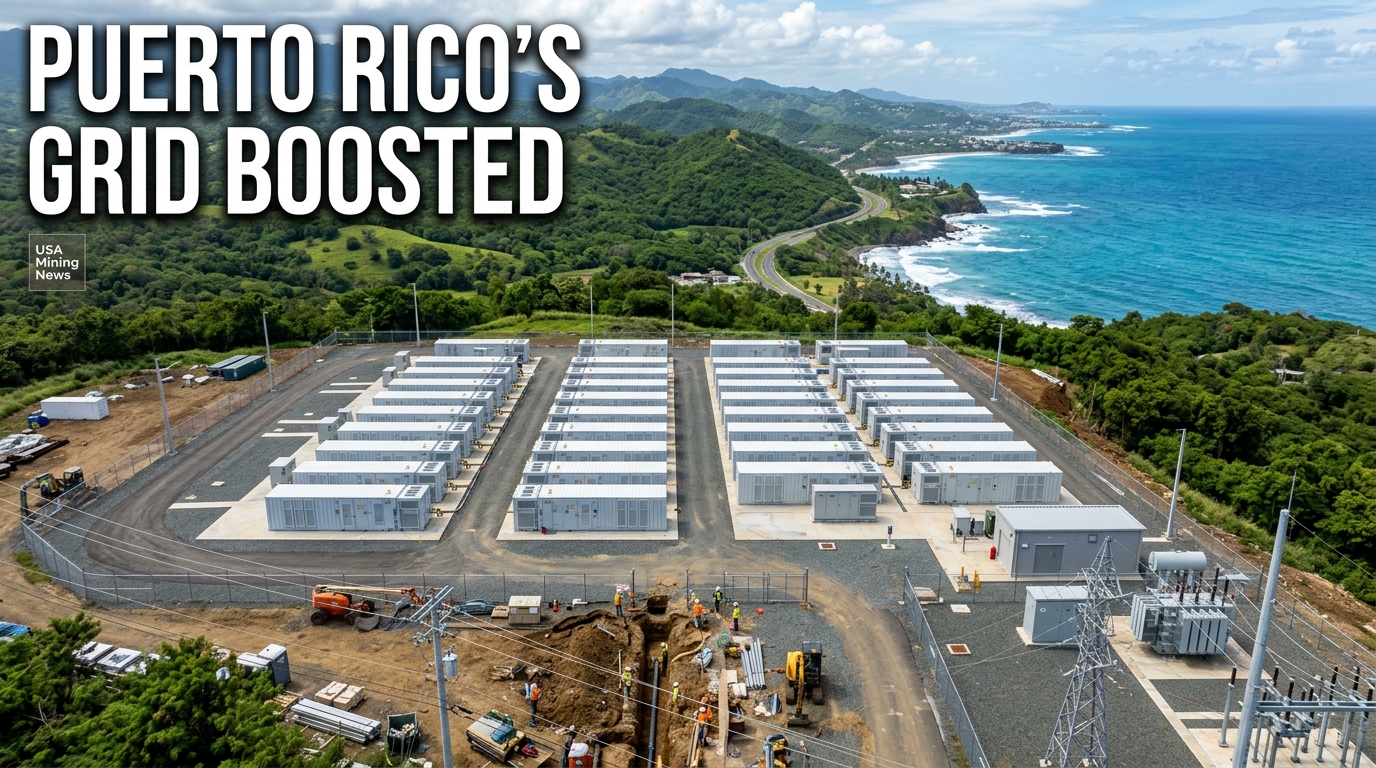
- 220 Megawatts of Battery Energy Storage Systems: The loan will facilitate the deployment of substantial battery energy storage systems, strategically located in Arecibo and Santa Isabel. A crucial aspect of this deployment is the mandate for American-manufactured battery technology and secure domestic supply chains. This stipulation directly aligns with the EDF's mission to strengthen U.S. industrial capacity and reduce reliance on foreign-controlled supply chains, particularly in critical energy technologies. These advanced battery systems are engineered to provide backup electricity for over 100,000 customers during power shortages, a vital capability given the island's history of grid instability. Based on 2025 operating data, these systems are anticipated to help avoid approximately 13 million customer interruption hours, marking a significant improvement in grid resilience.
- Pathway for Future Natural Gas Generation: In addition to the battery storage, the financing also establishes a pathway for the future development of reliable, dispatchable natural gas-fired generation. This move is intended to further improve grid stability and bolster Puerto Rico's long-term energy security. Natural gas-fired generation offers a reliable, on-demand power source that can complement intermittent renewable energy sources, ensuring a consistent energy supply necessary for a modern industrial economy.
Addressing a History of Grid Vulnerability
The current financing builds upon a series of prior efforts by the Trump Administration to restore reliable electricity across Puerto Rico. Since 2025, the DOE has proactively issued and renewed emergency orders under Section 202(c) of the Federal Power Act. These orders have authorized critical generation resources essential for maintaining reliable electric service, particularly in the face of persistent challenges. Furthermore, efforts have been directed towards crucial vegetation management and transmission maintenance initiatives, aimed at enhancing overall grid performance ahead of periods of peak demand and the annual hurricane season, which historically has posed existential threats to the island's infrastructure. These combined emergency actions and long-term infrastructure investments are strategically converging to deliver a stronger, more reliable, and ultimately more affordable electric system for the people of Puerto Rico.
The Broader Vision: American Manufacturing and Energy Security
The investment in Puerto Rico's grid by the EDF is not an isolated incident but rather a clear demonstration of the broader mandate under President Trump's leadership. The EDF is explicitly committed to financing American energy and manufacturing projects that make meaningful contributions to U.S. energy security, grid reliability, and the overarching goal of lowering costs for all Americans. This philosophy is rooted in empowering the private sector to invest in future-oriented technologies and infrastructure, with an eye towards enhancing national competitiveness, particularly in burgeoning fields like artificial intelligence, strengthening American industry, and ultimately restoring American Energy Dominance. The emphasis on "American-manufactured battery technology and secure domestic supply chains" is a direct reflection of this commitment, seeking to ensure that critical components for the nation's energy future are sourced and produced within its borders or from trusted allies.
Implications for the Mining Sector
While the immediate scope of this project focuses on energy generation and storage, its underpinnings carry profound implications for the mining industry. The commitment to 220 megawatts of American-manufactured battery energy storage systems, coupled with a directive for secure domestic supply chains, directly stimulates demand for critical minerals. Batteries, particularly lithium-ion variants, rely heavily on a range of key raw materials, including:
- Lithium: A primary component in almost all modern battery chemistries.
- Cobalt: Essential for cathode stability and energy density.
- Nickel: Used to increase energy density and reduce cobalt content in newer battery formulations.
- Graphite: A critical anode material.
- Manganese: Used in various cathode chemistries for improved safety and cost-effectiveness.
The push for "American-manufactured" technology implies a significant effort to develop and expand domestic mining, processing, and refining capabilities for these minerals. This could involve new exploration and extraction projects within the United States and its territories, as well as investment in advanced processing facilities to transform raw ore into battery-grade materials. For the U.S. mining industry, this represents a substantial market opportunity and a strategic imperative to reduce reliance on foreign, often geopolitically sensitive, sources for these vital inputs. Strengthening these domestic supply chains is paramount for national energy security and economic resilience, aligning perfectly with the EDF's stated goals.
Furthermore, the establishment of a pathway for natural gas-fired generation, while not directly mining for gas, requires extensive infrastructure development. This includes pipelines, power plants, and transmission lines, all of which necessitate significant quantities of mined materials such as iron ore (for steel pipes and structural components), copper (for electrical wiring and components), and construction aggregates. A stable, reliable, and cost-effective energy grid, as envisioned for Puerto Rico, also creates a more favorable environment for industrial consumers, including potential future mining or mineral processing operations, by reducing operational risks and energy costs. The broader "Energy Dominance" agenda signals a robust demand for primary resources across the entire energy spectrum, from conventional fuels to the raw materials powering the energy transition.
Outlook: A Resilient Energy Future for the Island
The $489.4 million loan represents a pivotal moment for Puerto Rico’s energy future. By addressing chronic grid instability, reducing consumer costs, and leveraging American innovation and manufacturing, the project aims to deliver a resilient and secure power system. The integration of advanced battery storage and the planned introduction of dispatchable natural gas generation offer a diversified and robust energy portfolio. For the mining industry, this initiative serves as a clear indicator of the growing demand for critical minerals and the strategic importance of developing secure, domestic supply chains. As the United States continues its drive towards energy independence and technological leadership, the foundational role of mining in supplying the necessary raw materials will only continue to amplify, making projects like Puerto Rico's grid modernization a tangible bellwether for industry growth and strategic investment.