Copper Quest Bolsters North American Footprint with Strategic Auxer Gold Acquisition in Idaho
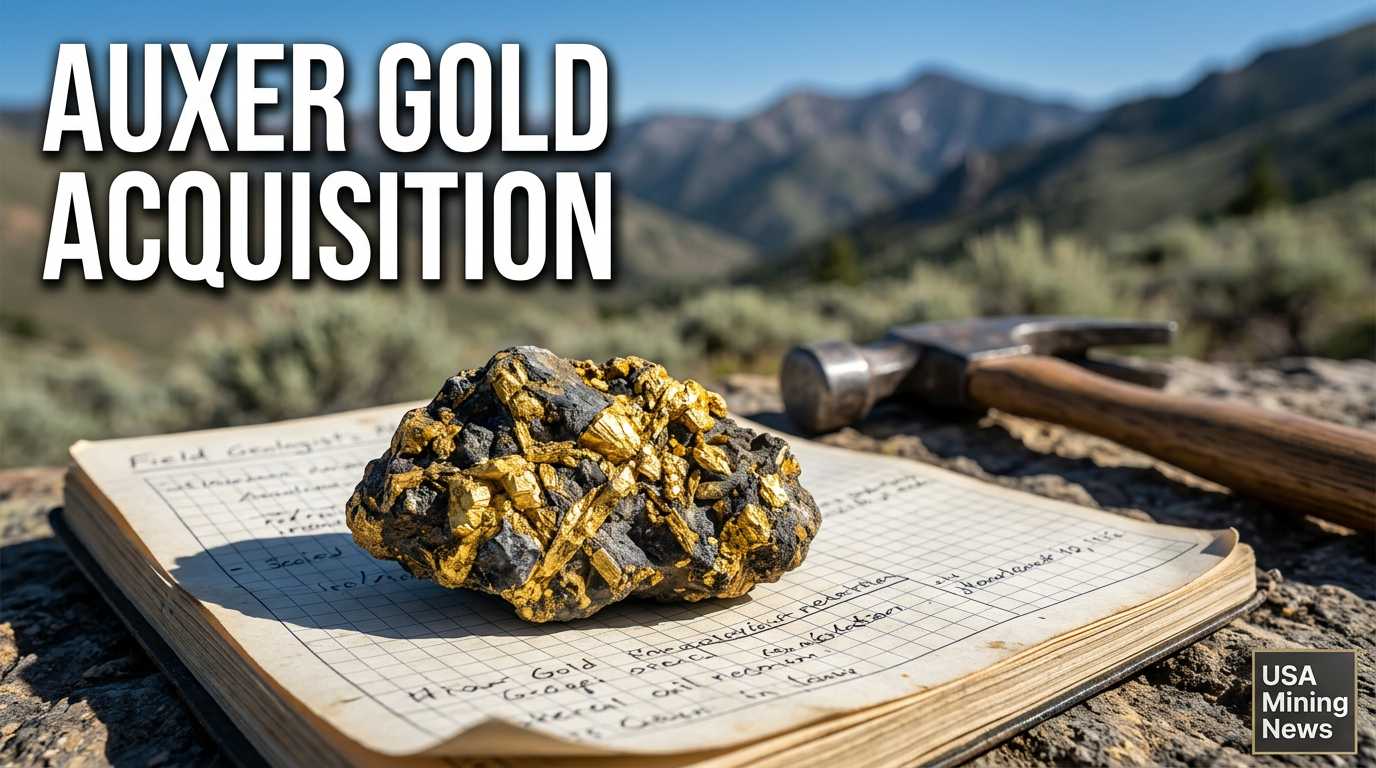
Spokane, WA – March 13, 2026 – In a significant development for the North American mining sector, Copper Quest Exploration has announced the successful completion of an arms-length purchase agreement to acquire full possessory rights and interest in the Auxer Gold Property. Located strategically in Bonner County, Idaho, United States, this acquisition marks a crucial expansion of Copper Quest's burgeoning portfolio of gold and copper assets across the continent. The property’s inherent geological promise, coupled with its advantageous logistical positioning, sets the stage for intensified exploration and potential development within a region renowned for its mineral wealth.
The Auxer Gold Property: A Detailed Overview
The newly acquired Auxer Gold Property is a substantial asset, spanning an impressive 1,087 hectares (approximately 2,686 acres) and encompassing 130 unpatented lode claims. Situated in Bonner County, Idaho, a jurisdiction with a long history of mining activity, the property is characterized by its significant geological potential and existing infrastructure advantages. For a mining company, the sheer scale of the claim block provides ample room for district-scale exploration and the potential discovery of multiple mineralized zones.
A key attribute highlighted by Copper Quest is the property's exhibition of near-surface, high-grade mineralization. Historical exploration efforts, particularly by Lightning Creek Gold, have revealed gold grades reaching an exceptional 26.8 grams per tonne (g/t). To put this figure into industry context, a grade of 26.8 g/t gold is considered extremely high-grade, especially if it is accessible near the surface. Such grades significantly enhance the economic viability of a project, as they can reduce the volume of ore needing to be processed to yield a certain amount of gold, thereby potentially lowering operating costs and increasing profitability.
Geological Promise and Orogenic Gold Systems
The geological endowments of the Auxer Gold Property are particularly compelling for an exploration company. The site features a substantial 7-kilometer strike length of mineralization, indicating a broad and extensive mineralizing system. The geological characteristics are noted to be highly analogous to known orogenic gold settings. Orogenic gold deposits are a highly desirable target for exploration due to their potential for significant size and depth continuity. These types of deposits typically form in metamorphic terrains during periods of continental collision and are known for producing some of the world’s largest and most long-lived gold mines. The presence of a 7 km strike length reinforces the potential for a large-scale system.
Within this extensive strike length, the Auxer site contains several high-grade ore shoots. The identification of such localized, high-concentration zones is crucial as it suggests the possibility of significant underground mining activities. Discrete ore shoots can provide immediate targets for resource definition and potential early-stage production. Copper Quest president and CEO, Brian Thurston, elaborated on this, stating, "The Auxer Project exhibits all the hallmarks of other mineralized orogenic gold systems as defined by contemporary deposit models. The expansion of the Boston Vein from 0.6m at surface to 3.66m at a 20m depth demonstrates classic orogenic gold vein geometry with strong depth continuation potential with mineralisation extending over multiple kilometres." This observation underscores a fundamental characteristic of orogenic systems: veins can widen and persist with depth, presenting excellent opportunities for underground development.
Operational Advantages and Critical Infrastructure
Beyond its geological merits, the Auxer Gold Property offers several operational advantages that are highly valued in the mining industry. Critical among these is its existing road access, which facilitates the transportation of equipment, personnel, and eventually, mined materials. Even more significantly, the property's proximity to the BNSF Railway mainline is a considerable advantage. Access to a major rail network can dramatically lower transport costs for bulk commodities, provide efficient logistical pathways for supplies, and accelerate overall development timelines, particularly if a mine moves into production. This infrastructure support distinguishes Auxer from many remote exploration projects that face prohibitive logistical challenges.
Another unique aspect is the existence of 1,000 meters of historical underground workings. These workings, which include access to the Boston Vein and Chicago Vein systems, are not merely relics of past mining but represent valuable assets for modern exploration. They offer direct geological data points that can inform current models and significantly reduce initial exploration costs by providing existing access points for sampling, mapping, and further drilling without the need for extensive new surface development. Re-establishing access to these historical workings means less time and capital spent on initial ground preparation, allowing for faster progression to understanding the deeper geology.
Permitting Progress and Future Exploration Plans
Copper Quest has already made substantive progress on the regulatory front, securing essential permits that pave the way for aggressive exploration. The company has received permits for surface diamond drilling, a vital technique for delineating the geometry and grade of mineralization at depth. Critically, permits have also been granted for re-establishing underground access to the aforementioned historical workings, which will be instrumental in validating historical data and targeting new high-grade zones. Additional infrastructure permits allow for temporary road construction and water withdrawal, ensuring the necessary logistical support for ongoing exploration activities.
These permitting successes highlight Copper Quest's proactive approach and ability to navigate regulatory landscapes, which is often a significant hurdle for mining projects. With these permits in hand, Copper Quest is well-positioned to rapidly advance its understanding of the Auxer property's resource potential, moving from initial exploration to potential resource definition in a more accelerated timeframe.
Terms of the Deal and Broader Corporate Strategy
The acquisition of the Auxer Gold Property was structured as an arms-length agreement. Under the terms, Copper Quest distributed two million common shares, each valued at $0.15, and made a non-refundable fee payment of $30,000 (equivalent to approximately $40,991 CAD at the time of the announcement) for full possessory rights. This transaction structure, involving both equity and a cash component, is common in the junior mining sector, allowing companies to conserve cash while aligning the interests of the vendors with the future success of the acquiring company.
This acquisition is not an isolated event but forms part of Copper Quest's broader strategic initiative to expand its gold and copper asset base across North America. As Brian Thurston reiterated, "The Auxer is just the latest acquisition for Copper Quest and adds to our existing gold portfolio including the past-producing Alpine Gold mine located approximately 150km to the north-west." This reference points to Copper Quest’s forward-looking strategy. In November 2025, the company announced an arms-length option to purchase agreement to acquire the Alpine Gold mine in British Columbia, Canada, from 0847114 BC (Privco). The Alpine Gold mine is a past-producing asset, which, like Auxer's historical workings, offers valuable prior data and potential for reactivation. The contiguous strategy of acquiring both past-producing and high-potential exploration assets demonstrates a clear intent to quickly establish a significant gold production and resource base in geopolitically stable mining jurisdictions.
Implications for the Gold Sector and Future Outlook
For investors and mining industry professionals, Copper Quest's acquisition of the Auxer Gold Property holds several key implications. In a commodity market environment where gold prices exhibit resilience against global economic uncertainties, securing high-grade gold assets becomes increasingly strategic. A property with documented near-surface high-grade mineralization and geological characteristics indicative of a large orogenic system presents substantial upside potential.
The combination of exceptional historical grades, extensive strike length, existing infrastructure (roads, rail proximity, historical underground workings), and secured exploration permits positions Auxer as a project poised for rapid advancement. The ability to re-establish access to historical workings like the Boston Vein and Chicago Vein systems can significantly de-risk the initial phases of exploration by providing immediate targets and reducing geological uncertainty. The potential for the Boston Vein to expand from 0.6m at surface to 3.66m at a 20m depth is particularly encouraging, implying increasing orebody width with depth, which is highly beneficial for underground mining.
Looking ahead, Copper Quest is expected to prioritize a systematic exploration program, commencing with diamond drilling and detailed mapping within the re-accessed historical workings. The immediate goal will likely be to define a maiden mineral resource estimate that conforms to industry reporting standards, demonstrating the economic viability and scale of the Auxer resource. This acquisition underscores Copper Quest's commitment to consolidating high-quality gold assets in tier-one mining jurisdictions, signaling a strategic focus on growth through disciplined and geologically sound acquisitions. The integration of Auxer into Copper Quest’s growing portfolio, alongside assets like the Alpine Gold mine, suggests a comprehensive strategy to evolve from an explorer to a significant gold developer and potentially producer in North America.