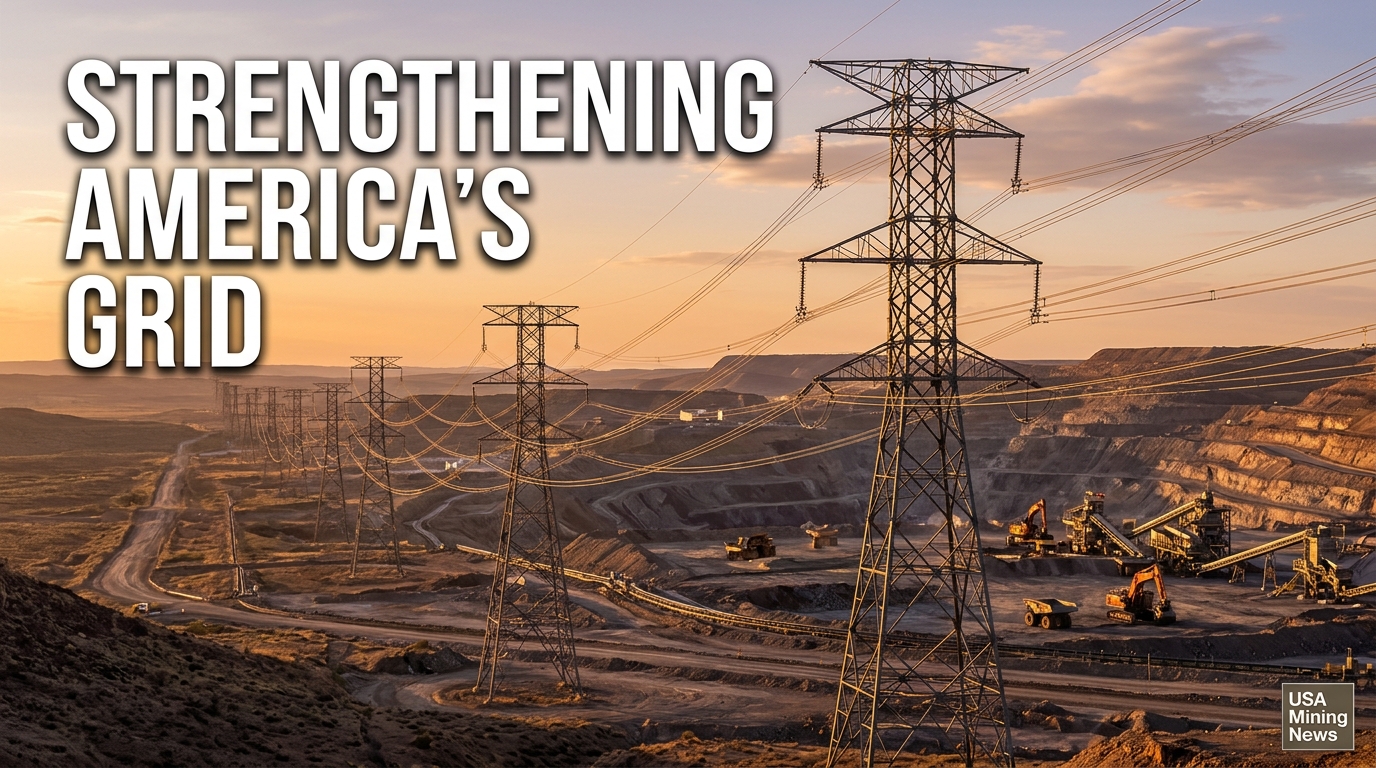
WASHINGTON – The critical intersection of energy infrastructure and industrial output has once again come into sharp focus with the U.S. Department of Energy's (DOE) recent announcement of a substantial investment aimed at bolstering America’s power grid. On October 20, 2026, the DOE unveiled approximately $967 million in additional funding through its Grid Resilience State and Tribal Formula Grant program, a move designed to modernize critical energy infrastructure, improve grid reliability, and ultimately lower electricity costs for American families and businesses.
This initiative, championed by the current administration, underscores a strategic national effort to fortify the foundational elements of economic prosperity. For the mining industry, a sector intrinsically tied to vast energy consumption, these investments are not merely administrative announcements but represent tangible prospects for operational stability, cost reduction, and enhanced competitiveness in a global market.
Significant Investment in Grid Modernization
The core of the DOE’s latest commitment lies in the Grid Resilience State and Tribal Formula Grant program, which funnels resources directly to states, territories, and tribes. This programmatic approach ensures that funding supports locally driven projects tailored to specific regional needs and challenges. The approximately $967 million in additional funding is earmarked for a broad spectrum of infrastructure improvements. These can range from hardening existing power lines against extreme weather events and natural disasters to deploying advanced smart grid technologies that enable more efficient energy distribution and rapid fault detection.
The explicit objectives of this funding include:
- Modernizing Critical Energy Infrastructure: Upgrading aging systems to meet contemporary demands and technological standards.
- Improving Grid Reliability: Reducing the frequency and duration of power outages, ensuring consistent energy supply.
- Delivering More Affordable Electricity: Optimizing grid operations to lower the long-term cost of power delivery.
This latest allocation comes as part of an ongoing governmental strategy to ensure that the nation’s energy backbone can withstand increasing pressures, whether from evolving climate patterns, cybersecurity threats, or the escalating electricity demands of an expanding economy. A robust, reliable grid is paramount not only for residential consumers but also for industrial operations where even momentary power disruptions can translate into significant financial losses and operational setbacks.
Advancing America's Energy Dominance
The DOE’s announcement explicitly links these investments to President Trump’s "American energy dominance agenda." This overarching policy framework prioritizes maximizing domestic energy production, reducing regulatory burdens, and strengthening the nation's energy infrastructure to ensure self-sufficiency and global leadership. U.S. Secretary of Energy Chris Wright articulated this vision, stating, "Lowering costs and unleashing prosperity are top priorities for President Trump. These commonsense investments provide resources directly to states, territories, and tribes to lower electricity costs and strengthen grid reliability for American businesses and families."
Supporting this perspective, Office of Electricity Assistant Secretary Katie Jereza emphasized the foundational role of a dependable grid. "A strong and dependable grid is the backbone of American economic prosperity," Jereza noted. "This funding will help Americans across the country, including our tribal partners, optimize their electricity systems and prepare for future growth while strengthening energy security and deploying technologies that can lower the long-term cost of delivering reliable power."
These statements underscore a strategic imperative: to ensure that the United States possesses an energy infrastructure capable of supporting robust economic activity, national security interests, and the efficient operation of its core industries. For the mining sector, this agenda implies a stable operating environment where energy access is less of a variable and more of a guaranteed constant, enabling better long-term planning and investment.
Operational Implications for the Mining Sector
The mining industry is one of the most energy-intensive sectors globally. From drilling and blasting to hauling, crushing, and processing vast quantities of ore, every stage of a mining operation demands a continuous and significant power supply. Any interruption to this supply can cascade into costly downtime, equipment damage, safety hazards, and missed production targets. For operations running 24/7, the impact of an unreliable grid can be particularly severe.
The DOE’s investment in grid resilience and reliability therefore carries profound implications for mining companies:
- Enhanced Operational Continuity: A more reliable grid directly translates to fewer unscheduled outages, reducing lost production time and allowing mines to maintain consistent output. This is crucial for meeting supply agreements and maintaining market share.
- Cost Reduction: Lower electricity costs, a stated goal of the program, can significantly impact the bottom line for mining companies. Energy often represents a substantial portion of a mine's operating expenses. Any reduction here can improve profitability and make U.S. mining operations more competitive against international counterparts. Furthermore, a stable grid reduces the need for expensive backup power generation or grid-resilience investments at the individual mine site level.
- Support for Critical Minerals Extraction: As the demand for critical minerals (such as lithium, copper, nickel, and rare earth elements) for electric vehicles, renewable energy, and defense technologies grows, domestic mining operations are becoming increasingly vital. These operations often require substantial energy inputs for processing and refining. A strengthened national grid ensures that the infrastructure exists to support the expansion and stability of this crucial supply chain.
- Facilitating Electrification and Automation: The global mining industry is steadily moving towards electrification of its fleets and increased automation to enhance safety, reduce emissions, and improve efficiency. These advanced technologies are heavily reliant on a stable and high-quality power supply. Grid modernization helps provide the necessary infrastructure to support these transformative trends within U.S. mining.
- Benefits for Remote Operations: Many significant mining deposits are located in remote areas, often at the end of long transmission lines where grid reliability can be more tenuous. Investments in strengthening these critical arteries directly benefit these isolated operations, reducing their vulnerability to regional grid instability.
In essence, a more robust and affordable energy grid translates into a more stable, predictable, and cost-effective operating environment for the U.S. mining industry, fostering greater investment and sustained growth.
Program Mechanics and Localized Impact
The "formula grant" aspect of this program is key. It ensures that funding allocations are distributed to states, territories, and tribes based on a predetermined formula, giving recipients autonomy to identify and execute projects that best address their specific grid vulnerabilities and energy needs. This decentralized approach is designed to foster innovation and efficiency by empowering local entities that possess the most intimate understanding of their infrastructure challenges.
Projects funded through this program are expected to focus on a variety of improvements, including:
- Reinforcing transmission and distribution lines.
- Implementing advanced grid control systems and sensors.
- Developing microgrids for enhanced local resilience.
- Investing in energy storage solutions to balance supply and demand.
- Upgrading cybersecurity measures for critical energy infrastructure.
The emphasis is on tangible infrastructure improvements that protect against disruptive events – from severe weather to cyberattacks – while improving system performance and ensuring communities and businesses, including vital industrial operations like mining, have dependable power when they need it most.
Future Outlook and Strategic Significance
The DOE's investment reflects a forward-looking strategy that recognizes the evolving challenges and opportunities in the energy landscape. By focusing on both immediate reliability and long-term cost reduction, the program aims to build a grid that is not only robust for today but also adaptable for tomorrow’s demands. This includes preparing for future economic growth, accommodating increasing electrification, and integrating new energy technologies.
For the mining sector, this national commitment to grid strength signals a positive outlook. A secure and affordable power supply is a prerequisite for attracting and retaining investment in domestic mining projects. It mitigates risks associated with energy supply, enabling companies to focus resources on exploration, extraction, and processing efficiencies. Moreover, as the United States strives for greater self-reliance in critical minerals and materials, a resilient energy grid becomes an indispensable enabler, underpinning the entire domestic supply chain from mine to manufacturing.
The roughly $967 million in additional funding, announced on October 20, 2026, through the Grid Resilience State and Tribal Formula Grant program, represents a significant step towards achieving a more reliable, affordable, and secure energy future for the United States. Its ripple effects will extend far beyond residential consumers, profoundly influencing the operational stability, economic viability, and strategic importance of energy-intensive industries such as mining, ultimately bolstering America's industrial base and global competitiveness.