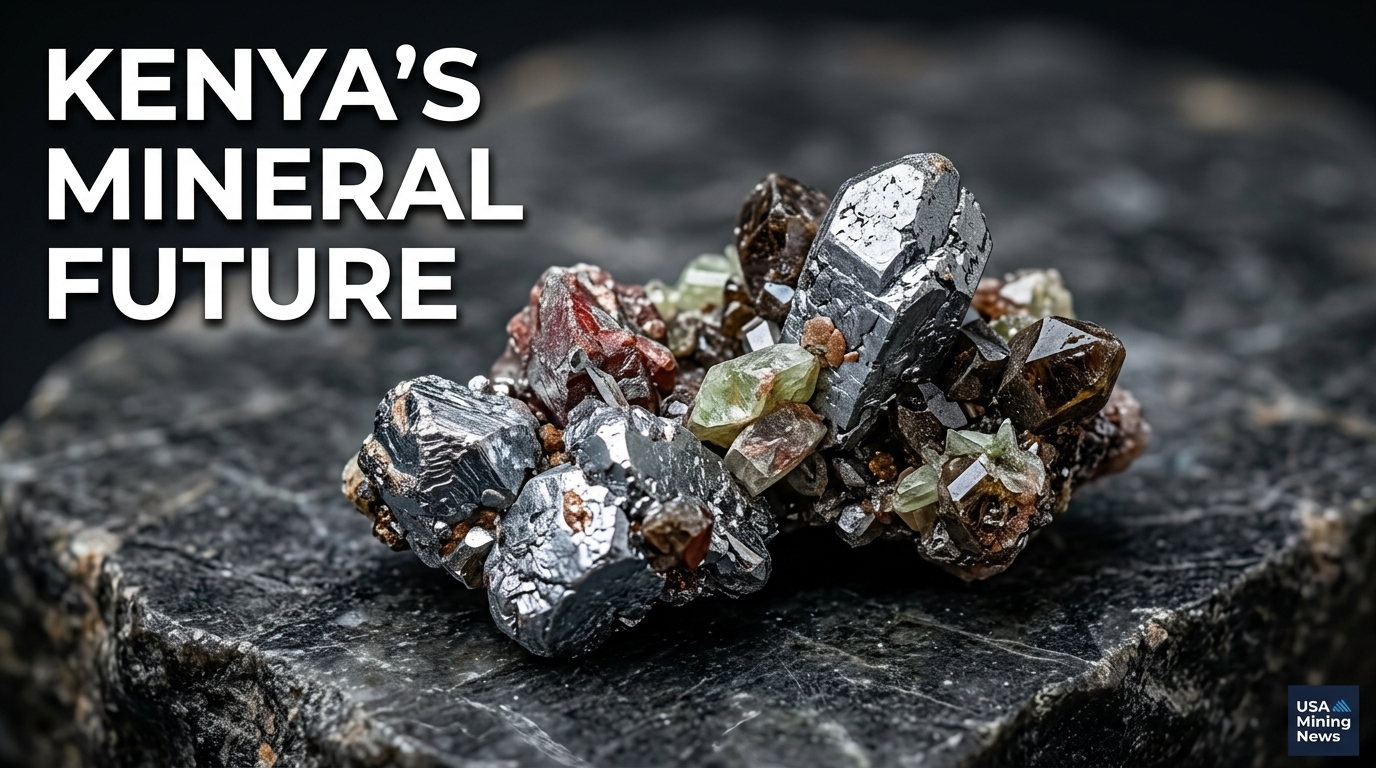
In an increasingly competitive global landscape for critical minerals, nations endowed with significant deposits are facing a pivotal choice: become raw material suppliers or ascend the value chain to capture greater economic benefit. This critical decision is at the heart of an expert assessment regarding Kenya’s Mrima Hill deposit, an asset holding immense strategic importance due to its reserves of niobium and Rare Earth Elements (REEs).
According to an insightful opinion piece published on October 20, 2026, geopolitical analyst and consultant Cyril Widdershoven emphasized that Kenya must adopt a forward-looking strategy that extends beyond the traditional export of mineral concentrates if it truly intends to unlock the full economic potential of Mrima Hill. Widdershoven's analysis underscores a broader industry trend where the economic contribution of such projects is increasingly tied to the extent of in-country processing, particularly for complex supply chains like those associated with rare earths.
The Strategic Significance of Mrima Hill
The Mrima Hill deposit in Kenya is not merely another mining project; it is a repository of minerals vital to modern technological and industrial sectors. Among the strategic minerals identified at this site are niobium and Rare Earth Elements (REEs), both of which play indispensable roles in high-tech applications and green energy transitions globally.
Niobium, as highlighted by Widdershoven, is a critical metal primarily used in aerospace applications. Its unique properties, including high melting point, resistance to corrosion, and superconductivity, make it invaluable for producing high-strength, low-alloy steels used in jet engines, rocket components, and gas pipelines. The demand for niobium is steadily growing, driven by aerospace expansion and infrastructure development, positioning it as a key strategic mineral for national security and advanced manufacturing sectors.
Rare Earth Elements (REEs), on the other hand, comprise a group of 17 chemically similar metallic elements that are essential components in a vast array of high-tech devices. These include permanent magnets in electric vehicles and wind turbines, catalysts in petroleum refining, phosphors in LED lighting and displays, and various specialized alloys in defense systems. The global supply chain for REEs has historically been concentrated, making new, diversified sources like Mrima Hill critically important for ensuring supply stability and mitigating geopolitical risks for consumer nations.
The co-occurrence of both niobium and REEs at Mrima Hill amplifies its strategic value, presenting Kenya with a multi-faceted opportunity to contribute significantly to multiple critical mineral supply chains, provided the right development pathway is chosen.
Kenya's Opportunity in the Value Chain
Widdershoven’s core argument centers on the idea that Kenya’s economic benefits from Mrima Hill will be substantially limited if the nation restricts its involvement to the initial stages of the mining value chain – namely, the extraction of ore and the production of a basic mineral concentrate. The concept of "beyond concentrate" is crucial here. In traditional mining, ore is extracted and then processed to remove gangue (waste rock), resulting in a concentrate rich in the target minerals. This concentrate is then typically shipped overseas for further, more complex processing.
For Rare Earth Elements, this downstream processing is particularly intricate and value-intensive. It involves several distinct stages:
- Concentration: Initial processing of ore to increase the percentage of REE minerals.
- Chemical Cracking/Leaching: Breaking down the concentrate to dissolve the REEs.
- Separation: A highly complex and energy-intensive process to separate the individual rare earth oxides from one another, as their chemical similarities make them difficult to differentiate. This stage alone can account for a significant portion of the total value.
- Refining: Further purification of individual rare earth oxides to very high purities.
- Metal Production: Converting the refined oxides into rare earth metals, which are then used to produce alloys for magnets and other applications.
- Alloy and Magnet Manufacturing: The final stage where rare earth metals are alloyed and manufactured into finished products like high-performance permanent magnets.
Each step up this processing chain adds significant value, creates more specialized jobs, and fosters a more sophisticated industrial base. By undertaking more of the rare earth processing chain within Kenya, the country could capture a far greater share of the economic value, rather than allowing it to accrue to nations that perform the advanced refining and manufacturing.
Global Competition for Critical Minerals
The intensifying global competition for critical minerals, as noted by Widdershoven, is a defining feature of the 21st-century resource economy. Nations worldwide are increasingly recognizing the strategic importance of securing reliable supplies of minerals essential for advanced technologies, renewable energy, and defense. This competition is driven by several factors:
- Energy Transition: The global shift towards renewable energy sources (wind, solar) and electric vehicles relies heavily on minerals like REEs (for magnets), lithium, cobalt, and nickel (for batteries).
- Technological Advancement: Continuous innovation in electronics, computing, and telecommunications demands a constant supply of specialized metals.
- Supply Chain Resilience: Geopolitical tensions and previous supply disruptions have highlighted the vulnerability of concentrated supply chains, prompting many countries to seek diversification and domestic processing capabilities.
- National Security: Many critical minerals have direct applications in defense technologies, making their secure supply a matter of national interest.
In this environment, countries that can offer not just raw materials but also value-added processing become more attractive partners, enhancing their geopolitical leverage and economic resilience. Kenya’s move to process its niobium and REEs domestically would position it as a key player in this competitive landscape, moving it from a mere supplier of raw inputs to a more integrated component of the global critical mineral economy.
Economic Implications for Kenya
The decision to pursue in-country processing "beyond concentrate" holds profound economic implications for Kenya. Adopting such a strategy could unlock substantial benefits, transforming the Mrima Hill project from a simple revenue generator into a catalyst for national industrial development:
- Increased Revenue and Foreign Exchange: Exporting refined metals and advanced materials commands significantly higher prices than concentrates, boosting export revenues and foreign exchange earnings.
- Job Creation: Downstream processing facilities are typically more labor-intensive and require a wider range of skilled personnel, from chemical engineers and metallurgists to technicians and administrative staff, leading to broader job creation across various skill levels.
- Skill Development and Technology Transfer: Establishing advanced processing facilities necessitates the transfer of sophisticated technologies and the development of a highly skilled local workforce, fostering human capital development and building a knowledge economy.
- Industrial Diversification: A robust mineral processing sector can stimulate the growth of ancillary industries, such as chemical manufacturing, engineering services, and logistics, contributing to overall industrial diversification and economic resilience.
- Enhanced Infrastructure Development: The establishment of complex processing facilities often requires significant investments in energy infrastructure, transportation networks, and water management, which benefit surrounding communities and the wider economy.
By moving up the value chain, Kenya has the potential to create a virtuous cycle of economic growth, where resource wealth translates into sustained industrial and social development.
Challenges and Considerations for Downstream Processing
While the economic benefits of in-country processing are compelling, the path "beyond concentrate" is not without significant challenges. Establishing advanced mineral processing facilities, particularly for complex materials like REEs, requires substantial strategic planning and investment:
- Capital Investment: The upfront capital expenditure (CapEx) for building separation and refining plants is enormous, often running into hundreds of millions or even billions of dollars. This necessitates robust financing strategies, potentially involving international partnerships or sovereign wealth funds.
- Technology Acquisition and Transfer: Rare earth separation technology is highly specialized and often proprietary. Kenya would need to acquire or develop this technology, either through licensing agreements, joint ventures with experienced international players, or significant investment in domestic R&D.
- Skilled Labor Force: Operating and maintaining sophisticated processing plants requires a highly skilled workforce, including metallurgists, chemical engineers, process operators, and environmental specialists. Significant investment in education and training programs would be crucial.
- Energy Intensity: Rare earth separation is an energy-intensive process. Ensuring access to reliable, affordable, and ideally, renewable energy sources is critical for economic viability and environmental sustainability.
- Environmental Management: Processing rare earths and niobium can generate significant waste streams and require careful management of hazardous materials. Robust environmental impact assessments, regulatory frameworks, and waste management protocols are essential to prevent pollution and ensure responsible operations.
- Infrastructure: Adequate infrastructure, including reliable power supply, water resources, transportation networks (roads, rail, ports), and communication systems, is a prerequisite for successful large-scale processing operations.
The Path Forward: Policy and Investment
To successfully navigate these challenges and realize Mrima Hill's potential, Kenya would need to implement a comprehensive strategy encompassing policy, investment, and capacity building. This could involve:
- Developing a National Critical Minerals Strategy: A clear government policy outlining the vision for value addition, investment incentives, regulatory frameworks, and environmental standards.
- Attracting Strategic Partnerships: Engaging with international mining companies, technology providers, and investors that possess the technical expertise, capital, and market access for advanced processing.
- Investing in Human Capital: Prioritizing education and vocational training in metallurgy, chemical engineering, and environmental management to build a local talent pool.
- Ensuring Sustainable Practices: Adhering to the highest environmental, social, and governance (ESG) standards to attract responsible investment and ensure long-term community benefit.
- Developing Infrastructure: Proactive development of power, water, and transport infrastructure to support industrial growth.
Broader Industry Context and Future Outlook
Kenya's strategic decision regarding Mrima Hill resonates with a broader industry narrative where resource-rich nations are increasingly seeking to escape the "resource curse" by moving beyond mere commodity extraction. From Australia's push into lithium refining to various African nations exploring value addition for cobalt and copper, the trend towards domestic processing is gaining momentum.
The Mrima Hill project offers Kenya a unique opportunity to become a significant, diversified supplier in the critical minerals market. By heeding Cyril Widdershoven’s counsel and prioritizing in-country processing for niobium and REEs, Kenya can not only maximize its economic returns but also secure a more influential position in the global supply chains that are defining the future of technology and sustainable development. The success of this endeavor will serve as an important case study for other emerging mining nations contemplating how best to leverage their own critical mineral endowments.