Supply Chain Shifts Reshape Australia's Manganese Future Amid Global Demand Surge
The global mining landscape is in constant flux, driven by technological advancements, geopolitical realignments, and an insatiable demand for critical raw materials. In this dynamic environment, Australia, a perennial powerhouse in mineral exports, finds its manganese sector grappling with profound shifts. Despite possessing a significant endowment of manganese resources, the country’s ability to expand supply is increasingly constrained by a confluence of factors: namely, ageing mining infrastructure, limited domestic processing capacity, and a rapidly changing global trade policy environment. This intricate interplay of challenges and opportunities was notably highlighted in an analysis by Alejandro Gonzalez and Prasanna Aakula, published on October 6, 2026, underscoring a pivotal moment for Australia’s role in the crucial manganese market.
Australia’s Manganese Endowment and Global Significance
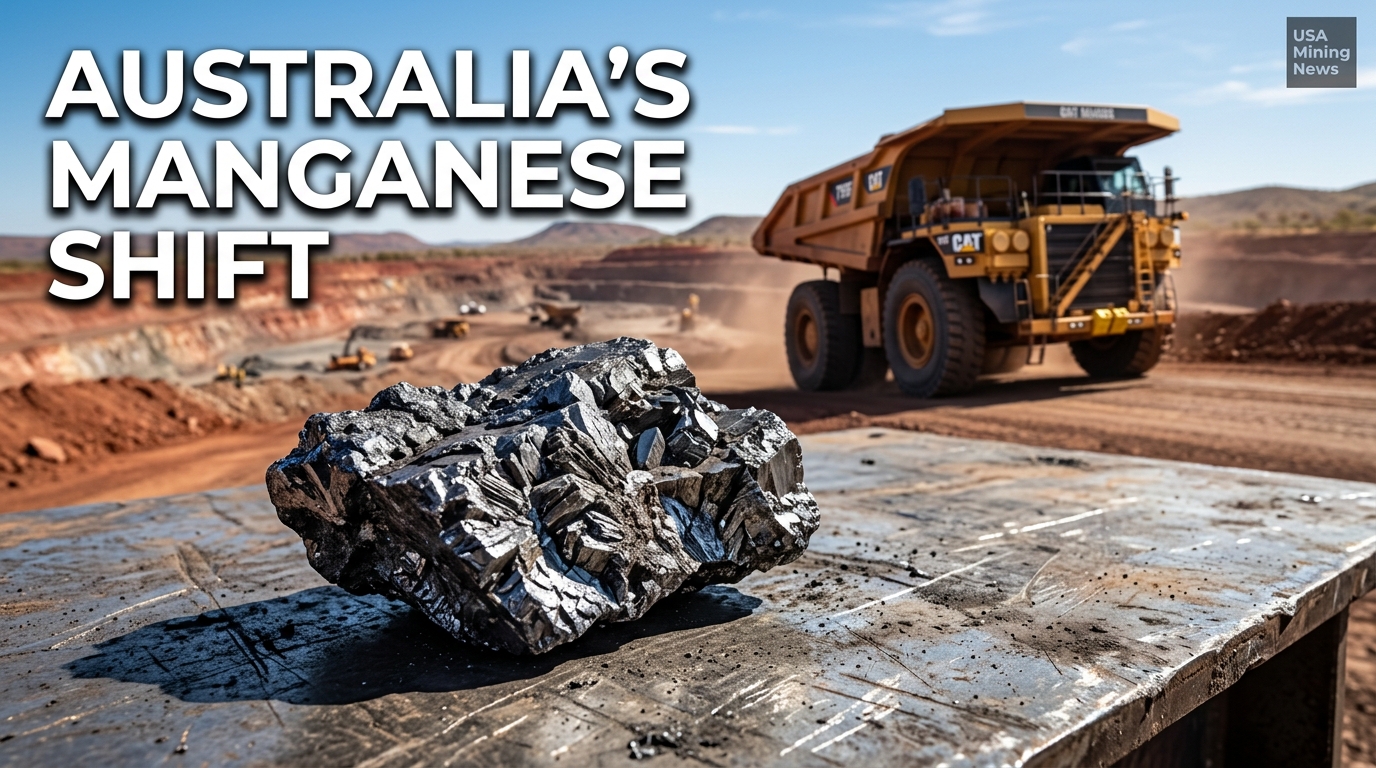
Australia stands as one of the world's leading producers of manganese ore, a commodity indispensable to modern industrial economies. Manganese is primarily used as an alloying agent in steel production, where it acts as a deoxidizer and desulfurizer, enhancing steel’s strength, hardness, and workability. Approximately 90% of global manganese production is consumed by the steel industry. Beyond steel, manganese is a vital component in various specialized alloys, chemicals, and increasingly, in high-performance battery cathodes, particularly for electric vehicles (EVs). As the global push towards decarbonization accelerates, the demand for manganese in EV batteries is projected to escalate dramatically, positioning it as a critical mineral for the energy transition.
The nation’s manganese riches are predominantly concentrated in regions like Groote Eylandt in Australia’s Northern Territory, home to the country’s largest and most established manganese operation, GEMCO (Groote Eylandt Mining Company). For decades, Australia has been a reliable, large-scale supplier of high-quality manganese ore to markets worldwide, underpinning its reputation as a crucial node in the global supply chain. However, the current trajectory suggests that this established role is subject to significant pressure, requiring strategic adaptation to maintain competitive advantage and meet evolving market demands.
The Dual Challenge: Ageing Infrastructure and Limited Processing Capacity
One of the primary impediments to Australia’s ability to expand its manganese supply, despite ample resources, is the maturity of its existing mining operations. Many of the country’s significant manganese mines have been in production for an extended period. While sustained operations demonstrate their historical robustness and resource quality, they also entail increasing operational complexities, higher maintenance costs, and potentially declining ore grades in accessible areas. Ageing infrastructure, from mining equipment to transport logistics, can impact efficiency, reliability, and the overall cost-effectiveness of extraction, making it challenging to scale up production rapidly or competitively in response to market signals.
Compounding this issue is Australia’s historically limited capacity for downstream processing of manganese. The vast majority of manganese ore mined in Australia is exported in a relatively raw, unrefined state. This reliance on exporting unprocessed ore means that Australia captures only a fraction of the full value chain. Downstream processing, which involves converting manganese ore into ferromanganese or electrolytic manganese metal (EMM), adds significant value, creates more skilled jobs, and strengthens domestic industrial capabilities. The absence of substantial processing infrastructure makes Australia vulnerable to global market fluctuations for raw ore prices and limits its strategic leverage in the critical minerals supply chain. Countries that process raw materials domestically gain economic benefits and enhanced supply chain resilience, lessons increasingly recognized in the global discourse around critical minerals. Developing this processing capacity would require substantial capital investment, technological expertise, and a supportive regulatory environment.
Navigating Shifting Trade Policies
The global trade environment is undergoing a fundamental transformation, particularly concerning critical minerals. Nations worldwide are increasingly prioritizing the security and resilience of their supply chains, driven by geopolitical tensions, the lessons learned from recent supply disruptions, and the strategic importance of minerals for green technologies and national security. This has led to a re-evaluation of trade policies, with many countries seeking to diversify their sources of critical minerals, reduce reliance on single suppliers, and, where possible, foster domestic processing capabilities.
For Australia's manganese sector, these shifting trade policies present both challenges and opportunities. On one hand, traditional export markets may seek to diversify their procurement or develop their own processing, potentially impacting Australia’s long-standing export relationships. On the other hand, the global push for supply chain diversification could open doors for Australia to forge new strategic partnerships, especially with nations keen to secure stable and ethically sourced mineral supplies. The challenge lies in adapting quickly to these changes, potentially by attracting foreign investment into domestic processing, negotiating new trade agreements that emphasize value-added exports, and demonstrating strong environmental, social, and governance (ESG) credentials. The October 6, 2026, analysis by Gonzalez and Aakula implicitly suggests that these external pressures are forcing a strategic recalibration within Australia's manganese industry.
GEMCO: The Cornerstone of Australian Manganese
At the heart of Australia's manganese production lies GEMCO, located on Groote Eylandt in the Northern Territory. As the country’s largest established manganese producer, GEMCO plays an instrumental role in the global supply of high-grade manganese ore. Its operations are characterized by significant scale and a long history of reliable production, making it a critical supplier to steelmakers and other industries worldwide. The geographical isolation of Groote Eylandt presents unique logistical challenges but also provides a distinct operational focus.
The future trajectory of GEMCO, and by extension, the broader Australian manganese sector, hinges on its ability to adapt to the evolving market dynamics discussed. While GEMCO has consistently demonstrated operational excellence, the systemic issues of ageing infrastructure across the sector and the national deficit in processing capacity will inevitably influence its strategic decisions. Investments in modernizing operations, exploring new processing technologies, and understanding the nuances of changing international trade policies will be crucial for GEMCO to maintain its prominent position and contribute to a more resilient Australian manganese supply chain.
Strategic Implications for the Global Supply Chain
The challenges faced by Australia's manganese sector carry significant implications for the global supply chain. As one of the world's most reliable and substantial producers of manganese ore, any slowdown in Australia’s ability to expand supply, or any shift in its export profile towards more processed materials, will inevitably ripple through international markets.
Firstly, it could lead to increased price volatility for manganese ore, especially if global demand continues to rise, driven by the steel industry and the burgeoning battery sector. Secondly, it could compel major manganese-consuming nations, such as China, Japan, South Korea, and European countries, to intensify their efforts in diversifying procurement sources and investing in alternative supplies. This could involve exploring new mining projects in Africa or other regions, or accelerating research into manganese recycling technologies. Thirdly, the scenario highlights the broader industry trend of nations with significant mineral resources evaluating the strategic value of domestic processing. If Australia moves towards greater value-added production, it would represent a significant shift in global manganese trade flows, potentially leading to increased competition in processed manganese markets.
Future Outlook and Potential Pathways
To overcome the existing limitations and fully leverage its vast manganese resources, Australia's mining industry and government will likely need to pursue a multi-pronged strategy.
- Investment in Modernization and Exploration: Significant capital will be required to modernize existing mines, improve efficiency, and extend mine lives. Simultaneously, exploration for new, high-grade deposits will be essential to ensure long-term supply sustainability.
- Developing Downstream Processing Capacity: This is arguably the most critical pathway for Australia to capture greater value. Incentives for private investment in ferroalloy plants and EMM facilities, coupled with robust regulatory frameworks, could catalyze the development of a domestic processing industry. This would transform Australia from primarily an ore exporter to a supplier of higher-value manganese products.
- Strategic Partnerships and Trade Diversification: Proactively forging new bilateral and multilateral agreements focused on critical minerals, particularly with nations committed to diversifying their supply chains, could secure stable demand for Australian manganese and attract necessary investment.
- Innovation and Sustainability: Investing in research and development for more sustainable mining practices, lower-emission processing technologies, and advanced materials for battery applications would enhance Australia’s competitive edge and align with global ESG priorities.
- Government Support: Policy support, including R&D grants, tax incentives for investment in processing, and streamlined permitting processes, will be crucial in facilitating these transformative changes.
The October 6, 2026, insights from Gonzalez and Aakula serve as a timely reminder that even established mining sectors in resource-rich nations are not immune to profound change. For Australia’s manganese sector, the coming years will be defined by its ability to strategically navigate these supply chain shifts, transforming challenges into opportunities for growth, value addition, and enhanced global leadership in a critical mineral commodity. The decisions made today will undoubtedly shape Australia’s position in the global manganese market for decades to come, impacting not only its economy but also the resilience of vital global industrial and technological supply chains.