In a decisive move to safeguard the nation’s energy supply, the U.S. Department of Energy (DOE) announced on October 10, 2026, the authorization of an emergency exchange of up to 4 million barrels of crude oil from the Strategic Petroleum Reserve (SPR). This critical action was taken to address significant supply disruptions arising from severe weather conditions, specifically a hurricane, in the Gulf of America region. The initiative underscores the federal government's commitment to maintaining energy stability, a factor of paramount importance for the broader industrial sector, including the mining industry, which relies heavily on a consistent and affordable supply of refined petroleum products.
The strategic release is designed to provide immediate relief to refineries impacted by the weather event, thereby preventing shortages in critical fuel supplies across the country. According to U.S. Secretary of Energy Chris Wright, the exchange is structured to not only alleviate current market pressures but also to strengthen the SPR for future contingencies, with participating companies repaying the borrowed crude oil along with additional premium barrels in 2027, all at no extra cost to taxpayers. This financial prudence, combined with a swift operational response, highlights a multifaceted approach to national energy security under the Trump Administration.
The Strategic Petroleum Reserve: A Cornerstone of U.S. Energy Security
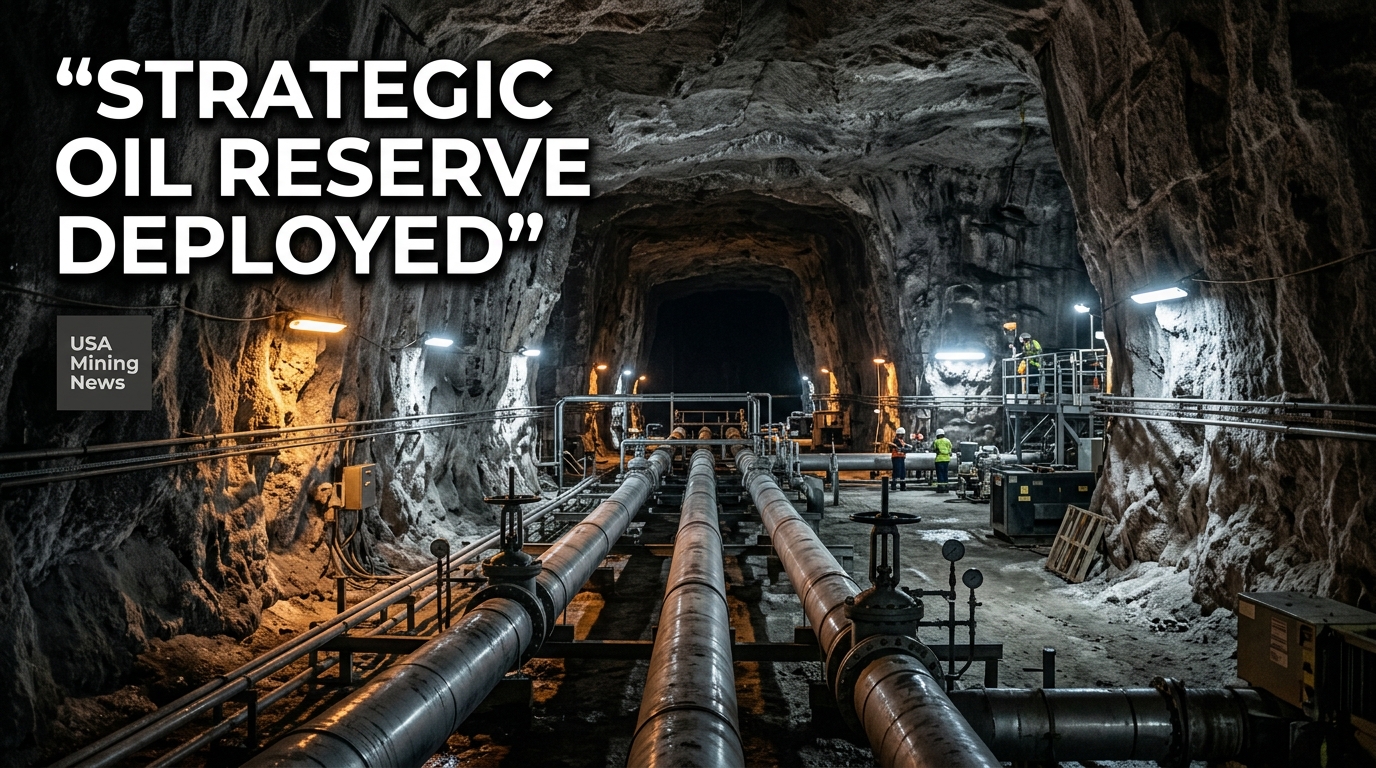
The Strategic Petroleum Reserve, established in the wake of the 1973-74 oil embargo, represents the world's largest emergency crude oil supply. Located in a complex of underground salt caverns along the Gulf Coast of Texas and Louisiana, the SPR holds hundreds of millions of barrels of crude oil, serving as a vital buffer against global and domestic supply shocks. Its primary purpose is to provide a readily available source of crude oil to the U.S. market in times of severe disruption, whether from natural disasters, geopolitical events, or widespread technical failures.
The SPR's operational mechanism allows for various types of releases, including sales and exchanges. Exchanges, like the one authorized on October 10, 2026, involve loaning crude oil to refiners or suppliers, who then return the same amount plus an additional premium at a later date. This method is particularly effective for short-term, localized disruptions, as it ensures prompt supply to affected areas while guaranteeing the replenishment and often enhancement of the reserve's capacity over time. This system is crucial for maintaining the nation's economic stability, as reliable energy access underpins virtually every sector, from transportation and manufacturing to agriculture and, critically, mining.
Operational Details of the Emergency Exchange
The DOE’s recent authorization details a specific allocation of the 4 million barrels. Leading global energy players, ExxonMobil and BP America, have been approved for exchanges of up to 2 million barrels each. This targeted approach ensures that the crude oil reaches key refining centers most affected by the Gulf Coast weather disruptions, which typically impact offshore production platforms, port operations, and pipeline networks in the region.
- ExxonMobil’s Exchange: This particular arrangement will accelerate deliveries of previously awarded SPR crude oil. This indicates a pre-existing commitment or contractual agreement that has been fast-tracked to meet immediate supply needs, demonstrating flexibility and a proactive response to the unfolding crisis.
- BP America’s Exchange: Similarly, BP America will receive up to 2 million barrels, funneling this essential feedstock into its refining operations to mitigate potential shortfalls in refined products.
A key aspect of these exchanges, as emphasized by Secretary Wright, is the financial benefit to the U.S. taxpayer. By requiring companies to return "additional premium barrels" in 2027, the DOE not only ensures the full restoration of the withdrawn crude but also aims for a net increase in the SPR's holdings. This mechanism effectively leverages industry participation to bolster national energy reserves without direct expenditure from public funds, saving "millions of dollars" while reinforcing strategic assets.
Secretary Chris Wright on Stability and Security
U.S. Secretary of Energy Chris Wright articulated the immediate and long-term goals of the emergency exchange. “With this emergency exchange, the Energy Department is acting swiftly to help maintain refinery operations, limit disruptions to fuel supplies, and ensure American families and businesses continue to have access to affordable, reliable, and secure energy,” he stated. His remarks highlight a dual focus: addressing immediate market exigencies while simultaneously working towards broader energy security objectives. The Secretary also reaffirmed the "Trump Administration's commitment to strengthening America’s energy security at every opportunity," underscoring the strategic importance of such interventions.
The Gulf Coast region is a critical hub for the U.S. energy industry, housing a significant portion of the nation's refining capacity and extensive infrastructure for crude oil and natural gas production and transportation. Hurricanes and other severe weather events in this area can swiftly incapacitate these operations, leading to reduced production, transportation bottlenecks, and refinery shutdowns. The SPR exchange acts as a vital stopgap, providing crucial feedstock to refineries that may be starved of crude due to port closures or offshore production halts, thereby preventing a cascade of fuel shortages that could impact transportation, power generation, and industrial activity nationwide.
Broader Implications for the Commodity Market and Mining Industry
The authorization of an SPR exchange, while directly targeting petroleum markets, sends crucial signals across the broader commodity landscape and has tangible implications for the mining industry. The immediate effect on the crude oil market is typically one of stabilization; by adding supply to a constrained market, the DOE helps temper price spikes that would otherwise occur due to supply concerns. For an industry as capital-intensive and energy-dependent as mining, stable and predictable energy prices are not merely beneficial but absolutely essential for operational planning and profitability.
- Fuel Consumption: Mining operations, particularly large-scale open-pit mines, are prodigious consumers of diesel fuel. Heavy machinery such as haul trucks, excavators, and loaders run continuously, demanding vast quantities of fuel. Fluctuations in diesel prices, driven by crude oil volatility, directly impact operational costs, potentially affecting margins and investment decisions. The SPR exchange helps mitigate these cost pressures by ensuring a steady flow of crude to refineries that produce diesel.
- Supply Chain Stability: Beyond direct fuel costs, stable energy markets contribute to the overall resilience of industrial supply chains. Disruptions in the availability or cost of petroleum products can ripple through the logistics networks that deliver mining equipment, spare parts, reagents, and other critical inputs to mine sites. A proactive measure like the SPR exchange helps safeguard these essential supply lines.
- Energy-Intensive Processing: While electricity often powers fixed processing plants, the broader energy market influences electricity generation costs. Furthermore, certain mining and metallurgical processes may directly or indirectly rely on fossil fuels. Reliable and affordable energy is fundamental to maintaining competitive production costs for metals and minerals.
- Investor Confidence: For an industry that requires significant long-term capital investment, market stability is a key driver of investor confidence. Uncertainty in critical input costs like energy can deter investment in new projects or expansions. The DOE's action helps project an image of stability and proactive risk management, fostering a more favorable environment for long-term planning within the mining sector.
- Parallel to Critical Minerals: This situation also draws a parallel to the increasing global focus on strategic reserves for critical minerals. Just as petroleum is vital for energy security, minerals like lithium, cobalt, and rare earths are crucial for advanced technologies and national defense. The U.S. government's demonstrated willingness to leverage its petroleum reserves underscores a broader strategic mindset towards securing essential resources, a strategy increasingly being applied to the domestic mining and processing of critical minerals.
Future Outlook and Continued Vigilance
The U.S. Department of Energy affirmed its commitment to ongoing collaboration with industry partners to ensure robust fuel supplies and effective responses to hurricane-related disruptions. As severe weather events become more frequent and intense, the reliance on mechanisms like the SPR for emergency response is expected to grow. This continuous vigilance and readiness are vital not only for the energy sector but for all foundational industries like mining that underpin the national economy.
The successful execution of this emergency exchange, coupled with its advantageous replenishment terms, positions the SPR as a resilient and economically sound tool for national energy security. For the mining industry, these actions translate into greater certainty in energy supply and pricing, allowing companies to focus on resource extraction and processing with a reduced threat of sudden, crippling operational cost increases. The incident serves as a reminder of the interconnectedness of global commodity markets and the profound impact that strategic government interventions can have on various industrial sectors.