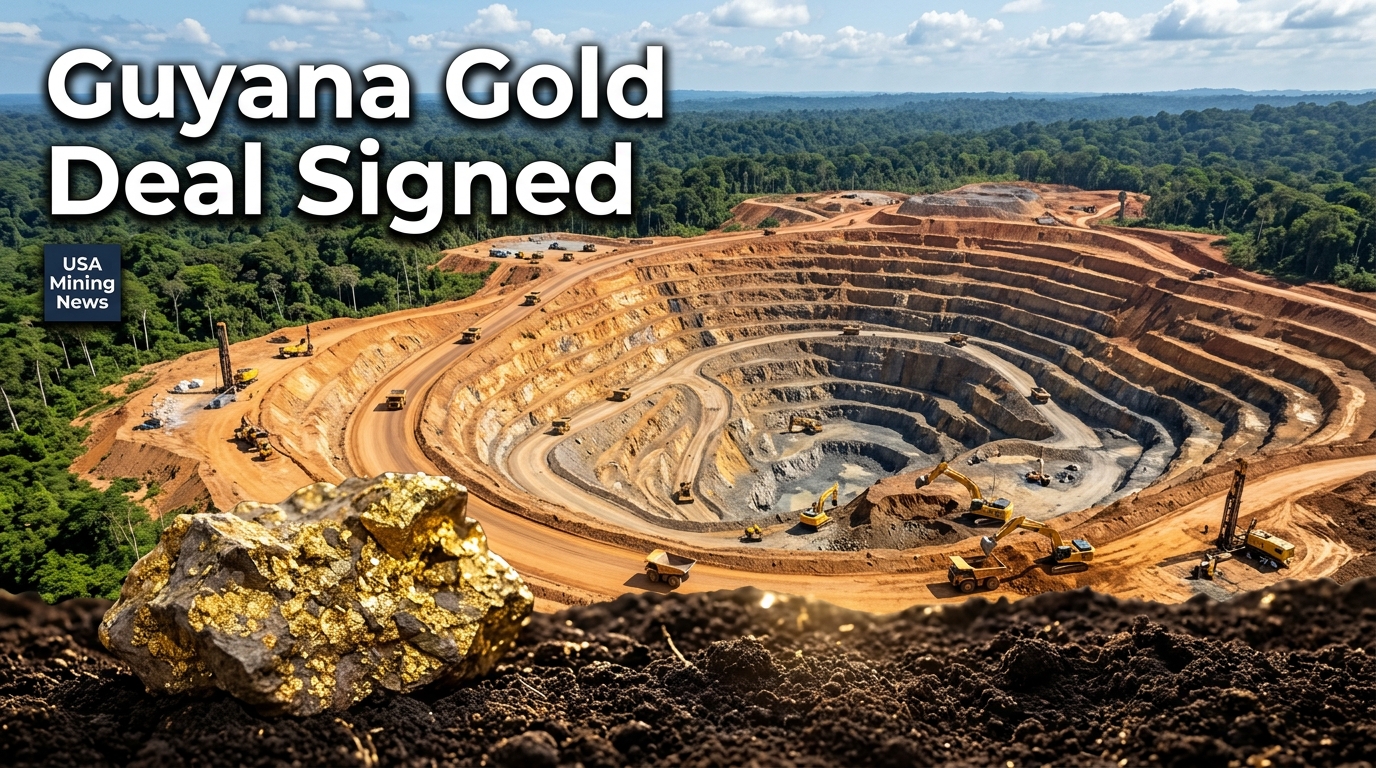
Georgetown, Guyana – In a significant development for Guyana’s burgeoning gold sector, Mako Mining has officially secured a comprehensive mineral agreement for its Eagle Mountain Gold Project. The accord, signed with the Cooperative Republic of Guyana and the Guyana Geology and Mines Commission (GGMC), represents a critical milestone that provides a long-term stability framework for the advanced-stage open-pit gold operation. This strategic step, announced on September 11, 2026, is poised to accelerate the project’s development, offering greater certainty to stakeholders and investors in an increasingly vital mining jurisdiction.
A Landmark Agreement for Eagle Mountain
The mineral agreement, meticulously structured in accordance with Guyana’s Mining Act, sets forth a clear and stable operating environment for the Eagle Mountain Gold Project over an initial ten-year period. For a large-scale mining venture such as Eagle Mountain, establishing such a framework is paramount. It provides legal stability concerning mining and prospecting licenses, authorizations, and crucial fiscal terms, which are fundamental to attracting and sustaining the substantial capital investment required for mine development.
The formalization of this agreement acts as a significant de-risking event for the project. By codifying the terms under which Mako Mining will operate, it mitigates potential future uncertainties regarding regulatory changes, taxation policies, and other governmental stipulations that could impact project economics. This clarity is a strong signal to the financial markets and potential equity partners, underscoring the Guyanese government's commitment to fostering a predictable and investor-friendly environment within its mining sector.
Project Overview and Strategic Location
The Eagle Mountain Gold Project is an advanced-stage open-pit development spanning approximately 5,050 hectares (ha) in west-central Guyana. This substantial land package positions the project for significant potential, with Mako Mining holding a 100% interest through its subsidiary, Stronghold Guyana. The project's location is strategically advantageous, situated around 200 kilometers southwest of Georgetown, the nation’s capital, and a mere 8 kilometers from the town of Mahdia. This proximity to established infrastructure and population centers can offer logistical benefits for supply chains, labor recruitment, and community engagement initiatives.
Guyana has long been recognized for its rich natural resource endowment, particularly in gold. The country’s geological landscape, part of the Guiana Shield, hosts numerous gold deposits, attracting considerable interest from international mining companies. Projects like Eagle Mountain are crucial for Guyana's economic diversification and development, building on a history of artisanal and small-scale mining while transitioning towards larger, more modern operations that adhere to global best practices.
Key Provisions and Fiscal Framework
The comprehensive nature of the mineral agreement is evident in its detailed provisions. Beyond establishing a stable legal and fiscal regime for a decade, it also includes mechanisms for renewal or renegotiation of terms subsequent to the initial period, offering long-term predictability. This forward-looking clause demonstrates a collaborative approach between the company and the government, ensuring the agreement can adapt to changing circumstances or market conditions in the future.
Crucially, the agreement outlines stipulations related to royalties and taxes, ensuring that these are aligned with existing terms in other mineral agreements within Guyana. This consistency is vital for maintaining a level playing field across the industry and reinforcing the country's reputation as a reliable destination for mining investment. Furthermore, the agreement emphasizes government undertakings, providing assurances for Mako Mining's operational needs and the protection of its investment. A significant aspect of the agreement is the prioritization of Guyanese labor, goods, and services. This local content requirement is increasingly standard in mineral agreements worldwide, designed to maximize the economic benefits for the host country by fostering local employment, skill development, and the growth of ancillary industries. For the Eagle Mountain project, this means a concerted effort to train and employ Guyanese citizens and procure supplies and services from local businesses, thereby contributing directly to regional economic development.
Social Responsibility and Community Engagement
Beyond the economic and operational terms, the mineral agreement strongly reflects Mako Mining’s commitment to social responsibility and environmental stewardship. The agreement stipulates that Mako will contribute annually to community development, environmental programs, and social initiatives. This funding is slated to commence within 24 months of the mine license grant or within one year from the start of production, whichever comes first. Such commitments are integral to securing and maintaining a social license to operate, fostering positive relationships with local communities, and ensuring sustainable development.
Steve Parsons, President of Mako Mining, highlighted the importance of these elements. "The signing of the mineral agreement marks a significant milestone for Eagle Mountain and represents an important step in advancing and de-risking the project by providing greater certainty around key legal and fiscal terms," Parsons stated. He further emphasized, "Equally important, the commitments relating to employment, training, environmental stewardship and community development are closely aligned with Mako’s core values and the approach our teams employ with success across our portfolio of mines and projects." This statement underscores the company's philosophy of integrated project development, where economic success is intertwined with responsible environmental management and robust community engagement.
Advancing Through Permitting
While the mineral agreement provides the foundational framework, Mako Mining is actively progressing through the detailed permitting and regulatory processes required to bring Eagle Mountain into production. A significant step in this journey was the submission of an Environmental and Social Impact Assessment (ESIA) to the Guyana Environmental Protection Agency (EPA) in March 2026. The ESIA is a critical document that evaluates the potential environmental and social effects of the proposed mining operation and outlines mitigation strategies.
Following its submission, the ESIA underwent a public comment period, which concluded in June 2026. This period is crucial for gathering feedback from local communities, indigenous groups, and other stakeholders, ensuring their concerns and perspectives are considered. Mako Mining is currently incorporating this stakeholder feedback into the final version of the assessment, which it expects to file in the fourth quarter of 2026. A permitting decision from the EPA is anticipated to follow this final submission. Successful completion of the ESIA and the subsequent permitting decision are non-negotiable prerequisites for proceeding with mine construction and operations, reflecting modern mining's stringent environmental and social governance (ESG) standards.
Broader Implications for Guyana's Mining Sector
For Guyana, the finalization of this mineral agreement with Mako Mining serves as a strong endorsement of its efforts to attract and retain responsible mining investment. In an era where resource nationalism and regulatory uncertainty can deter capital, a stable and transparent legal framework is a competitive advantage. This agreement, along with others structured under the nation's Mining Act, contributes to a perception of Guyana as a predictable and reliable jurisdiction for mineral exploration and extraction.
The development of projects like Eagle Mountain can significantly contribute to Guyana's national treasury through royalties, taxes, and other revenues, which can then be reinvested in public services and infrastructure. Furthermore, the commitment to local content drives job creation and economic diversification, building a skilled workforce and strengthening local supply chains. This holistic approach to resource development is increasingly important for governments aiming to maximize the long-term benefits of their mineral wealth.
Outlook and Next Steps for Mako Mining
With the mineral agreement now in place, Mako Mining’s immediate focus will be on successfully navigating the final stages of the permitting process. A positive permitting decision would clear the way for engineering and construction activities, moving Eagle Mountain closer to becoming a producing gold mine. The project is a key asset in Mako's portfolio, and its successful development would contribute significantly to the company's overall production profile and financial performance.
The Eagle Mountain Gold Project exemplifies the meticulous, multi-faceted approach required for modern mining development. From securing a robust legal framework to engaging with communities and addressing environmental concerns, each step is critical. As Mako Mining progresses towards a production decision, the industry will be watching closely, recognizing the potential for Eagle Mountain to become a cornerstone gold producer in the heart of Guyana's promising mining landscape.