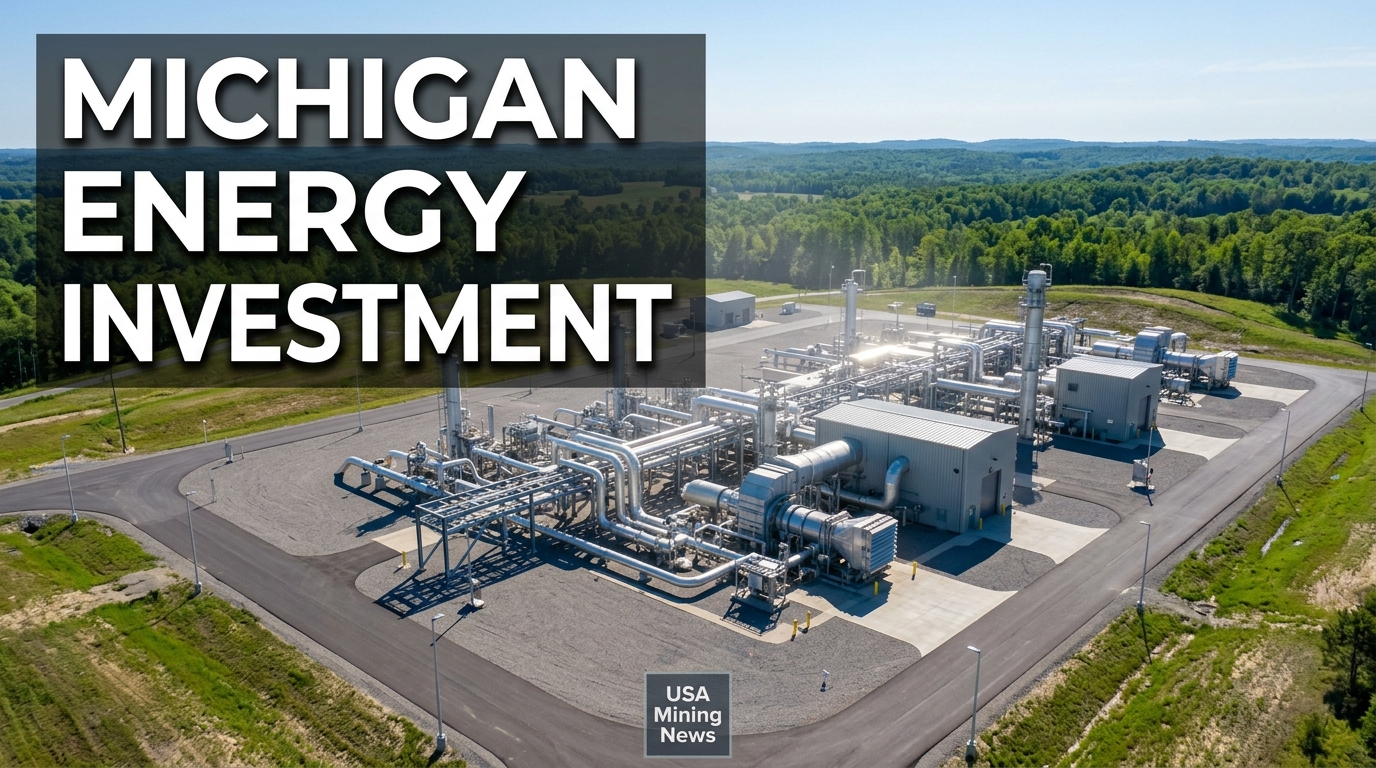
WASHINGTON, D.C. – In a move poised to reshape energy economics for millions of Michiganders and reinforce the nation’s energy infrastructure, the U.S. Department of Energy’s (DOE) Office of Energy Dominance Financing (EDF) announced on June 15, 2026, the closure of a substantial $1.6 billion loan to DTE Gas Company (DTE). This significant financing initiative is primarily aimed at modernizing crucial natural gas infrastructure and is expected to deliver over $700 million in direct cost savings to customers across Michigan, solidifying access to more affordable and reliable energy.
The announcement from Energy.gov underscores a broader policy commitment, aligning with President Trump’s Executive Order, Unleashing American Energy, and made possible by the Working Families Tax Cut. For industrial consumers, including the energy-intensive mining sector, this development holds particular relevance, promising greater stability in energy prices and an enhanced reliability of supply. Such foundational improvements in energy infrastructure are critical for maintaining competitive operational costs within domestic industries.
A Strategic Investment in Michigan's Energy Future
The $1.6 billion loan represents a cornerstone investment in the foundational elements of Michigan’s energy delivery system. DTE Gas Company, a subsidiary of DTE Energy, is a major utility provider in the state, serving millions of customers. The modernization efforts funded by this loan are not merely about upgrading aging infrastructure; they are about strategically enhancing the efficiency, resilience, and cost-effectiveness of natural gas distribution. By targeting these critical areas, the DOE and DTE aim to address current challenges and future demands, ensuring that Michigan’s energy grid remains robust and capable of supporting continued economic growth and industrial activity.
Secretary Wright, commenting on the initiative, emphasized the broader benefits, stating, “Thanks to President Trump and the Working Families Tax Cut, the Energy Department is lowering energy costs and ensuring the American people have access to affordable, reliable, and secure energy.” He further elaborated on the direct impacts of the loan, affirming, “This loan to DTE Gas will lower energy costs, create jobs and increase grid reliability for the people of Michigan.” These direct benefits—cost reduction, job creation, and reliability—are fundamental for any region’s economic health, with ripple effects extending into various industrial sectors, including mining.
Technical Scope of the Infrastructure Modernization
The operational details of DTE’s project highlight a comprehensive approach to upgrading its natural gas network. The $1.6 billion loan will facilitate significant enhancements across key areas:
- Distribution Mains and Service Lines: The project includes the modernization and strengthening of approximately 800 miles of distribution mains and service lines. This extensive upgrade targets the arteries of the natural gas network that deliver gas directly to homes, businesses, and industrial facilities. Modernizing these lines typically involves replacing older materials (like cast iron or unprotected steel) with more durable, leak-resistant, and higher-capacity pipes (such as polyethylene or cathodically protected steel), which reduces maintenance costs, minimizes gas leaks, and enhances safety and operational efficiency.
- Compressor Station Rebuild: A critical component of the project is the rebuilding of an existing compressor station. Compressor stations are vital for maintaining pressure in natural gas pipelines, ensuring efficient transport. More importantly, this specific rebuild will enhance DTE’s capability to store natural gas during periods of low demand. This strategic storage capacity is crucial for energy price stabilization. By accumulating gas when market prices are typically lower, DTE can then draw from these reserves during peak demand periods, thereby reducing the incremental costs that Michigan customers would otherwise incur when market prices spike. This mechanism directly contributes to the projected $700 million in cost savings.
These technical advancements not only secure the physical infrastructure but also introduce a greater degree of market flexibility and economic efficiency into the energy supply chain. For industries that rely heavily on a consistent and predictable energy supply, such as mining, these improvements translate into more stable operational planning and budgeting.
Policy Context: "Unleashing American Energy"
This loan forms part of a larger federal policy framework focused on enhancing domestic energy production, distribution, and affordability. President Trump’s Executive Order, Unleashing American Energy, has been a driving force behind initiatives aimed at reducing regulatory burdens, promoting energy independence, and fostering infrastructure development. The stated objective is to ensure the “affordability and reliance of America’s energy distribution system.”
The DOE’s Office of Energy Dominance Financing, through its mandate, aims to set "a new standard for government energy financing, ensuring the responsible stewardship of taxpayer dollars and that loans deliver affordable, reliable, and secure energy for the American people." This approach aligns with a broader national strategy that views domestic energy resources, including natural gas, as paramount to national security and economic prosperity. The explicit mention of the Working Families Tax Cut also frames this investment within an economic relief context, aiming to directly benefit American households and businesses through reduced utility costs.
Further illustrating this policy stance, a previous press release from June 12, 2026, noted that the Energy Secretary was focused on "Keep[ing] Coal-Fired Power Generation Alive in the Northwest." This broader context suggests a federal administration committed to a diversified energy portfolio that prioritizes grid stability, energy security, and the utilization of traditional fossil fuel assets to meet the nation’s energy demands, rather than solely pursuing renewable energy targets without considering reliability implications.
Implications for the Mining Industry
For the U.S. mining industry, which is inherently energy-intensive, the DOE’s $1.6 billion loan to DTE Gas Company carries significant implications, both direct and indirect. The stability and affordability of natural gas and electricity are fundamental to the operational viability and competitiveness of mining operations. While Michigan might not be a primary hub for large-scale metal mining, it does host significant industrial minerals and aggregates operations, which are just as susceptible to energy price fluctuations.
- Reduced Operational Costs: Mining companies operating in Michigan or adjacent regions that source power and gas from the interconnected grid stand to benefit directly from the anticipated over $700 million in cost savings. Lower electricity prices, driven by more efficient natural gas infrastructure and strategic gas storage, can translate into reduced operating expenditures for everything from excavation equipment and processing plants to administrative facilities. For an industry where energy can account for a substantial portion of overall costs, even marginal reductions can significantly impact profitability and investment decisions.
- Enhanced Reliability of Supply: The modernization of 800 miles of distribution mains and service lines, along with a rebuilt compressor station, promises a more reliable natural gas supply. Uninterrupted energy supply is critical for mining operations, where downtime due to energy shortages or infrastructure failures can lead to substantial financial losses and missed production targets. For mining sites that use natural gas directly for heating, drying, or on-site power generation, this reliability is paramount.
- Supply Chain Stability: Beyond direct energy consumption, the mining industry relies on a complex supply chain that includes equipment manufacturers, chemical suppliers, and logistics providers. Many of these upstream and downstream businesses also depend on stable and affordable energy. Improvements in Michigan’s energy infrastructure contribute to the overall stability and predictability of the regional industrial base, benefitting mining through more reliable access to goods and services at predictable costs.
- Broader Economic and Investment Climate: President Trump’s Executive Order, Unleashing American Energy, and the broader policy push for affordable and secure energy signals a supportive regulatory and economic environment for domestic industries. For mining investors and operators, this indicates a federal commitment to policies that favor domestic resource development and infrastructure, which can encourage new investments in exploration, project development, and expansion across various commodity types, not just natural gas. The emphasis on "energy dominance" suggests an environment where the extraction and utilization of domestic energy resources, including those requiring mining-derived materials, are priorities.
- Demand for Mined Materials: Infrastructure projects themselves drive demand for various mined materials. While this loan is for gas infrastructure, the broader push for infrastructure upgrades across the nation, often enabled by cheaper energy, stimulates demand for aggregates, cement components (limestone), steel (iron ore, coking coal), and other industrial minerals crucial for construction and manufacturing.
The DOE’s active role in financing such projects underscores a willingness to leverage federal resources to shore up critical infrastructure, a trend that mining executives and investors should monitor closely for potential spillover benefits or similar initiatives in other sectors or regions important to their operations.
Future Outlook and Ongoing Commitments
The closure of this $1.6 billion loan marks a significant milestone in Michigan’s energy landscape and signals a continued proactive approach from the Department of Energy. The successful implementation of DTE’s modernization project is expected to set a precedent for future government-backed energy financing initiatives. The DOE remains steadfast in its commitment to "setting a new standard for government energy financing," ensuring meticulous stewardship of taxpayer dollars while delivering on the promise of affordable, reliable, and secure energy for all Americans.
The long-term impact on Michigan is anticipated to be profound, fostering a more competitive economic environment, attracting investment, and ensuring a stable quality of life for its residents. For the broader mining industry and other energy-intensive sectors, such robust commitments to infrastructure and energy affordability are critical indicators of a supportive operational climate, fostering domestic industrial strength and competitiveness on a global scale. As the nation continues to navigate evolving energy demands and geopolitical shifts, investments like this become increasingly vital for securing future prosperity and industrial resilience.