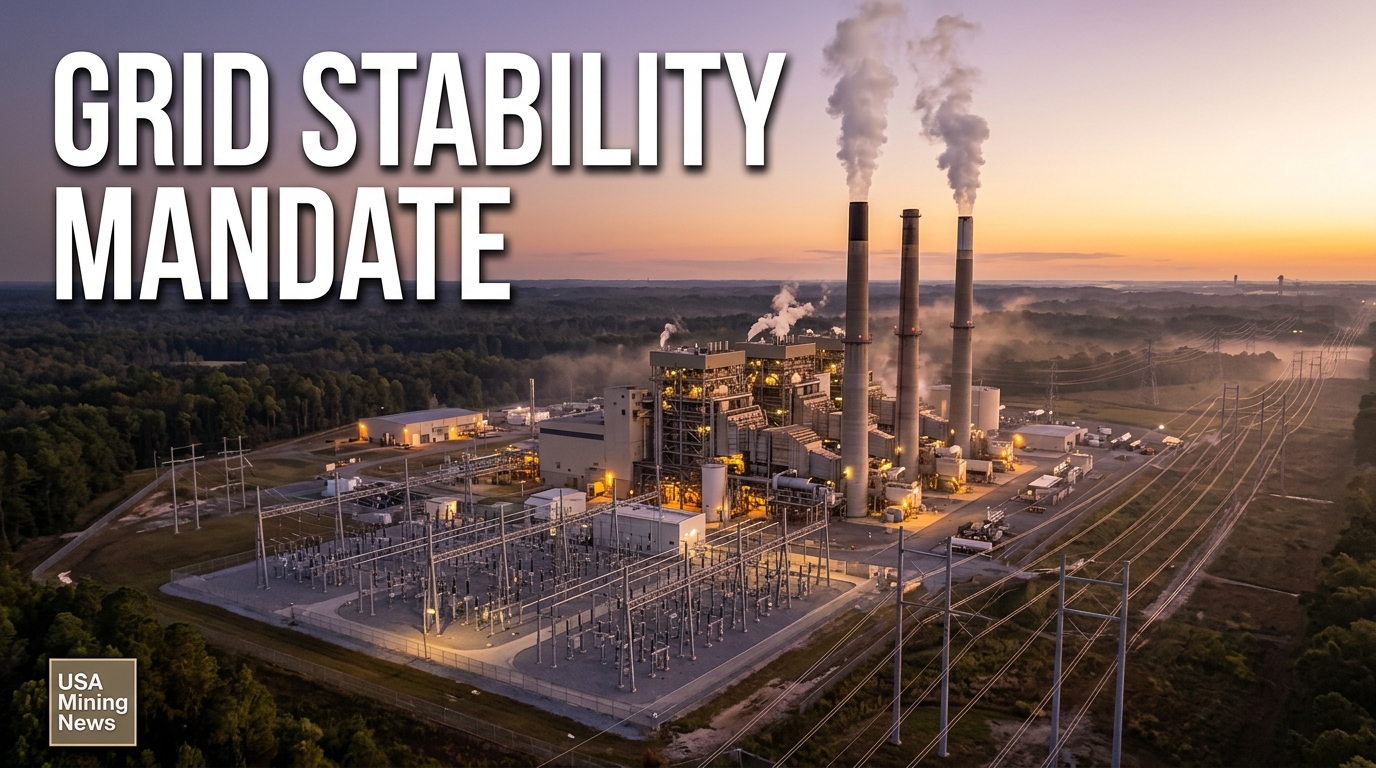
WASHINGTON D.C. – In a decisive move to fortify grid stability across the Mid-Atlantic region of the United States, U.S. Secretary of Energy Chris Wright issued an emergency order on May 21, 2026, mandating the continued operation of crucial power generation assets. This directive specifically targets Units 3 and 4 of the Eddystone Generating Station in Pennsylvania, requiring PJM Interconnection (PJM), in collaboration with Constellation Energy Corporation, to ensure these units remain available and to utilize economic dispatch to manage costs for consumers.
The Eddystone units, originally slated for retirement on May 31, 2025, have become a focal point in the ongoing national debate concerning electricity supply reliability. This latest order, effective from May 25, 2026, through August 22, 2026, underscores the persistent challenges faced by grid operators in balancing generator retirements with escalating demand and the critical necessity of dispatchable power sources, a dynamic with profound implications for energy-intensive industries such as mining.
The Emergency Mandate and Its Immediate Impact
Secretary Wright’s emergency order is a direct response to what the Department of Energy (DOE) identifies as critical grid reliability issues within the PJM service territory, which encompasses all or parts of 13 states and the District of Columbia. The decision to override the planned retirement of the Eddystone units reflects a pragmatic approach to energy security, prioritizing immediate stability over long-term generation fleet changes in the face of identified risks.
"The energy sources that perform when you need them most are inherently the most valuable—that's why natural gas and oil were valuable during peak capacity events this past year," Secretary Wright stated. He further emphasized the life-saving potential of such interventions, attributing past success to actions by President Trump in keeping critical generation online, specifically citing Eddystone’s operation during Winter Storm Fern. "This emergency order will mitigate the risk of blackouts and help maintain affordable, reliable, and secure electricity access across the region," Wright affirmed.
The directive for PJM to employ "economic dispatch" is noteworthy. It means that while the units must remain available, their operation will be managed in a way that minimizes costs to consumers, ideally by running them only when needed to maintain grid stability or when they are the most cost-effective option to meet demand. This nuanced approach aims to address the capacity shortfall without imposing undue financial burdens, although the very act of extending the operational life of retiring assets inherently carries a cost, whether through direct subsidies or market mechanisms.
A Pattern of Intervention: Eddystone’s Enduring Role
This is not the first intervention for the Eddystone Generating Station. Secretary Wright initially ordered the two units to remain online past their originally planned May 31, 2025, retirement date through an emergency order issued on May 30, 2025. Subsequent orders were issued later in 2025 and again earlier in 2026, leading up to the current directive. This series of mandates highlights a recurring pattern of federal intervention to maintain grid reliability, suggesting that the underlying issues are systemic and not easily resolved within the typical market-driven retirement and replacement cycles.
The value of these emergency prolongations has been tangibly demonstrated. PJM, the regional transmission organization, called upon the Eddystone units for generation during several critical periods: both during heat waves that impacted the region in the summer of 2025 and crucially during the severe conditions of Winter Storm Fern. According to data from the U.S. Environmental Protection Agency (EPA), the Eddystone Units generated a substantial 26,971 MWh between June 2025 and December 2025, providing vital generation to the region during these stressed periods. This quantifiable output underscores the real-world impact of keeping these conventional energy sources online when demand peaks and other sources might be constrained.
Underlying Grid Vulnerabilities and Industry Concerns
The Department of Energy’s actions are set against a backdrop of increasing concern about the resilience of the U.S. electricity grid. DOE’s own Resource Adequacy Report paints a stark picture, cautioning that power outages could increase by a staggering 100 times by 2030 if the nation continues to retire reliable base-load generation without adequate replacement. This projection underscores the urgency behind the Eddystone orders.
PJM Interconnection has been a consistent voice expressing these concerns. The organization has "repeatedly documented and voiced its concerns over the growing risk of a supply and demand imbalance driven by the confluence of generator retirements and demand growth." This imbalance, PJM stated, "could have serious ramifications for reliability and affordability for consumers." The fundamental challenge lies in the pace of decarbonization efforts, which, while critical, often lead to the retirement of dispatchable thermal generation units—like coal and natural gas plants—at a faster rate than new, often intermittent, renewable capacity, paired with sufficient energy storage or transmission upgrades, can reliably come online and integrate into the grid.
This situation creates a precarious scenario, particularly during extreme weather events or periods of peak demand, where the resilience and instantaneous dispatchability of conventional generation become indispensable.
Implications for the Mining Industry: Powering Critical Operations
For the mining industry, a sector characterized by its profound energy intensity and capital investment, the stability and affordability of electricity supply are paramount. Mining operations, from underground tunneling and ventilation to automated haulage systems, crushing, grinding, and sophisticated mineral processing, are heavily reliant on a continuous, reliable power feed. Large-scale beneficiation plants, particularly those involved in refining critical minerals, require immense and consistent power delivery, often operating 24 hours a day, 7 days a week.
The potential for increased power outages, as warned by DOE’s report, represents a significant operational and financial risk for mining companies. An unexpected grid failure can lead to:
- Safety Hazards: Loss of power can compromise ventilation systems in underground mines, disable hoisting mechanisms, and plunge vast work areas into darkness, posing immediate dangers to personnel.
- Production Losses: Downtime due to power interruptions translates directly into lost production, impacting revenue and disrupting complex supply chains for essential raw materials. Even brief outages can require lengthy startup procedures for heavy machinery and continuous processes.
- Equipment Damage: Sudden power loss or fluctuations can damage sensitive electronic controls and large motors, necessitating costly repairs and further prolonging downtime. Pumping systems in underground mines are particularly vulnerable, with prolonged outages risking significant flooding.
- Increased Operating Costs: Many mines rely on expensive, backup diesel generators during outages, significantly increasing fuel consumption and carbon emissions. Furthermore, the uncertainty of power supply can lead to higher long-term energy procurement costs as utilities hedge against volatility.
- Investment Hesitation: Regions with unreliable grid infrastructure are less attractive for new mining project development, even if they possess valuable mineral deposits. Investors demand assurance of consistent and cost-effective power supply to ensure project viability.
The federal government’s intervention in the Mid-Atlantic, while geographically specific, serves as a critical indicator for the mining industry nationwide. It highlights that even amidst efforts to transition to cleaner energy sources, the undeniable requirement for reliable, dispatchable baseload and peak capacity generation remains. For the U.S. mining sector, which is increasingly focused on developing domestic supplies of critical minerals necessary for energy transition technologies, ensuring grid stability is not merely an operational concern but a matter of national strategic importance.
The Future Outlook: Balancing Transition with Reliability
The repeated emergency orders for Eddystone suggest that the challenge of ensuring grid reliability amidst a rapidly evolving energy landscape is more profound than initially anticipated. This situation compels a broader re-evaluation of national energy policy, particularly concerning the pace and execution of generation fleet transitions.
For the mining industry, these developments reinforce the need for robust energy strategies, which may include:
- Diversified Power Portfolios: Exploring a mix of grid-supplied power, on-site renewables, and battery storage, along with potentially investing in robust backup generation capabilities.
- Advocacy for Infrastructure Investment: Supporting policies that promote significant investment in grid modernization, new transmission lines, and the development of dispatchable low-carbon generation technologies.
- Engagement with Utilities: Proactive engagement with regional utilities and grid operators like PJM to understand future capacity forecasts, potential risks, and opportunities for demand-side management.
The Eddystone emergency order is not an isolated incident but a symptom of a larger systemic issue. It underscores the critical role that conventional energy sources, specifically natural gas and oil in this context, continue to play in maintaining the stability of the U.S. electricity grid during peak demand periods. As the nation progresses with its energy transition goals, the lessons from the Mid-Atlantic’s grid challenges will be vital for ensuring that reliability and affordability are not compromised, thereby safeguarding the foundational energy supply upon which sectors like mining, critical for national economic and strategic objectives, depend.
The period between May 25 and August 22, 2026, will serve as another test of this strategy, with PJM and Constellation Energy Corporation tasked with carefully managing the units to avert potential blackouts and maintain stability, offering a temporary but crucial bulwark against the ongoing reliability concerns.