WASHINGTON D.C. – In a critical move to safeguard regional energy stability, the U.S. Department of Energy (DOE) on September 3, 2026, issued an emergency order to mitigate potential blackout risks across North and South Carolina. This decisive action, spearheaded by U.S. Secretary of Energy Chris Wright, was enacted in response to heightened demand driven by hot weather conditions and was specifically designed to ensure uninterrupted power supply for the upcoming Labor Day weekend, which concludes on September 8, 2026. The order, an exercise of federal authority under Section 202(c) of the Federal Power Act, granted Duke Energy Carolinas, LLC (Duke) expanded operational flexibility, underscoring the pressing challenges of maintaining a robust and resilient electrical grid in the face of escalating climatic and demand pressures. For the mining industry, a sector critically reliant on consistent and affordable power, such emergency interventions serve as a stark reminder of the intrinsic link between national energy policy, infrastructure reliability, and operational continuity.
Anatomy of an Emergency Order: Stabilizing the Carolinas' Grid
The emergency order, effective from September 3, 2026, through September 8, 2026, provided Duke Energy Carolinas, LLC, with explicit authorization to take necessary measures to preserve grid reliability. Specifically, Duke was empowered to dispatch designated generating units and to command their operation as required to maintain the stability of the power system. Furthermore, the order authorized Duke, in close coordination with its Transmission Owners, to activate backup generation resources. This activation was specified as a measure of last resort, to be deployed either before declaring an Energy Emergency Alert (EEA) 3 or during the progression of an EEA 3 event.
Secretary Wright emphasized the immediate objective of the order, stating, "Thanks to this emergency order, Americans will not have to worry about losing access to affordable power this Labor Day weekend." This highlights the seasonal vulnerability of power grids to extreme temperatures, where increased air conditioning usage significantly strains generation and transmission capacities. Duke’s application, submitted on the same day the order was issued, signals proactive engagement from the utility in addressing anticipated grid stresses, recognizing the need for federal backing to implement extraordinary measures.
The Federal Power Act and Grid Reliability Mechanisms
The authority for this emergency directive stems from Section 202(c) of the Federal Power Act. Enacted in 1935, this provision grants the Secretary of Energy the power to issue temporary orders for the transmission of electricity or for the generation of energy whenever an emergency exists due to a sudden or unforeseen shortage of electric energy, or of facilities for the generation or transmission of electric energy, or of any fuel or water for generating facilities. This section is invoked rarely and only in situations deemed critical to prevent widespread power outages, reflecting the significant federal intervention it represents in the operations of otherwise independent utilities.
The mention of an Energy Emergency Alert (EEA) 3 is particularly telling for industry professionals. An EEA 3 is the highest level of emergency declaration by grid operators, signifying that load shedding – or forced blackouts – is imminent or actively occurring. It indicates a severe imbalance between available generation and demand, where all available resources have been deployed, and the grid operator has exhausted all other options to maintain stability. Authorizing Duke to use backup generation as a preemptive or immediate response to an EEA 3 situation underscores the severity of the anticipated power deficit and the government’s commitment to avoiding such an outcome. This level of intervention highlights the delicate balance utilities must maintain and the immense pressure placed on grid infrastructure during peak demand periods.
Political Crosscurrents: Energy Policy and Grid Vulnerability
The Secretary’s statement also injected a clear political dimension into the discussion, attributing current grid vulnerabilities to past policy decisions. Secretary Wright asserted, "The previous administration’s energy subtraction policies weakened the grid, leaving Americans more vulnerable during events like this." He contrasted this with President Trump's "Energy Dominance Agenda," which, according to the press release, is "Delivering for American Energy Workers" and aims to ensure "hardworking American families and businesses in the Carolinas’ have continued access energy to power and cool their homes."
The narrative points to a broader ideological divide in national energy strategy. The Trump administration, on its "day one," declared a "national energy emergency," framing the grid's precarious state as a direct consequence of policies perceived to have curtailed domestic energy production and infrastructure investment. This perspective advocates for policies that prioritize robust, diverse energy supply, often emphasizing fossil fuels, to enhance grid resilience and energy independence. This stance contrasts with approaches that might prioritize rapid decarbonization or distributed energy resources, which, while offering long-term benefits, can introduce short-term grid management complexities if not properly integrated and supported by adequate baseload and transmission infrastructure. For the mining industry, these policy shifts can directly impact fuel costs, availability of specific power generation technologies, and the regulatory environment governing energy project development, all of which are crucial inputs to operational planning and capital allocation.
Implications for the Mining Industry: Powering Production
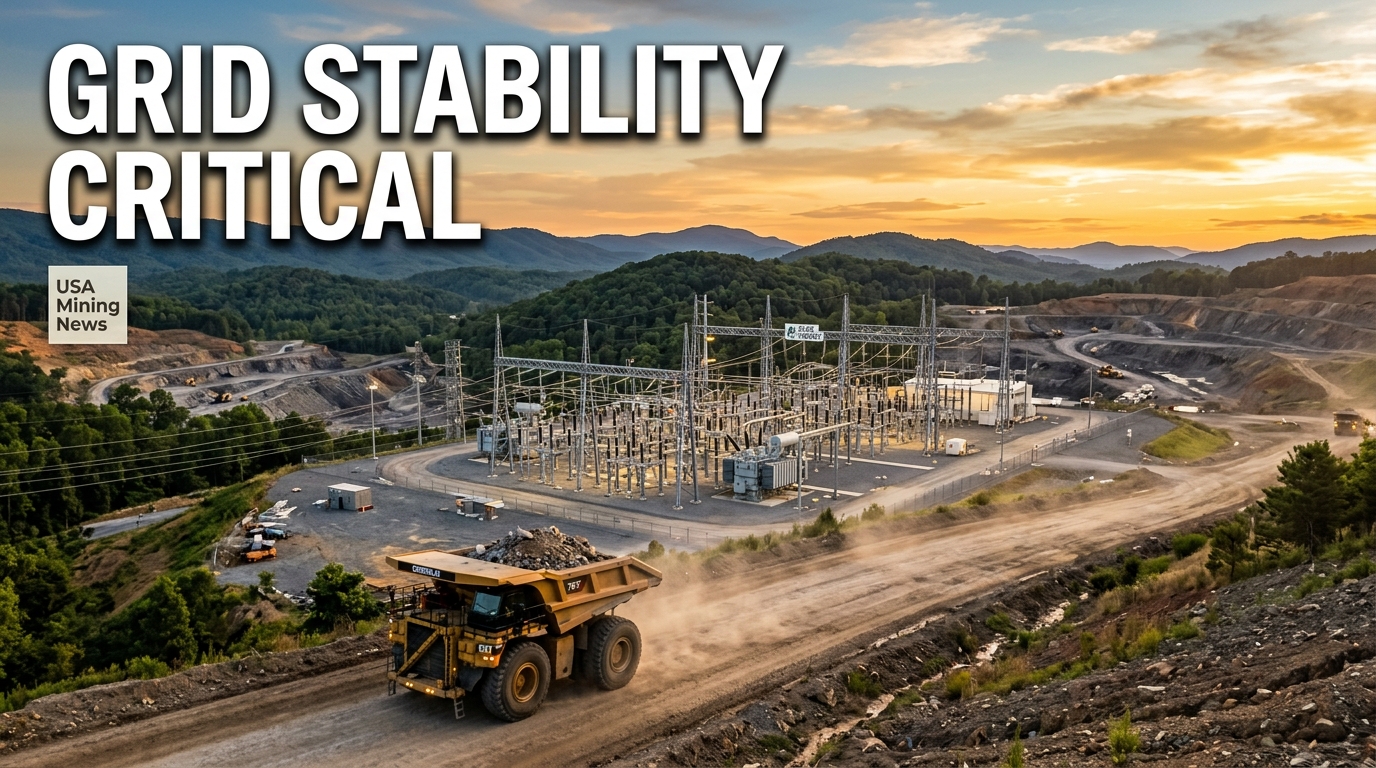
For the mining industry, reliable and affordable energy is not merely a convenience but an existential necessity. Mining operations are inherently energy-intensive, requiring substantial and continuous power for a multitude of processes. A disruption of the scale averted in the Carolinas carries profound implications for any mining enterprise.
- Continuous Operations: Many modern mines, particularly those with sophisticated processing plants like mills, flotation circuits, or smelters, operate 24 hours a day, seven days a week. Unexpected power outages can force immediate shutdowns, leading to significant material handling challenges, potential equipment damage, and costly restarts. For instance, molten material in smelters can solidify, requiring extensive and expensive remedial work.
- Power-Intensive Processes: Core mining activities, such as drilling, blasting, hauling, crushing, and grinding, consume vast amounts of electricity. Ventilation systems in underground mines are critical for worker safety and health, operating continuously. Dewatering pumps are essential to prevent mine flooding. Any interruption can jeopardize safety and cause environmental hazards.
- Economic Impact: Production halts translate directly into lost revenue. Beyond the immediate loss, companies face additional costs for equipment repair, workforce standby time, and potential penalties for failing to meet supply contracts. These costs can quickly escalate, eroding profit margins and impacting investment decisions.
- Supply Chain Reliability: The mining industry forms the foundational layer of countless supply chains, providing raw materials for everything from electronics to construction. A power-induced disruption at a mine can ripple through these supply chains, affecting downstream manufacturing and economic activity far beyond the immediate geographic location of the outage.
While the Carolinas are perhaps best known for industrial minerals such – aggregates, kaolin, and phosphate – and hold significant reserves of heavy mineral sands, the broader principle of grid reliability applies universally to all U.S. mining operations, from copper and gold in the West to coal in Appalachia. Mining companies operating in regions prone to extreme weather events or characterized by aging grid infrastructure must actively integrate energy resilience into their strategic planning. This includes exploring options such as on-site power generation (e.g., natural gas peaker plants, solar arrays with battery storage), negotiating robust power purchase agreements with reliability clauses, and developing detailed contingency plans for grid outages.
The Broader National Context: Energy Dominance and Future Resilience
The emergency order in the Carolinas serves as a microcosm of larger national energy challenges. The Trump administration's "Energy Dominance Agenda" articulates a vision for a robust energy sector characterized by abundant domestic production across all sources, aiming to fortify national security, economic prosperity, and grid reliability. This philosophy suggests that a diverse and ample supply of energy resources is the most direct path to preventing grid vulnerabilities and ensuring continuous power access for all sectors, including heavy industry.
The incident in the Carolinas underscores the critical need for ongoing investment in grid modernization and expansion. The existing U.S. electricity grid, parts of which are decades old, struggles to cope with the dual pressures of increasing demand, particularly during extreme weather events, and the integration of new, often intermittent, energy sources. Future resilience will require a multi-faceted approach, encompassing not only generation capacity but also robust transmission infrastructure, advanced grid management technologies, and adaptive regulatory frameworks. The mining industry, as a major energy consumer and a vital component of the national economy, has a vested interest in advocating for and collaborating on solutions that ensure a stable, reliable, and cost-effective energy future.
Outlook: Navigating an Evolving Energy Landscape
The timely intervention by the DOE effectively mitigated an immediate threat to the Carolinas' power grid, preventing potential blackouts over a high-demand holiday weekend. However, this incident is a vivid illustration of the systemic challenges facing the nation's energy infrastructure. As climatic patterns become more unpredictable and energy demands continue to grow, the need for proactive measures and resilient systems will only intensify.
For mining companies, the implications are clear: energy security is a top-tier operational and strategic concern. Investments in on-site power generation, energy efficiency, and diversified energy portfolios are no longer merely cost-saving measures but essential components of risk management. Furthermore, the political dimension of energy policy debates means that the regulatory and market environments for energy supply can shift, necessitating constant vigilance and adaptive strategies from industry stakeholders. The long-term stability of the U.S. mining sector will be inextricably linked to the nation's ability to ensure a robust, reliable, and economically viable energy supply, a challenge brought into sharp focus by the events of early September 2026.