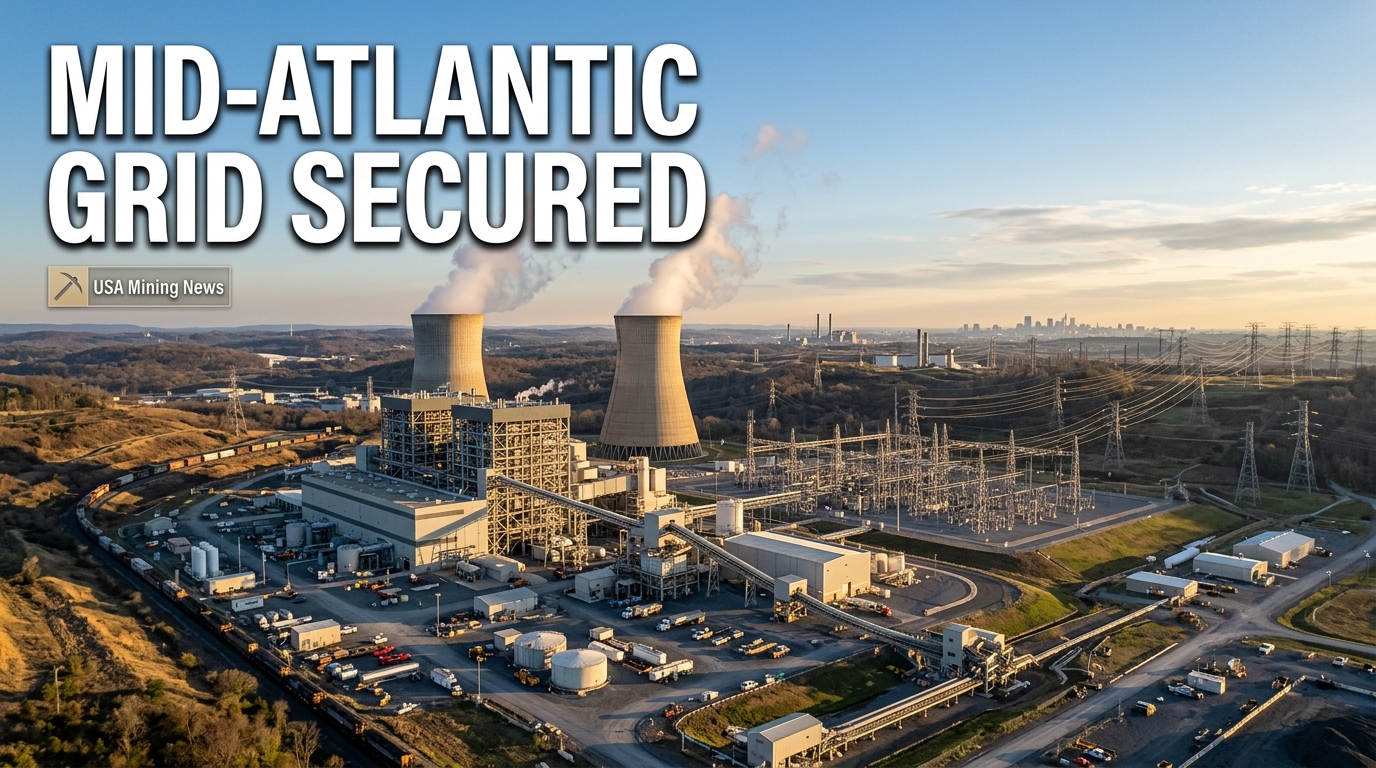
Emergency Order Bolsters Mid-Atlantic Grid Reliability Ahead of Summer Demand
WASHINGTON – In a decisive move to fortify energy infrastructure reliability across the Mid-Atlantic region, U.S. Secretary of Energy Chris Wright today, May 21, 2026, issued an emergency order. This intervention, sanctioned under Section 202(c) of the Federal Power Act, is designed to ensure that 65 million Americans residing in 13 states and the District of Columbia maintain uninterrupted access to affordable, reliable, and secure energy, particularly as the region braces for the peak demands of the summer months.
The order specifically permits PJM Interconnection L.L.C. (PJM), the regional transmission organization coordinating the movement of wholesale electricity in the Mid-Atlantic, to work in concert with Talen Energy Corporation. Their mandate is to operate Unit 4 at the Wagner Generating Station, located in Anne Arundel County, Maryland, beyond its established operating limits. Such a directive underscores the urgency of addressing what PJM has consistently cited as a "growing resource adequacy concern" – a challenge that remains pertinent since its initial request in July 2025.
The Immediate Challenge: Preserving Grid Stability for 65 Million Americans
The Secretary’s action comes in direct response to an application submitted by PJM on May 21, 2026, highlighting the imminent need for bolstered generation capacity. “Energy shortfalls for 65 million Americans are simply unacceptable,” Secretary Wright stated, emphasizing the government's commitment to energy security. He further articulated, “Previous orders in the Mid-Atlantic region have helped keep the lights on and I’m confident this order will help do so in the coming summer months as well. Today’s order helps temporarily address the urgent need to strengthen grid reliability and ensure Americans across the Mid-Atlantic region have access to affordable, reliable, and secure power regardless of whether the sun shines or wind blows.”
This statement not only reinforces the immediate necessity of the emergency measure but also subtly points to the broader challenges of integrating intermittent renewable energy sources into the grid without compromising overall reliability. The 13 states served by PJM, in addition to the District of Columbia, encompass a vast and economically critical region, where a stable power supply is non-negotiable for both residential consumers and large industrial operations.
Wagner Generating Station: A Critical Asset Under Strain
At the core of this emergency directive is Unit 4 of the Wagner Generating Station, an existing power generation asset owned and operated by Talen Energy Corporation. PJM’s assessment indicated that, under conditions of atypically high seasonal temperatures and the occurrence of other generator outages, the remaining generation run hours for Wagner Unit 4 would be insufficient due to its pre-defined operating limits. This constraint posed a direct threat to the grid's ability to meet anticipated electricity demand.
It is important to note that this is not the first instance of federal intervention regarding Wagner Unit 4. Secretary Wright had previously granted PJM’s requests to allow the dispatch and operation of this Maryland-based unit beyond its standard operating limits, highlighting its recurring critical role in seasonal grid stability. The repeated reliance on such emergency measures underscores the inherent volatility in the region's energy supply outlook and the indispensable role of dispatchable, on-demand power generation in preventing widespread disruptions.
The Federal Power Act's Section 202(c) specifically empowers the Secretary of Energy to issue such orders in emergencies, particularly when there is "an actual or immediate threatened war, or by any other existing or imminent calamity, or by any scarcity of fuel, water, or other causes of power shortage." This legal framework allows for temporary, extraordinary measures to safeguard the national interest in a reliable electricity supply.
The Broader Context: Resource Adequacy and Energy Transition
PJM’s consistent reference to a "growing resource adequacy concern" is a signal to the entire energy industry. Resource adequacy refers to the grid's ability to reliably deliver sufficient electricity to meet peak demand, even during extreme weather conditions or unexpected equipment failures. This concern is often exacerbated by several factors:
- Retirement of Conventional Power Plants: Many older, baseload thermal power plants, which provide consistent, dispatchable power, are being retired,
- Increased Reliance on Intermittent Sources: While critical for decarbonization goals, solar and wind power are by nature intermittent, requiring robust backup or storage solutions to maintain grid stability when the sun isn't shining or the wind isn't blowing; this echoes Secretary Wright's direct comments.
- Growing Demand: Economic development and electrification initiatives lead to increased electricity consumption, putting additional strain on existing infrastructure.
For industrial consumers, particularly those in the mining sector, these trends are highly significant. Prolonged resource adequacy concerns can translate into higher wholesale electricity prices, increased risk of demand curtailment orders during peak times, and potentially decreased overall grid reliability. The emergency order, while temporary, highlights the ongoing tension between decarbonization efforts and the practical realities of maintaining grid resilience.
Implications for the Mining Industry: Powering Production
The reliability and cost of electricity are paramount for the mining industry. Mining operations, from extraction to processing, are inherently energy-intensive. Large-scale equipment, ventilation systems, dewatering pumps, crushing, grinding, and smelting processes all require a constant and substantial supply of power.
- Operational Continuity: Grid instability, such as that mitigated by the Wagner order, poses a direct threat to continuous mining operations. Unexpected power outages can lead to significant production losses, equipment damage, and serious safety hazards in underground mines. Even brief interruptions can have cascading effects on complex processing workflows.
- Energy Costs: Electricity typically represents a significant operating expense for mining companies. Fluctuations in wholesale power markets, exacerbated by resource adequacy challenges, can directly impact profitability and operational budgeting. When emergency measures are needed, it often indicates underlying supply constraints that can drive up prices in the long term.
- Investment Decisions: For companies planning new mine developments or expansions, the long-term outlook for energy reliability and cost is a critical factor in site selection and financial modeling. Regions with a demonstrated history of grid instability or heavy reliance on emergency orders may be perceived as higher risk, influencing capital allocation decisions.
- Policy and Regulatory Landscape: Government interventions like the DOE's emergency order demonstrate the regulatory environment's crucial role in ensuring industrial power supply. Mining companies must remain attuned to these policies, which can affect the stability and predictability of their energy inputs.
The mining sector's demand for base metals and critical minerals, essential for renewable energy technologies, means that the industry itself is a key enabler of the broader energy transition. However, this paradox requires a robust and reliable energy supply to meet its own production targets, making grid stability a foundational concern.
Operational Details and Timeline
The emergency order officially takes effect on May 22, 2026, and is slated to remain in force through August 19, 2026. This timeframe strategically covers the core summer months, a period traditionally associated with heightened electricity demand due to increased air conditioning use and potential heatwaves. During this period, Talen Energy, under coordination with PJM, will have the necessary authorization to dispatch Wagner Unit 4 as vital for maintaining regional grid stability. The temporary nature of the order highlights its role as a stopgap measure, providing immediate relief while longer-term solutions to resource adequacy challenges are developed and implemented.
Future Outlook: Navigating Energy Security and Decarbonization
This emergency order, while critical for immediate grid stability, serves as a stark reminder of the ongoing complexities in the nation's energy landscape. For the mining industry and other energy-intensive sectors, the need for reliable power remains constant, irrespective of the broader energy transition. The coming months and years will likely see continued discussions and investments focused on:
- Infrastructure Modernization: Upgrading transmission and distribution networks to better integrate diverse energy sources.
- Energy Storage Solutions: Deploying utility-scale battery storage and other technologies to firm up intermittent renewable generation.
- Strategic Resource Planning: Developing comprehensive plans that balance environmental goals with the practical need for dispatchable, base-load power to ensure long-term resource adequacy.
- Demand-Side Management: Implementing programs to manage and reduce peak electricity demand, easing the strain on the grid.
The decision to temporarily override operational limits for Wagner Unit 4 ensures that essential power will flow to millions this summer. However, it also underscores the critical need for sustained investment and strategic policy to build an energy infrastructure that is both resilient for heavy industrial users and aligned with future energy objectives.