Addressing the Indo-Pacific's Energy Imperative: A New Era for Mining and Critical Minerals
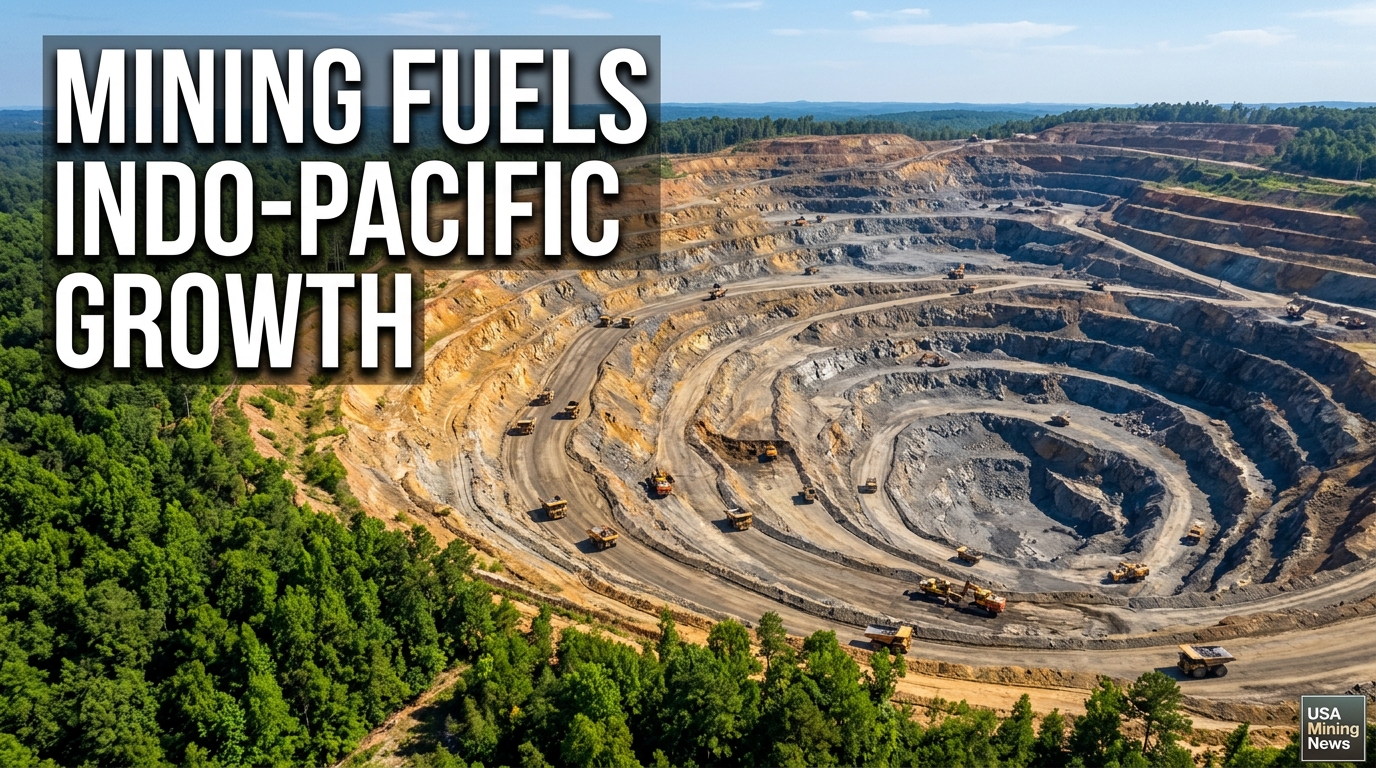
On March 14–15, 2026, a pivotal gathering in Tokyo, Japan, convened senior government officials from twelve nations to address the burgeoning energy demands and security vulnerabilities of the Indo-Pacific region, a recognized global growth engine of the 21st century. The Indo-Pacific Energy Security Ministerial and Business Forum, co-hosted by key U.S. and Japanese energy leaders, underscored an urgent collective determination to fortify a stable and secure energy supply across this vast and strategically vital area. For the global mining sector, the outcomes of this landmark forum signal profound implications, particularly for the future of critical mineral supply chains, energy resource development, and infrastructure investment necessary to power the region's ambitious growth trajectory.
A Unified Front for Energy Security and Regional Growth
The forum brought together ministers and representatives from a diverse and influential coalition of nations: Australia, Bangladesh, Brunei, Japan, Malaysia, New Zealand, Philippines, Republic of Korea, Singapore, Timor-Leste, the United States, and Vietnam. Guiding the high-level discussions were co-hosts Secretary of the Interior Doug Burgum and Secretary of Energy Chris Wright, representing the U.S. National Energy Dominance Council, alongside Japanese Minister of Economy, Trade and Industry Akazawa Ryosei. Their collective affirmation centered on a shared strategic imperative: to ensure a resilient energy future for the Indo-Pacific, acknowledging its critical role as a global economic epicenter.
Discussions were meticulously structured around three core pillars, designed to foster comprehensive strategies for energy stability:
- Strong, reliable energy for Indo-Pacific growth and security.
- Robust strategies for securing energy supply chains, infrastructure, and maritime routes.
- Dynamic frameworks for enabling trade and investment across the entire energy spectrum.
These interconnected themes collectively underscore a holistic approach to energy security, moving beyond mere supply volumes to actively address the underlying vulnerabilities inherent in critical infrastructure and global logistics. For the mining industry, this integrated outlook translates into direct and significant demand signals for the raw materials paramount to energy infrastructure, ranging from essential upstream extraction through to critical downstream deployment of energy systems.
Diversification and Resilience: The Mining Sector's Mandate
A central declaration from the forum was the absolute necessity of "reliable, affordable, secure and dispatchable energy from all sources" to meet the region’s surging energy demand, while adapting to each country’s unique situation. This commitment to an "all-of-the-above" energy strategy carries profound and multi-faceted implications for the mining industry, necessitating a strategic response across various commodity fronts:
- Traditional Energy Sources: While the global energy transition is actively underway, the commitment to "all sources" indicates a continued, albeit evolving, demand for traditional energy inputs. This includes thermal coal, which remains essential for baseload power in specific national contexts, alongside natural gas. The forum's explicit welcome for Pacific Liquefied Natural Gas (LNG) exports, notably from the United States and other established and emerging suppliers, ensures ongoing investment in gas exploration, extraction, and associated infrastructure. This, in turn, drives considerable demand for industrial metals such as steel, copper, and specialty alloys required for pipelines, liquefaction plants, and critical maritime terminals.
- Critical Minerals for Electrification: The forum explicitly acknowledged that "as the global economy expands, so too does demand for energy driven by AI and electrification." This foresight directly fuels the demand for a broad and increasing spectrum of critical minerals, all of which are absolutely essential for renewable energy technologies, advanced battery storage solutions, and robust modern grid infrastructure. Commodities like copper, lithium, nickel, cobalt, graphite, and various rare earth elements become increasingly vital, prompting a renewed and urgent focus on developing secure and diversified sources for these materials. Miners globally, and particularly those with strategic assets and operational capabilities within the mineral-rich Indo-Pacific, will find enhanced incentives for accelerated exploration, responsible production, and the establishment of resilient supply chains.
- Upstream Investment: A particularly significant affirmation for the mining sector was the explicit call for "investment in comprehensive energy infrastructure that encompasses the entire energy supply chain from upstream development facilities to downstream equipment." The term "upstream development facilities" directly mandates greater investment in the exploration, development, and processing of critical mineral resources. This encompasses not only the raw materials directly required for renewable technologies but also those essential for traditional energy infrastructure components and, crucially, for the burgeoning nuclear energy sector. Such investment will be pivotal in ensuring the foundational supply of raw materials for the region's energy ambitions.
The Nuclear Revival and SMR Opportunity: A Boost for Uranium
Perhaps one of the most compelling developments for the mining industry emerging from the Tokyo forum is the unambiguous and revitalized emphasis on nuclear energy. The participating nations recognized and welcomed efforts by international finance institutions (IFIs) such as the World Bank and the Asian Development Bank (ADB) to significantly expand financing for energy-related programs. Crucially, this support was specifically highlighted for "nuclear energy projects for interested countries aligned with IAEA standards on safety, security, regulatory frameworks, and non-proliferation safeguards." This institutional backing signals a fundamental shift in perception and a strong commitment to nuclear power as a clean, reliable baseload energy source.
Furthermore, interested countries expressed a clear intent to "accelerate cooperation, especially in the field of nuclear energy, to pursue deployment of Small Modular Reactors (SMRs) and other advanced technologies." This strategic pivot towards nuclear power, particularly the next-generation SMRs, represents a significant and compelling long-term growth driver for the global uranium mining sector. SMRs offer the promise of scalable, flexible, and often quicker-to-deploy baseload power, making them highly attractive for meeting the Indo-Pacific's rapidly escalating energy requirements while simultaneously addressing crucial emissions targets. Uranium producers and explorers will view this development as a substantial de-risking of future demand, encouraging new project development, strategic supply chain investments, and renewed confidence in the long-term viability of the nuclear fuel cycle.
Strengthening Supply Chains and Mitigating Risk
Beyond simply diversifying energy sources, the forum also articulated critical strategies for fortifying energy supply chains against an array of modern risks. Key among these was "promoting quality as a key procurement mechanism to mitigate risk of operational liabilities." For the mining sector, this vital directive translates directly into an increased focus on responsible sourcing, adherence to robust Environmental, Social, and Governance (ESG) standards, and the implementation of top-tier operational practices. High-quality, ethically and sustainably mined materials will be increasingly favored by procuring entities to ensure the long-term integrity, reliability, and social license of critical energy infrastructure projects across the region.
A significant area of concern and attention was also given to protection against "rising cyber threats to the security of the energy grid, critical infrastructure, vehicles, and devices." While this broadly encompasses energy infrastructure, the mining industry itself, as a foundational component of critical infrastructure and increasingly digitalized in its operations, must also proactively bolster its cybersecurity defenses to ensure uninterrupted supply. Interruptions in mining operations due to sophisticated cyberattacks could instigate cascading negative effects throughout the entire energy supply chain, underscoring the interconnectedness of modern industrial ecosystems.
Finally, the commitment to "promoting transparent, long-term energy contracts that reduce market volatility" is a crucial stabilizing factor that indirectly but significantly benefits the mining sector. Stable, predictable off-take agreements encourage essential investment in new mining projects, providing much-needed certainty for miners developing capital-intensive operations that often span decades. This fosters an environment conducive to long-term planning and investment confidence.
Enhancing Trade, Investment, and Sustainable Development
The delegates broadly recognized that "growing all sources of energy, ensuring energy access and infrastructure, and lowering energy costs for all are essential to our efforts to end poverty, better human lives, and further drive economic growth, security, and prosperity in the Indo-Pacific." This commitment explicitly and powerfully links energy security provisions to broader sustainable development goals within the region.
The instrumental role of international finance institutions (IFIs) such as the World Bank and the Asian Development Bank (ADB) in "mobilizing finance, transferring technology and capacity building" for developing countries within the energy sector is highly relevant to the future of mining in the region. Many globally significant critical mineral deposits reside in developing nations across the Indo-Pacific. IFI support for energy infrastructure and related programs can unlock crucial capital for new mining projects, substantially improve local infrastructure (e.g., reliable power grids, improved roads, modernized ports), and contribute significantly to community development—ultimately lowering operating costs and improving project viability margins for miners operating in these regions.
The forum's congratulatory note on "a series of tangible deals announced in Tokyo on this occasion" further emphasizes the immediate, actionable impact of these high-level discussions. While specific details of these agreements were not provided in the public communiqué, it is highly probable that many of these undisclosed deals involve significant investments in energy projects that will directly or indirectly require vast quantities of mined commodities, ranging from foundational construction materials to highly specialized metals essential for advanced energy technologies.
Outlook for the Mining Industry in a Secure Indo-Pacific
The Indo-Pacific Energy Security Ministerial and Business Forum, held in March 2026, presents a clear and compelling strategic roadmap for the region's energy future, one that places significant and enduring reliance on a robust and diversified mining sector. For mining companies and investors navigating global markets, the imperative is clear, highlighting several key areas for strategic focus:
- Increased Demand Across the Board: Stakeholders should anticipate sustained and growing demand for a wide range of commodities. This encompasses traditional energy inputs like uranium and, in specific contexts, coal for baseload power, extending to the vital critical minerals essential for electrification, advanced AI infrastructure, and next-generation energy technologies.
- Prioritization of Resilient Supply Chains: Projects and operations that actively contribute to diversification, reduce reliance on single-source dependencies, adhere to stringent quality and ESG standards, and demonstrate genuine supply chain transparency will gain a significant strategic and competitive advantage in securing market access and investment.
- Nuclear Energy's Resurgence: The explicit commitment to SMRs and broader nuclear power deployment offers a fundamentally bullish long-term outlook for uranium. Companies currently positioned within this sector should confidently anticipate increased long-term investment, renewed procurement contracts, and a more stable demand environment.
- Investment Opportunities: The emphasized role of IFI financing, technology transfer, and the development of "upstream development facilities" creates fertile ground for substantial capital deployment in new exploration and mine development projects across the mineral-rich Indo-Pacific region.
- Cybersecurity as a Core Mandate: Recognizing its status as a foundational component of critical infrastructure, mining operations must integrate advanced and proactive cybersecurity measures to protect their own networks and, by extension, ensure reliability and continuity within the broader energy supply chain.
As the Indo-Pacific region continues to cement its role as a pivotal global growth center, the stability and security of its energy landscape will remain paramount. The mining industry, as the foundational supplier of the raw materials that power this ambitious future, stands at the cusp of unprecedented opportunities, provided it can adeptly align with the forum's urgent calls for diversified, resilient, and responsibly sourced supply chains.