Sweden's Nuclear Renaissance: A Strategic Pivot Reshaping Global Energy and Mining Dynamics
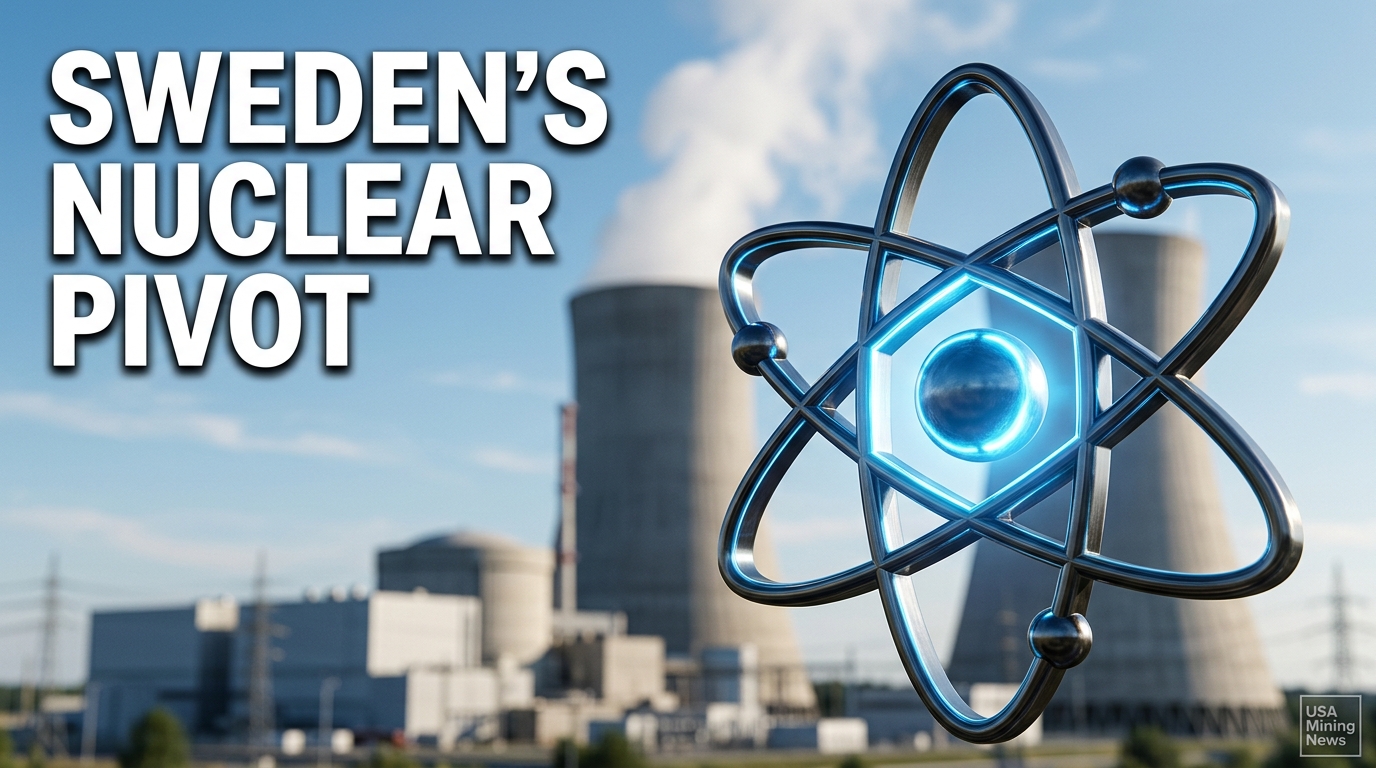
Stockholm’s energy policy is undergoing a profound transformation, signaling a decisive shift from a planned nuclear power phase-out to an ambitious expansion. This strategic pivot, detailed in a recent episode of the Energy Technology podcast featuring Carl Berglöf, the national nuclear power coordinator of the Swedish Ministry of Climate and Enterprise, marks a critical juncture for both Sweden’s energy independence and the global mining industry. The nation's intent to add substantial new nuclear capacity in the coming decades is poised to significantly impact demand for uranium and a suite of other critical minerals, warranting close attention from mining executives, investors, and policymakers worldwide.
A Dramatic 180-Degree Turn in Energy Policy
For decades, Sweden maintained a policy aimed at gradually phasing out nuclear power, a stance influenced by historical concerns following incidents like Chernobyl and Fukushima. However, recent years have witnessed an extraordinary reversal. The Swedish government has not only scrapped the previous reactor cap but has also designated new sites for nuclear development and introduced legislative measures designed to accelerate investments and streamline deployment processes. This policy shift reflects a broader European re-evaluation of nuclear energy's role in achieving both energy security and decarbonization targets in the wake of geopolitical instabilities and the escalating climate crisis.
The national nuclear roadmap now outlines concrete and ambitious targets:
- Adding at least 2.5 gigawatts (GW) of new nuclear capacity by 2035.
- Achieving the equivalent of approximately ten new reactors in capacity by 2045.
These targets represent a substantial commitment to nuclear power, illustrating a clear strategic direction for the nation's energy future. The discussion with Carl Berglöf, as part of the Energy Technology podcast series, provides invaluable insight into the operational and strategic thinking behind this monumental shift, offering professionals in the power, oil and gas, and mining sectors an expert perspective on these industry-defining topics. The podcast, released on April 7, 2026, delves into the specifics of Sweden's approach, building on previous conversations to offer a comprehensive view.
Catalysts for Change: Energy Security and Decarbonization
The impetus behind Sweden’s nuclear renaissance is multifaceted, primarily driven by twin imperatives: enhancing energy security and meeting aggressive climate change mitigation goals. Like many industrialized nations, Sweden faces the challenge of maintaining a stable, affordable, and clean electricity supply to support its growing economy and industrial base. Nuclear power, with its capacity for continuous, baseload generation and near-zero operational carbon emissions, offers a compelling solution.
The European energy crisis, exacerbated by geopolitical tensions in recent years, underscored the vulnerabilities of over-reliance on intermittent renewables or imported fossil fuels. For Sweden, a country with significant energy-intensive industries, including a robust mining sector, ensuring a reliable and domestically sourced power supply is paramount. Nuclear energy provides this stability, reducing dependence on volatile international energy markets and bolstering national resilience.
Profound Implications for the Global Uranium Market
The most immediate and direct impact of Sweden’s nuclear expansion will be felt within the global uranium mining sector. New reactor builds translate directly into increased demand for uranium, the fundamental fuel for nuclear fission. With Sweden committing to the equivalent of ten new reactors by 2045, this signals a significant, long-term commitment to nuclear fuel procurement that will contribute to the tightening global uranium supply-demand balance.
The uranium market has historically been characterized by cycles of boom and bust, with prices influenced by geopolitical events, new reactor builds, and supply disruptions. While Sweden's planned capacity additions alone may not trigger an immediate price surge, they certainly contribute to a bullish long-term outlook for uranium. Major uranium producing nations such as Kazakhstan, Canada, Australia, and Namibia will likely see sustained demand for their output. For exploration companies, this creates renewed interest in developing new projects, particularly those that can bring supply online within the next decade to support the wave of new builds projected globally.
Industry analysts have already highlighted a potential supply deficit in the coming years, as current production struggles to keep pace with increasing demand from existing reactors, let alone the wave of new capacity planned across Europe, Asia, and North America. Sweden's commitment adds another layer of certainty to this demand growth, incentivizing investment in both conventional uranium mining and advanced extraction technologies. This long-term demand signal helps de-risk new project development, potentially drawing fresh capital into a sector that requires significant foresight and investment.
Critical Minerals: The Unsung Heroes of Nuclear Development
Beyond uranium, the construction and operation of nuclear power plants require a diverse array of critical minerals, creating broader opportunities and challenges for the mining supply chain. Building large-scale nuclear infrastructure, whether traditional large-scale reactors or advanced Small Modular Reactors (SMRs), demands substantial quantities of:
- Copper: Essential for electrical wiring, control systems, and grid connections. A typical nuclear power plant requires thousands of tons of copper.
- Nickel and Chromium: Crucial components in stainless steels and specialized alloys used in reactor pressure vessels, piping, and other structural elements that must withstand extreme conditions of heat, pressure, and radiation. These alloys are vital for reactor integrity and safety.
- Manganese: Used extensively in steel production for various construction components and infrastructure, providing strength and durability.
- Graphite: While less common in modern light-water reactors, it is vital for certain advanced reactor designs, such as High-Temperature Gas-cooled Reactors (HTGRs), where it acts as a neutron moderator or reflector.
- Rare Earth Elements: Though not directly consumed as fuel, rare earths can be found in various high-tech components, sensors, and control systems, as well as in associated electrical infrastructure like powerful magnets for generators and transformers.
The increased demand for these minerals underscores the importance of resilient and diversified supply chains. Mining companies engaged in the extraction and processing of these critical materials stand to benefit from the revitalized nuclear power sector. This also highlights the strategic significance of domestic or friendly-nation sourcing for these minerals to ensure uninterrupted project delivery for countries like Sweden, mitigating risks associated with geopolitical supply disruptions.
Powering Mining Operations: A Strategic Advantage for Swedish Industry
For Sweden’s domestic mining sector, the return to nuclear expansion represents a significant strategic advantage. Mining operations are inherently energy-intensive, from large-scale extraction and transportation to crushing, grinding, and refining processes. Guaranteed access to stable, affordable, and low-carbon baseload electricity is critical for operational efficiency, cost management, and meeting increasingly stringent environmental, social, and governance (ESG) targets.
Mines in Sweden, such as the Zinkgruvan Mine (a polymetallic mine producing zinc, lead, and silver, which GlobalData has previously covered), operate within an energy landscape that will increasingly rely on nuclear power. By expanding nuclear capacity, Sweden ensures its industries, including mining, have access to a reliable power source that minimizes Scope 2 emissions (emissions from purchased electricity). This supports the mining industry’s own decarbonization goals, a growing imperative for attracting investment and maintaining social license to operate. The stability offered by nuclear power also mitigates risks associated with volatile energy prices, allowing for better long-term planning and investment in new mining projects or expansions. The long operational lifespan of nuclear plants, typically 60 years or more, provides unparalleled long-term energy price stability.
Navigating the Road Ahead: Challenges and Opportunities
While Sweden’s commitment to nuclear expansion is clear, the path ahead is not without its challenges. Carl Berglöf, in his role as national nuclear power coordinator, will be instrumental in navigating these complexities. Key hurdles include:
- Regulatory Streamlining: Accelerating investment and deployment requires efficient permitting and approval processes, balancing robust safety standards with project timelines. Historically, nuclear plant construction has faced lengthy regulatory reviews.
- Financing: Nuclear projects are capital-intensive, requiring significant upfront investment and long construction periods. Innovative financing models, potentially involving government loan guarantees or direct investment, and a stable policy environment will be crucial to attract private capital.
- Skilled Workforce: The nuclear sector demands highly specialized engineers, technicians, and operators. Developing a robust talent pipeline through education, training programs, and international collaboration will be essential to meet the needs of a growing fleet.
- Public Acceptance: While sentiment towards nuclear power appears to be shifting positively in many regions, maintaining public trust and support through transparent communication about safety, waste management, and economic benefits remains vital for successful project implementation.
However, these challenges also present opportunities. The drive towards new nuclear capacity could stimulate innovation in reactor design (e.g., SMRs, advanced reactors), construction techniques, and project management. For the mining industry, it creates a stable, long-term demand signal, encouraging investment in exploration, mine development, and processing technologies for both uranium and critical construction minerals, thereby enhancing supply chain robustness.
A Broader European and Global Trend
Sweden’s nuclear pivot is not an isolated incident but rather indicative of a broader trend emerging across Europe and globally. Countries like France, the United Kingdom, Poland, and the Netherlands are also bolstering their nuclear ambitions, driven by similar concerns for energy independence and climate action. Even nations previously committed to phase-outs, such as Japan, are reconsidering their positions, recognizing nuclear's role in a balanced energy mix. This collective resurgence of interest in nuclear power reinforces the long-term demand outlook for uranium and the underlying mineral resources necessary for this energy transition, suggesting a prolonged period of elevated demand for these critical inputs.
Conclusion: A Catalyst for Mining Sector Opportunities
The dramatic shift in Sweden’s energy policy from nuclear phase-out to aggressive expansion represents a significant development for the global energy landscape and, critically, for the mining industry. With targets to add 2.5 GW by 2035 and the equivalent of ten new reactors by 2045, Sweden is poised to become a significant contributor to the global resurgence of nuclear power. This commitment will inevitably strengthen demand for uranium, underpinning stability and growth in that specialized market. Furthermore, the extensive mineral requirements for nuclear plant construction – from copper and nickel to manganese and specialized alloys – will stimulate demand for a wide range of critical minerals, offering robust opportunities for mining companies worldwide.
As Carl Berglöf and the Swedish Ministry of Climate and Enterprise move forward with this ambitious roadmap, the mining sector must factor these developments into their long-term strategies. The pursuit of stable, low-carbon energy by nations like Sweden is not merely an energy policy decision; it is a powerful demand signal for the mining industry, highlighting its indispensable role in building the infrastructure for a sustainable and secure energy future. For investors and operators in the resource sector, tracking these governmental policy shifts and infrastructure commitments will be key to identifying future growth opportunities.