U.S. Energy Dominance: A Deep Dive into Record Production and the Permian Basin's Strategic Role
Midland, Texas – August 17, 2026 – In a significant reaffirmation of American energy prowess, Secretary Wright is visiting Midland, Texas, today to celebrate what the administration terms the "Great American Energy Comeback." The visit serves to highlight the profound impact of President Trump’s energy dominance agenda, which has propelled the United States to an unparalleled position in global energy markets, marked by record-breaking oil and natural gas production. This resurgence is not merely a political slogan but a tangible reality for the global mining and energy sectors, presenting both opportunities and shifts in international energy dynamics.
Global Leadership in Oil and Natural Gas Production
Under the current administration’s policies, the United States has demonstrably emerged as the world leader in both crude oil and natural gas production, achieving output levels that were once considered aspirational. The latest figures underscore this remarkable trajectory.
- Record Oil Production: In 2025, U.S. oil production reached an all-time high of 13.6 million barrels per day. The nation’s capacity has continued to expand, with current production of oil and other liquid fuels now standing at an impressive 24 million barrels per day. This figure is particularly striking as it surpasses the combined output of two of the world’s other major producers, Russia and Saudi Arabia, signaling a profound shift in global supply dynamics.
- Unprecedented Natural Gas Output: Similarly, the U.S. achieved record-high levels of natural gas production in 2025. This year, 2026, is projected to set a new benchmark, with production expected to reach 122.5 billion cubic feet per day (bcf/d), exceeding the previous record of 118.5 bcf/d set just last year. To put this into perspective, America is now producing as much natural gas as Russia, Iran, and China combined, cementing its role as a pivotal force in the global gas market.
For mining industry professionals and investors, these figures illustrate more than just raw output; they represent a fundamental reshaping of energy security and geopolitical influence. The ability of the U.S. to produce such vast quantities of hydrocarbons provides a stable domestic supply, mitigating reliance on volatile international markets and offering a competitive advantage to energy-intensive industries within the nation.
Revitalization of U.S. LNG Exports
A critical component of the energy dominance strategy has been the aggressive push to expand U.S. liquefied natural gas (LNG) export capabilities. On day one of his return to office, President Trump directed the Energy Department to rescind the Biden Administration’s LNG export ban, a move framed as delivering both prosperity at home and peace abroad. This policy reversal has had an immediate and substantial impact.
The United States now leads the world in LNG production, a testament to the rapid development of liquefaction and export infrastructure. The strategic decision to lift the export ban has unleashed a wave of investment and development, with U.S. LNG exports projected to nearly double by the end of the decade. Since January 2025 alone, the Energy Department has approved approximately 22.3 bcf/d in non-Free Trade Agreement (FTA) LNG export authorizations. This figure is highly significant, as it represents more export capacity than the entire U.S. had in operation on the day President Trump took office.
The implications for the global energy market are profound. Increased U.S. LNG exports provide critical supply diversification for allies, particularly in Europe and Asia, reducing their dependence on less reliable sources. For domestic natural gas producers, this expanded export capacity ensures robust demand, supports continued investment in exploration and production, and helps to stabilize commodity prices within the U.S.
The Permian Basin: Engine of American Energy Dominance
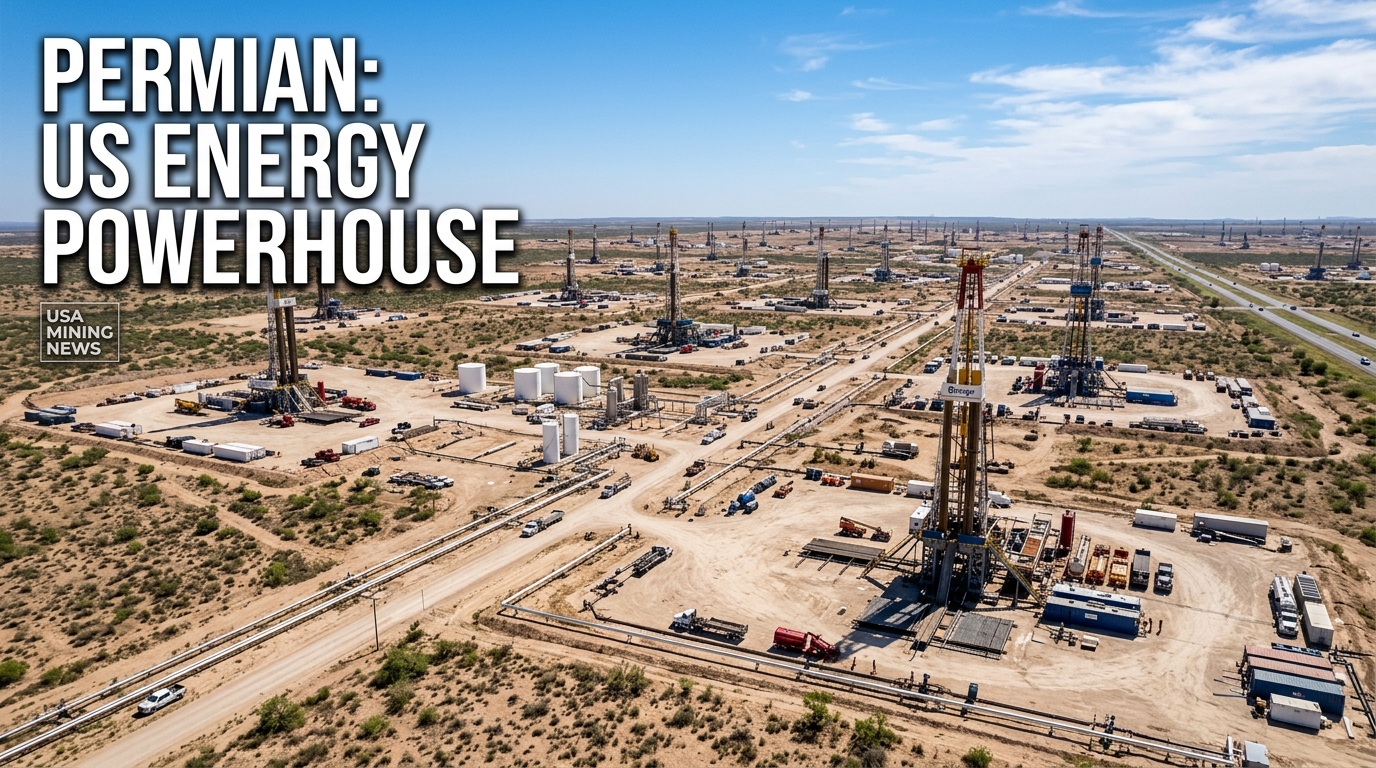
At the geographical heart of this "Great American Energy Comeback" is the Permian Basin, with Midland serving as its vibrant operational hub. The Permian has experienced an unprecedented resurgence, transforming into the undisputed powerhouse of American energy production.
The growth statistics for the Permian are extraordinary. Since 2016, crude oil production in the region has increased by roughly 250%, escalating from approximately 1.9 million barrels per day (mbpd) in 2015 to a record 6.6 mbpd in 2025. By December 2025, the Permian Basin alone was producing 6.7 mbpd of crude oil, accounting for a remarkable 44% of total U.S. oil production. Its contribution to the nation’s natural gas supply is equally substantial, providing 22.2 bcf/d of U.S. marketed gas production, which constitutes more than one-fifth of the total supply.
This dramatic increase in output has been primarily driven by continuous advancements in exploration and extraction technologies, notably hydraulic fracturing and horizontal drilling. These innovations have unlocked vast, previously inaccessible resources within key geological formations such as the Wolfcamp and Spraberry, establishing the Permian Basin as an indispensable driver of American energy independence and global supply. The sustained productivity of the Permian is a critical factor for energy planners, investors, and logistics providers monitoring future supply trends.
Economic Impact and Job Creation in West Texas
The strategic focus on unleashing American energy has had a transformative effect on regional economies, particularly in West Texas, where Midland stands as a prime example of energy-fueled growth. The thriving energy industry in Midland supports a robust economy and significant job creation across the region.
Midland’s population has experienced an impressive 11% increase since 2020, making it the fastest-growing city among its West Texas counterparts. This population boom is directly attributable to the burgeoning opportunities within the oil and gas sector. Employment data through May 2026 further illustrates this trend:
- Midland boasts more than 72 times the national employment share in the mining, quarrying, and oil and gas extraction industry, underscoring its specialized and concentrated energy workforce.
- Across Texas, upstream oil and gas employment increased by 4,100 jobs in May 2026, marking the third consecutive month of job growth in the sector.
These statistics highlight the significant multiplier effect of energy production, creating high-paying jobs not only directly in extraction but also in supporting services, manufacturing, logistics, and technology. For investors, this regional economic vibrancy signals a healthy and expanding operational environment, while for industry professionals, it confirms a fertile ground for career development and innovation.
Competitive Energy Prices for Americans
Beyond production volumes and economic growth, the policy of energy dominance has translated into tangible benefits for American consumers and businesses in the form of competitive energy prices. The United States continues to enjoy some of the lowest energy prices in the world, a direct outcome of abundant domestic supply.
U.S. natural gas prices, for instance, are among the lowest globally, providing a significant cost advantage to industrial users, power generators, and residential consumers. Similarly, Americans continue to pay lower gasoline prices compared to most other developed countries. This affordability acts as a crucial economic stimulus, reducing operational costs for manufacturers, lowering transportation expenses, and increasing disposable income for households. For energy-intensive industries, these lower input costs enhance global competitiveness and foster domestic investment.
Future Outlook and Strategic Implications
The trajectory established by President Trump’s energy dominance agenda points toward a future where the United States maintains its position as a preeminent global energy supplier. The sustained productivity of regions like the Permian Basin, coupled with expanding export capabilities for both crude oil and LNG, are foundational to this outlook.
The continued emphasis on technological innovation, regulatory frameworks that support efficient resource extraction, and strategic infrastructure development will be paramount in maintaining this leadership. For the mining and energy industries, this signifies a period of continued opportunity for investment, technological advancement, and skilled workforce development. As global energy demands evolve, the U.S. is positioned not merely as a supplier, but as a stabilizing force in international energy markets, contributing to both economic prosperity at home and greater energy security worldwide. The narrative from Midland today is clear: American energy is back, and it is leading the world.