U.S. Energy Department Doubles Down on Coal, Citing Grid Reliability and National Security Imperatives
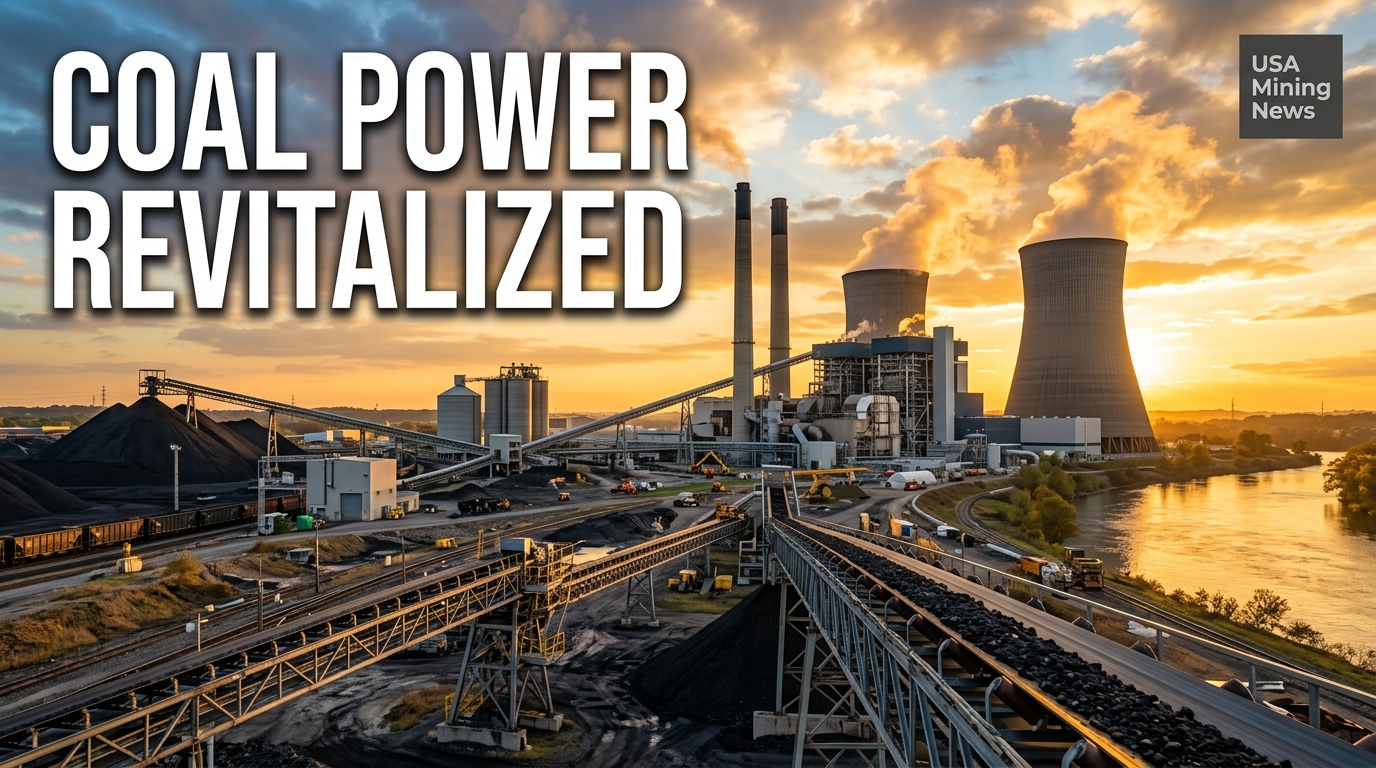
Washington, D.C. – June 4, 2026 – The United States Energy Department, under the Trump Administration, underscored its robust commitment to the American coal industry today, announcing a series of initiatives aimed at strengthening the nation’s electricity grid, bolstering national security, and supporting domestic energy production. This latest announcement, building upon an already established policy framework, signifies a profound strategic pivot for the coal sector, which has faced significant headwinds in recent decades. The administration has positioned itself as the "Undisputed Champion of Beautiful, Clean Coal," framing its actions as a reversal of what it termed a "war on American coal."
Expanded Support for Coal Power and Infrastructure
Today's declaration marks a pivotal moment, with the Energy Department confirming its intent to save or support an additional 17 coal plants alongside one crucial export facility. This expands upon earlier actions, bringing the total number of coal plants saved or supported by the administration to 45, cumulatively representing more than 40 gigawatts (GW) of coal-fired power capacity. For an industry that has seen numerous plant retirements due to economic and regulatory pressures, this represents a significant lifeline. The Energy Department estimates these interventions have saved approximately $50 billion in potential costs that would have been incurred to build new power generation capacity, a benefit it states protects ratepayers across the United States. Furthermore, these governmental investments are projected to galvanize an additional $1.7 billion in private sector investment, vital for the revitalization of the coal industry. Critically for the mining sector, these actions are expected to ensure the continued operation of at least 42 coal mines.
The core philosophy driving these developments stems from President Trump's declaration of a National Energy Emergency, which catalyzed efforts to prevent the premature shutdown of coal-fired power plants and expand associated infrastructure. This strategy is explicitly designed to enhance grid reliability, mitigate energy costs, and sustain employment for American coal workers.
Strategic Investments in Coal-Fired Generation Assets
A central pillar of the June 4 announcement involves substantial funding earmarked for the construction, upgrading, and modernization of coal-powered infrastructure. Through the Energy Department’s "Restoring Reliability: Coal Recommissioning and Modernization" initiative, four projects are slated to receive up to $350 million. This initiative is strategically focused on targeted upgrades aimed at increasing operational efficiency, extending the lifespan of existing plants, and adding reliable, dispatchable baseload capacity to the national grid. The selected projects highlight a dual approach: investing in new capacity while also rejuvenating existing assets.
- New Coal Plant Commissioning: The initiative includes projects assessing the commissioning of two entirely new coal-powered plants. One is a 1.25 GW coal plant proposed for Anchorage, Alaska, a region where energy security and grid stability in remote areas are paramount. The second is a substantial 1.6 GW coal plant slated for the West Virginia Energy Campus, a state historically synonymous with coal production and expertise. The development of new gigawatt-scale coal plants represents a departure from recent trends and signals a renewed emphasis on baseload capacity in key regions.
- Recommissioning and Modernization: Funds are also allocated to recommission the 205-megawatt (MW) AES Warrior Run Generating Plant in Cumberland, Maryland, which was shuttered in 2024. Recommissioning a previously retired plant offers a cost-effective pathway to restoring lost capacity, potentially faster than greenfield construction. Additionally, plans are in motion for the retrofitting and modernizing of AES Puerto Rico, an existing 510 MW coal-fired plant located in Guayama, Puerto Rico. Such modernization efforts typically involve upgrades to environmental controls, combustion efficiency, and digital systems, pushing towards what the administration refers to as "clean coal" operation through improved performance.
These new allocations follow a previous commitment of $175 million from the Energy Department for six earlier announced projects designed to upgrade existing coal facilities, underscoring a consistent, multi-year strategy to reinforce coal's role in the energy mix. These investments acknowledge the considerable capital expenditure required to bring plants up to modern operational standards, ensuring they remain viable and compliant while providing consistent power.
Bolstering American Energy Security and Supply Chains
The administration’s vision extends beyond domestic power generation to fostering robust supply chains crucial for national security. This strategy was significantly advanced on April 30, 2026, when President Trump issued five Presidential Determinations, authorizing the Energy Department to deploy funding under the Defense Production Act (DPA). These determinations specifically target strengthening domestic energy production and critical infrastructure, with coal power generation prominently featured.
An earlier, substantial commitment made on June 4, 2025, saw the Energy Department allocate $500 million in DPA funding to support 13 coal plants and critical coal export infrastructure. This funding package was divided strategically:
- Domestic Power Plant Support: $425 million was directed to support 13 coal plants, saving over 14 GW of coal-fired power capacity. This capacity is estimated to be sufficient to power more than 14 million American homes. These plants are strategically located across ten states - Oklahoma, Arkansas, Arizona, Tennessee, West Virginia, Kentucky, North Carolina, Indiana, Wisconsin, and North Dakota. This geographical spread aims to strengthen reliable coal supply chains nationwide, ensuring regional energy independence and grid stability against localized disruptions.
- Export Infrastructure Development: The remaining $75 million was designated for the construction of a critical coal export facility on the West Coast, known as the West Gateway Terminal Project in Oakland, California. This project is of significant interest to the mining industry. It is designed to expand U.S. coal export capacity, creating jobs in American mining and port operations. Beyond economic benefits, the terminal is presented as a measure to bolster domestic supply chains of coal and diversify energy supply chains globally, which the administration identifies as critical to national security. Expanding export capacity, particularly to growing Asian markets, provides a crucial outward pathway for high-quality American thermal and metallurgical coal.
Grid Reliability and Lives Saved
The Energy Department's assertive stance on coal is rooted in claims of enhanced grid reliability, particularly during periods of extreme weather. The administration highlights that in 2025, its actions saved more than 17 GW of coal-powered electricity generation by preventing the premature shutdown of coal-fired power plants. Since January 2025, Secretary Wright specifically issued emergency orders that prevented the shutdown of six coal-fired power plants. These plants, according to the administration, "provided critical power generation during extreme weather and likely saved American lives," underscoring the perceived essentiality of baseload coal power in crisis situations.
Furthermore, since President Trump's assumption of office in January 2025, and the subsequent policy shift, more than 15 coal plants reportedly voluntarily reversed their plans for premature shutdown. This indicates a significant response from the private sector to governmental signals of support, altering previous decommissioning schedules and maintaining operational capacity longer than anticipated.
Implications for the Mining Industry and Future Outlook
For the American mining industry, these announcements represent a substantial and sustained vote of confidence. The commitment to keeping at least 42 coal mines operational directly translates into maintained demand for thermal and potentially metallurgical coal, securing thousands of jobs across coal-producing regions. The investments in coal-fired generation ensure a domestic market for mined coal, stabilizing an industry that has faced intense pressure from environmental regulations and competing energy sources. The expansion of export capacity via projects like the West Gateway Terminal provides vital access to international markets, offering diversified revenue streams and reducing reliance solely on domestic demand. This is particularly relevant as Asian economies, such as India and Southeast Asian nations, continue to expand their coal-fired generation capacity.
The narrative of "beautiful, clean coal" emphasizes not only the economic and grid reliability aspects but also signals an expectation for continued innovation in coal technologies. While not explicitly detailed in this announcement, "clean coal" typically refers to technologies that reduce emissions, such as carbon capture, utilization, and storage (CCUS), or advanced combustion systems that improve efficiency. The "modernization" and "retrofitting" projects are likely to incorporate such enhancements, aligning with the administration's stated goals for environmental responsibility alongside energy security.
Looking ahead, the longevity of these initiatives will depend on sustained political will and economic factors. The $1.7 billion in anticipated private sector investment suggests a belief that these government actions will de-risk future coal projects sufficiently to attract significant commercial capital. The ongoing debate around energy transition, climate policy, and the economic viability of different energy sources will continue to shape the landscape, but for the immediate future, the U.S. coal industry has received a powerful impetus, positioning it as a cornerstone of the nation’s energy strategy under the current administration.