Perpetua Resources Secures $2.9 Billion EXIM Loan, Boosting American Mineral Independence with Stibnite Gold Project
In a move poised to significantly bolster the United States' critical mineral supply chains, Perpetua Resources announced on May 22, 2026, that it has secured a $2.9 billion senior secured long-term loan from the Export-Import Bank of the US (EXIM). This substantial financial commitment is earmarked for the development of Perpetua's Stibnite Gold Project, located in Idaho, a venture strategically vital for both domestic gold production and, crucially, for establishing the nation's only identified domestic reserve of antimony.
The approval of this EXIM loan marks a pivotal moment for Perpetua Resources and reflects a broader national imperative. It falls under EXIM’s Make More in America Initiative (MMIA), a program specifically designed to enhance domestic manufacturing capabilities and create jobs within the United States. The comprehensive nature of EXIM’s due diligence, which included thorough technical, financial, environmental, and social evaluations, alongside a mandatory 25-day notification period to Congress, underscores the project's strategic importance and the rigor of the approval process.
A Landmark Financial Commitment for American Mineral Security
The $2.9 billion loan from EXIM represents a cornerstone of the financing strategy for the Stibnite Gold Project. This non-dilutive funding, coupled with Perpetua Resources’ existing cash reserves, is anticipated to cover the entirety of the project’s construction costs. The structure of the loan includes an upfront facility of $2.4 billion, with the remaining allocation dedicated to capitalized interest and EXIM’s exposure fee. This comprehensive financing package provides a clear runway for Perpetua to advance the Stibnite project from development into an operational phase.
The financial terms of the loan are tailored to support a long-term, capital-intensive mining project. The interest rate on the EXIM loan will be pegged to the prevailing long-term US Treasury bond rate, augmented by an additional 100 basis points. Significantly, this rate will be fixed at the initial drawdown, providing Perpetua with certainty regarding its long-term debt servicing costs. Repayments on the loan are structured to commence in 2030, aligning with the projected operational timeline and cash flow generation from the Stibnite project. While approved, the loan funds are projected to become available in the latter half of 2026, contingent upon the completion of final documentation and adherence to customary closing conditions. This structured approach to financing minimizes interest rate volatility risks for the company over the lifespan of the debt.
The Strategic Importance of the Stibnite Gold Project
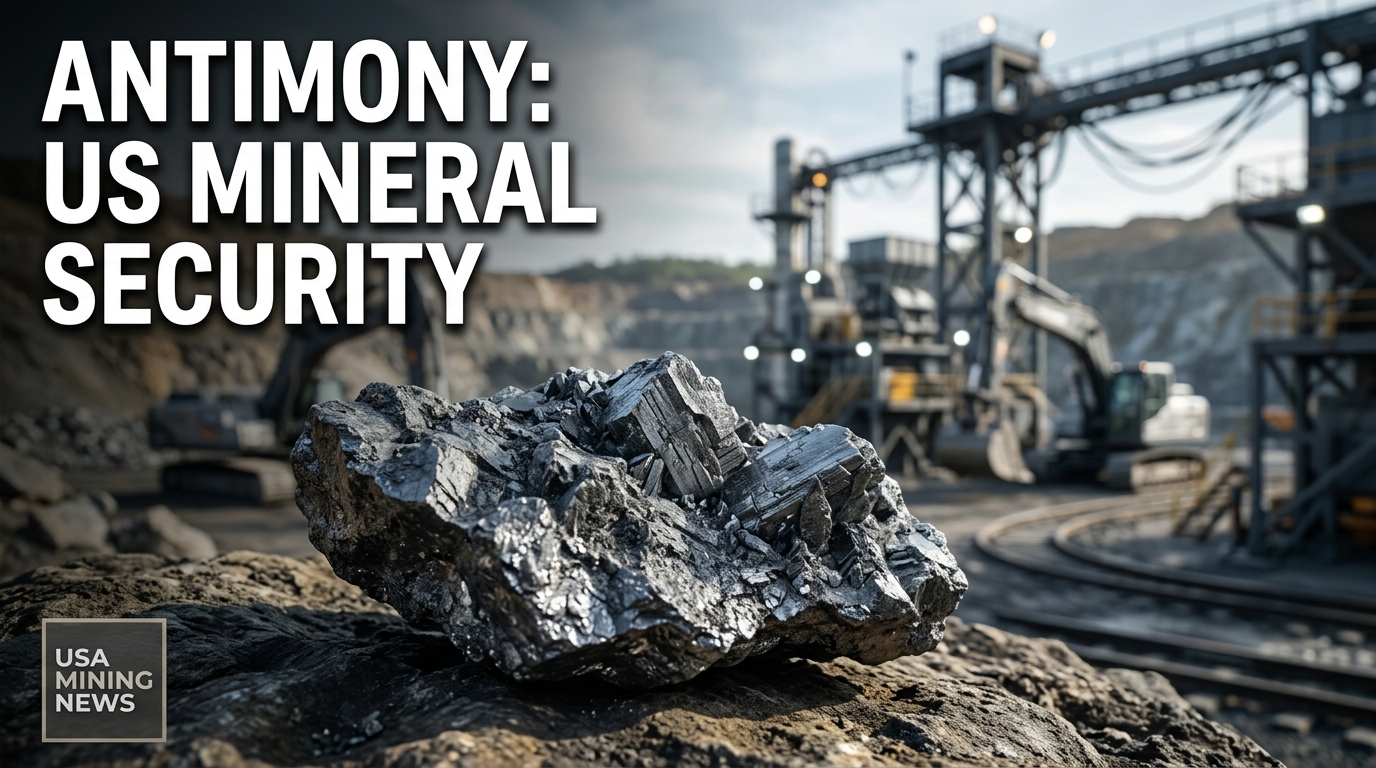
Beyond its financial scale, the Stibnite Gold Project in Idaho holds profound strategic significance for the United States. The project is uniquely positioned as the country's only identified domestic reserve of antimony. Antimony is classified as a critical mineral, indispensable for national security and a wide array of industrial applications. It is a key component in defense technologies, including munitions, night vision goggles, and specialized alloys that enhance the hardness and strength of metals. In the commercial sector, antimony is vital for flame retardants, batteries, and the production of specific plastics and ceramics. The current reliance on foreign sources for this critical mineral exposes the US to supply chain vulnerabilities and geopolitical risks, making the Stibnite project's domestic supply capability a crucial national asset.
The Stibnite project also encompasses a significant environmental remediation component. It aims to sustainably redevelop the abandoned Stibnite Mining District, an area with a legacy of historical mining activity that has contributed to environmental degradation. Perpetua’s plans include an extensive environmental clean-up initiative designed to address long-standing issues, demonstrating a commitment to responsible mining practices. This dual focus on mineral extraction and ecological restoration exemplifies how modern mining projects can contribute positively to both economic development and environmental stewardship.
Economically, the project is projected to create a substantial positive impact. Perpetua Resources anticipates generating an average of more than 700 direct jobs annually during the peak construction and operational phases. These jobs will not only stimulate local economies but also contribute significant tax revenue to local communities within Idaho and the state government, fostering long-term economic stability in the region.
Key Players and Strategic Partnerships
The successful securing of this EXIM loan is a testament to strong corporate leadership and strategic partnerships. Perpetua Resources' President and CEO, Jon Cherry, highlighted the broader implications of this development, stating, “It is time to make more in America and today marks not only a key milestone for Perpetua Resources but a significant step in mineral security for our country. When the federal government and private industry work together on a shared national priority, big things are made possible. The $2.9bn loan positions us to bring the Stibnite Gold Project to life and signals a new day in American mineral independence and responsible mining.” His remarks underscore the collaborative effort between the private sector and federal government agencies to achieve national strategic objectives.
The engagement between Perpetua Resources and EXIM commenced in 2024, culminating in this approval after a diligent and multifaceted evaluation process. Facilitating this complex financial transaction, Endeavour Financial served as the financial advisor, with Hunton Andrews Kurth providing essential legal counsel to Perpetua Resources. These expert advisory roles were instrumental in navigating the intricate requirements of securing federal loan support for a project of this scale and strategic importance.
Prior to this EXIM financing, Perpetua Resources had already demonstrated its ability to attract significant investor interest. In October last year (presumably October 2025, relative to the May 2026 news), the company successfully secured $255 million through equity investments. This private placement involved prominent financial entities, Agnico Eagle Mines and JPMorganChase, collectively providing an additional layer of financial strength and market confidence in the Stibnite Gold Project’s viability and strategic value.
Broader Implications for US Mineral Independence
This EXIM loan for the Stibnite Gold Project resonates deeply with the United States’ broader critical minerals strategy. The federal government has increasingly recognized the vulnerabilities posed by an over-reliance on foreign sources for minerals essential to economic prosperity and national security. By supporting domestic projects like Stibnite, the US aims to de-risk its supply chains, reduce dependence on geopolitical rivals, and foster a robust domestic mining and processing sector. The "Make More in America" Initiative exemplifies this strategic shift, directing federal financial resources towards projects that onshore critical production capabilities.
Moreover, the approval of such a significant loan for a project that blends mineral extraction with environmental remediation could serve as an important precedent. It signals that large-scale mining projects, particularly those addressing critical mineral needs and demonstrating strong environmental stewardship, may find federal government backing. This could encourage other mining companies to pursue domestic development opportunities, knowing that strategic projects aligned with national priorities might attract similar governmental support, thereby stimulating further investment in the US mining sector.
Next Steps and Future Outlook
With the EXIM loan now approved, Perpetua Resources' immediate focus will be on finalizing the necessary documentation and meeting all customary conditions to access the funds in the latter half of 2026. Once the capital is fully secured, the company can accelerate its construction timeline, transitioning from development to a fully operational mine by the time loan repayments are scheduled to begin in 2030. The commencement of operations will not only establish a crucial domestic supply of antimony but also contribute significantly to US gold production.
The industry will closely monitor the Stibnite Gold Project's progress, not only for its operational achievements but also for its execution of environmental commitments. Successful implementation of the rigorous environmental clean-up plans will be key to demonstrating the viability of responsible mining practices in sensitive areas, further shaping public and regulatory perceptions of the industry. This project stands as a tangible example of how strategic collaboration between government and industry can drive progress on critical national priorities, from mineral security to economic development and environmental reclamation.