Fortescue Fuels Green Energy Expansion in Pilbara with US$680 Million Commitment
Perth, Western Australia – In a bold strategic move set to reshape the energy landscape of heavy industry, Australian mining giant Fortescue has announced a significant investment of US$680 million (approximately A$952.44 million) into its Pilbara Green Energy Project. This substantial commitment underscores Fortescue's unwavering dedication to decarbonization and positions the company as a vanguard in the transition to renewable energy sources, not only for its own operations but also for critical industrial demand in the region.
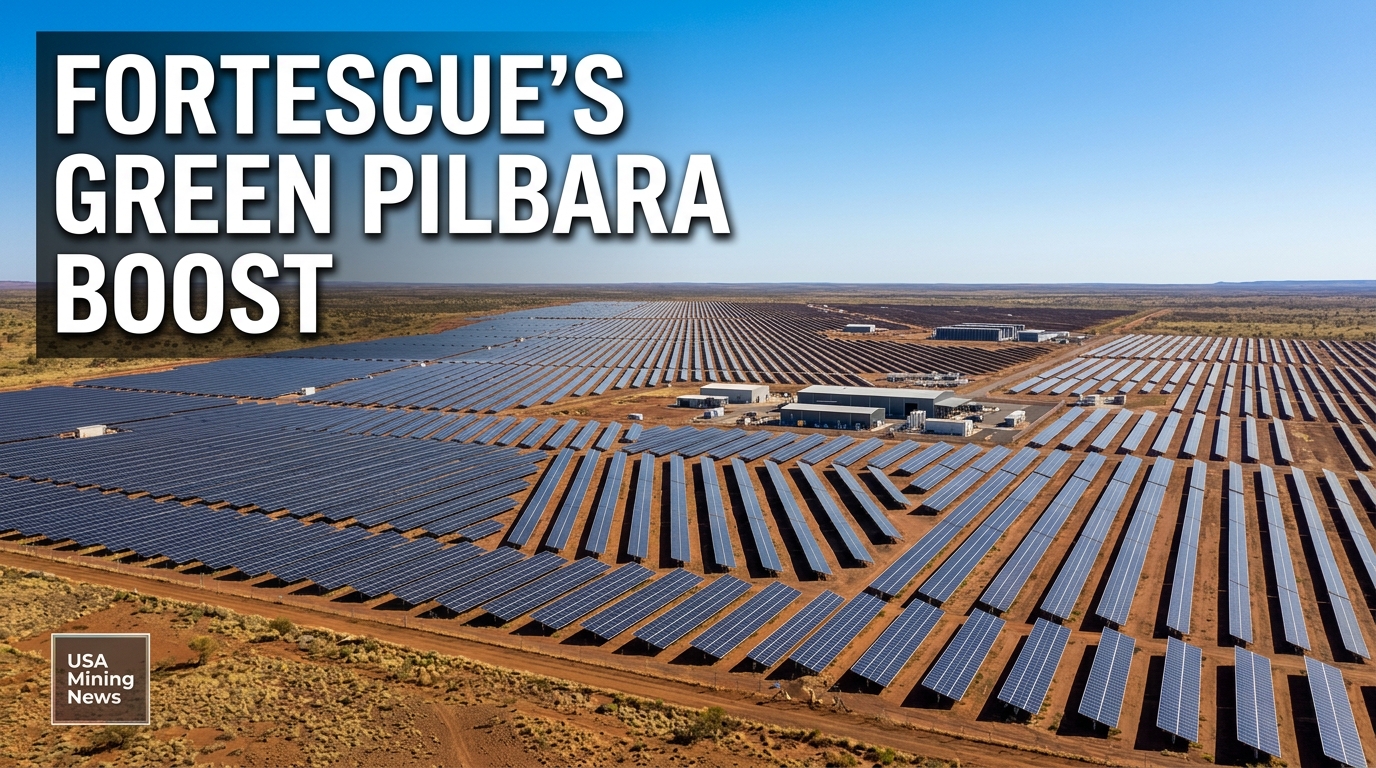
The project, located in the resource-rich Pilbara region of Western Australia, is designed to develop a 200-megawatt (MW) integrated off-grid renewable energy system. This capacity is intended to provide additional green power beyond the requirements outlined in Fortescue's ambitious Real Zero by 2030 strategy, demonstrating a proactive approach to sustainable growth and energy independence. The initiative highlights a growing trend within the mining sector to integrate large-scale renewable energy solutions, driven by both environmental stewardship and economic imperatives.
The Core Investment: Pilbara Green Energy Project
Fortescue's US$680 million investment signals a tangible acceleration of its green energy capabilities. The Pilbara Green Energy Project is envisioned as a holistic, self-sufficient energy ecosystem. At its heart will be a fully integrated off-grid renewable energy system, incorporating advanced battery storage and firming capabilities. These features are crucial for ensuring the reliability and stability required to power industrial operations 24/7, overcoming the intermittent nature of some renewable energy sources like solar and wind.
The project is targeting completion by 2028, a timeline that reflects the urgency with which Fortescue is pursuing its decarbonization agenda. Furthermore, the company has indicated plans for additional expansions beyond 2030, suggesting a long-term vision that extends far past its initial "Real Zero" benchmark. This phased development approach allows for scalability and adaptation to future energy demands and technological advancements.
A key driver for this expansion is the escalating industrial demand within the Pilbara region, notably from rapidly expanding sectors such as data centers. These facilities are characterized by their intensive power consumption, and the availability of stable, cost-effective green energy can be a significant competitive advantage. By catering to these new industrial customers, Fortescue is not only diversifying its energy focus but also leveraging its deep regional presence and infrastructure development expertise to foster broader economic growth.
Context of Fortescue's Decarbonization Drive
This latest investment is not an isolated initiative but rather a critical component within Fortescue's broader, corporate-wide decarbonization strategy. It complements a previously approved US$6.2 billion plan aimed at eliminating fossil fuel consumption across its iron ore operations by 2030. The scale of these investments underscores a profound commitment to transitioning legacy heavy industry operations to a sustainable footprint, setting a benchmark for the global mining sector.
Fortescue's proactive stance is rooted in a strategic response to several external factors, including the inherent instability of global energy markets and a pervasive, long-standing reliance on volatile fossil fuels. By pursuing energy independence through integrated renewable systems, the company aims to achieve greater control over its operational costs and supply chains. This strategy mitigates exposure to fluctuating commodity prices and geopolitical risks, enhancing long-term financial resilience and operational certainty.
Central to Fortescue's Real Zero target is its "Green Grid" initiative, an ambitious plan to revolutionize its energy infrastructure in the Pilbara. By 2028, the Green Grid is slated to integrate 1.2 gigawatts (GW) of solar power and 600 MW of wind power, complemented by a substantial 4–5 gigawatt-hours (GWh) of battery storage. This extensive renewable network will be supported by approximately 620 kilometers of new transmission lines, creating a robust and interconnected energy system. Crucially, this initiative is designed to operate independently, ensuring a scalable and steady power supply that is resilient to external grid interruptions and capable of meeting various demand profiles without reliance on traditional fossil fuel sources.
The company has stated that the capital management and project execution strategies honed during its extensive decarbonization efforts will directly inform and guide the implementation of the Pilbara Green Energy Project. This foundational experience is expected to streamline development, optimize resource allocation, and ensure efficient delivery of the new renewable energy assets.
Strategic Rationale and Leadership Vision
Fortescue Executive Chairman Andrew Forrest has been a vocal proponent of the company's green energy transition, articulating a clear vision for the future of heavy industry. During the announcement, Mr. Forrest emphasized, "Fortescue is already demonstrating in the Pilbara that heavy industry can operate on a fully integrated renewable grid – eliminating fossil fuels while improving cost, reliability and control." This statement highlights the practical and economic advantages of renewable energy beyond environmental compliance, positioning it as a tool for operational excellence.
Mr. Forrest further elaborated on the strategic expansion, noting, "We are now extending this model to new customers, particularly data centers, helping meet one of the fastest-growing sources of demand in the world." This move underscores Fortescue's ambition to become a broader green energy provider, leveraging its established infrastructure and expertise to support other industrial players seeking sustainable power solutions. The ability to "replicate our Decarbonisation Green Grid," as Mr. Forrest stated, allows for the delivery of "new green electrons at a scale and speed to market not able to be replicated by fossil fuel." This rapid deployment capability is crucial for meeting surging industrial demand and providing a competitive advantage over traditional energy sources.
"It enables a pathway for new industries to operate fossil fuel free, cheaper and faster than traditional alternatives," Mr. Forrest added, highlighting the transformative potential of Fortescue's strategy. This vision extends beyond simply reducing emissions; it aims to create an environment where green energy is not just an alternative, but the preferred, more efficient, and more economical option for industrial operations.
Fortescue has also stated its commitment to working closely with key partners and stakeholders throughout the project's development. This includes collaborative efforts with government bodies, ensuring regulatory alignment and necessary approvals, and crucially, engagement with traditional custodians to respect cultural heritage and ensure mutually beneficial outcomes for the communities in the Pilbara region.
Broader Industry Implications for Mining and Beyond
Fortescue's significant investment holds profound implications for the global mining industry and heavy industry sectors more broadly. As one of the world's largest iron ore producers, its aggressive decarbonization strategy sets a powerful precedent. It demonstrates that even carbon-intensive operations can transition to fully integrated renewable energy systems, addressing Scope 1 and Scope 2 emissions directly at the source. This is particularly relevant as pressure from investors, regulators, and consumers for stronger Environmental, Social, and Governance (ESG) performance continues to mount.
For mining companies operating in remote regions, achieving energy independence through renewables offers substantial benefits. Beyond the environmental advantages, it provides a stable and predictable energy supply, crucial for continuous operations, and potentially significant long-term cost savings by reducing reliance on diesel fuel or expensive grid connections. This model could be a blueprint for other miners struggling with the logistics and costs associated with conventional power generation in isolated areas.
Furthermore, Fortescue's venture into supplying green energy to new clientele, such as data centers, signifies a strategic diversification that could influence other resource sectors. It positions mining companies not just as raw material producers but as integral players in the broader green energy value chain. This strategy mitigates risk associated with commodity price fluctuations and creates new revenue streams, fostering a more sustainable business model.
Future Outlook and Scalability
The Pilbara Green Energy Project, with its target completion by 2028 and plans for expansions beyond 2030, underscores Fortescue's commitment to continuous innovation and scalability in green energy. The development of an off-grid, fully integrated renewable system in a challenging industrial environment like the Pilbara serves as a real-world demonstration of the viability and reliability of such solutions. This pioneering effort could inspire and enable other industries, from mineral processing to manufacturing, to pursue similar large-scale green energy transitions.
Fortescue's proactive engagement in "green technology, energy and metals" indicates a long-term strategic pivot that extends beyond its traditional iron ore business. The company is actively positioning itself as a leader in the emerging green economy, securing its future relevance and fostering a sustainable competitive advantage. The Pilbara region, already a global mining powerhouse, is steadily transforming into a hub for renewable energy generation and green industrial development, with Fortescue at the forefront of this evolution.
In conclusion, Fortescue's US$680 million investment in the Pilbara Green Energy Project is more than a financial commitment; it is a profound declaration of intent. It signifies a tangible pathway for heavy industry to achieve energy independence, manage costs effectively, and meet growing industrial demands through scalable, reliable, and entirely renewable power. As the mining industry navigates an increasingly complex energy landscape, Fortescue's bold strategy in Western Australia offers a compelling vision for a fossil fuel-free future.