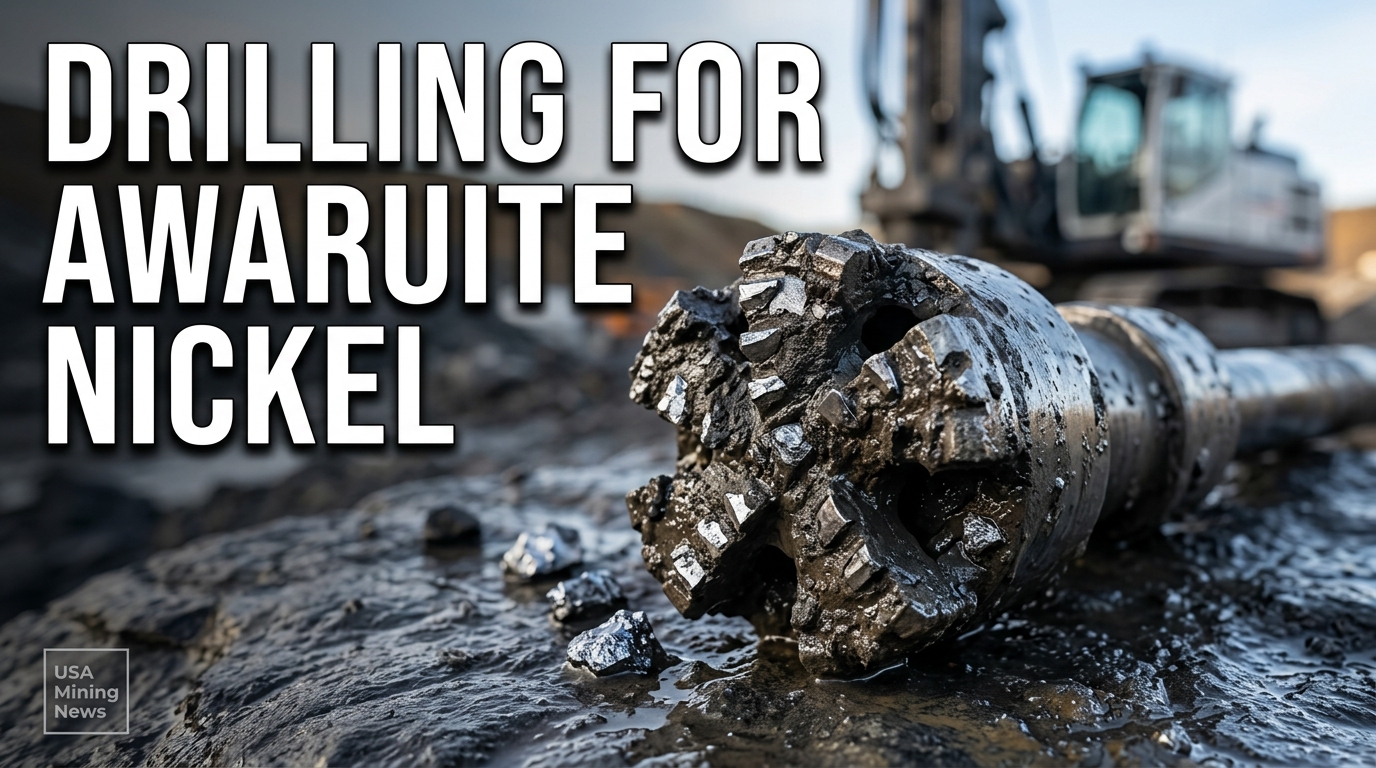
In a significant move poised to advance the exploration for critical minerals, FPX Nickel Corp. (FPX) has initiated a 4,000-meter diamond drilling program at its wholly-owned Advocate Nickel Property. Located in north-central Newfoundland, Canada, this extensive campaign, which commenced on August 5, 2026, is strategically focused on confirming the presence of recoverable awaruite nickel mineralisation within the Birchy North and Wolverine target areas. The undertaking marks a pivotal development for FPX Nickel and its global generative alliance with the Japan Organisation for Metals and Energy Security (JOGMEC), underscoring the growing industry interest in awaruite as a potentially low-carbon source of nickel.
The Advocate Property: A Strategic Location
The Advocate Nickel Property encompasses a substantial land package of 12,175 hectares, strategically positioned in an established mining jurisdiction. The property is situated in north-central Newfoundland, a region known for its geological prospectivity, specifically lying between the communities of Deer Lake and Baie Verte. Its location offers significant logistical advantages, crucial for the development of any large-scale mining operation. Access to the site is facilitated by an existing network of logging roads, which connect the property to major highways located just 5 to 10 kilometers away. Furthermore, an important piece of regional infrastructure, a deep-sea port at Pine Cove, operated by a vendor associated with the property, lies approximately 50 kilometers north-east of the site. This port offers direct marine access, which could prove invaluable for the transportation of equipment, consumables, and eventually, concentrate or processed materials, significantly reducing logistical complexities and costs associated with remote operations.
Targeting Awaruite Nickel: The Birchy North and Wolverine Zones
The current drilling program is meticulously designed to investigate two high-priority zones within the Advocate Property: Birchy North and Wolverine. These targets were identified through prior surveys and sampling campaigns that indicated the compelling presence of recoverable awaruite nickel mineralisation. Awaruite (Ni3Fe) is a naturally occurring nickel-iron alloy, distinct from the more common sulfide or laterite nickel deposits. Its unique magnetic properties allow for recovery through simple magnetic separation, potentially offering a more environmentally friendly and lower-cost processing pathway compared to traditional methods that rely on energy-intensive smelting or chemical leaching.
At Birchy North, the drilling is set to investigate approximately 1.2 kilometers within a larger, well-defined zone measuring 2.6 kilometers by 700 meters. Prior bedrock and surface sampling in this area returned Davis Tube Recoverable (DTR) nickel values of up to 0.13%. The Davis Tube Recoverable assay is a crucial metric for awaruite deposits, as it directly measures the amount of magnetically recoverable nickel, providing a strong indicator of economic viability for magnetic separation processing.
The Wolverine target, equally promising, is characterized by a 7-kilometer-long, high-magnetic zone that spans up to 1 kilometer in width. Surface sampling at Wolverine yielded DTR nickel values of up to 0.14%. While the total nickel values in ultramafic rock samples from across the entire Advocate Property range between 0.18% and 0.30%, with an average of 0.23%—levels consistent with background concentrations observed in similar rock types globally—it is the consistently high DTR nickel values in these specific target zones that truly stand out. These elevated DTR figures strongly suggest the presence of awaruite with grain sizes suitable for efficient magnetic recovery, which is a critical factor for successful project development.
The 4,000-Meter Diamond Drilling Program
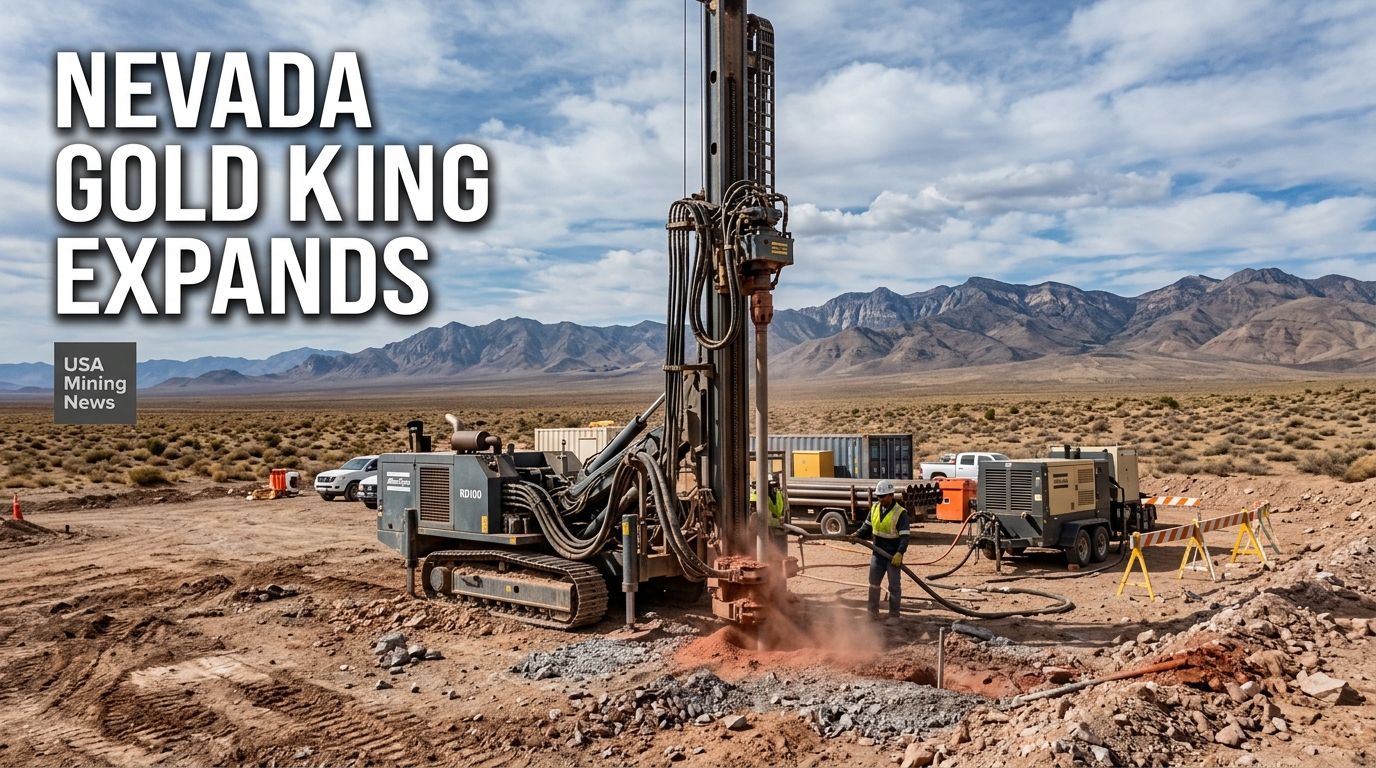
The current diamond drilling program represents a substantial investment in the exploration of the Advocate Property. Commencing on August 5, 2026, the 4,000-meter campaign is designed to provide critical subsurface data necessary to delineate the awaruite mineralisation at Birchy North and Wolverine. Diamond drilling provides core samples that allow geologists to directly observe rock types, alteration, and mineralisation, enabling precise measurements of grade and continuity. This detailed information is indispensable for future resource estimation and mine planning.
FPX Nickel has indicated that flexibility will be a key aspect of this program. Drill-hole positions and directions at both Birchy North and Wolverine may be subject to significant changes based on findings during fieldwork. This adaptive approach is common in early-stage exploration, allowing geological teams to optimize drilling efforts by reacting to real-time observations from core logging, geochemical assays, and evolving geological models, thereby maximizing the efficiency and effectiveness of the drilling investment.
The Role of Geophysics: Airborne Magnetic Survey
The genesis of the current drilling targets is rooted in a comprehensive airborne magnetic survey conducted by Abitibi Geophysics. This sophisticated survey played a pivotal role in defining the promising awaruite targets at Birchy North and Wolverine. The survey covered an extensive area, encompassing more than 30 kilometers of ultramafic rocks along the Advocate Complex, which are the host rocks for awaruite mineralisation.
The magnetic data acquisition involved a total of 2,226 line kilometers flown with detailed line spacings. Initial coverage used 50-meter line spacings, which were then tightened to more detailed 25-meter lines over specific target areas. Magnetic surveys are highly effective in identifying awaruite because the nickel-iron alloy is naturally ferromagnetic, creating distinct magnetic anomalies that can be mapped from the air. The high-resolution data from this survey provided the foundational understanding of the subsurface geology and highlighted the most prospective zones for subsequent ground-truthing and drilling, significantly derisking the exploration process by focusing efforts on areas with the highest potential.
Strategic Partnerships: JOGMEC Alliance
The Advocate drill program holds particular significance as it marks an important milestone in FPX Nickel’s global generative alliance with the Japan Organisation for Metals and Energy Security (JOGMEC). This strategic partnership brings together FPX Nickel’s expertise in awaruite exploration with JOGMEC’s mandate to secure stable supplies of critical minerals for Japan. Such alliances are increasingly vital in the global mining landscape, enabling companies to share risks, leverage diverse expertise, and accelerate the development of new mineral resources.
Keith Patterson, FPX’s exploration vice-president, emphasized the importance of this collaboration, stating,
“The Advocate drill programme marks an important milestone in our global generative alliance with JOGMEC. The large-scale, high-grade awaruite targets at Birchy North and Wolverine are similar in size and surface DTR nickel grades to those at the Baptiste deposit, and we look forward to confirming Advocate mineralisation with the drill bit.”
This comparison to the Baptiste deposit, FPX Nickel’s flagship project in British Columbia, is particularly noteworthy. Baptiste is recognized as one of the world’s largest undeveloped awaruite nickel deposits, and any new discovery exhibiting similar scale and grade potential would significantly augment FPX’s asset portfolio and reinforce its position as a leader in awaruite exploration.The Significance of Awaruite Nickel and DTR Technology
Awaruite nickel represents a distinct and increasingly attractive segment of the global nickel market. Unlike sulfide nickel deposits, which require energy-intensive smelting, or laterite nickel deposits, which often involve complex hydrometallurgical processing, awaruite can be recovered using simpler, physically-based methods, primarily magnetic separation. This characteristic is precisely why the Davis Tube Recoverable (DTR) assay is so critical for these projects. DTR values directly indicate the percentage of nickel that can be economically recovered through magnetic means, bypassing the need for extensive chemical processing.
The potential environmental benefits of awaruite processing are substantial. By reducing reliance on high-temperature pyro-metallurgical or acid-leaching processes, awaruite projects like Advocate could boast a significantly lower energy footprint and reduced greenhouse gas emissions. In an era where industries are increasingly focused on decarbonization and sustainable sourcing, a "green nickel" supply chain is highly desirable, particularly for the burgeoning electric vehicle (EV) battery market. The consistency of total nickel values with global background levels, coupled with high DTR figures, points to an enrichment process of awaruite within the host ultramafic rocks that yields economically viable concentrations for magnetic recovery, making such deposits particularly compelling.
Industry Context and Broader Implications
The global nickel market is currently experiencing robust demand, driven primarily by two key sectors: stainless steel production and the rapidly expanding electric vehicle battery market. Nickel is a vital component in many lithium-ion battery chemistries, and the push for higher energy density batteries is increasing the demand for Class 1 nickel, which awaruite projects are well-positioned to supply. As governments and industries worldwide commit to aggressive decarbonization targets, securing a stable and ethically sourced supply of critical minerals like nickel is paramount.
Newfoundland and Labrador is positioning itself as an emerging hub for critical minerals, with ongoing exploration and development activities across the province. The Advocate project, if successful, could further solidify Newfoundland’s role in the global supply chain for future-facing commodities. For FPX Nickel, successful drilling at Advocate would validate its unique exploration model and demonstrate the scalability of awaruite deposits beyond its flagship Baptiste project. For JOGMEC, the alliance represents a strategic investment in diversifying and securing Japan’s long-term access to essential raw materials, aligning with national economic and industrial objectives.
Future Outlook and Next Steps
The immediate next steps following the completion of the 4,000-meter diamond drilling program will involve detailed geological logging of the core samples, followed by extensive laboratory analysis for DTR nickel and other elements. The assay results will be crucial in determining the grade, thickness, and lateral continuity of the awaruite mineralisation within the Birchy North and Wolverine zones. Depending on the success of this initial drilling, FPX Nickel will then proceed with further exploration phases, which could include infill drilling to improve geological confidence and, ultimately, the commencement of a maiden mineral resource estimate.
Should the drilling confirm high-grade, recoverable awaruite nickel, the Advocate Property could evolve into a significant asset for FPX Nickel and a valuable contribution to the global nickel supply. This success would not only strengthen the FPX-JOGMEC alliance but also provide a compelling case study for the economic and environmental advantages of awaruite deposits. The mining industry, keen to embrace sustainable practices and secure future mineral supplies, will be watching the developments at Advocate with considerable interest, as it holds the potential to unlock a new generation of nickel production.