The Road to Autonomous Operations: Scaling AI in Mining
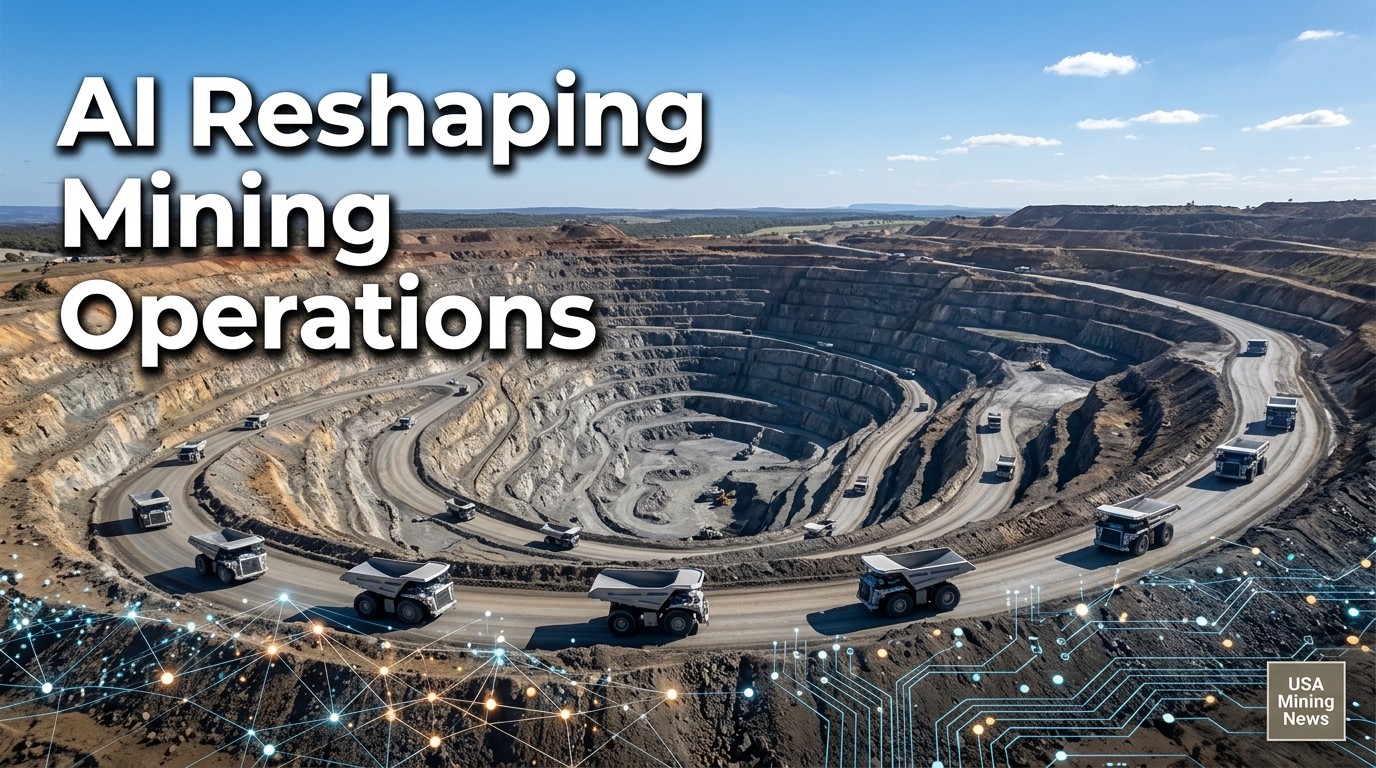
Artificial Intelligence (AI) is rapidly redefining the operational landscape of the global mining industry. While its immediate utility is already evident in areas such as predictive maintenance and data pattern recognition, the true future of AI in mining envisions a more integrated and autonomous environment. This future, projected by industry experts on August 5, 2026, will be characterized by sophisticated systems capable of translating predictive insights into secure, coordinated actions across the entire mining value chain. A recent analysis by GlobalData underscores this accelerating trend, forecasting a dramatic rise in mining industry spending on AI from $2.7 billion in 2024 to an estimated $13.1 billion by 2029. This significant investment signals a profound commitment to leveraging AI's transformative potential, but also highlights the imperative for operators to move beyond isolated analytical tools and integrate AI directly into core mine management systems.
The progression of AI adoption in mining is evolving. Initially focused on monitoring and prediction, the industry is now shifting towards recommendation, orchestration, and ultimately, bounded autonomous control. The challenge lies not just in a model's ability to make an accurate prediction, but in the entire operation's capacity to respond effectively and efficiently to that insight. For instance, a warning that a bearing may fail in ten days holds limited value if it fails to influence the maintenance schedule, reserve the correct component, and account for the effect of potential downtime on production. This critical transition from mere insight to decisive action is paramount for realizing the full return on substantial AI investments.
Current Strengths: Where AI Excels in Mining Today
The mining sector provides an ideal environment for AI applications, given the vast quantities of equipment, geological, and process data generated by modern operations. This rich data ecosystem allows AI to support decision-making across the entire mining value chain, utilizing information from an array of sensors and monitoring systems to enhance efficiency, reduce costs, improve safety protocols, and bolster environmental performance.
Among the most mature and widely adopted applications of AI is predictive maintenance. Here, machine-learning models analyze a multitude of variables such as vibration levels, temperature fluctuations, pressure readings, electrical currents, and lubricant conditions. By continuously monitoring these parameters, AI algorithms can identify subtle equipment degradation patterns long before conventional alarm thresholds are triggered. This proactive approach allows mining companies to schedule maintenance interventions strategically, minimizing unscheduled downtime and catastrophic failures on critical, high-value assets.
The growing impact of AI in this domain was highlighted in a 2025 systematic review of AI-driven predictive maintenance in mining. This comprehensive review, which examined 166 studies, confirmed the increasing integration of machine learning, the Internet of Things (IoT), and digital twin technologies for early fault detection and intelligent asset management across the industry.
Beyond predictive maintenance, AI has also found established applications in several other critical areas, albeit with varying degrees of deployment maturity across different sites, often dependent on data quality and operational readiness. These include:
- Ore classification: Optimizing sorting processes to improve recovery rates and resource utilization, crucial for economic viability.
- Flotation control: Enhancing efficiency in mineral processing plants by fine-tuning parameters, directly impacting commodity output.
- Haulage optimization: Improving truck dispatch, routing, and fuel efficiency, leading to significant operational cost reductions in open-pit mines.
- Environmental monitoring: Tracking and managing environmental impacts more effectively, aiding compliance and sustainability efforts.
These applications underscore AI's current capabilities in enhancing specific operational facets, laying the groundwork for more integrated deployments that aim to synchronize multiple systems.
From Prediction to Prescription: The Shift Towards Actionable Maintenance
While forecasting failures remains a crucial function of AI in maintenance, the next frontier involves moving beyond simple prediction to prescriptive maintenance. A truly valuable AI system in this context must do more than just issue a warning; it needs to provide actionable recommendations. This means estimating the remaining useful life of an asset, assessing the potential consequences of a failure (e.g., impact on production targets, safety risks), and crucially, recommending the optimal timing for intervention.
An advanced prescriptive AI system would integrate various operational factors to make its recommendations. It would determine the availability of required parts in inventory, confirm if appropriately qualified personnel are on shift to perform the repair, and even evaluate if the necessary work can be efficiently combined with another planned shutdown to minimize disruption. Furthermore, such a system would empower planners by illustrating the direct impact on production risk of various decisions – whether to act immediately, defer the repair, or adjust the machine’s operating profile. This holistic view transforms an alert into a strategic planning tool, allowing for more informed and cost-effective operational decisions.
A key enabler in this transition is the widespread adoption of digital twins. A mining digital twin combines a sophisticated virtual representation of a physical asset, process, or even an entire mine site, with continuously updated operational data, advanced analytics, and detailed simulations. This controlled virtual environment allows mine operators to rigorously test maintenance windows, experiment with process set-point changes, simulate equipment outages, and evaluate safety responses under a myriad of different conditions, all without impacting actual physical equipment or production schedules. The digital twin thus serves as a critical sandbox for refining AI-driven recommendations before deployment, mitigating risks and optimizing outcomes.
This evolution from predictive to prescriptive maintenance represents a fundamental shift. Instead of merely adding another alert to an already crowded operational dashboard, AI becomes an integral, proactive component of the maintenance workflow. While human oversight remains indispensable, particularly for failures with severe safety or production consequences, engineers are empowered with a prioritized, evidence-based course of action. This significantly reduces the manual effort traditionally required to gather and synthesize information from disparate systems, streamlining decision-making and improving response times, ultimately leading to greater operational resilience and output.
Navigating the Practical Barriers to Scaling Mining AI
Despite the undeniable benefits and the industry’s increasing embrace of digital technologies and AI-assisted tools, scaling AI across mining operations presents several significant challenges. Overcoming these practical barriers is essential for widespread, effective deployment and for capturing the full return on investment:
- Uneven Connectivity: Real-time data requires consistent and reliable connectivity, which can be exceptionally difficult at many mining sites. Remote locations, deep excavation areas, and dynamic underground environments often lack the robust network infrastructure needed for continuous, high-bandwidth data transfer, hindering the deployment of real-time AI applications.
- Operating Sensors in Adverse Environments: Mining environments are inherently harsh. The presence of dust, water, extreme vibrations, wide temperature variations, and physical impacts can severely compromise sensor performance. These conditions can lead to noisy signals, sensor drift (where readings gradually become inaccurate over time), or even complete data loss, undermining the quality and reliability of the input data for AI models. This directly impacts the accuracy of predictions and prescriptions.
- Divided Data and Information Silos: A persistent challenge in mining is the fragmentation of data. Maintenance teams, processing plants, mine planning departments, and even original equipment manufacturers (OEMs) frequently utilize distinct asset naming conventions, incompatible data structures, and varying time horizons for their data collection. This creates information silos that hinder the comprehensive, integrated data streams necessary for sophisticated AI applications that span the entire value chain.
- Cybersecurity Requirements: As AI transitions from passively reading operational data to actively writing instructions back to equipment or control systems, the cybersecurity risk profile significantly changes. Operational Technology (OT) systems in mining, which directly control physical processes, have distinct reliability, performance, and safety requirements compared to standard IT systems. The US National Institute of Standards and Technology’s (NIST) Guide to Operational Technology Security emphasizes the critical need for robust security measures tailored specifically for these environments, acknowledging that a cyber intrusion could have direct physical consequences, including safety incidents, major production disruptions, or environmental damage.
- Workforce Readiness: The successful integration of AI relies heavily on human factors. Engineers and operators must possess a fundamental understanding of what an AI model is recommending, the specific data inputs it utilized, and critically, when its output should be challenged or validated by human expertise. This necessitates hands-on involvement of the workforce during the design and validation phases of AI systems, rather than simply providing training shortly before a system’s launch. Effective change management and continuous upskilling are crucial for fostering trust and competence in AI tools.
Enabling Infrastructure: The Role of Carroll Technologies Group
The journey from an AI insight to a decisive operational action hinges on a foundation of reliable communications, trustworthy field data, and seamless interfaces that connect monitoring systems with human workers, central control rooms, and heavy equipment. Without this underlying infrastructure, even the most advanced AI models will struggle to deliver their full potential.
Carroll Technologies Group stands as a key player in providing these foundational technologies. As a prominent supplier of communications, monitoring, safety, and control technologies for mining and other industrial operations, the company works with an extensive network of specialist manufacturers. Their expertise lies in integrating and supporting systems specifically tailored to withstand the demanding conditions of harsh operating environments, such as those found in mining. Crucially, their offerings include solutions for robust underground connectivity, which are vital for supporting the continuous transfer of voice, data, and alerts – the lifeblood of any scalable AI deployment in subterranean mining operations.
The Future Outlook: Towards Bounded Autonomous Control
The trajectory of AI in mining is clear: from isolated predictive analytics to fully integrated systems that orchestrate operations. The initial steps involved detecting abnormal equipment behavior and forecasting failures. The next steps are about converting these predictions into intelligent, coordinated actions. This progression involves a sophisticated interplay of monitoring, prediction, recommendation, and orchestration, culminating in bounded autonomous control – where AI systems can execute pre-defined actions within specified parameters, under robust human supervision.
The industry's escalating investment, coupled with ongoing advancements in sensor technology, data integration, and computational power, suggests that this vision is well within reach. Overcoming the practical barriers through strategic infrastructure development, robust cybersecurity protocols, and comprehensive workforce training will be critical to unlock this potential. As AI becomes more deeply embedded in mining operations, it promises not only enhanced efficiency and reduced costs but also significant improvements in safety and environmental stewardship, solidifying its role as a cornerstone of modern, sustainable mining operations globally.